
Safety
General information, not medical advice
Your prescriber and the leaflet in your pack know your situation. This page does not.
- Follow your prescriber and the leaflet
- Don't start, stop, or change a dose on your own
- Doses and warnings differ by country and product
Paxlovid Tablet: Uses, Dosage, Side Effects, Precautions and Alternates
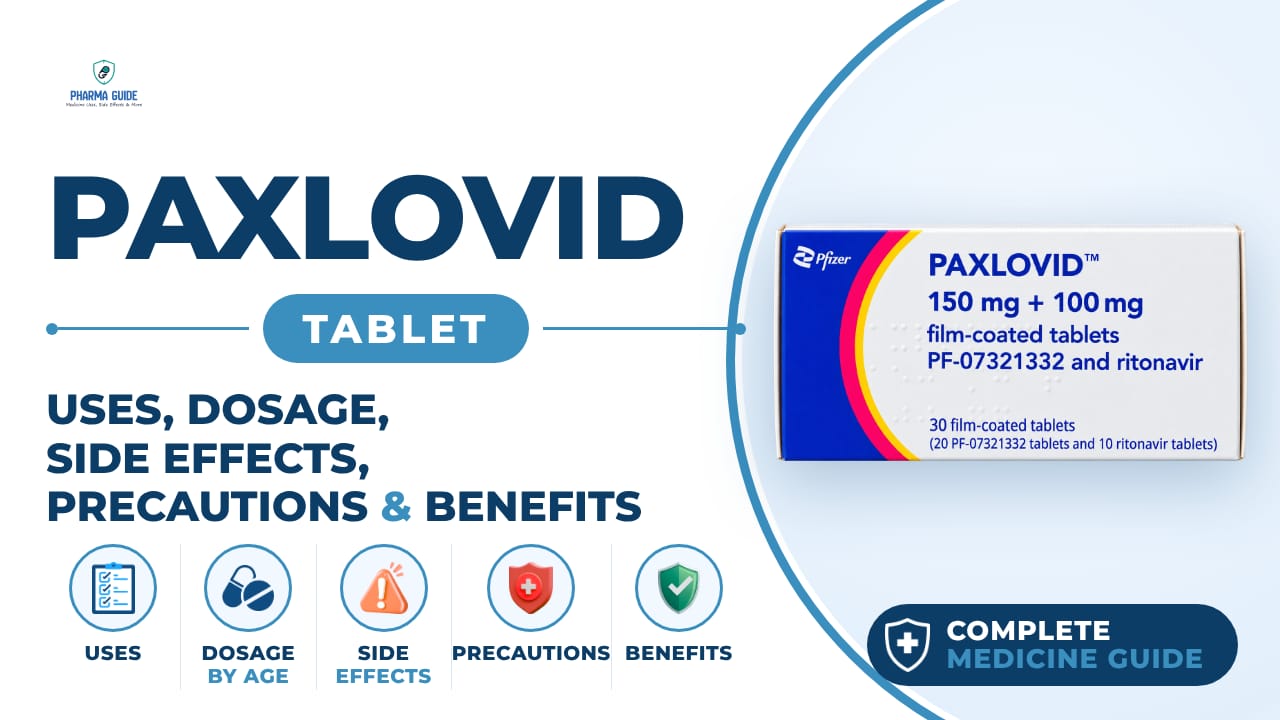
| Generic name | nirmatrelvir and ritonavir |
|---|---|
| Drug class | Antiviral combination (SARS-CoV-2 main protease inhibitor) with pharmacokinetic enhancer |
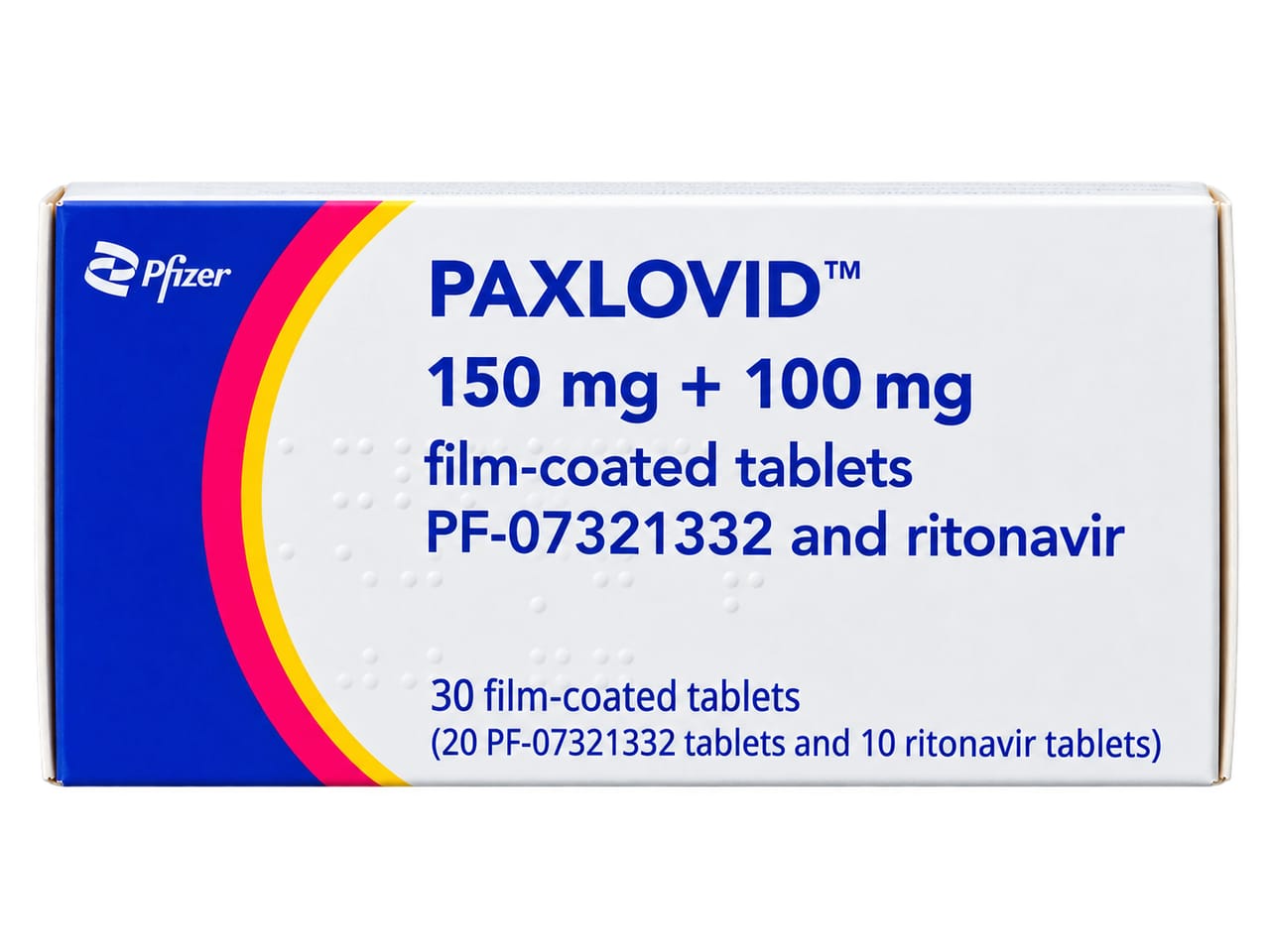
| Forms | Film-coated tablets (pink nirmatrelvir tablets and white ritonavir tablets), packaged together in blister cards |
Quick overview
Paxlovid Tablet contains nirmatrelvir and ritonavir, an antiviral combination used to treat COVID-19 in people at higher risk of becoming seriously ill. It is taken as a 5-day oral course and works by blocking a virus enzyme while helping keep the active medicine in the body longer. Common side effects include taste changes, diarrhea, headache, and nausea, while serious effects can include allergic reactions, skin reactions, and liver problems.
What is Paxlovid Tablet
Paxlovid is an antiviral medicine that contains two medicines, nirmatrelvir and ritonavir, packaged together as tablets. It is used to treat COVID-19 in people who are at higher risk of becoming seriously ill.
Paxlovid Tablet uses
- Treatment of coronavirus disease 2019 (COVID-19) in adults and children 6 years and older weighing at least 20 kg who do not need extra oxygen and who are at increased risk of their illness becoming severe
- Used for mild-to-moderate COVID-19 in people at high risk of hospitalization or death from COVID-19
Benefits of Paxlovid Tablet
- Treats mild-to-moderate COVID-19
- Helps reduce progression to severe COVID-19
- Can lower the risk of hospitalization or death in eligible high-risk patients
- Oral treatment taken at home
- Treatment course lasts 5 days
How Paxlovid Tablet works
Nirmatrelvir blocks an enzyme the COVID-19 virus needs to make copies of itself, which stops it from multiplying. Ritonavir doesn't fight the virus itself, but it slows down the breakdown of nirmatrelvir in the body so that more of it stays active for longer, making the treatment work better.
Paxlovid Tablet dosage
Start treatment as soon as possible after being diagnosed with COVID-19 and within 5 days of your symptoms starting. Take the nirmatrelvir tablets and the ritonavir tablet together at the same time, twice a day, about 12 hours apart. Finish the complete 5-day course of treatment, even if you need to go to the hospital for severe COVID-19 after you start treatment, unless your doctor says otherwise.
Can be taken with or without food. Swallow the tablets whole; do not chew, break, or crush them.
If you miss a dose and it has been less than 8 hours since you were supposed to take it, take it as soon as you remember; if more than 8 hours have passed, skip the missed dose and take your next dose at the regular time. Do not take a double dose to make up for a missed dose.
People with kidney problems may need a lower dose or a different schedule — talk to your doctor. Do not stop taking this medicine early even if you start to feel better, unless your doctor tells you to.
| Age group | Dose |
|---|---|
| 12–17 years and ≥40 kg | 300 mg nirmatrelvir + 100 mg ritonavir twice daily for 5 days, when prescribed and eligible |
| 18–64 years | 300 mg nirmatrelvir + 100 mg ritonavir twice daily for 5 days |
Available forms and strengths
Film-coated tablets (pink nirmatrelvir tablets and white ritonavir tablets), packaged together in blister cards.
Side effects of Paxlovid Tablet
Common
- Change in sense of taste (metallic or bitter taste)
- Diarrhea
- Headache
- Nausea and vomiting
- Stomach pain
- High blood pressure
- Overall unwell feeling
Serious
- Severe allergic reactions (anaphylaxis) including swelling of face, lips, mouth, tongue or throat, trouble breathing or swallowing, throat tightness, hives, skin rash
- Serious skin reactions including toxic epidermal necrolysis and Stevens-Johnson syndrome (red, painful, burned-looking skin, blisters, peeling skin, blisters or sores in mouth or on lips)
- Liver problems (hepatotoxicity) including loss of appetite, stomach pain, tiredness, itching, dark urine, light-colored stools, yellowing of skin or eyes (jaundice)
- High blood pressure
Warnings and precautions
- There isn't enough information to know for certain whether Paxlovid is safe during pregnancy. It is generally not recommended unless your doctor feels you specifically need it. If you could become pregnant, you should avoid unprotected sex or use a barrier method of contraception during treatment and for some time after finishing it, because this medicine can make hormonal birth control less effective.
- Paxlovid passes into breast milk, and it isn't known if it could affect a nursing baby. It's recommended that you stop breastfeeding during treatment and for a short period after your last dose.
- Tell your doctor if you have kidney problems. People with moderate kidney impairment need a lower dose, and those with severe kidney impairment need a different reduced dosing schedule.
- Tell your doctor if you have liver disease, as this medicine should not be used by people with severe liver problems, and caution is needed in people with existing liver disease.
- It isn't known whether drinking alcohol affects this medicine.
- This medicine isn't expected to affect your ability to drive or use machines.
- Paxlovid can interact with many other medicines, some of which should never be taken together with it, as this could cause serious or life-threatening reactions or make Paxlovid less effective. Always tell your doctor about every medicine, vitamin, and herbal product you use.
- Serious allergic reactions and severe skin reactions have happened in people taking this medicine, sometimes after only one dose.
- This medicine can cause liver problems, including elevated liver enzymes, hepatitis, and jaundice.
- Cases of high blood pressure, usually mild and temporary, have occurred during treatment, with elderly patients at higher risk of complications.
- If you have untreated or undiagnosed HIV infection, taking this medicine could make the HIV virus resistant to certain HIV medicines in the future.
- This medicine contains lactose, so people with certain rare inherited conditions affecting sugar processing should not take it.
Storage
- This medicine does not require any special storage conditions.
- Store at room temperature 20°C to 25°C (68°F to 77°F).
- Keep out of the sight and reach of children.
- Do not use after the expiry date on the carton or blister.
- Do not throw away medicines via wastewater or household waste; ask your pharmacist how to dispose of medicines you no longer use.
When to see a doctor
- Stop taking this medicine and get emergency help right away if you notice signs of a serious allergic reaction, such as swelling of the face, lips, mouth or tongue, difficulty breathing or swallowing, throat tightness, hives, or skin rash.
- Get emergency help immediately if you develop red or painful skin that looks burned, blistering or peeling skin, or sores in the mouth or on the lips, as these can be signs of a severe, life-threatening skin reaction.
- Call your doctor right away if you notice signs of liver problems, such as loss of appetite, pain in the upper right side of your stomach, tiredness, itching, dark urine, light-colored stools, or yellowing of your skin or eyes.
- Talk to your doctor if you don't feel better, or if you feel worse, after 5 days of treatment.
- If you think you have taken too much of this medicine, get emergency medical help or contact a poison control center right away.
Alternatives
- Remdesivir
Watch the video
FAQs
What is Paxlovid Tablet used for?
Paxlovid treats mild-to-moderate COVID-19 in adults and children 6 years and older weighing at least 20 kg who do not need extra oxygen and who are at increased risk of their illness becoming severe.
How is Paxlovid Tablet taken?
Paxlovid should be started as soon as possible after diagnosis and within 5 days of symptoms starting. The nirmatrelvir tablets and ritonavir tablet are taken together twice a day, about 12 hours apart, for a full 5-day course, with or without food, swallowed whole.
What are the common side effects of Paxlovid Tablet?
Common side effects include change in sense of taste, diarrhea, headache, nausea and vomiting, stomach pain, high blood pressure, and an overall unwell feeling.
What should I do if I miss a dose of Paxlovid Tablet?
If it has been less than 8 hours since your scheduled dose, take it as soon as you remember. If more than 8 hours have passed, skip the missed dose and take your next dose at the regular time. Do not double the dose.
Can Paxlovid Tablet be taken during pregnancy or breastfeeding?
There isn't enough information to confirm safety during pregnancy, so it is generally not recommended unless specifically needed. Paxlovid passes into breast milk, so breastfeeding should be stopped during treatment and for a short period after the last dose.
General information, not medical advice
Your prescriber and the leaflet in your pack know your situation. This page does not.
- Follow your prescriber and the leaflet
- Don't start, stop, or change a dose on your own
- Doses and warnings differ by country and product
Sources
Video
Related medicines

Injectafer Injection: Uses, Dosage, Side Effects, Precautions and Alternates
Iron products
Injectafer (ferric carboxymaltose) treats iron deficiency anemia and heart failure-related iron deficiency via IV. Learn uses, dosage, side effects, and

Gliclazide Tablet: Uses, Dosage, Side Effects, Precautions and Alternates
Sulfonylurea (hypoglycemic/antidiabetic agent)
Gliclazide Tablet is a sulfonylurea for type 2 diabetes that boosts insulin release. Learn about dosage, side effects, warnings, and precautions.