
Safety
General information, not medical advice
Your prescriber and the leaflet in your pack know your situation. This page does not.
- Follow your prescriber and the leaflet
- Don't start, stop, or change a dose on your own
- Doses and warnings differ by country and product
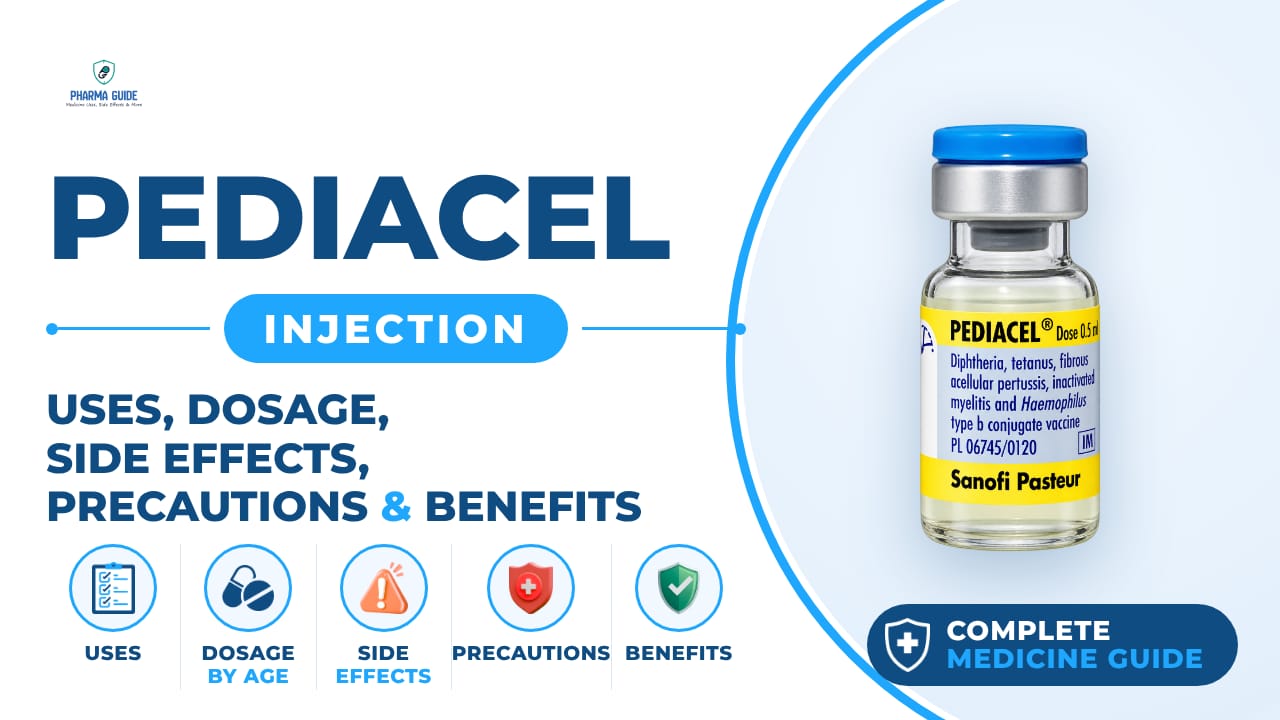
Pediacel Injection: Uses, Dosage, Side Effects, Precautions and Alternates
| Generic name | Diphtheria and Tetanus Toxoids and Acellular Pertussis Vaccine Adsorbed Combined with Inactivated Poliomyelitis Vaccine and Haemophilus b Conjugate Vaccine (Tetanus Protein – Conjugate) |
|---|---|
| Drug class | Vaccine (combination vaccine) |
| Forms | Suspension for injection (liquid vaccine given into a muscle) |
Quick overview
Pediacel is a combination vaccine given by injection into a muscle that helps protect against five diseases: diphtheria, tetanus, pertussis (whooping cough), polio, and invasive Haemophilus influenzae type b (Hib) infections. It is given to infants from 2 months of age and can also be used as a booster up to age 7. The vaccine works by stimulating the body's immune system to develop its own protection against these diseases.
What is Pediacel Injection
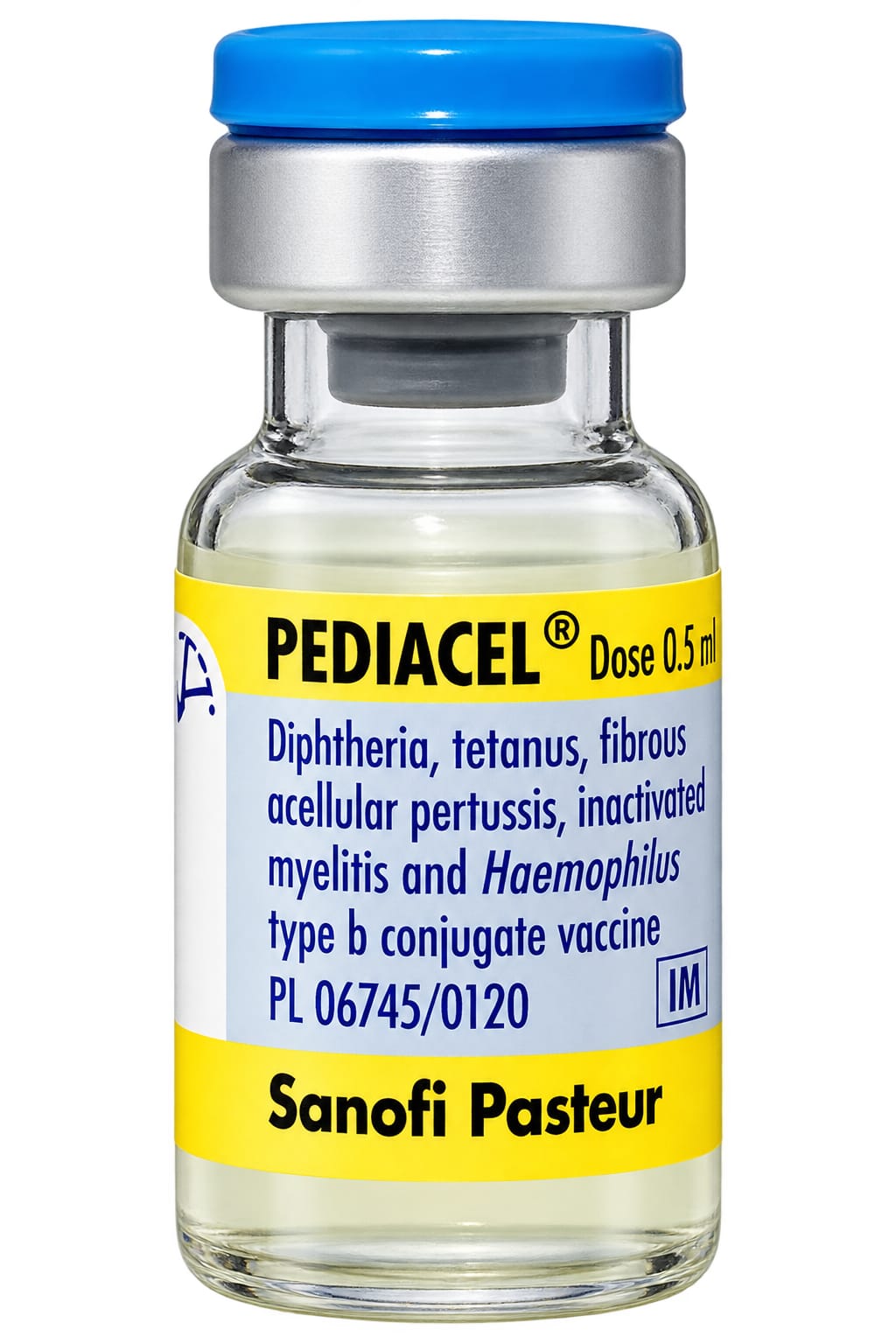
Pediacel is a combination vaccine from the vaccine drug class. Its full generic name is Diphtheria and Tetanus Toxoids and Acellular Pertussis Vaccine Adsorbed Combined with Inactivated Poliomyelitis Vaccine and Haemophilus b Conjugate Vaccine (Tetanus Protein – Conjugate). It is given by injection into a muscle and is intended for infants starting at 2 months of age, with use as a booster possible up to age 7.
Pediacel Injection uses
- Helps prevent diphtheria
- Helps prevent tetanus (lock jaw)
- Helps prevent pertussis (whooping cough)
- Helps prevent polio
- Helps prevent invasive H. influenzae type b (Hib) infections
Benefits of Pediacel Injection
- Helps protect against diphtheria.
- Helps protect against tetanus.
- Helps protect against pertussis (whooping cough).
- Helps protect against poliomyelitis (polio).
- Helps protect against serious infections caused by Haemophilus influenzae type b (Hib), including meningitis.
- Stimulates the immune system to develop long-term protection against these five childhood diseases.
How Pediacel Injection works
The vaccine exposes the body to inactivated or purified pieces of the bacteria and viruses that cause these diseases. This causes the body to make its own natural protection, called antibodies, so that if the person later comes into contact with the actual germs, the body is usually ready to fight them off.
Pediacel Injection dosage
Pediacel is given as an injection into a muscle, usually the thigh for children under 1 year old, and the shoulder area for children older than 1 year. It is given as part of a routine series in infancy and childhood, with a booster possible up to age 7. This vaccine should not be mixed with other vaccines or medicines in the same syringe. The vial should be shaken well until it looks like a uniform, cloudy suspension before it is drawn up. If a dose in the schedule is delayed, the doctor will follow a catch-up schedule with spacing between doses.
| Age group | Dose |
|---|---|
| Under 6 weeks | Generally not recommended |
| 6 weeks–<2 months | 0.5 mL IM per dose when vaccination is indicated according to the local schedule |
| 2–12 months | 0.5 mL IM per dose as part of the primary vaccination series |
| 1–4 years | 0.5 mL IM when a primary or booster dose is indicated |
| 5 years and older | Pediacel is generally not routinely used; age-appropriate vaccines are preferred |
Available forms and strengths
Suspension for injection (liquid vaccine given into a muscle)
Side effects of Pediacel Injection
Common
- Redness, swelling, or tenderness around the injection site
- Fever
- Increased crying
- Fussiness
- Being less active
- Decreased eating
- Diarrhea
- Vomiting
Serious
- High fever
- Swelling and redness of the entire arm or leg
- Serious allergic reaction (such as hives, swelling of the face, lips, tongue, or throat, or difficulty breathing)
- Seizures (convulsions), with or without fever
- Hypotonic-hyporesponsive episode (infant appears pale, limp, and unresponsive)
- Prolonged or unusual high-pitched crying
Warnings and precautions
- Do not give this vaccine to a child who is allergic to any of its ingredients or who has had an allergic reaction to a vaccine with similar ingredients.
- Do not give this vaccine to someone who had a serious nervous system disorder within 7 days after a previous pertussis-containing vaccine.
- If the child has a high fever or serious illness, wait until they are better before vaccinating.
- Tell the doctor if the child has an immune system disease or is taking treatment that affects the immune system, since the vaccine may work less well and vaccination may need to be postponed.
- Tell the person giving the injection if the child has a bleeding disorder or takes blood-thinning medication, so the injection can be given carefully.
- If the child has a higher risk of seizures than usual, a fever-reducing medicine may be given.
- Do not mix this vaccine with other vaccines or medicines in the same syringe.
Pediacel is a paediatric combination vaccine intended for young children, not for routine vaccination during pregnancy. It is not applicable for routine use for breastfeeding adults, as it is administered to children.
No specific dose adjustment is generally required for kidney function, but children with significant kidney disease or weakened immunity should be assessed by their healthcare professional before vaccination. No specific liver-related dose adjustment is generally required. There is no relevant interaction with alcohol, and driving is not relevant to its usual paediatric use.
Storage
- Store refrigerated at 2–8°C (36–46°F).
- Keep in the original packaging to protect from light.
- Do not freeze; discard the vaccine if it has been frozen.
- Maintain the recommended cold chain during storage and transport.
- Do not use after the expiry date or if recommended storage conditions were not maintained.
- Keep securely stored and out of reach of children.
When to see a doctor
- Tell your doctor, nurse, or pharmacist as soon as possible if your child is not feeling well after getting this vaccine.
- Get medical help right away if there are signs of a serious allergic reaction, such as hives, trouble breathing, or swelling of the face, lips, tongue, or throat.
- Call your doctor at once if the child has irritability or crying for an hour or longer, a very high fever, or extreme drowsiness or fainting.
- If you suspect an overdose, contact a health-care practitioner, hospital emergency department, or your regional poison control center right away, even if there are no symptoms.
Alternatives
- Pediarix
- Vaxelis
- Infanrix Hexa
- Infanrix-IPV+Hib
- Pentacel (DTaP-IPV-Hib)
Watch the video
FAQs
What is Pediacel Injection used for?
Pediacel is a combination vaccine used to help prevent diphtheria, tetanus, pertussis (whooping cough), polio, and invasive Haemophilus influenzae type b (Hib) infections.
At what age is Pediacel given?
Pediacel is given to infants starting at 2 months of age and can also be used as a booster up to age 7.
How is Pediacel administered?
Pediacel is given as an injection into a muscle, usually the thigh for children under 1 year old and the shoulder area for children older than 1 year.
What are the common side effects of Pediacel?
Common side effects include redness, swelling, or tenderness around the injection site, fever, increased crying, fussiness, being less active, decreased eating, diarrhea, and vomiting.
Can Pediacel be mixed with other vaccines in the same syringe?
No, Pediacel should not be mixed with other vaccines or medicines in the same syringe.
General information, not medical advice
Your prescriber and the leaflet in your pack know your situation. This page does not.
- Follow your prescriber and the leaflet
- Don't start, stop, or change a dose on your own
- Doses and warnings differ by country and product
Sources
Video
Related medicines

Injectafer Injection: Uses, Dosage, Side Effects, Precautions and Alternates
Iron products
Injectafer (ferric carboxymaltose) treats iron deficiency anemia and heart failure-related iron deficiency via IV. Learn uses, dosage, side effects, and

Gliclazide Tablet: Uses, Dosage, Side Effects, Precautions and Alternates
Sulfonylurea (hypoglycemic/antidiabetic agent)
Gliclazide Tablet is a sulfonylurea for type 2 diabetes that boosts insulin release. Learn about dosage, side effects, warnings, and precautions.