
Safety
General information, not medical advice
Your prescriber and the leaflet in your pack know your situation. This page does not.
- Follow your prescriber and the leaflet
- Don't start, stop, or change a dose on your own
- Doses and warnings differ by country and product
Pegasys Injection: Uses, Dosage, Side Effects, Precautions and Alternates
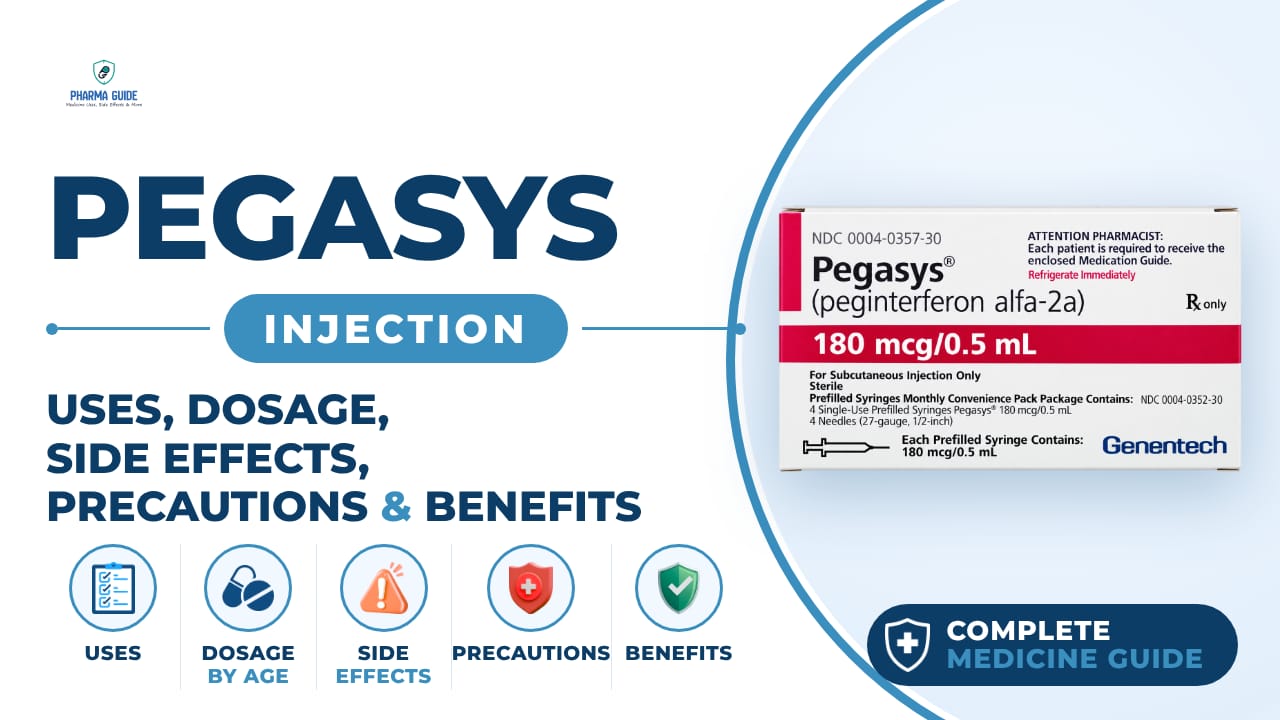
| Generic name | Peginterferon alfa-2a |
|---|---|
| Drug class | Biological response modifier / interferon (immunostimulant) |
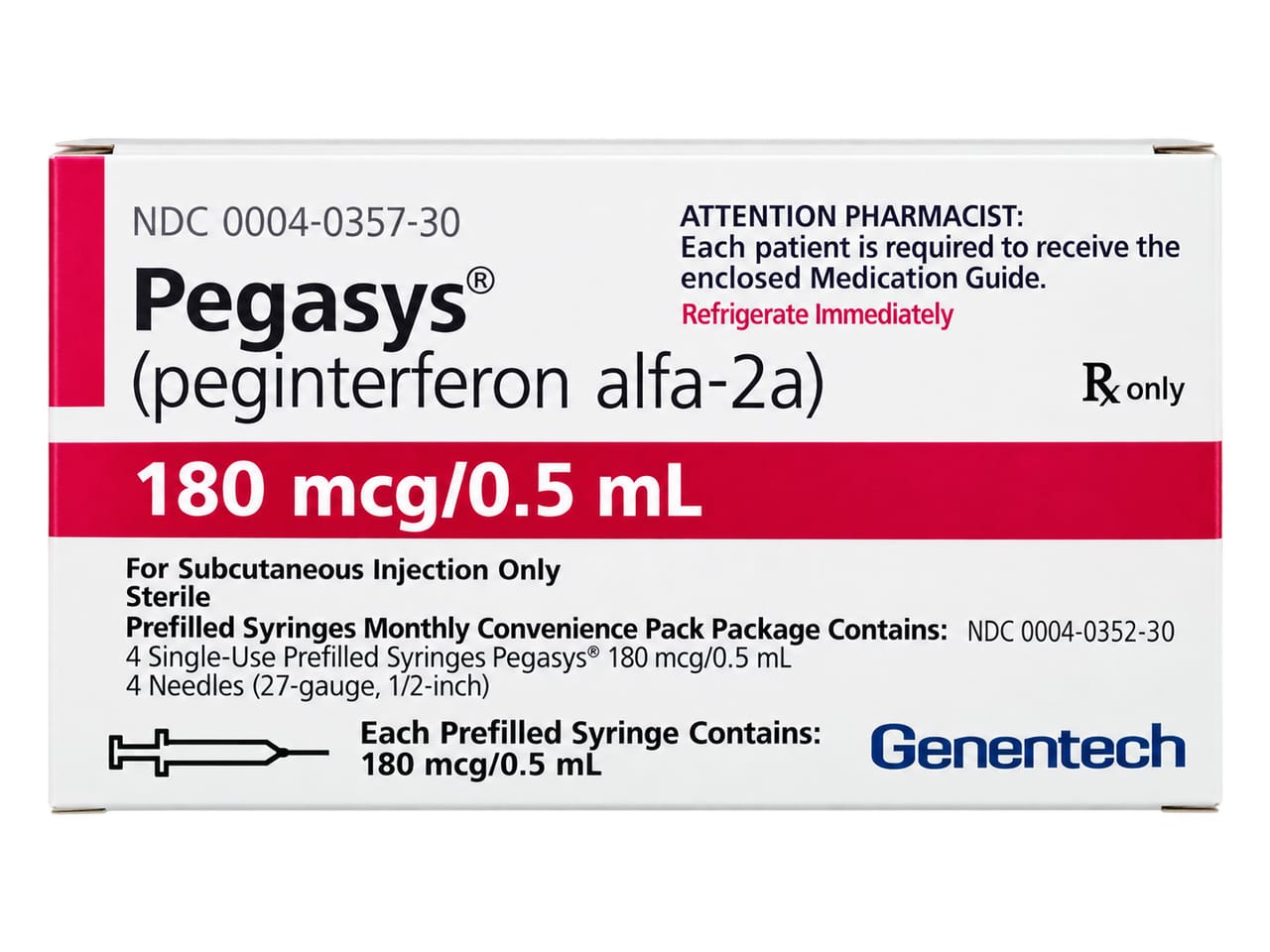
| Forms | Solution for injection in single-use vial (180 micrograms/mL), Solution for injection in pre-filled syringe (90, 135, or 180 micrograms/0.5 mL), Solution for injection in ProClick autoinjector (135 or 180 micrograms/0.5 mL) |
Quick overview
Pegasys Injection (Peginterferon alfa-2a) is a biological response modifier used to treat chronic hepatitis C and chronic hepatitis B in adults and certain children, as well as the blood disorders polycythaemia vera and essential thrombocythaemia. It is given as a once-weekly injection under the skin. Pegasys works by boosting the body's natural immune defenses to help control these conditions.
What is Pegasys Injection
Pegasys is a man-made version of interferon, a protein your body naturally makes to help fight infections and disease. It is given as an injection under the skin and is designed to stay in the body longer than regular interferon, so it only needs to be injected once a week.
Pegasys Injection uses
- Chronic hepatitis C (CHC) infection in adults, usually combined with other antiviral medicines
- Chronic hepatitis C in children and adolescents aged 5 years and older, usually combined with ribavirin
- Chronic hepatitis B (both HBeAg-positive and HBeAg-negative) in adults with liver inflammation and signs the virus is still active
- Chronic hepatitis B in children and adolescents aged 3 years and older
- Polycythaemia vera (a blood disorder causing too many red blood cells) in adults
- Essential thrombocythaemia (a blood disorder causing too many platelets) in adults
Benefits of Pegasys Injection
- Can reduce the hepatitis C virus to levels too low to measure on blood tests in some patients
- Can help normalize liver enzyme levels (ALT) in many patients with hepatitis B or C
- May lead to loss of hepatitis B surface antigen in some patients, a sign of better long-term control of the infection
- Helps control red blood cell, white blood cell, and platelet counts in polycythaemia vera and essential thrombocythaemia
How Pegasys Injection works
Pegasys works by boosting the body's own natural defenses against disease. It attaches to receptors on cells, which switches on a chain of signals inside the cell that can block virus multiplication, slow down cell growth, and adjust immune activity. Exactly how this leads to its effects in hepatitis or blood disorders is not completely understood.
Pegasys Injection dosage
Pegasys is given as an injection just under the skin (subcutaneous), usually in the stomach area or thigh, avoiding the navel and waistline. It is usually injected once per week, on the same day and around the same time each week, and is often recommended to be taken in the evening, which may help you sleep through flu-like side effects. Change the injection site each time to a different spot on the stomach or thigh, and drink plenty of fluids while being treated.
Do not switch between different forms (vial, prefilled syringe, autoinjector) or between different brands of interferon without talking to your doctor, since the amount delivered may differ. If a dose is missed and remembered within 2 days, inject it as soon as you remember, then continue with your normal weekly schedule; if more than 2 days have passed, contact your doctor for instructions. Let the medicine warm to room temperature before injecting, but do not warm it in any other way, and do not shake it. In children, dosing is based on body size and the medicine is usually given together with ribavirin.
| Age group | Dose |
|---|---|
| Under 3 years | Safety and effectiveness are not established |
| 3–4 years – chronic hepatitis B | 180 mcg/1.73 m² × body surface area once weekly, maximum 180 mcg/week |
| 5–17 years – chronic hepatitis B or C | 180 mcg/1.73 m² × body surface area once weekly, maximum 180 mcg/week |
| 18–64 years | 180 mcg subcutaneously once weekly |
Available forms and strengths
- Solution for injection in single-use vial (180 micrograms/mL)
- Solution for injection in pre-filled syringe (90, 135, or 180 micrograms/0.5 mL)
- Solution for injection in ProClick autoinjector (135 or 180 micrograms/0.5 mL)
Side effects of Pegasys Injection
Common
- Flu-like symptoms: tiredness, fever, chills, muscle aches, joint pain, headaches
- Nausea, vomiting, loss of appetite, diarrhea, stomach pain
- Trouble sleeping, poor concentration, dizziness
- Hair thinning or hair loss
- Redness, swelling, or irritation at the injection site
- Dry or itchy skin, rash
- Decreased sex drive
- Numbness or tingling
- Problems with blood sugar control
- General weakness or fatigue
- Cough
Serious
- Severe depression, thoughts of suicide or self-harm, aggressive behavior
- Serious infections (bacterial, viral, or fungal)
- Significant drops in red blood cells, white blood cells, or platelets, including rare pancytopenia or aplastic anemia
- Heart problems such as chest pain, abnormal heart rhythm, heart failure, or heart attack
- Lung problems such as shortness of breath, pneumonia, or pulmonary hypertension
- Eye problems including blurred vision, vision loss, or retinal damage
- Autoimmune conditions such as psoriasis flare, thyroid disease, lupus-like reactions, or rheumatoid arthritis
- Severe allergic reactions including hives, swelling of face/throat, difficulty breathing
- Serious skin reactions such as Stevens-Johnson syndrome or toxic epidermal necrolysis
- Colitis (bloody diarrhea, severe stomach pain, fever) and pancreatitis
- Liver problems including worsening liver function or liver failure
- Stroke-like symptoms: weakness, loss of coordination, numbness
- Slowed growth and weight gain in children and adolescents
Warnings and precautions
- Interferons like Pegasys can cause or worsen serious, sometimes fatal, mental health, autoimmune, blood flow (ischemic), and infection-related problems. Patients need close monitoring, and treatment should be stopped if these conditions become severe or keep getting worse.
- Pegasys must not be given to newborns or infants because it contains benzyl alcohol, which has been linked to serious, sometimes fatal, complications in this age group.
- Pegasys should not be used in people with autoimmune hepatitis, decompensated cirrhosis, or a history of autoimmune disease, as it can trigger or worsen these conditions.
- Combining Pegasys with the hepatitis B medicine telbivudine is not recommended, as it raises the risk of nerve damage (peripheral neuropathy) causing numbness, tingling, weakness, or burning in the arms or legs.
- Serious eye problems, including vision loss, can occur with Pegasys, so an eye exam is recommended before starting treatment, and any new vision changes should be checked by a doctor right away.
- Children treated with Pegasys may grow more slowly and gain less weight than expected during treatment, and it's not fully certain whether they will catch up completely afterward.
- Pegasys alone should only be used in pregnancy if clearly needed, since safety has not been established.
- When combined with ribavirin, pregnancy must be avoided completely by both female patients and female partners of male patients, due to serious risk of birth defects or fetal death; effective contraception is required during and for months after treatment.
- It is not known whether Pegasys passes into breast milk, and breastfeeding is not recommended during treatment due to potential risk to the nursing infant.
- People with reduced kidney function need a lower dose of Pegasys, and should be closely monitored for side effects, since the body clears the drug more slowly when the kidneys are not working well.
- Pegasys can be used in people with stable, compensated cirrhosis, but must not be used in those with severe or worsening liver disease, and treatment should be stopped right away if signs of liver failure develop.
- Drinking alcohol is discouraged during treatment because it may further harm the liver.
- Pegasys can cause dizziness, confusion, sleepiness, or tiredness, so you should avoid driving or operating machinery if you experience these effects.
Storage
- Store in a refrigerator at 2-8°C (36°F to 46°F)
- Do not freeze
- Protect from light; keep the vial, syringe, or autoinjector in its outer carton
- Do not leave out of the refrigerator for more than 24 hours before use
- Do not use after the expiry date on the label
- Do not use if the solution is cloudy, discolored, or contains particles
- Each vial, syringe, or autoinjector is for single use only; throw away any unused portion
- Dispose of used needles, syringes, and autoinjectors in a puncture-resistant sharps container, out of reach of children, and follow local requirements or your healthcare provider's instructions for disposal; avoid placing used sharps containers in household waste
When to see a doctor
- Get medical help right away if you have thoughts of suicide, self-harm, or harming others, or if you notice severe depression, aggression, or confusion while on treatment.
- Seek urgent care for chest pain, irregular heartbeat, trouble breathing, or persistent cough, as these can signal serious heart or lung problems.
- Contact your doctor immediately if you develop sudden weakness, loss of coordination, or numbness, which could be signs of a stroke.
- Seek medical attention for signs of a serious allergic reaction such as swelling of the face, lips, or throat, difficulty breathing, hives, or widespread skin rash/blistering.
- Get medical help for severe stomach pain, bloody diarrhea, or fever, which could indicate colitis or pancreatitis.
- Tell your doctor right away about any new or worsening vision problems, since this may require stopping treatment to prevent permanent eye damage.
Alternatives
- Entecavir
- Tenofovir disoproxil fumarate
- Tenofovir alafenamide
Watch the video
FAQs
What is Pegasys Injection used for?
Pegasys is used to treat chronic hepatitis C and chronic hepatitis B in adults and certain children, as well as polycythaemia vera and essential thrombocythaemia, two blood disorders affecting red blood cells and platelets.
How often is Pegasys Injection given?
Pegasys is given as a subcutaneous injection once per week, on the same day and around the same time each week, usually in the stomach area or thigh, with the injection site rotated each time.
What is the usual dose of Pegasys for adults?
Adults aged 18 to 64 years typically receive 180 mcg subcutaneously once weekly, while children's doses are calculated based on body surface area.
What are the common side effects of Pegasys Injection?
Common side effects include flu-like symptoms such as tiredness, fever, chills, muscle and joint aches, nausea, vomiting, diarrhea, trouble sleeping, hair thinning, and injection site reactions.
Can Pegasys be used during pregnancy?
Pegasys alone should only be used in pregnancy if clearly needed, and when combined with ribavirin, pregnancy must be completely avoided due to serious risk of birth defects or fetal death.
General information, not medical advice
Your prescriber and the leaflet in your pack know your situation. This page does not.
- Follow your prescriber and the leaflet
- Don't start, stop, or change a dose on your own
- Doses and warnings differ by country and product
Sources
Video
Related medicines

Injectafer Injection: Uses, Dosage, Side Effects, Precautions and Alternates
Iron products
Injectafer (ferric carboxymaltose) treats iron deficiency anemia and heart failure-related iron deficiency via IV. Learn uses, dosage, side effects, and

Gliclazide Tablet: Uses, Dosage, Side Effects, Precautions and Alternates
Sulfonylurea (hypoglycemic/antidiabetic agent)
Gliclazide Tablet is a sulfonylurea for type 2 diabetes that boosts insulin release. Learn about dosage, side effects, warnings, and precautions.