
Safety
General information, not medical advice
Your prescriber and the leaflet in your pack know your situation. This page does not.
- Follow your prescriber and the leaflet
- Don't start, stop, or change a dose on your own
- Doses and warnings differ by country and product
Pemetrexed Injection: Uses, Dosage, Side Effects, Precautions and Alternates
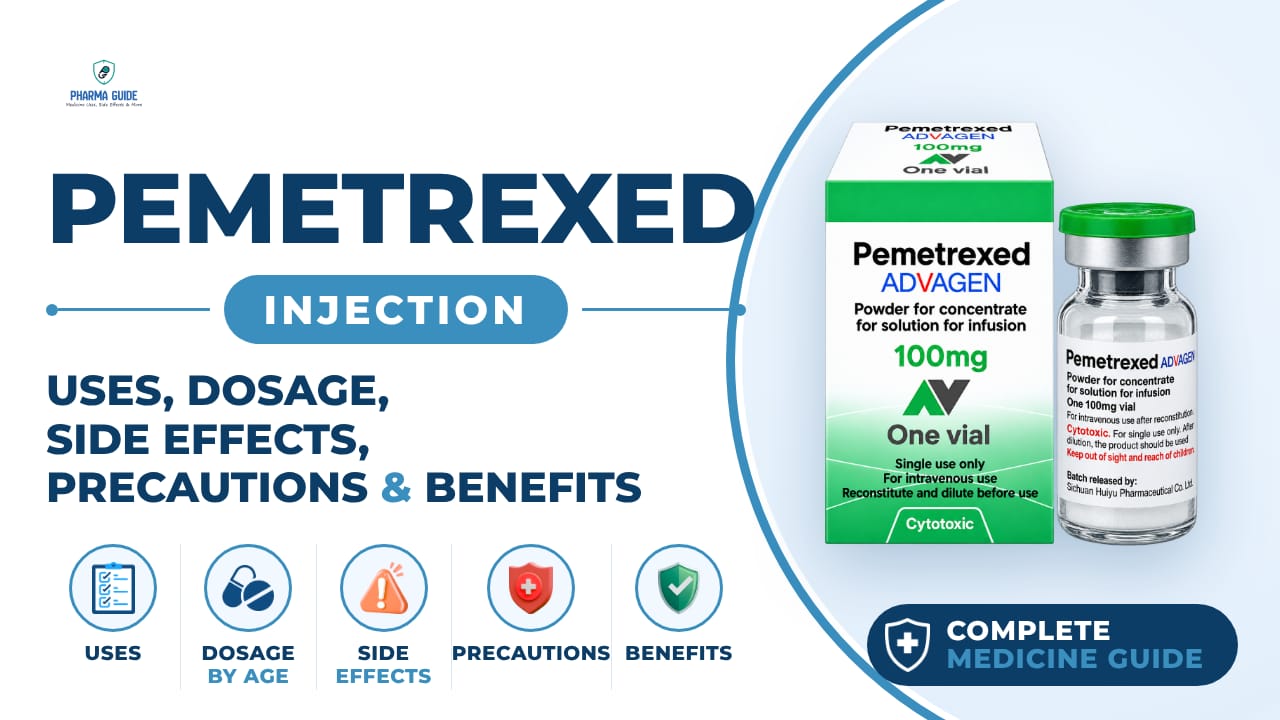
| Generic name | Pemetrexed |
|---|---|
| Drug class | Antineoplastic agent (folate analog metabolic inhibitor / antifolate) |
| Forms | INJECTION |
Quick overview
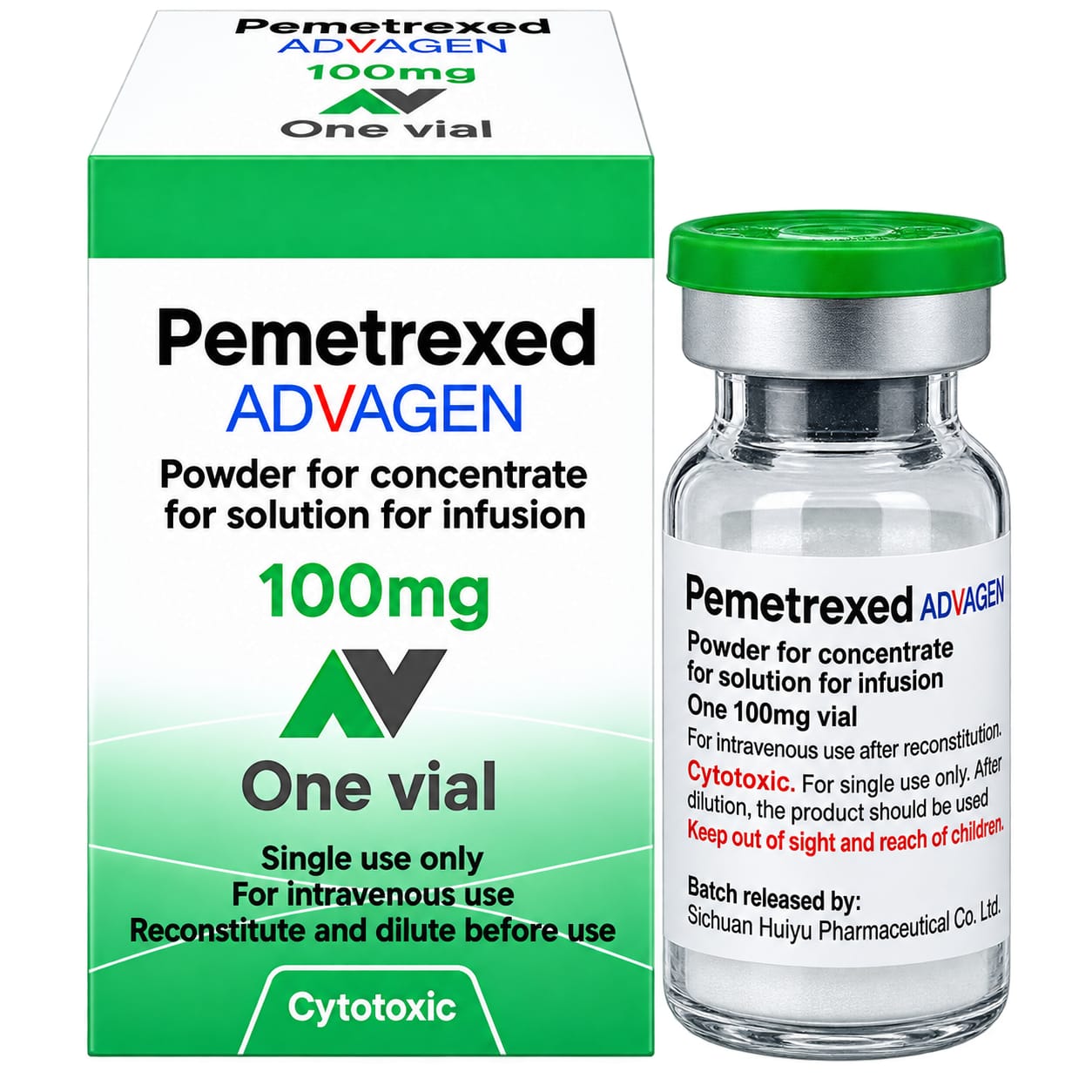
Pemetrexed Injection (generic name: Pemetrexed) is an antineoplastic agent belonging to the antifolate class. It is given as an infusion into a vein, usually in a hospital or clinic under the care of a cancer specialist, to treat certain cancers such as malignant pleural mesothelioma and non-squamous non-small cell lung cancer. It works by blocking enzymes that cancer cells need to grow and divide. Treatment is usually accompanied by folic acid, vitamin B12, and corticosteroid support to help reduce side effects.
What is Pemetrexed Injection
Pemetrexed is a medicine used to treat certain cancers. It belongs to a group of medicines called antifolates, which work by blocking processes that cancer cells need to grow and multiply. It is given as an infusion into a vein, usually in a hospital or clinic setting, under the care of a cancer specialist.
Pemetrexed Injection uses
- Combined with cisplatin, for initial treatment of malignant pleural mesothelioma (a cancer of the lining of the lung or chest) that cannot be removed by surgery
- Combined with cisplatin, for initial treatment of locally advanced or metastatic non-squamous non-small cell lung cancer (NSCLC)
- Combined with pembrolizumab and platinum chemotherapy, for initial treatment of metastatic non-squamous NSCLC without certain gene changes (EGFR or ALK)
- Alone, as maintenance treatment for non-squamous NSCLC that has not worsened after initial platinum-based chemotherapy
- Alone, for treatment of non-squamous NSCLC that has come back or spread after previous chemotherapy
Benefits of Pemetrexed Injection
- Can help some patients with malignant pleural mesothelioma live longer when combined with cisplatin
- Can help slow down or shrink advanced non-squamous NSCLC when used as initial, maintenance, or later-line treatment
- May reduce the need for blood transfusions and other supportive treatments compared with some other chemotherapy combinations
How Pemetrexed Injection works
Pemetrexed blocks several enzymes that cancer cells need to make new DNA building blocks. Without these building blocks, cancer cells cannot divide and grow, which slows or stops the cancer.
Pemetrexed Injection dosage
This medicine is given as an infusion into a vein by a healthcare professional; it is not a medicine you take at home. The infusion usually takes about 10 minutes. You will usually receive this medicine once every 21 days (3 weeks). If combined with cisplatin, the cisplatin infusion is given about 30 minutes after the pemetrexed infusion finishes and lasts about 2 hours.
You must take folic acid by mouth once a day starting about a week before your first treatment and continuing for several weeks after your last treatment, as directed by your doctor. You will receive vitamin B12 injections before starting treatment and periodically during treatment to help reduce side effects — this should not be replaced with an oral B12 supplement. You will be given a corticosteroid medicine to take by mouth twice a day for a few days around each treatment to help reduce skin reactions.
Avoid taking ibuprofen or similar pain/anti-inflammatory medicines around the time of your infusion if you have reduced kidney function, unless your doctor says it is safe. Blood tests will be done before each treatment cycle to check that your blood counts and kidney/liver function are adequate before you can receive the next dose.
| Age group | Dose |
|---|---|
| Under 18 years | Safety and effectiveness have not been established |
| 18–64 years | Common regimen: 500 mg/m² IV once every 21 days |
| 65–74 years | Usually 500 mg/m² IV every 21 days |
Available forms and strengths
Injection
Side effects of Pemetrexed Injection
Common
- Tiredness (fatigue)
- Nausea and vomiting
- Loss of appetite
- Diarrhea or constipation
- Mouth or throat soreness (stomatitis/pharyngitis)
- Low red blood cells (anemia)
- Low white blood cells (neutropenia/leukopenia)
- Low platelets (thrombocytopenia)
- Skin rash or peeling
- Hair loss (more common when combined with certain other chemotherapy)
- Changes in liver blood tests
- Taste changes
Serious
- Severe infection or sepsis, sometimes life-threatening, especially with low white blood cell counts
- Severe bleeding due to low platelet counts
- Kidney problems, including kidney failure
- Severe skin reactions, including blistering, peeling, or ulcers (rarely Stevens-Johnson syndrome or toxic epidermal necrolysis, which can be fatal)
- Serious lung inflammation (interstitial pneumonitis) causing breathing problems
- Radiation recall reaction (skin inflammation in a previously irradiated area)
- Heart problems, including heart attack, irregular heartbeat, or heart failure
- Stroke or blood clots, including clots in the lungs
- Severe allergic reaction (anaphylaxis)
- Severe dehydration from vomiting or diarrhea
Warnings and precautions
- This medicine can severely lower blood cell counts, increasing the risk of infection, bleeding, and anemia. Blood counts must be checked before every dose.
- Serious and sometimes fatal kidney problems can occur with this medicine.
- Severe skin reactions that can be life-threatening have occurred and require stopping treatment immediately if they happen.
- Serious lung inflammation can occur and treatment must be stopped if confirmed.
- People who previously had radiation therapy can develop a skin reaction in the treated area, known as radiation recall, which requires stopping the medicine.
- This medicine can cause fetal harm and should not be used during pregnancy; effective contraception is needed during and after treatment.
- This medicine must not be taken by anyone who has had a severe allergic reaction to it or who has recently received or is about to receive a yellow fever vaccine.
- Taking folic acid and vitamin B12 as prescribed is essential to reduce the risk of serious toxicity from this medicine.
- This medicine should be avoided during pregnancy because it may seriously harm an unborn baby. Women who could become pregnant should use effective contraception during treatment and for 6 months after the last dose.
- Breastfeeding must be stopped during treatment with this medicine because it is not known if it passes into breast milk and could harm the baby.
- This medicine is removed from the body mainly by the kidneys. It should not be given to people with significantly reduced kidney function, and kidney function will be checked regularly during treatment.
- People with significant liver problems have not been specifically studied with this medicine, so caution and monitoring are needed if you have liver impairment.
- This medicine may cause tiredness, so be careful when driving or operating machinery if you feel this effect.
Storage
- Store the unopened vial at controlled room temperature, as instructed on the label
- Keep out of the sight and reach of children
- After mixing (reconstitution) and dilution, the solution should be used right away; if not used immediately, it can be stored refrigerated for up to 24 hours
- Do not use after the expiry date on the vial or carton
- Any unused medicine or waste material should be disposed of according to local requirements; do not throw medicines into wastewater or household waste
When to see a doctor
- Get medical help right away if you have signs of infection such as fever, chills, or sore throat.
- Seek immediate care for signs of bleeding, such as bruising, nosebleeds, bleeding gums, or blood in urine or stool.
- Contact your doctor immediately if you develop a severe skin rash, blistering, or peeling skin.
- Seek urgent medical attention for new or worsening shortness of breath, cough, or fever, which may indicate serious lung inflammation.
- Get emergency help for sudden chest pain, a fast or irregular heartbeat, or signs of a blood clot such as sudden breathlessness with bloody cough.
- Contact your doctor immediately if you notice a decrease in how much urine you are passing, which could signal kidney problems.
- Tell your doctor right away if you develop swelling, blistering, or a sunburn-like rash in an area that was previously treated with radiation.
Alternatives
- Docetaxel
- Gemcitabine
- Paclitaxel
Watch the video
FAQs
What is Pemetrexed Injection used for?
It is used, often combined with cisplatin or pembrolizumab, to treat malignant pleural mesothelioma and non-squamous non-small cell lung cancer, including as initial, maintenance, or later-line treatment.
How is Pemetrexed Injection given?
It is given as an infusion into a vein by a healthcare professional, usually taking about 10 minutes, once every 21 days (3 weeks).
Why do I need folic acid and vitamin B12 with Pemetrexed treatment?
Folic acid is taken by mouth daily starting about a week before treatment, and vitamin B12 is given by injection before and during treatment, to help reduce the risk of serious toxicity from the medicine.
What are the serious side effects of Pemetrexed Injection?
Serious side effects include severe infection, bleeding, kidney problems, severe skin reactions, lung inflammation, radiation recall reaction, heart problems, stroke or blood clots, and severe allergic reaction.
Can Pemetrexed Injection be used during pregnancy?
No, it should be avoided during pregnancy because it may seriously harm an unborn baby, and effective contraception is needed during treatment and for 6 months after the last dose.
General information, not medical advice
Your prescriber and the leaflet in your pack know your situation. This page does not.
- Follow your prescriber and the leaflet
- Don't start, stop, or change a dose on your own
- Doses and warnings differ by country and product
Sources
Video
Related medicines

Injectafer Injection: Uses, Dosage, Side Effects, Precautions and Alternates
Iron products
Injectafer (ferric carboxymaltose) treats iron deficiency anemia and heart failure-related iron deficiency via IV. Learn uses, dosage, side effects, and

Gliclazide Tablet: Uses, Dosage, Side Effects, Precautions and Alternates
Sulfonylurea (hypoglycemic/antidiabetic agent)
Gliclazide Tablet is a sulfonylurea for type 2 diabetes that boosts insulin release. Learn about dosage, side effects, warnings, and precautions.