
Safety
General information, not medical advice
Your prescriber and the leaflet in your pack know your situation. This page does not.
- Follow your prescriber and the leaflet
- Don't start, stop, or change a dose on your own
- Doses and warnings differ by country and product
Pentasa Capsule: Uses, Dosage, Side Effects, Precautions and Alternates
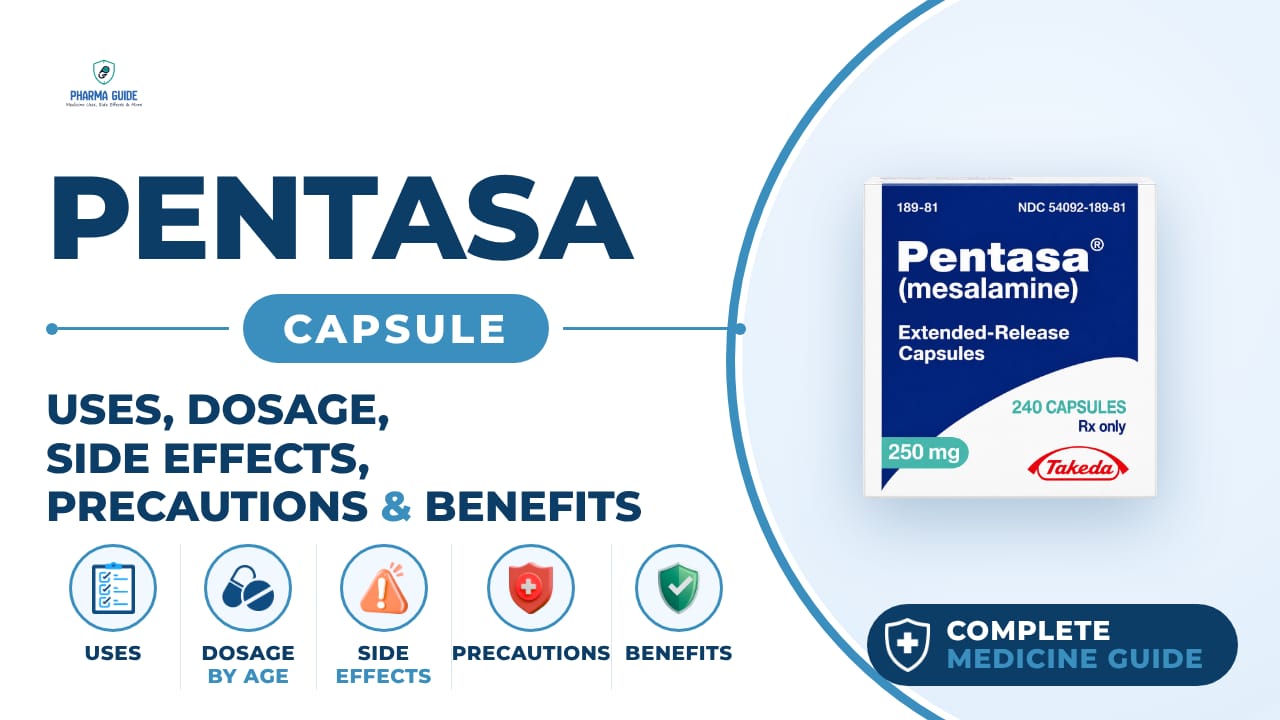
| Generic name | mesalazine (mesalamine) |
|---|---|
| Drug class | 5-aminosalicylates (salicylates) |
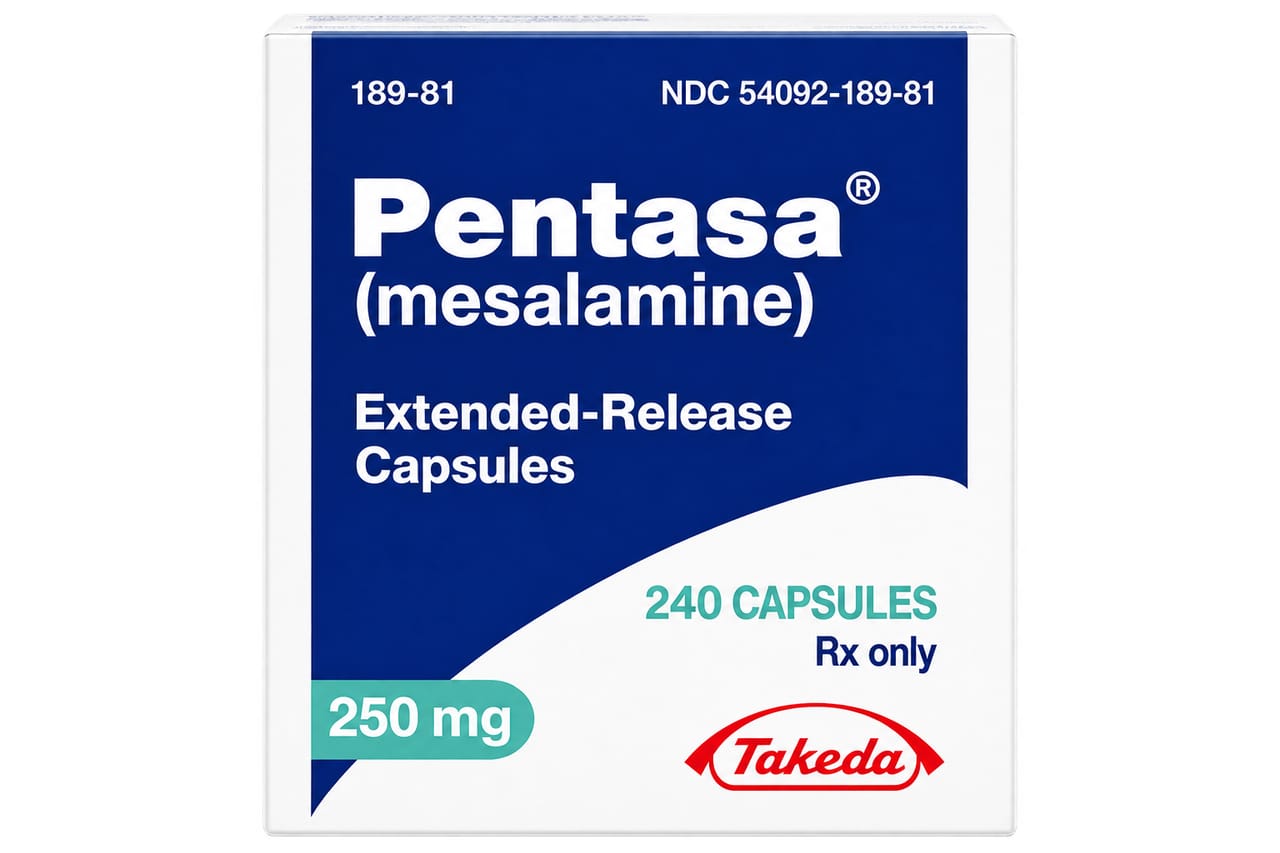
| Forms | Slow release tablets (500mg, 1g), Extended-release capsules (250mg, 500mg) |
Quick overview
Pentasa Capsule contains mesalazine (mesalamine), a medicine from the salicylate drug class. It is used to treat mild to moderate attacks of ulcerative colitis and to help maintain freedom from further attacks, and in some countries it is also used for Crohn's disease. It works by acting directly on the bowel lining to reduce inflammation. As with any medicine, it can cause side effects and carries certain precautions, particularly around kidney and liver function.
What is Pentasa Capsule
Pentasa contains the active ingredient mesalazine, which belongs to a group of medicines called salicylates. It is used to treat inflammatory bowel conditions such as ulcerative colitis and, in some countries, Crohn's disease.
Pentasa Capsule uses
- Treatment of mild to moderate attacks of ulcerative colitis
- Helping to maintain freedom from further attacks of ulcerative colitis
- Treatment of Crohn's disease (approved in some countries; used off-label in the USA)
Benefits of Pentasa Capsule
- Reduces inflammation in the lining of the bowel
- Helps relieve or stop pain from ulcerative colitis
- Helps control symptoms like bleeding, stomach pain, and diarrhoea
- Helps maintain remission so attacks happen less often
How Pentasa Capsule works
Pentasa releases its active ingredient slowly as it passes through the gut, where it acts directly on the bowel lining to reduce inflammation.
Pentasa Capsule dosage
Take the tablets by mouth, either whole or broken up, but do not crush or chew them. If you have trouble swallowing, you can mix the tablets in a small amount of cold water, stir, and drink right away. Capsules can be swallowed whole without chewing or crushing, or opened and sprinkled onto a spoonful of yogurt or applesauce and swallowed right away without chewing.
Pentasa can be taken with or without food. Try to take your medicine at the same time each day, and keep taking it regularly, even if you feel well, unless your doctor tells you to stop. If you forget a dose, take it when you remember unless it is close to your next dose; do not double up. Drink plenty of liquids while taking this medicine to help prevent kidney stones.
| Age group | Dose |
|---|---|
| Under 18 years | The current U.S. Pentasa-specific label does not establish a pediatric dosage |
| 18–39 years | 1,000 mg four times daily |
| 65–74 years | Usually follows the adult dose, with closer monitoring of kidney function |
| 75 years and older | Individualized cautiously; kidney function and overall tolerability should be assessed |
Available forms and strengths
- Slow release tablets (500mg, 1g)
- Extended-release capsules (250mg, 500mg)
Side effects of Pentasa Capsule
Common
- Diarrhoea
- Abdominal pain
- Nausea
- Vomiting
- Headache
- Rash
- Flatulence (passing wind)
- Dizziness
- Constipation
- Burping
- Back pain
- Cold-like symptoms such as stuffy nose, sneezing, sore throat
- Abnormal liver function tests
Serious
- Severe skin reactions (DRESS, Stevens-Johnson syndrome, toxic epidermal necrolysis) with rash, blisters, mouth/eye/genital sores, fever
- Signs of allergic reaction: itching, rash, swelling of face/lips/throat, difficulty breathing or wheezing
- Signs of blood disorder: unexplained bleeding, bruising, fever, sore throat
- Kidney problems: change in colour or amount of urine, blood in urine, swelling
- Kidney stones: pain in sides of abdomen, blood in urine
- Liver problems: jaundice, dark urine, pale stools, loss of appetite, tiredness
- Inflammation of the heart (myocarditis/pericarditis): chest pain, shortness of breath, palpitations
- Inflammation of the pancreas: back and/or stomach pain
- Lung problems: coughing, breathing difficulties, chest discomfort
- Peripheral neuropathy: tingling or numbness in hands and feet
- Worsening bowel symptoms: severe diarrhoea, bloody stools, severe stomach cramps
- Signs of increased pressure in the skull: strong or recurrent headache, disturbed vision, ringing or buzzing in the ears
- Low white blood cell count: fever, chills, mouth sores, sore throat, feeling light-headed
Warnings and precautions
- If you suddenly get stomach cramps, stomach pain, fever, severe headache and rash, stop taking Pentasa right away and seek medical help.
- Kidney stones can develop during treatment, so drink enough fluids and watch for pain in the sides of your abdomen or blood in your urine.
- Serious skin reactions have been linked to this medicine. Stop taking it and get medical help right away if you notice symptoms of a severe skin reaction.
- Make sure you don't become dehydrated while on this medicine, which can happen after severe vomiting, diarrhoea, high fever, or heavy sweating.
- Avoid too much sun or tanning beds, since this medicine can make skin more sensitive to sunburn, especially if you have a skin condition like eczema.
- If you are pregnant or planning to become pregnant, talk to your doctor before taking this medicine, since there is limited experience with its use in pregnancy.
- Mesalazine may cause allergic reactions such as diarrhoea in a breastfed baby; tell your doctor if you are breastfeeding, and stop breastfeeding if the baby develops diarrhoea.
- Do not take this medicine if you have severe kidney problems, and tell your doctor if you have ever had kidney disease, since mesalazine can affect kidney function.
- Do not take this medicine if you have severe liver problems, and tell your doctor if you have ever had liver disease.
- No major direct interaction with alcohol is established, but alcohol may worsen gastrointestinal symptoms in some people.
- This medicine is not known to affect your ability to drive or use machines.
Storage
- Keep this medicine out of the sight and reach of children
- Do not use this medicine after the expiry date which is stated on the carton and blister
- Do not store above 25°C
- Do not freeze
- Store in original packaging to protect from light
- Do not throw away any medicines via wastewater or household waste; ask your pharmacist how to throw away medicines you no longer use
- Keep in a cool dry place, away from moisture, heat or sunlight, and not in the bathroom, car, or on window sills
When to see a doctor
Go to the hospital right away if you notice signs of a severe skin reaction such as widespread rash, blisters, mouth or eye sores, fever, and swollen lymph nodes.
Get emergency help for signs of an allergic reaction, including itching, rash, swelling of the face, lips, or throat, or trouble breathing.
Contact your doctor or go to the emergency department right away if you notice unexplained bleeding, bruising, rash, fever, or sore throat, which can be signs of a blood disorder.
See a doctor urgently if you notice a change in the colour or amount of urine you produce, which can be a sign of kidney problems.
Contact your doctor immediately if you get a strong or recurring headache, blurred vision, or ringing/buzzing in the ears.
If you think you have taken too much of this medicine, get urgent medical attention or go to the nearest emergency department, taking the pack with you.
Stop taking this medicine and call your doctor right away if you have severe stomach pain, stomach cramping, or bloody diarrhoea, which may come with fever, headache, and skin rash.
Alternatives
- Asacol HD
- Delzicol
- Lialda
- Apriso
Watch the video
FAQs
What is Pentasa Capsule used for?
Pentasa is used to treat mild to moderate attacks of ulcerative colitis and to help maintain freedom from further attacks. In some countries, it is also used for Crohn's disease.
How does Pentasa Capsule work?
Pentasa releases its active ingredient, mesalazine, slowly as it passes through the gut, where it acts directly on the bowel lining to reduce inflammation.
What is the adult dosage of Pentasa Capsule?
For adults aged 18–39 years, the typical dose is 1,000 mg four times daily. Older adults usually follow the adult dose but with closer monitoring of kidney function.
What are the common side effects of Pentasa Capsule?
Common side effects include diarrhoea, abdominal pain, nausea, vomiting, headache, rash, flatulence, dizziness, constipation, burping, back pain, cold-like symptoms, and abnormal liver function tests.
Can Pentasa Capsule cause kidney problems?
Yes, Pentasa can affect kidney function and may cause kidney stones. It should not be taken if you have severe kidney problems, and you should drink plenty of fluids and watch for pain in the sides of your abdomen or blood in your urine.
General information, not medical advice
Your prescriber and the leaflet in your pack know your situation. This page does not.
- Follow your prescriber and the leaflet
- Don't start, stop, or change a dose on your own
- Doses and warnings differ by country and product
Sources
Video
Related medicines

Injectafer Injection: Uses, Dosage, Side Effects, Precautions and Alternates
Iron products
Injectafer (ferric carboxymaltose) treats iron deficiency anemia and heart failure-related iron deficiency via IV. Learn uses, dosage, side effects, and

Gliclazide Tablet: Uses, Dosage, Side Effects, Precautions and Alternates
Sulfonylurea (hypoglycemic/antidiabetic agent)
Gliclazide Tablet is a sulfonylurea for type 2 diabetes that boosts insulin release. Learn about dosage, side effects, warnings, and precautions.