
Safety
General information, not medical advice
Your prescriber and the leaflet in your pack know your situation. This page does not.
- Follow your prescriber and the leaflet
- Don't start, stop, or change a dose on your own
- Doses and warnings differ by country and product
Pentoxifylline Tablet: Uses, Dosage, Side Effects, Precautions and Alternates
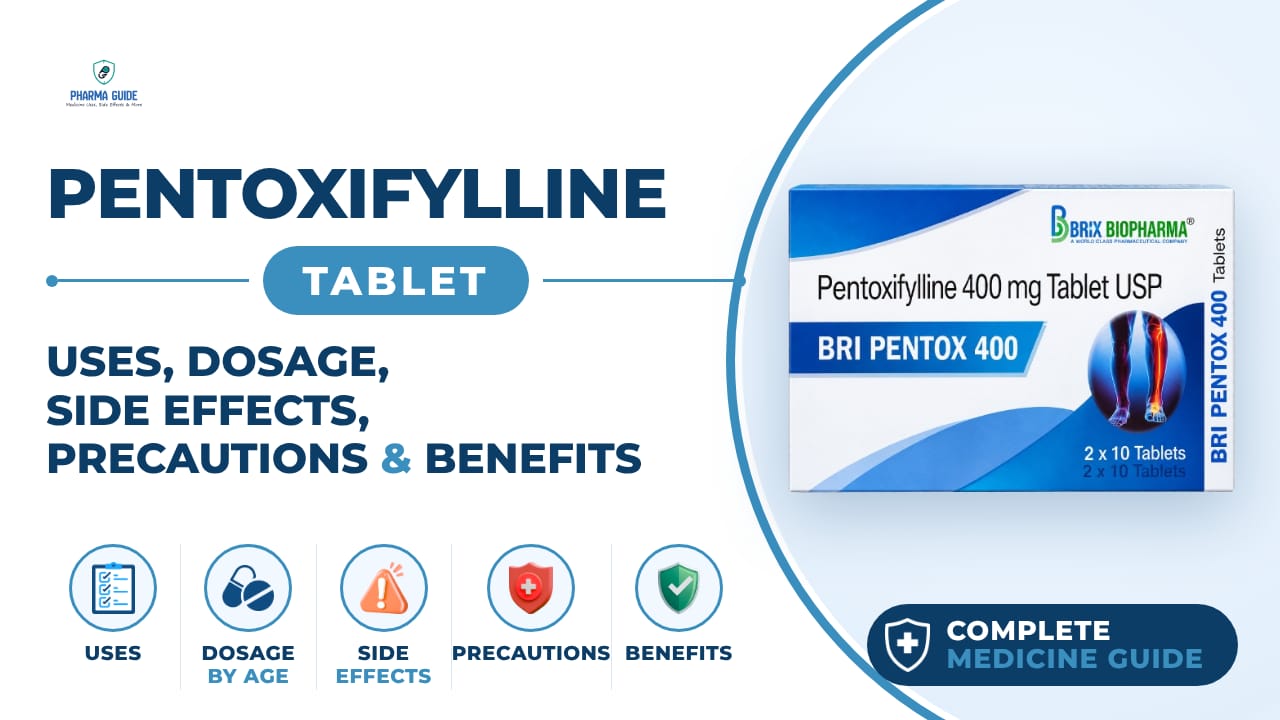
| Generic name | Pentoxifylline |
|---|---|
| Drug class | Hemorheologic agent (blood viscosity reducer) / vasoactive agent |
| Forms | Tablet |

Quick overview
Pentoxifylline Tablet is a prescription medicine, generically known as Pentoxifylline, belonging to the hemorheologic (blood viscosity reducer) or vasoactive drug class. It is taken by mouth as an extended-release tablet to help treat symptoms of poor circulation in the arms and legs. It works by making blood less thick, helping it flow more easily through blood vessels.
What is Pentoxifylline Tablet
Pentoxifylline is a prescription medicine taken by mouth as an extended-release tablet. It belongs to a group of medicines called hemorheologic or vasoactive agents, which help blood flow more easily through blood vessels.
Pentoxifylline Tablet uses
- Treats symptoms of intermittent claudication, a condition caused by chronic blockage of arteries in the arms and legs
- Can relieve aching, cramping, or tiredness in the legs or arms during walking or exercise
- Helps with trophic ulcers (ulcers around the ankle or on the arms) in some patients
- Not meant to replace more definitive treatments such as surgery to bypass or remove arterial blockages
Benefits of Pentoxifylline Tablet
- Can improve walking distance and reduce leg pain from poor circulation
- May improve function and symptoms of chronic blood flow problems in the limbs
How Pentoxifylline Tablet works
Pentoxifylline makes blood less thick and helps blood cells move more easily, which improves blood flow and allows more oxygen to reach muscles that need it, such as during walking.
Pentoxifylline Tablet dosage
Take the tablet after a meal. Swallow the tablet whole with water; do not crush, chew, or break it. Take the medicine regularly, even if you do not feel better right away. It may take several weeks for the medicine to start working, and your doctor may want you to continue for at least 8 weeks to judge if it is helping. If you miss a dose, take it as soon as you remember, but skip it if it is almost time for your next dose — do not take two doses together. Keep taking this medicine exactly as your healthcare professional has told you.
| Age group | Dose |
|---|---|
| Under 18 years | Not recommended |
| 18–64 years | 400 mg, 3 times/day |
| 65+ years | 400 mg, 3 times/day |
Available forms and strengths
Tablet
Side effects of Pentoxifylline Tablet
Common
- Nausea
- Vomiting
- Gas (flatulence)
- Bloating
- Belching
- Upset stomach/dyspepsia
- Diarrhea
- Dizziness or light-headedness
- Headache
- Blurred vision
- Flushing or redness/warmth of the face or neck
- Drowsiness or sleepiness
- Agitation or nervousness
- Difficulty sleeping (insomnia)
- Tremor
- Nose bleeds
- Muscle aches, backache, leg cramps
- Fever
- Weakness
Serious
- Signs of a severe allergic reaction: difficulty breathing or swallowing, wheezing, swelling of the face, lips, tongue or throat, hives or rash, racing heart, fainting
- Chest pain or angina (discomfort in shoulder, arm, back, throat, jaw, or teeth; pressure in chest)
- Abnormal heart rhythms (rapid, slow, or irregular heartbeat)
- Signs of bleeding or hemorrhage, including in the stomach, brain, or retina (bloody or tarry stools, coughing up blood, vomit like coffee grounds, red/pink urine)
- Signs of low blood pressure: dizziness, fainting, light-headedness, blurred vision, nausea, vomiting, fatigue, especially when standing up
- Signs of liver problems: yellowing of skin or eyes, dark urine, light colored stools, fatigue, loss of appetite, abdominal pain, itchiness (hepatitis, jaundice, cholestasis, increased liver enzymes)
- Signs of gallbladder inflammation: fever, nausea, severe upper right abdominal pain, vomiting, pain radiating to shoulder or back
- Signs of aseptic meningitis: fever, confusion, sudden headache, neck stiffness, sensitivity to light, nausea, vomiting
- Signs of blood cell problems: unusual bruising or bleeding, fatigue, pale skin, rapid heart rate, shortness of breath, fever, signs of infection (low red cells, white cells, or platelets; leukopenia, pancytopenia, aplastic anemia, thrombocytopenia, purpura)
Warnings and precautions
- Pentoxifylline should only be used during pregnancy if your doctor decides the benefits outweigh the possible risks, since there isn't enough research in pregnant women to know if it's completely safe. Pentoxifylline passes into breast milk. You and your doctor should decide whether to stop breastfeeding or stop the medicine.
- This medicine is eliminated through the kidneys. It is not recommended for people with significant kidney problems, and people with milder kidney issues should be watched closely and may need a lower dose. This medicine is broken down by the liver. It is not recommended for people with significant liver problems, and people with milder liver issues should be watched closely and may need a lower dose.
- It isn't known for certain how alcohol affects this medicine, but drinking alcohol while taking it may increase the chance of feeling dizzy. This medicine can cause dizziness and may affect coordination. Do not drive or do activities that require alertness until you know how it affects you.
- Do not take this medicine if you have recently had bleeding in the brain or the retina of the eye.
- Do not take this medicine if you are allergic to it, or to related substances like caffeine, theophylline, or theobromine.
- Should not be used by people who have recently had a heart attack, severe coronary artery disease where heart stimulation could be harmful, or a stomach/intestinal ulcer or history of one.
- If you take warfarin or have conditions that raise bleeding risk, your doctor should check you more often for signs of bleeding.
- People with low or unstable blood pressure should be monitored carefully, and any dose increases should be done gradually.
- Stop taking the medicine right away at the first sign of a severe allergic reaction.
- This medicine can increase levels of theophylline (an asthma/breathing medicine), raising the risk of theophylline side effects.
Storage
- Store at room temperature, between 15-30°C (59-86°F)
- Protect from light
- Protect from moisture
- Keep out of reach and sight of children
- Dispense in well-closed, light-resistant containers with safety closures
When to see a doctor
- Get emergency help right away if you notice signs of a severe allergic reaction, such as trouble breathing, swelling of the face/lips/tongue/throat, hives, or a racing heart.
- Call your doctor right away if you have chest pain, pounding or fluttering heartbeat, red or pink urine, feeling faint, or signs of stomach bleeding such as bloody or tarry stools or vomit that looks like coffee grounds.
- If you think you or someone else has taken too much of this medicine, get medical help immediately, even if there are no symptoms yet.
- Tell your doctor if your symptoms do not improve after about 8 weeks of treatment.
Alternatives
- Clopidogrel
- Pletal
- Trental
Watch the video
FAQs
What is Pentoxifylline Tablet used for?
It treats symptoms of intermittent claudication caused by chronic blockage of arteries in the arms and legs, relieving aching, cramping, or tiredness during walking or exercise, and can help with trophic ulcers in some patients.
How does Pentoxifylline Tablet work?
It makes blood less thick and helps blood cells move more easily, improving blood flow and allowing more oxygen to reach muscles that need it, such as during walking.
What is the dosage of Pentoxifylline Tablet for adults?
For ages 18-64 and 65+, the dose is 400 mg, 3 times a day. It is not recommended for those under 18 years.
How long does it take for Pentoxifylline Tablet to work?
It may take several weeks for the medicine to start working, and your doctor may want you to continue for at least 8 weeks to judge if it is helping.
What are the common side effects of Pentoxifylline Tablet?
Common side effects include nausea, vomiting, gas, bloating, upset stomach, diarrhea, dizziness, headache, blurred vision, flushing, drowsiness, nervousness, insomnia, tremor, nose bleeds, and muscle aches.
General information, not medical advice
Your prescriber and the leaflet in your pack know your situation. This page does not.
- Follow your prescriber and the leaflet
- Don't start, stop, or change a dose on your own
- Doses and warnings differ by country and product
Sources
Video
Related medicines

Injectafer Injection: Uses, Dosage, Side Effects, Precautions and Alternates
Iron products
Injectafer (ferric carboxymaltose) treats iron deficiency anemia and heart failure-related iron deficiency via IV. Learn uses, dosage, side effects, and

Gliclazide Tablet: Uses, Dosage, Side Effects, Precautions and Alternates
Sulfonylurea (hypoglycemic/antidiabetic agent)
Gliclazide Tablet is a sulfonylurea for type 2 diabetes that boosts insulin release. Learn about dosage, side effects, warnings, and precautions.