
Safety
General information, not medical advice
Your prescriber and the leaflet in your pack know your situation. This page does not.
- Follow your prescriber and the leaflet
- Don't start, stop, or change a dose on your own
- Doses and warnings differ by country and product
Permethrin Cream: Uses, Dosage, Side Effects, Precautions and Alternates
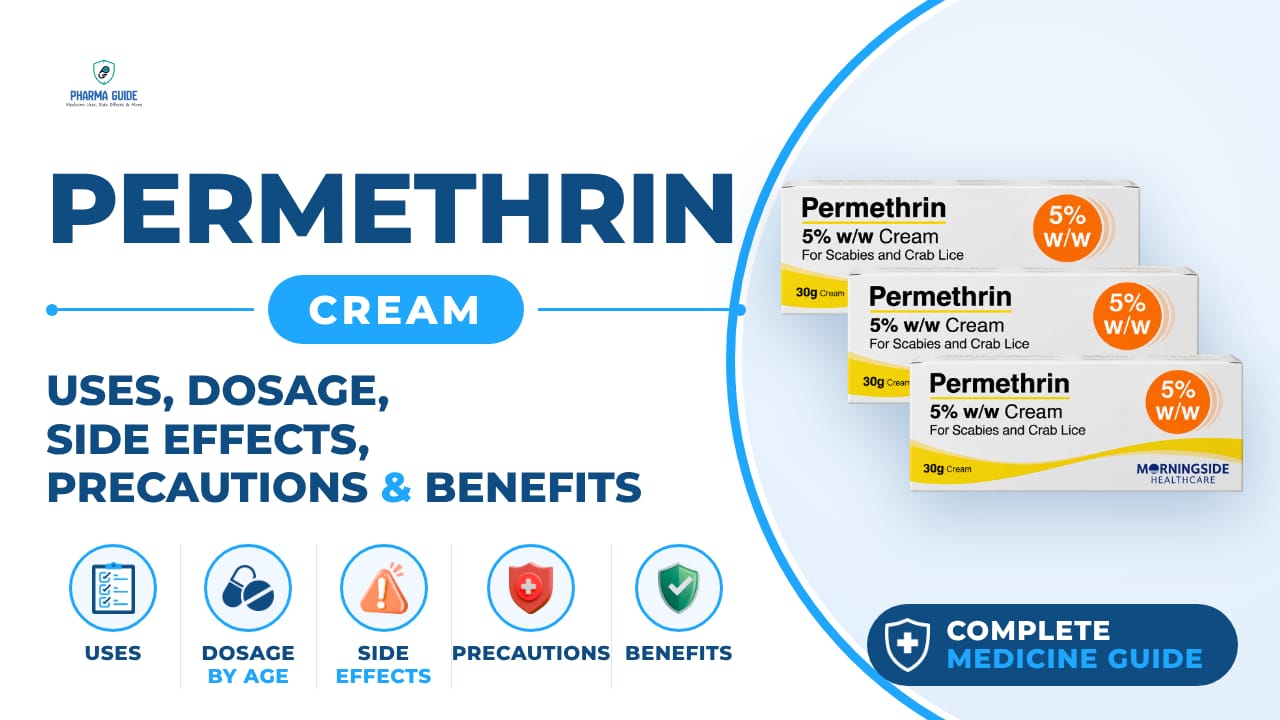
| Generic name | Permethrin |
|---|---|
| Drug class | Pyrethroid (topical scabicidal/pediculicide agent) |
| Forms | Cream, Lotion, Liquid, Ointment, Gel, Soap |
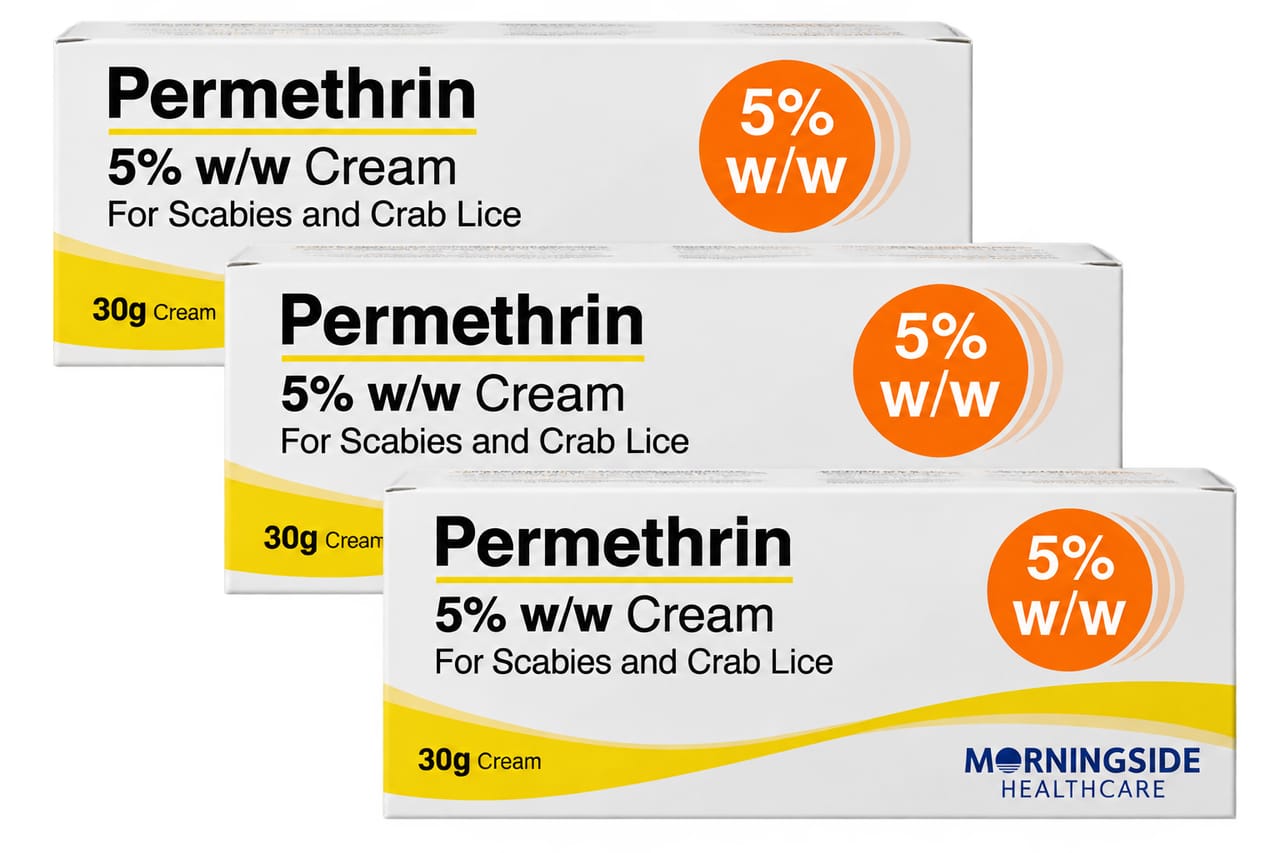
Quick overview
Permethrin Cream is a topical medicine containing permethrin, a pyrethroid used to treat scabies and lice infestations. It works by killing mites and lice through disruption of their nervous system. The cream is applied to the skin and typically washed off after a set period, and it is generally well tolerated with mostly mild, temporary side effects.
What is Permethrin Cream
Permethrin Cream is a topical medicine used to treat scabies, a contagious itchy skin condition caused by tiny mites, and lice infestations. It contains permethrin, which belongs to a group of medicines called pyrethroids that kill mites and lice.
Permethrin Cream uses
- Treatment of scabies (Sarcoptes scabiei infestation)
- Treatment of head lice (pediculosis capitis)
- Treatment of crab lice (pediculosis pubis) on the body
Benefits of Permethrin Cream
- Kills scabies mites and their eggs, clearing the infestation
- Kills head lice and their eggs
- Often works with a single application
- Well tolerated in clinical studies with mostly mild, temporary side effects
How Permethrin Cream works
Permethrin acts on the nervous system of mites and lice. It disrupts sodium channels in their nerve cell membranes, which delays the membrane's return to its resting state. This causes paralysis and death of the mites or lice.
Permethrin Cream dosage
For external skin use only; do not swallow. Apply to clean, dry, cool skin; do not take a hot bath or shower right before treatment. Massage the cream thoroughly into the whole body as directed, paying special attention to areas between fingers and toes, wrists, underarms, groin, and under nails. Avoid the head and face in adults unless a doctor says those areas are affected; older adults and young children may need the scalp, neck, ears, and face treated as well, avoiding the area near the eyes. Avoid contact with eyes, nose, mouth, other mucous membranes, and broken skin; rinse with water right away if contact happens.
After applying, put on clean clothes and wash hands before eating. If hands are washed with soap and water during the treatment period, reapply cream to the hands. Wash the cream off by shower or bath after the recommended time, then change into clean clothes. Do not apply a double amount if a dose is missed or forgotten.
Wash or treat clothing, bedding, and towels used recently, and clean the home environment to prevent reinfestation. Family members and close contacts may also need treatment to prevent spread or reinfestation.
| Age group | Dose |
|---|---|
| Under 2 months | Not established; doctor-directed |
| 2 months–1 year | Apply once from head to soles; wash off after 8–14 hours |
| 1–64 years | Apply once from head to soles; wash off after 8–14 hours |
| 65+ years | Apply once from head to soles; wash off after 8–14 hours |
Available forms and strengths
- Cream
- Lotion
- Liquid
- Ointment
- Gel
- Soap
Side effects of Permethrin Cream
Common
- Itching
- Redness of skin or scalp
- Burning or stinging sensation
- Tingling or numbness (paraesthesia)
- Dry skin
- Skin rash
- Mild swelling (edema)
Serious
- Difficulty breathing
- Severe allergic (hypersensitivity) reactions
- Infected, pus-filled areas on the skin or scalp
- Skin lesions or excoriations
- Inflammation of hair follicles (folliculitis)
- Reduced skin pigmentation
- Contact allergy reactions with blisters or hives that may spread beyond the treated area
Warnings and precautions
- Do not smoke or go near open flames while using this cream, since treated fabric can catch fire more easily.
- This medicine may make asthma or eczema symptoms worse.
- Do not use steroid creams to treat skin conditions like eczema at the same time as this medicine, since steroids can reduce the body's natural defense against scabies and lice and make the infestation worse.
- This product is harmful to fish and other water-dwelling animals, so keep it away from aquariums or ponds.
- Do not use in newborns or infants younger than 2 months unless a doctor specifically tells you to, since there isn't enough safety information for this age group.
- Itching may continue for several weeks after treatment; this does not necessarily mean the treatment failed, and retreatment should only happen if live mites or new lesions are seen.
- People allergic to chrysanthemums should only use this medicine after speaking with a doctor.
- This medicine should generally not be used during pregnancy unless a doctor advises it, although some sources consider it safe. Talk to your doctor before use if you are pregnant or think you might be pregnant.
- It is not known if this medicine passes into breast milk. Your doctor may consider stopping breastfeeding for a short time or avoiding the medicine while nursing, though other sources consider it low risk.
- There is no specific information on use in people with kidney problems, but because the medicine is mainly processed by the liver, it is thought to be likely safe for people with kidney impairment. There is no specific information from the manufacturer about use in people with liver problems.
- It is not known how this medicine interacts with alcohol. Ask your doctor before drinking alcohol while using this medicine.
- This medicine is not expected to affect your ability to drive or use machines.
Storage
- Store at 15°C to 25°C
- Keep out of the reach and sight of children
- Discard remaining contents of the tube after use to prevent accidental ingestion by children
- Do not use after the expiry date; return expired product to a pharmacist for safe disposal
- Do not throw away medicines via wastewater; ask a pharmacist how to dispose of unused medicine
When to see a doctor
- Get emergency medical help right away if the cream is swallowed, even if there are no symptoms.
- Seek immediate medical attention for symptoms of overdose such as dizziness, loss of appetite, nausea, vomiting, headache, weakness, seizures, or loss of consciousness.
- Talk to a doctor right away if you have a severe allergic reaction, and stop using the cream.
- Stop using the cream and see a doctor if skin irritation occurs and does not improve.
- See a doctor if symptoms do not improve or get worse after treatment.
Alternatives
- Oral ivermectin
- Benzyl benzoate lotion
- Dimethicone-based products
- Crotamiton cream
- Lindane lotion
Watch the video
FAQs
What is Permethrin Cream used for?
It is used to treat scabies caused by mites, head lice, and crab lice infestations on the body.
How does Permethrin Cream work?
It disrupts sodium channels in the nerve cell membranes of mites and lice, causing paralysis and death of the parasites.
How long should Permethrin Cream be left on the skin?
It is typically applied once from head to soles and washed off after 8 to 14 hours, depending on age.
What are the common side effects of Permethrin Cream?
Common side effects include itching, redness, burning or stinging, tingling or numbness, dry skin, rash, and mild swelling.
Can Permethrin Cream be used during pregnancy?
It should generally not be used during pregnancy unless a doctor advises it, although some sources consider it safe, so it's best to talk to your doctor first.
General information, not medical advice
Your prescriber and the leaflet in your pack know your situation. This page does not.
- Follow your prescriber and the leaflet
- Don't start, stop, or change a dose on your own
- Doses and warnings differ by country and product
Sources
Video
Related medicines

Injectafer Injection: Uses, Dosage, Side Effects, Precautions and Alternates
Iron products
Injectafer (ferric carboxymaltose) treats iron deficiency anemia and heart failure-related iron deficiency via IV. Learn uses, dosage, side effects, and

Gliclazide Tablet: Uses, Dosage, Side Effects, Precautions and Alternates
Sulfonylurea (hypoglycemic/antidiabetic agent)
Gliclazide Tablet is a sulfonylurea for type 2 diabetes that boosts insulin release. Learn about dosage, side effects, warnings, and precautions.