
Safety
General information, not medical advice
Your prescriber and the leaflet in your pack know your situation. This page does not.
- Follow your prescriber and the leaflet
- Don't start, stop, or change a dose on your own
- Doses and warnings differ by country and product
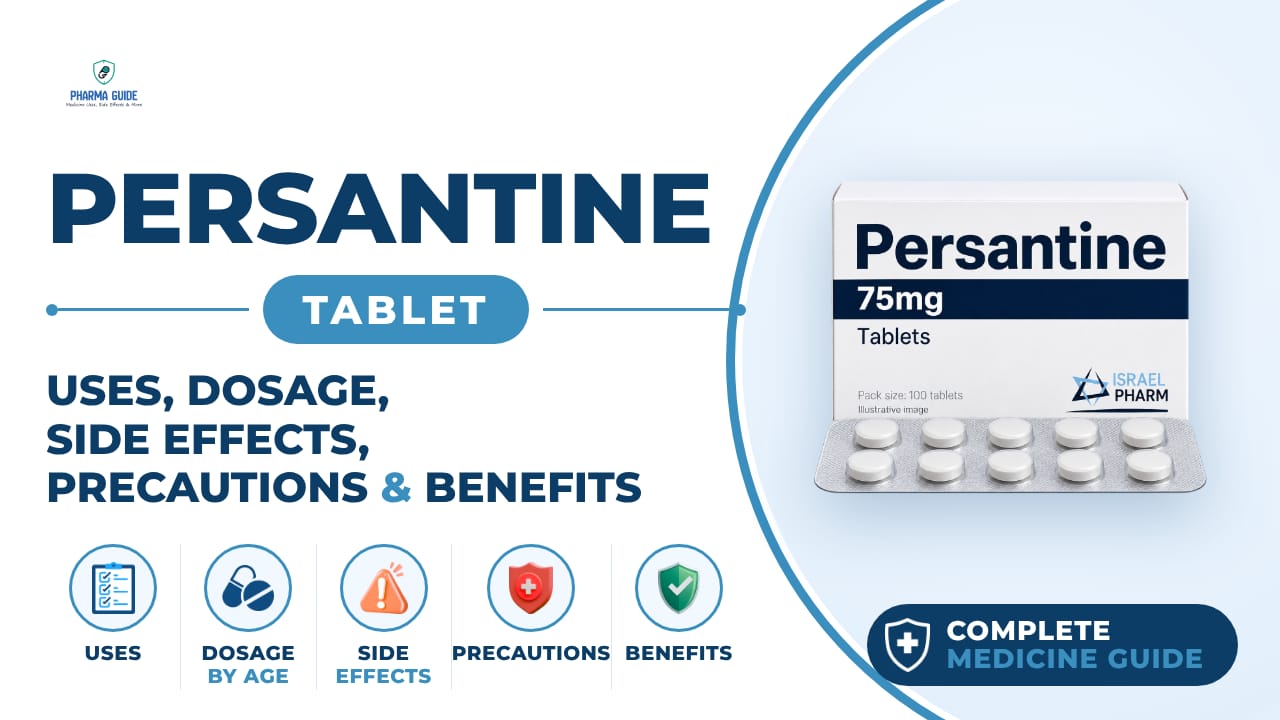
Persantine Tablet: Uses, Dosage, Side Effects, Precautions and Alternates
| Generic name | dipyridamole |
|---|---|
| Drug class | Platelet aggregation inhibitor (cardiac stressing agent) |
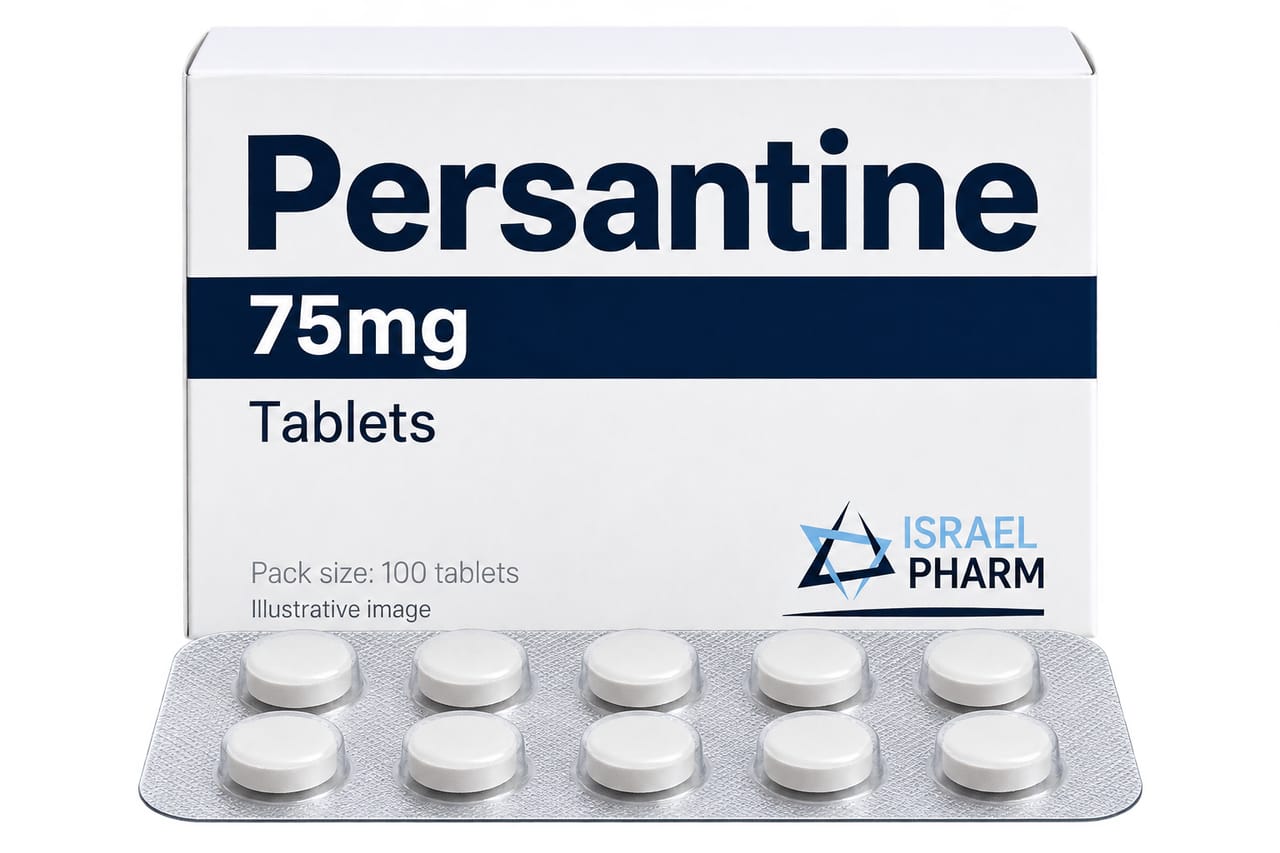
| Forms | Tablet (25 mg, 50 mg, and 75 mg) |
Quick overview
Persantine Tablet is a brand name for dipyridamole, a platelet aggregation inhibitor used as a cardiac stressing agent. It is used along with other blood-thinning medicine to help prevent blood clots after heart valve replacement surgery. The brand name has been discontinued in the U.S., but generic versions may be available.
What is Persantine Tablet
Persantine is a brand name for dipyridamole, a platelet inhibitor tablet. It is used along with other blood-thinning medicine to help prevent blood clots after heart valve replacement surgery. The brand name has been discontinued in the U.S., but generic versions may be available.
Persantine Tablet uses
- Clot prevention after artificial heart valve replacement
- May be prescribed along with warfarin
- Heart-related blood flow testing
- Injectable form used in nuclear cardiac stress tests
- Use in specific heart conditions under medical supervision
Benefits of Persantine Tablet
- Helps reduce the risk of blood clots
- Reduces platelet activity
- Helps prevent clots in people with artificial heart valves
- Helps with blood flow assessment
- May reduce the risk of clot-related complications when used with prescribed treatment
How Persantine Tablet works
Dipyridamole blocks platelets from absorbing a natural substance called adenosine. This raises adenosine levels, which helps keep platelets from clumping together and also relaxes blood vessels.
Persantine Tablet dosage
This medicine is taken by mouth, usually along with other medicine to prevent blood clots. Follow your prescription label exactly and do not change your dose or schedule without your doctor's advice. You may need regular medical tests while taking this medicine. It is not approved for use in children younger than 12 years old.
If you need a stress test while taking this medicine by mouth, you may need to stop taking it about 2 days before the test — follow your doctor's instructions.
If you miss a dose, take it as soon as you remember, but skip it if it is almost time for your next dose; do not take two doses at once.
| Age group | Dose |
|---|---|
| Under 18 years | Not recommended |
| 18–64 years | 75 mg, 4 times/day |
| 65+ years | 75 mg, 4 times/day |
Available forms and strengths
Tablet (25 mg, 50 mg, and 75 mg)
Side effects of Persantine Tablet
Common
- Headache
- Dizziness
- Rash
- Upset stomach
- Flushing
- Itching
- Muscle or joint pain
- Diarrhea
- Vomiting
Serious
- Light-headed feeling, like you might pass out
- Chest pain
- Liver problems — upper stomach pain, itching, loss of appetite, dark urine, clay-colored stools, yellowing of skin or eyes
- Allergic reaction — hives, difficult breathing, swelling of face, lips, tongue, or throat
- Low blood pressure
- Liver failure (rare)
Warnings and precautions
- Use this medicine with caution if you have severe coronary artery disease, such as unstable angina or a recent heart attack, since it widens blood vessels and chest pain may get worse.
- Use with caution if you have low blood pressure, since this medicine can widen blood vessels further.
- If you take this medicine by mouth and also need an intravenous stress test, you should stop taking it 48 hours before the test, since combining them can increase cardiovascular side effects and reduce the test's accuracy.
- This medicine may counteract cholinesterase inhibitor medicines, which could make myasthenia gravis worse.
- Do not take this medicine if you are allergic to dipyridamole or any of its ingredients.
- Ask a doctor or pharmacist before using aspirin or any medicine for pain, fever, swelling, or cold/flu symptoms, and avoid standing up too quickly since it may cause dizziness.
- Before a stress test, you may be told to avoid caffeine-containing foods and drinks like coffee, tea, energy drinks, and chocolate for 24 hours, because caffeine can interfere with the test.
- Animal studies did not show harm to the baby, but there are no well-controlled studies in pregnant women. This medicine should be used during pregnancy only if clearly needed.
- This medicine passes into breast milk, so caution is needed if it is given to a breastfeeding woman.
- This medicine should be used carefully in people with liver disease, since liver enzyme increases and liver failure have been reported.
- This medicine can cause dizziness or a light-headed feeling, especially in older adults, which could affect activities like driving.
Storage
- Store at room temperature away from moisture and heat.
- Store at 25°C (77°F); excursions permitted to 15°-30°C (59°-86°F) [see USP Controlled Room Temperature].
- Keep out of reach of children.
When to see a doctor
- Get emergency help right away if you have signs of an allergic reaction, such as hives, trouble breathing, or swelling of the face, lips, tongue, or throat.
- Call your doctor right away if you feel like you might pass out, have chest pain, or notice signs of liver problems such as upper stomach pain, itching, loss of appetite, dark urine, pale stools, or yellowing of the skin or eyes.
- If you think you have taken too much of this medicine, seek emergency medical help or contact a poison control center right away.
Alternatives
- Ticagrelor
- Aspirin
- Aggrenox
Watch the video
FAQs
What is Persantine Tablet used for?
Persantine Tablet is used along with other blood-thinning medicine to help prevent blood clots after heart valve replacement surgery, and it can also be used for heart-related blood flow testing.
How does Persantine Tablet work?
Dipyridamole blocks platelets from absorbing adenosine, which raises adenosine levels, helping keep platelets from clumping together and relaxing blood vessels.
What is the dosage of Persantine Tablet for adults?
For adults aged 18–64 and those 65 and older, the typical dose is 75 mg taken 4 times a day. It is not recommended for those under 18 years old.
What are the common side effects of Persantine Tablet?
Common side effects include headache, dizziness, rash, upset stomach, flushing, itching, muscle or joint pain, diarrhea, and vomiting.
Do I need to stop taking Persantine Tablet before a stress test?
Yes, if you take this medicine by mouth and need a stress test, you may need to stop taking it about 2 days (48 hours) before the test, following your doctor's instructions.
General information, not medical advice
Your prescriber and the leaflet in your pack know your situation. This page does not.
- Follow your prescriber and the leaflet
- Don't start, stop, or change a dose on your own
- Doses and warnings differ by country and product
Sources
Video
Related medicines

Injectafer Injection: Uses, Dosage, Side Effects, Precautions and Alternates
Iron products
Injectafer (ferric carboxymaltose) treats iron deficiency anemia and heart failure-related iron deficiency via IV. Learn uses, dosage, side effects, and

Gliclazide Tablet: Uses, Dosage, Side Effects, Precautions and Alternates
Sulfonylurea (hypoglycemic/antidiabetic agent)
Gliclazide Tablet is a sulfonylurea for type 2 diabetes that boosts insulin release. Learn about dosage, side effects, warnings, and precautions.