
Safety
General information, not medical advice
Your prescriber and the leaflet in your pack know your situation. This page does not.
- Follow your prescriber and the leaflet
- Don't start, stop, or change a dose on your own
- Doses and warnings differ by country and product
Petril Tablet: Uses, Dosage, Side Effects, Precautions and Alternates
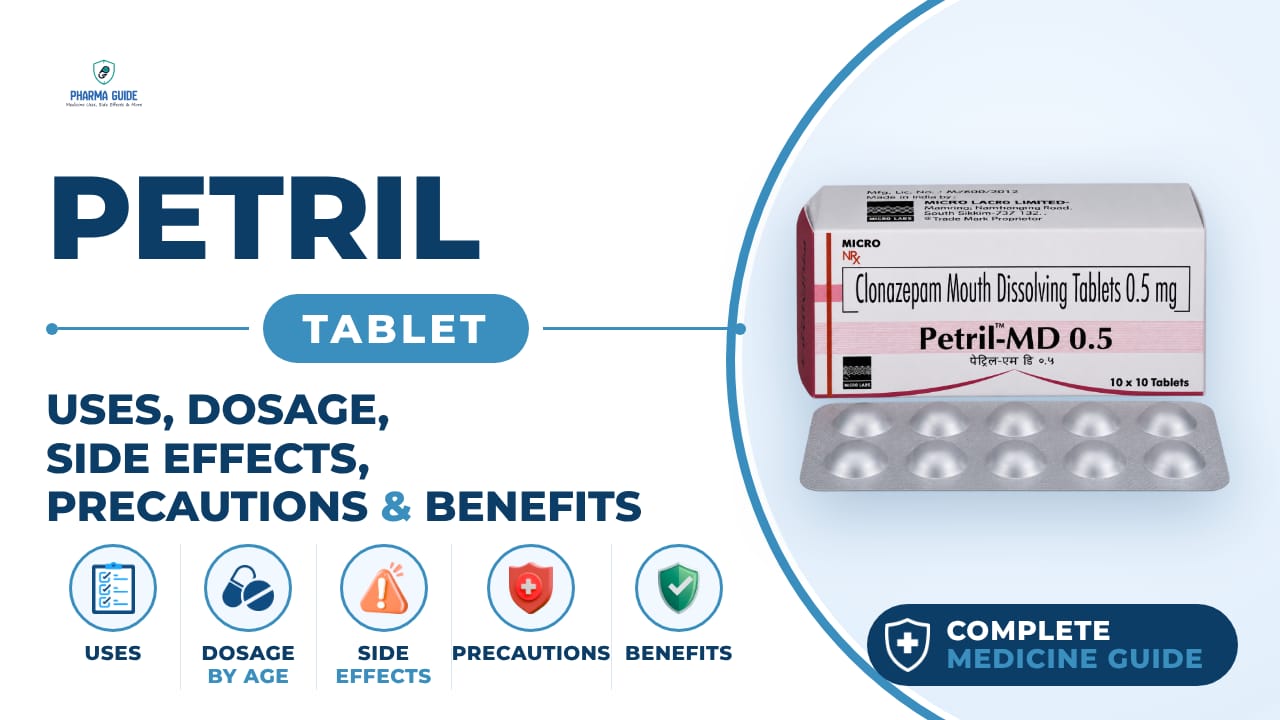
| Generic name | Clonazepam |
|---|---|
| Drug class | Benzodiazepine / sedative-hypnotic (anxiolytic and hypnotic) |
| Forms | Tablet |
Quick overview
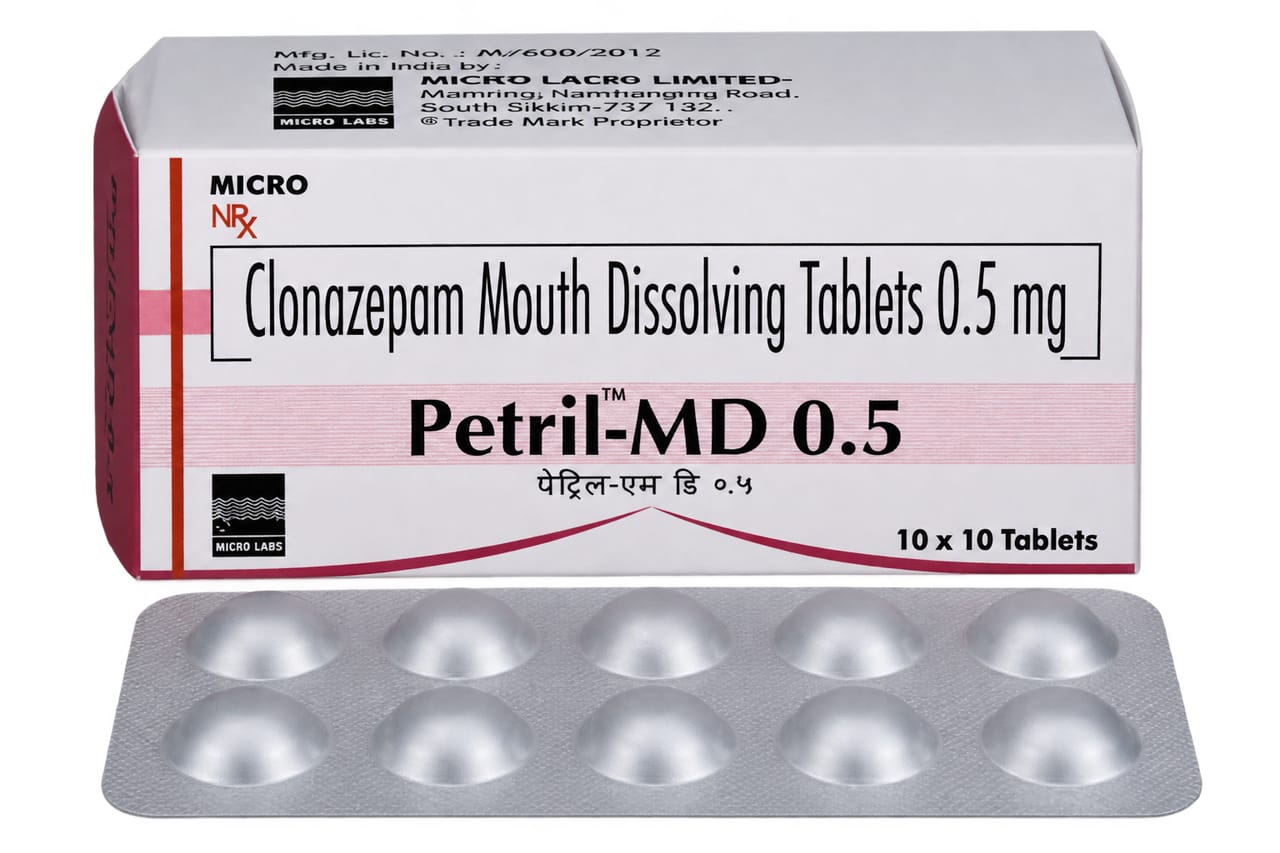
Petril Tablet contains clonazepam, a benzodiazepine that calms overactive nerve activity in the brain. It is prescribed for seizure disorders, panic disorder, anxiety, and insomnia. It works by boosting a natural calming brain chemical called GABA. It is a prescription-only medicine and should be used exactly as directed by a doctor.
What is Petril Tablet
Petril Tablet is a prescription medicine that contains clonazepam, a benzodiazepine. It is used to calm overactive nerve activity in the brain and is prescribed for seizure disorders, panic disorder, anxiety, and insomnia.
Petril Tablet uses
- Anxiety
- Panic attack and panic disorder
- Insomnia
- Seizure disorders (epilepsy)
- Muscle spasm
- Restless legs syndrome (secondary/off-label use)
- Burning mouth syndrome (secondary/off-label use)
Benefits of Petril Tablet
- May reduce seizure frequency in appropriate patients
- May lessen panic symptoms such as sudden fear, physical tension, and restlessness
- Can provide rapid relief of severe anxiety
- Can give short-term help with sleep
- May improve day-to-day comfort and functioning when used consistently under medical supervision
How Petril Tablet works
Clonazepam boosts the effect of a natural calming chemical in the brain called GABA. This reduces excessive nerve activity, which calms the brain and nerves and helps control seizures, anxiety, and panic symptoms.
Petril Tablet dosage
Take the tablet exactly as your doctor prescribes; do not change the dose or stop early on your own. It can be taken with or without food, unless your doctor tells you otherwise. Swallow the tablet whole with a glass of water; do not crush, chew, or split it unless your doctor or pharmacist says it is appropriate.
Try to take it at the same time each day to help you remember and keep a steady level of medicine in your body. If taken for sleep, take it at bedtime as prescribed.
Do not stop taking it suddenly without medical advice, as this can cause withdrawal symptoms.
If you miss a dose, take it as soon as you remember; if it is close to your next dose, skip the missed one and continue your regular schedule. Do not double up to make up for a missed dose.
Older adults should use this medicine with extra caution due to a higher risk of drowsiness and muscle weakness.
| Age group | Dose |
|---|---|
| Under 18 Years | Use only if prescribed by a healthcare professional |
| Adults (18–64 Years) | 0.25–0.5 mg initially, adjusted according to condition |
| Older Adults (65+ Years) | Lower starting dose (0.25 mg); adjusted based on response |
Available forms and strengths
- Tablet
Side effects of Petril Tablet
Common
- Drowsiness or sleepiness
- Dizziness or light-headedness
- Poor coordination or unsteadiness
- Fatigue or tiredness
- Slowed reaction time
- Memory problems or confusion
- Dry mouth
- Blurred vision
- Headache
- Nausea
- Increased salivation
- Mood changes or irritability
- Sleep disturbances
- Constipation
- Weight gain
- Vertigo
- Cough
Serious
- Slow, shallow, or difficult breathing
- Severe drowsiness, confusion, or trouble waking up
- Depression, suicidal thoughts, or unusual behaviour changes
- Severe allergic reaction, such as swelling of the face or throat, difficulty breathing, or a widespread rash
Warnings and precautions
- This medicine can be habit-forming, especially with long-term or unsupervised use. It is meant to be used for the shortest possible time. Never stop taking it suddenly, as this can cause severe withdrawal symptoms like anxiety, tremor, and seizures. Your doctor will lower the dose gradually.
- Never combine this medicine with alcohol or opioid painkillers, as together they can stop your breathing. Older people are much more likely to fall, become confused, or have memory problems while taking this medicine.
- Do not take this medicine if you have a known allergy to it, severe breathing problems, sleep apnoea, or severe liver disease, or a history of dependence unless under specialist supervision. This medicine is not recommended if you have certain conditions such as COPD, glaucoma, or a history of alcoholism, because it can cause harmful effects.
- Clonazepam is not usually recommended in pregnancy because it may harm the developing baby. It may only be used if the expected benefit outweighs the risk, for example for seizure control. Using it late in pregnancy may make the baby drowsy or affect feeding after birth. Tell your doctor right away if you are or might be pregnant.
- Clonazepam can pass into breast milk and may cause sleepiness or poor feeding in the infant. It is generally not recommended while breastfeeding, and your doctor will decide if it is appropriate for you.
- Kidney problems do not usually affect how the body handles clonazepam as much as liver problems do, but you should still get medical advice before use, especially if you have kidney disease, since the doctor may want to monitor you closely.
- Clonazepam is processed by the liver, so people with liver disease may need closer monitoring or a lower dose. It should be used only under medical supervision, and is not recommended if you have active liver problems.
- Do not drink alcohol while taking this medicine. Alcohol can increase drowsiness, dizziness, and breathing problems, and combining the two can be dangerous.
- This medicine may cause drowsiness, dizziness, slowed reaction time, or poor concentration. Do not drive or operate machinery until you know how it affects you.
Storage
- Store at room temperature in a cool, dry place away from direct heat, moisture, and light.
- Store below 30°C in the original pack, away from direct sunlight and moisture.
- Keep the container tightly closed and out of the reach of children and pets.
- Do not use the medicine after the expiry date.
- Ensure that unused medicine is disposed of safely as advised by your pharmacist.
When to see a doctor
- Get medical help right away if you have slow, shallow, or difficult breathing.
- Get medical help right away if you have severe drowsiness, confusion, or trouble waking up.
- Contact your doctor immediately if you notice depression, suicidal thoughts, or unusual changes in behaviour.
- Seek emergency care for a severe allergic reaction, such as swelling of the face or throat, difficulty breathing, or a widespread rash.
- Tell your doctor if you notice signs of dependence or withdrawal after stopping the medicine, such as anxiety, tremors, or seizures.
- If you suspect an overdose, go to the nearest emergency department right away and take the medicine pack with you; do not wait for symptoms to improve.
Alternatives
- Alprazolam
- Diazepam
- Hydroxyzine
Watch the video
FAQs
What is Petril Tablet used for?
Petril Tablet is used for anxiety, panic attacks and panic disorder, insomnia, seizure disorders, and muscle spasm, with off-label use for restless legs syndrome and burning mouth syndrome.
How does Petril Tablet work?
It contains clonazepam, which boosts the effect of a natural calming brain chemical called GABA, reducing excessive nerve activity to calm the brain and control seizures, anxiety, and panic symptoms.
What is the adult dosage of Petril Tablet?
Adults aged 18-64 years are usually started on 0.25-0.5 mg, adjusted according to condition, while older adults start on a lower dose of 0.25 mg based on response.
Can I stop taking Petril Tablet suddenly?
No, you should never stop taking it suddenly without medical advice, as this can cause severe withdrawal symptoms like anxiety, tremor, and seizures; your doctor will lower the dose gradually.
What are the common side effects of Petril Tablet?
Common side effects include drowsiness, dizziness, poor coordination, fatigue, slowed reaction time, memory problems, dry mouth, blurred vision, headache, nausea, and weight gain.
General information, not medical advice
Your prescriber and the leaflet in your pack know your situation. This page does not.
- Follow your prescriber and the leaflet
- Don't start, stop, or change a dose on your own
- Doses and warnings differ by country and product
Sources
- https://www.myupchar.com/en/medicine/petril-p37081427
- https://www.practo.com/medicine-info/petril-05-mg-tablet-8923
- https://www.pingmedoc.com/pharmacy/medicine/petril-0-5mg-tab-15-s
- https://www.nhs.uk/medicines/clonazepam/side-effects-of-clonazepam/
- https://my.clevelandclinic.org/health/drugs/19749-clonazepam-tablets
- https://www.ncbi.nlm.nih.gov/books/NBK556010/
- https://www.goodrx.com/clonazepam/mechanism-of-action
- https://medlineplus.gov/druginfo/meds/a682279.html
- https://www.nhs.uk/medicines/clonazepam/
- https://dailymed.nlm.nih.gov/dailymed/fda/fdaDrugXsl.cfm?setid=487d4493-4526-472f-8dbc-8ae1b9fe40d0&type=display
- https://www.rxlist.com/consumer_clonazepam_klonopin/drugs-condition.htm
- https://pubchem.ncbi.nlm.nih.gov/compound/2802
Video
Related medicines

Injectafer Injection: Uses, Dosage, Side Effects, Precautions and Alternates
Iron products
Injectafer (ferric carboxymaltose) treats iron deficiency anemia and heart failure-related iron deficiency via IV. Learn uses, dosage, side effects, and

Gliclazide Tablet: Uses, Dosage, Side Effects, Precautions and Alternates
Sulfonylurea (hypoglycemic/antidiabetic agent)
Gliclazide Tablet is a sulfonylurea for type 2 diabetes that boosts insulin release. Learn about dosage, side effects, warnings, and precautions.