
Safety
General information, not medical advice
Your prescriber and the leaflet in your pack know your situation. This page does not.
- Follow your prescriber and the leaflet
- Don't start, stop, or change a dose on your own
- Doses and warnings differ by country and product
Phenergan Syrup: Uses, Dosage, Side Effects, Precautions and Alternates

| Generic name | Promethazine Hydrochloride |
|---|---|
| Drug class | Antihistamine (Phenothiazine antiemetic) |
| Forms | Syrup, Tablet, Elixir, Injection, Suppository |
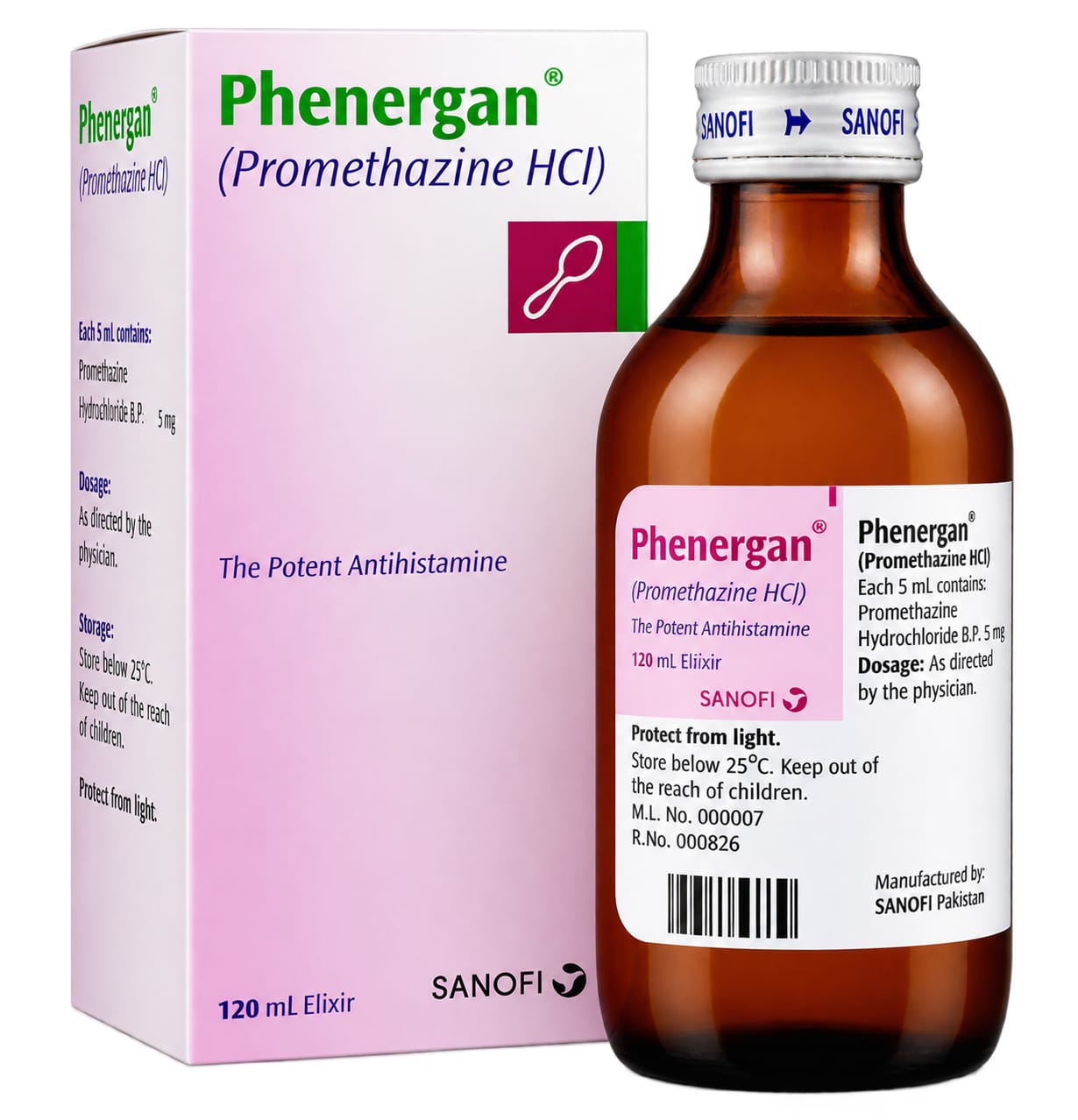
Quick overview
Phenergan Syrup contains promethazine hydrochloride, a first-generation antihistamine from the phenothiazine class. It is used to treat allergy symptoms, prevent motion sickness, control nausea and vomiting, and provide sedation. It works by blocking histamine and affecting certain brain chemicals, and dosage depends on age and the condition being treated. It should not be used in children under 2 years due to the risk of serious breathing problems.
What is Phenergan Syrup
Phenergan Syrup contains promethazine hydrochloride, a first-generation antihistamine. It is used to treat allergy symptoms, prevent motion sickness, control nausea and vomiting, and provide sedation.
Phenergan Syrup uses
- Allergic rhinitis (runny nose from allergies)
- Allergic skin reactions such as hives and itching
- Motion sickness
- Nausea and vomiting
- Pre-operative and post-operative sedation
- Short-term sedation/insomnia
- Anxiety (short-term, as advised by a doctor)
- Common cold symptoms
Benefits of Phenergan Syrup
- Reduces allergic symptoms like itching, runny nose, and hives
- Prevents and controls nausea and vomiting from motion sickness or surgery
- Provides mild sedative effects to help patients relax before and after surgery
- Relieves allergy symptoms such as sneezing, runny nose, and itching
- Helps relieve hives (urticaria) and allergic skin itching
- Helps prevent and treat motion sickness
- Can help control nausea and vomiting
How Phenergan Syrup works
Phenergan blocks the effects of histamine, a substance the body produces during allergic reactions, and also affects certain chemicals in the brain, including those involved in the vomiting center, which is why it can prevent nausea and cause sedation.
Phenergan Syrup dosage
Phenergan Syrup can be taken with or without food. For allergies, it may be best taken at bedtime so sleepiness does not affect daily activities. Take it at the same time each day to keep a steady level of medicine in your body. For motion sickness, take the first dose 30 to 60 minutes before travel, and it may be repeated later if needed.
Shake the bottle well before use and measure the liquid accurately using the measuring cup or dosing device provided. This medicine is meant for short-term use; talk to your doctor if symptoms do not improve after a few days. Do not take more of this medicine or use it more often than your doctor directs. Follow your doctor's or pharmacist's instructions on the label, as they may differ from general information.
| Age group | Dose |
|---|---|
| Under 2 years | Do NOT use — risk of serious breathing problems |
| 2–5 years | Doctor's advice required; dose depends on the indication |
| 6–11 years | 5–25 mg per dose, depending on the indication |
| 12 years & older | 10–25 mg per dose, depending on the indication |
| Adults | 10–25 mg per dose, depending on the indication |
Available forms and strengths
- Syrup
- Tablet
- Elixir
- Injection
- Suppository
Side effects of Phenergan Syrup
Common
- Drowsiness or sleepiness
- Dry mouth
- Dizziness
- Blurred vision
- Constipation
- Confusion
- Increased sensitivity of skin to sunlight
- Headache
- Nausea or vomiting
- Diarrhoea or constipation
- Stomach upset
- Loss of appetite
- Congested nose
- Ringing in ears
- Double vision
- Feeling nervous
- Sleep problems (insomnia)
Serious
- Respiratory depression
- Severe drowsiness or weak/shallow breathing
- Extrapyramidal symptoms (uncontrolled muscle movements)
- Seizures
- Low blood pressure
- Neuroleptic malignant syndrome
- Irregular heartbeat or fast/slow heartbeats
- Jaundice (yellowing of skin or eyes)
- Easy bruising or bleeding
- Confusion, agitation, hallucinations, nightmares
- Tremors or convulsions
- Difficulty breathing or shortness of breath
- Fever, sore throat, or signs of infection
- Difficulty passing urine
Warnings and precautions
- Phenergan is not recommended during pregnancy as it may harm the developing baby. It should only be used if your doctor decides the benefits outweigh the risks.
- Phenergan passes into breast milk and is not recommended while breastfeeding. Discuss the risks and benefits with your doctor.
- Use with caution if you have kidney problems, since the medicine is removed from the body by the kidneys.
- Use with caution if you have liver problems, as the medicine may build up in your body and increase the risk of side effects.
- Avoid alcohol while taking this medicine, as it can increase drowsiness and other side effects like confusion, dizziness, nausea, and fainting.
- This medicine can cause drowsiness and dizziness, so avoid driving or operating machinery until you know how it affects you.
- Phenergan must not be used in children under 6 years of age because of the risk of fatal breathing problems and psychiatric or nervous system effects.
- Do not give this medicine to newborn or premature babies.
- This medicine should not be given to a child younger than 2 years old, as it can cause severe breathing problems or death in very young children.
- Anyone who is unconscious or in a coma must not be given this medicine.
- Do not use this medicine if you have asthma or another lower respiratory tract disorder.
- A serious and sometimes fatal condition called neuroleptic malignant syndrome can occur. Stop the medicine and get medical help right away if you notice high fever, muscle stiffness, confusion, fast heartbeat, or heavy sweating.
- Do not take more than the recommended dose, as there have been reports of promethazine abuse.
Storage
- Store at room temperature between 15°C to 30°C
- Protect from light
- Keep in a cool, dry place
- Keep out of reach of children
- Store Phenergan elixir below 25°C
- Keep your medicine in the pack until it is time to take it
- Store it in a cool dry place away from moisture, heat or sunlight; for example, do not store it in the bathroom or near a sink, or in the car or on window sills
- Keep it where young children cannot reach it, in a locked cupboard at least one-and-a-half metres above the ground is a good place to store medicines
- If you no longer need to use this medicine or it is out of date, take it to any pharmacy for safe disposal
- Do not use this medicine after the expiry date
When to see a doctor
- Get emergency help right away if you have signs of a serious allergic reaction, such as hives, difficulty breathing, or swelling of the face, lips, tongue, or throat.
- Stop the medicine and call your doctor right away if you have twitching or uncontrollable movements of your eyes, lips, tongue, face, arms, or legs, since these could be early signs of a dangerous side effect.
- If you think you have taken too much of this medicine, get urgent medical attention even if you feel fine, by contacting your doctor, poison control, or going to the nearest emergency department.
- Call your doctor immediately if you develop a fever, sore throat, or any other sign of infection, since a blood test may be needed.
- Call your doctor right away if you experience very stiff muscles, high fever, sweating, confusion, uneven heartbeats, or tremors, as these can be signs of a serious reaction.
Alternatives
- Phenergan is also combined with other medicines such as phenylephrine, codeine, or dextromethorphan.
- Other brand names for promethazine include Phenadoz and Promethegan.
- Substitute products listed for Phenergan 5 MG Syrup include Phenamin 5 MG Syrup and PROMPT(NEU) 5 MG Syrup.
Watch the video
FAQs
What is Phenergan Syrup used for?
It is used to treat allergy symptoms, prevent motion sickness, control nausea and vomiting, and provide sedation, including pre- and post-operative sedation and short-term insomnia or anxiety.
Can Phenergan Syrup be given to young children?
No, it should not be used in children under 2 years due to the risk of serious breathing problems, and it must not be used in children under 6 years because of the risk of fatal breathing problems and psychiatric or nervous system effects.
How should Phenergan Syrup be taken for motion sickness?
Take the first dose 30 to 60 minutes before travel, and it may be repeated later if needed.
What are the serious side effects of Phenergan Syrup?
Serious side effects include respiratory depression, severe drowsiness or weak/shallow breathing, extrapyramidal symptoms, seizures, low blood pressure, neuroleptic malignant syndrome, irregular heartbeat, jaundice, and difficulty breathing.
Is Phenergan Syrup safe during pregnancy or breastfeeding?
It is not recommended during pregnancy as it may harm the developing baby, and it passes into breast milk so it is not recommended while breastfeeding; use should only occur if a doctor decides benefits outweigh risks.
General information, not medical advice
Your prescriber and the leaflet in your pack know your situation. This page does not.
- Follow your prescriber and the leaflet
- Don't start, stop, or change a dose on your own
- Doses and warnings differ by country and product
Sources
Video
Related medicines

Injectafer Injection: Uses, Dosage, Side Effects, Precautions and Alternates
Iron products
Injectafer (ferric carboxymaltose) treats iron deficiency anemia and heart failure-related iron deficiency via IV. Learn uses, dosage, side effects, and

Gliclazide Tablet: Uses, Dosage, Side Effects, Precautions and Alternates
Sulfonylurea (hypoglycemic/antidiabetic agent)
Gliclazide Tablet is a sulfonylurea for type 2 diabetes that boosts insulin release. Learn about dosage, side effects, warnings, and precautions.