
Safety
General information, not medical advice
Your prescriber and the leaflet in your pack know your situation. This page does not.
- Follow your prescriber and the leaflet
- Don't start, stop, or change a dose on your own
- Doses and warnings differ by country and product
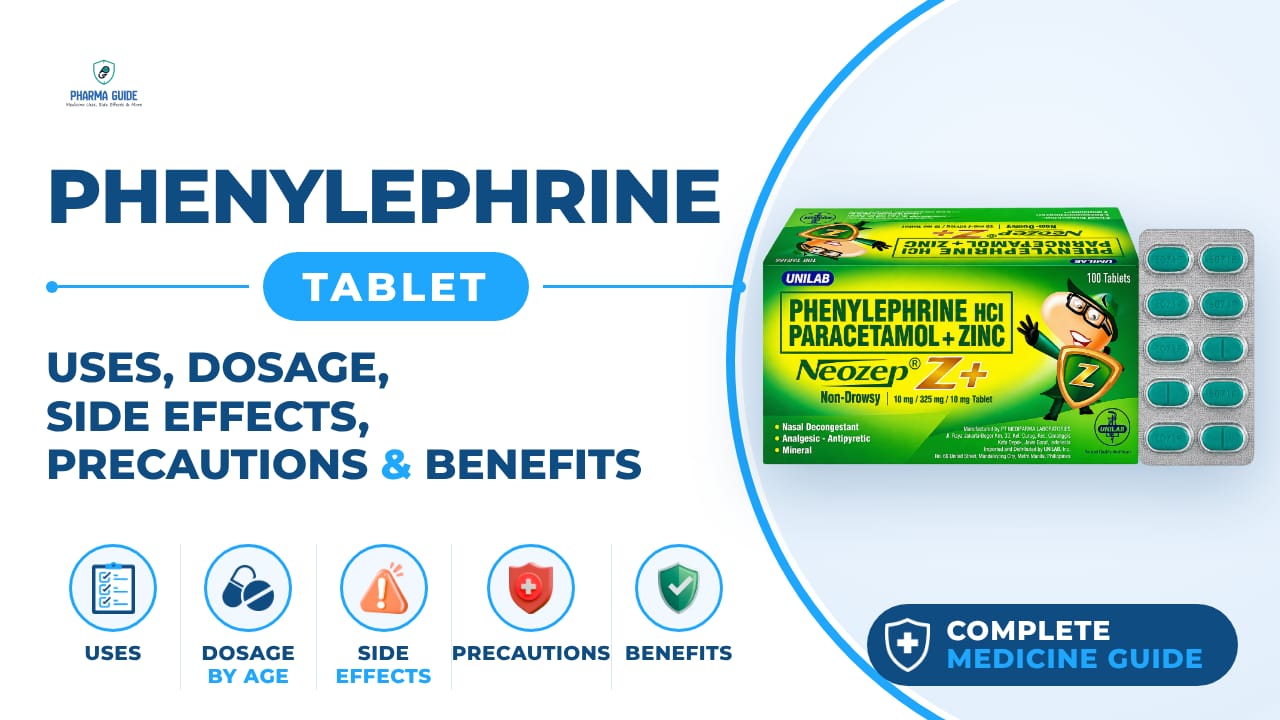
Phenylephrine Tablet: Uses, Dosage, Side Effects, Precautions and Alternates
| Generic name | phenylephrine |
|---|---|
| Drug class | Decongestants, Vasopressors |
| Forms | oral tablet, extended-release oral tablet, oral liquid, nasal spray, intravenous solution, dissolving strip |
Quick overview
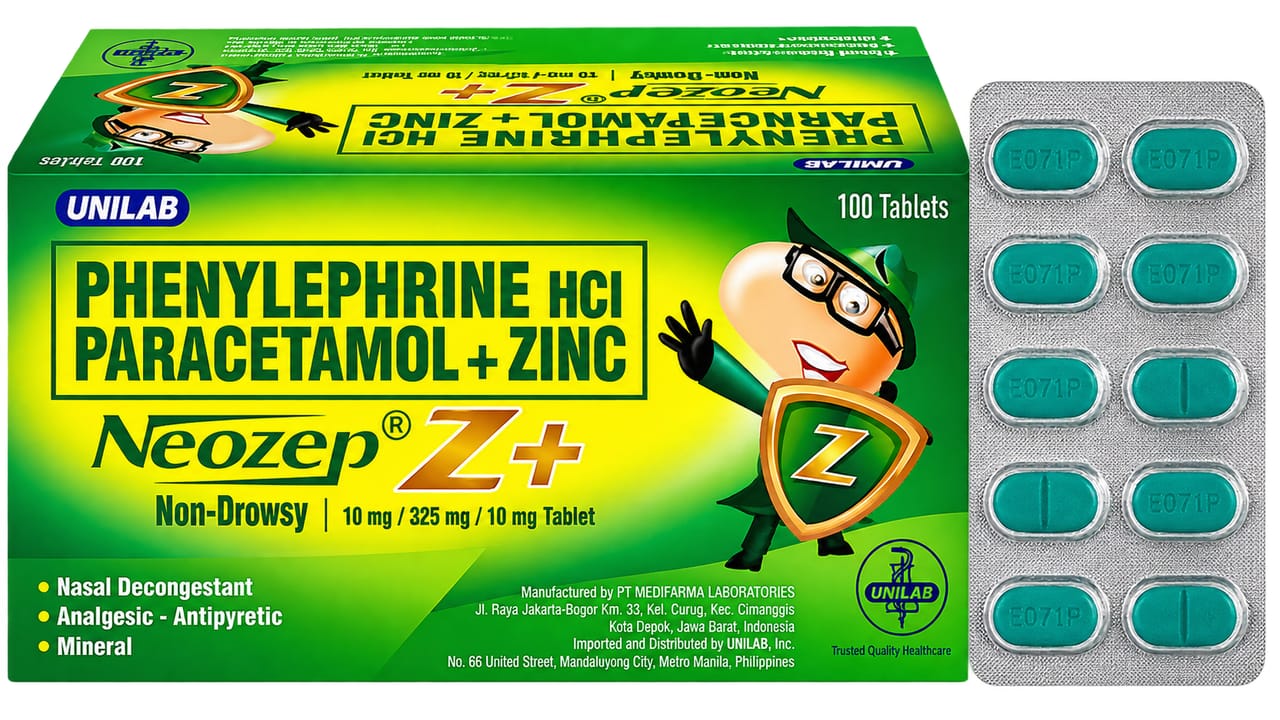
Phenylephrine Tablet is a nasal decongestant used to temporarily relieve a blocked nose or sinus pressure caused by colds, allergies, or hay fever. It works by narrowing blood vessels in the nose to reduce swelling and congestion. It is intended for short-term use and comes with specific dosing guidance based on age.
What is Phenylephrine Tablet
Phenylephrine is a nasal decongestant used to temporarily relieve a blocked nose or sinus pressure caused by colds, allergies, or hay fever. It is in a class of medications called nasal decongestants.
Phenylephrine Tablet uses
- Relieve nasal discomfort caused by colds, allergies, and hay fever
- Relieve sinus congestion and pressure
- Temporarily unblock a nose in people with nasal and sinus congestion
Benefits of Phenylephrine Tablet
- Marketed for temporary relief of a blocked or stuffy nose
- Intended to reduce nasal and sinus congestion from colds or allergies
- May help relieve a feeling of sinus pressure or fullness
- Designed to make nasal breathing easier by constricting swollen blood vessels in the nasal passages
How Phenylephrine Tablet works
Phenylephrine works by narrowing blood vessels in the nose, which reduces swelling and stops fluid from leaking into the tissue lining the nasal passages. This helps relieve congestion.
Phenylephrine Tablet dosage
Take phenylephrine exactly as directed on the label, or as prescribed by your doctor. Cold medicine is only for short-term use until your symptoms clear up. Always follow directions on the medicine label about giving cold medicine to a child. Chewable tablets must be chewed before swallowing. If taking an orally disintegrating tablet, remove it from the package only when ready to take it, place it in the mouth, and let it dissolve without chewing, swallowing several times as it dissolves.
Do not give phenylephrine products made for adults to children. Check the package label carefully before giving to a child of a certain age. Stop taking and ask a doctor if nervousness, dizziness, or sleeplessness occur, or if symptoms do not improve within 7 days or occur with a fever, rash, or headaches. Tell your surgeon if you are currently using phenylephrine before any surgery, including dental surgery.
Check nonprescription cough and cold product labels carefully before using two or more products at the same time, since they may contain the same active ingredient and combining them could cause an overdose. This medication is usually taken as needed; if a regular dosing schedule was prescribed and a dose is missed, take it as soon as remembered unless it is almost time for the next dose.
| Age group | Dose |
|---|---|
| Under 4 years | Do not use OTC |
| 4–5 years | Use only if specifically directed by a doctor |
| 6–11 years | 5 mg every 4 hours, according to product labeling |
| 12–64 years | 10 mg every 4 hours; max 60 mg/day |
| 65+ years | Use cautiously; medical/pharmacist advice recommended |
Available forms and strengths
- Oral tablet
- Extended-release oral tablet
- Oral liquid
- Nasal spray
- Intravenous solution
- Dissolving strip
Side effects of Phenylephrine Tablet
Common
- Flushing (warmth, redness, or tingly feeling)
- Loss of appetite
- Feeling restless or excited (especially in children)
- Nervousness
- Dizziness
- Sleeplessness (insomnia)
Serious
- Signs of an allergic reaction, such as hives, difficulty breathing, or swelling of face, lips, tongue, or throat
- Fast, pounding, or irregular heartbeat
- Severe dizziness or nervousness
- Sleep problems (insomnia)
- Increased blood pressure with symptoms such as severe headache, blurred vision, and pounding in the neck or ears
- Slow heart rate, AV block, irregular heartbeats, reduced blood flow to the heart
- Chest pain
- Sulfite sensitivity reactions
- Headache, nervousness, tingling, tremor
- Excitability
- Fluid in the lungs
- Sweating, pale skin, hair standing on end, skin damage at an injection site
- Hypertensive crisis (dangerously high blood pressure)
Warnings and precautions
- It is not known whether phenylephrine can harm an unborn baby or affect fertility. It should only be given to a pregnant woman if needed. In a combination product, it should not be used at all during pregnancy because phenylephrine has been linked to birth defects when taken during pregnancy.
- It is not known if phenylephrine passes into breast milk. Ask a health professional before use if breastfeeding.
- People with kidney disease may need a lower or less frequent dose, so speak to a doctor or pharmacist before use.
- People with liver disease may need a lower or less frequent dose, so speak to a doctor or pharmacist before use.
- Avoid drinking alcohol when taking this medicine.
- This medicine may cause dizziness. Do not drive or operate machinery if you feel dizzy after taking it.
- Do not use phenylephrine if you are taking, or have taken in the past 14 days, a monoamine oxidase inhibitor (MAOI), as a dangerous drug interaction could occur
- An FDA advisory panel found that oral phenylephrine does not work better than a placebo as a decongestant, and the FDA has proposed removing it from the market, though it remains available for now
- Nonprescription cough and cold products containing phenylephrine can cause serious side effects or death in young children and should not be given to children younger than 4 years old
- Ask a doctor or pharmacist before use if you have heart disease, high blood pressure, diabetes, a thyroid disorder, an enlarged prostate with urination problems, or drug allergies
- The liquid form may contain phenylalanine, which is important to know if you have phenylketonuria (PKU)
- Taking too much paracetamol in a combination product can cause delayed, irreversible liver damage
Storage
- Store phenylephrine tablets and nasal spray between 20-25°C (68-77°F)
- Do not use it if the blister unit is torn or broken
- Keep out of reach of children
- Keep this medication in the container it came in, tightly closed, and out of reach of children
- Store it at room temperature and away from excess heat and moisture (not in the bathroom)
- Dispose of unneeded medications in a way so that pets, children, and other people cannot take them
- Do not flush this medication down the toilet
- Use a medicine take-back program
When to see a doctor
- Get emergency medical help if you have signs of an allergic reaction, such as hives, difficulty breathing, or swelling of your face, lips, tongue, or throat
- Stop using phenylephrine and call your doctor right away if you have a fast, pounding, or irregular heartbeat; severe dizziness or nervousness; sleep problems; or signs of increased blood pressure such as severe headache, blurred vision, and pounding in the neck or ears
- Stop taking and ask a doctor if nervousness, dizziness, or sleeplessness occur, or if symptoms do not improve within 7 days, or if they occur with fever, rash, or headaches
- In case of overdose, get medical help or contact a poison control center right away
- If a combination product overdose is taken, talk to a doctor at once even if you feel well, since too much paracetamol can cause delayed, irreversible liver damage; initial symptoms may include pale skin, nausea, vomiting, and abdominal pain
Alternatives
- Cetirizine
- Xylometazoline Nasal Spray
- Oxymetazoline Nasal Spray
- Pseudoephedrine
Watch the video
FAQs
What is Phenylephrine Tablet used for?
It is used to temporarily relieve a blocked nose or sinus pressure caused by colds, allergies, or hay fever by narrowing blood vessels in the nose to reduce swelling and congestion.
What is the dosage of Phenylephrine Tablet for adults?
For ages 12 to 64, the typical dose is 10 mg every 4 hours, with a maximum of 60 mg per day.
Can children take Phenylephrine Tablet?
Children under 4 years should not use it, those aged 4 to 5 should only use it if directed by a doctor, and children 6 to 11 years may take 5 mg every 4 hours according to product labeling.
What are the common side effects of Phenylephrine Tablet?
Common side effects include flushing, loss of appetite, restlessness or excitement, nervousness, dizziness, and sleeplessness.
Is it safe to take Phenylephrine Tablet during pregnancy?
It is not known whether phenylephrine can harm an unborn baby, so it should only be given to a pregnant woman if needed, and it should not be used at all in combination products during pregnancy.
General information, not medical advice
Your prescriber and the leaflet in your pack know your situation. This page does not.
- Follow your prescriber and the leaflet
- Don't start, stop, or change a dose on your own
- Doses and warnings differ by country and product
Sources
Video
Related medicines

Injectafer Injection: Uses, Dosage, Side Effects, Precautions and Alternates
Iron products
Injectafer (ferric carboxymaltose) treats iron deficiency anemia and heart failure-related iron deficiency via IV. Learn uses, dosage, side effects, and

Gliclazide Tablet: Uses, Dosage, Side Effects, Precautions and Alternates
Sulfonylurea (hypoglycemic/antidiabetic agent)
Gliclazide Tablet is a sulfonylurea for type 2 diabetes that boosts insulin release. Learn about dosage, side effects, warnings, and precautions.