
Safety
General information, not medical advice
Your prescriber and the leaflet in your pack know your situation. This page does not.
- Follow your prescriber and the leaflet
- Don't start, stop, or change a dose on your own
- Doses and warnings differ by country and product
Phytonadione Injection: Uses, Dosage, Side Effects, Precautions and Alternates
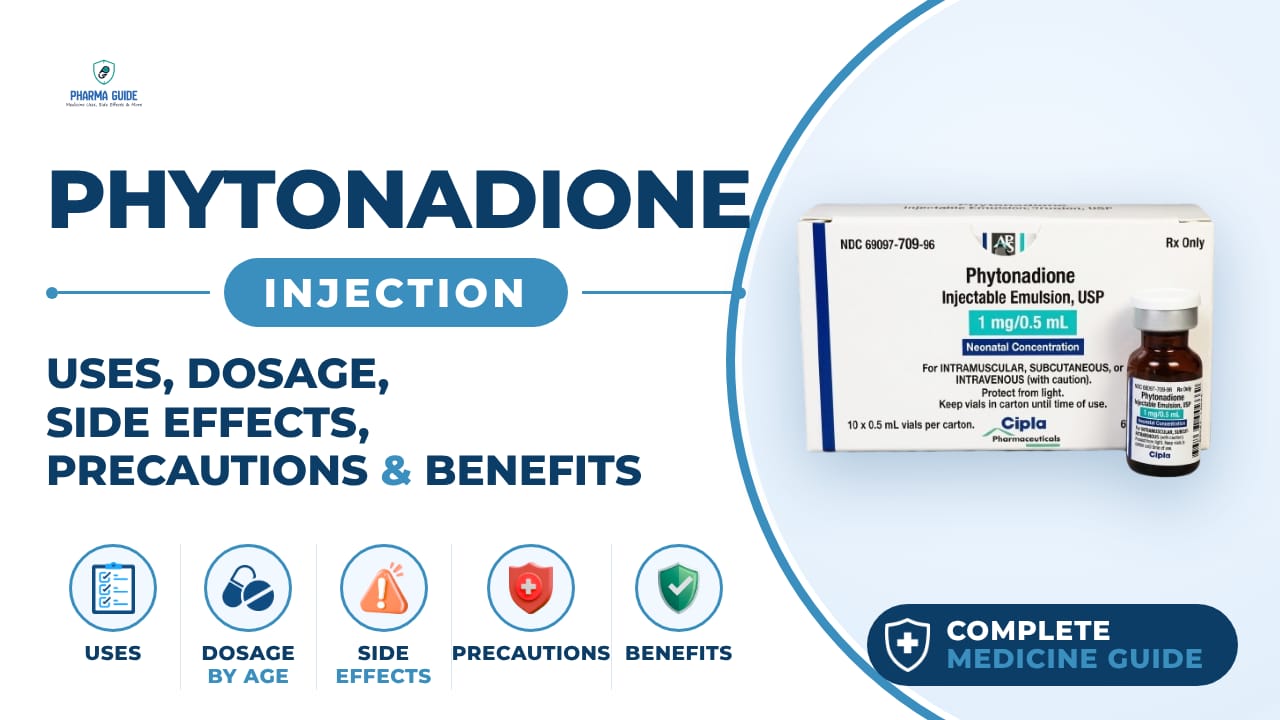
| Generic name | Phytonadione |
|---|---|
| Drug class | Vitamin K / Hemostatic (Anticoagulant reversal agent, Vitamin) |
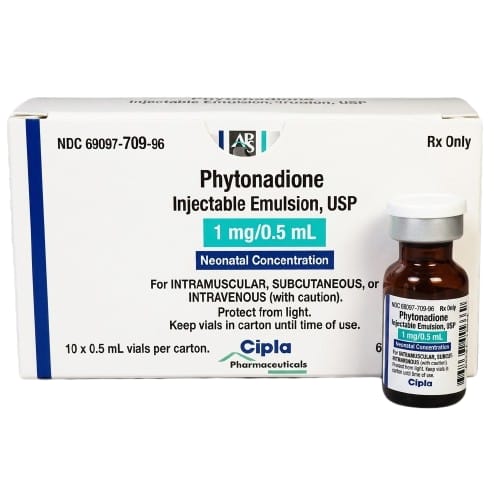
| Forms | Prefilled syringe, Injection |
Quick overview
Phytonadione Injection is a man-made form of vitamin K given as a shot to help the blood clot normally. It is used to treat and prevent bleeding or clotting problems caused by low vitamin K levels, including reversing bleeding from certain blood thinners and treating vitamin K deficiency bleeding in newborns. It works by helping the liver produce proteins needed for normal clotting. It can cause mild side effects as well as rare but serious allergic reactions.
What is Phytonadione Injection
Phytonadione is a man-made form of vitamin K, which occurs naturally in the body. It is given as an injection to help the blood clot normally.
Phytonadione Injection uses
- Treats and prevents bleeding or blood clotting problems caused by low vitamin K levels
- Reverses bleeding caused by certain blood thinners such as warfarin
- Treats bleeding problems caused by medical conditions such as obstructive jaundice or ulcerative colitis
- Prevents and treats vitamin K deficiency bleeding (hemorrhagic disease) in newborn babies
- Treats hypoprothrombinemia caused by antibiotics, salicylates, or conditions that limit absorption or production of vitamin K
Benefits of Phytonadione Injection
- Helps restore normal blood clotting factors made by the liver
- Can help control bleeding caused by vitamin K deficiency or certain drugs
- Lower risk of certain side effects in newborns compared with other vitamin K products
How Phytonadione Injection works
Vitamin K helps the liver make several proteins needed for normal blood clotting. It acts as a helper substance for an enzyme that activates clotting factors II, VII, IX, and X so the blood can clot properly.
Phytonadione Injection dosage
This medicine is given by a doctor or nurse as a shot under the skin, into a muscle, or into a vein. Subcutaneous injection (under the skin) is used whenever possible; the vein route is avoided unless no other option is safe or possible. If your caregiver gives you shots at home, a different body area should be used each time, and the injection sites should be tracked and rotated to help prevent skin problems.
The liquid should look clear and yellow before use; it should not be used if it looks discolored or has particles in it. A new needle and syringe should be used for each injection. If given into a vein, it must be given very slowly. If diluted for an infusion, it should be used right away, and any leftover diluted medicine should be thrown away.
Your doctor may also give you plasma or other blood products along with this medicine if bleeding is severe. Doses may be repeated if your first dose does not work well enough, based on your doctor's advice.
| Age group | Dose |
|---|---|
| Under 18 years | Not recommended |
| 18–64 years | 10 mg, once/day |
| 65+ years | 10 mg, once/day |
Available forms and strengths
- Prefilled syringe
- Injection
Side effects of Phytonadione Injection
Common
- Dizziness
- Flushing (warmth, redness, or tingly feeling)
- Changes in the sense of taste
- Sweating
- Pain or swelling at the injection site
- Dry, scaly, itchy skin
Serious
- Hives, itching, or skin rash
- Difficulty breathing or shortness of breath
- Swelling of the face, lips, tongue, or throat
- Chest pain or tightness
- Fast, pounding, or irregular heartbeat
- Dizziness, faintness, or lightheadedness when standing up suddenly
- Bluish color of the lips, fingernails, or skin
- Yellowing of the skin or eyes (jaundice)
- Unusual tiredness or weakness
- Confusion, blurred vision, or cough
- A new rash that can appear a day to a year after the injection
- Unusual bruising or bleeding
Warnings and precautions
- This medicine can cause severe, sometimes fatal, allergic reactions, especially when given into a vein or muscle.
- These reactions can happen even in people receiving the drug for the first time. Because of this risk, the injection should be given under the skin whenever possible, and the vein or muscle routes should only be used if there is no other safe option.
- This medicine will not reverse the effects of the blood thinner heparin and does not fix abnormal platelet function. Its clotting effect is not immediate; it may take several hours to control bleeding, and blood products may be needed for severe bleeding in the meantime.
- Taking too much of this medicine while still needing blood thinners can bring back the original clotting risk, so doses are kept as low as possible with regular blood test monitoring. Skin reactions can occur after an injection and may appear anywhere from a day to a year later; these should be reported to a doctor right away.
- Some forms of this medicine contain a preservative (benzyl alcohol) that can cause serious, sometimes fatal reactions in newborns and premature infants. Large doses given to newborns, especially premature babies, have rarely caused serious blood and liver problems such as anemia from red blood cell breakdown and high bilirubin levels.
- This medicine should only be used during pregnancy if clearly needed and under a doctor's supervision. Studies have not shown a clear link between phytonadione and problems in the developing baby, but vitamin K deficiency itself carries risks during pregnancy.
- Phytonadione passes into breast milk. There isn't enough information to know the effect on a nursing baby, so the benefits of breastfeeding should be weighed against the need for this medicine.
- People with kidney problems should use this medicine carefully, and kidney function should be monitored regularly during treatment. This medicine should be used carefully in people with liver disease, since the body may remove it more slowly, and repeated large doses may not help if the first dose doesn't work.
- This medicine usually does not affect your ability to drive or use machinery, but avoid these activities if you feel dizzy or unwell after the injection.
Storage
- Store between 15 and 30°C
- Protect from light
- Store the medicine in a closed container at room temperature, away from heat, moisture, and direct light
- Keep from freezing
- Keep out of the reach of children
- Do not keep outdated medicine or medicine no longer needed
- Ask your healthcare professional how you should dispose of any medicine you do not use
When to see a doctor
- Get medical help right away if you have signs of a serious allergic reaction such as rash, hives, itching, flushing, trouble breathing, shortness of breath, weakness, bluish color around the mouth, fingers, or fingernails, chest pain, sweating, or fast heartbeat
- Call your doctor right away if you notice a rash, itching, hoarseness, trouble breathing, trouble swallowing, or swelling of your hands, face, or mouth after using this medicine
- Contact your doctor right away if you develop a new skin rash, even long after your injection
- Call your doctor immediately if you notice any unusual bruising or bleeding
- If an overdose is suspected, contact your regional poison control center immediately
Alternatives
- Fresh Frozen Plasma
- Mephyton
- Vitamin K1
Watch the video
FAQs
What is Phytonadione Injection used for?
It treats and prevents bleeding or clotting problems caused by low vitamin K levels, reverses bleeding from certain blood thinners like warfarin, treats bleeding from conditions such as obstructive jaundice or ulcerative colitis, and prevents or treats vitamin K deficiency bleeding in newborns.
How does Phytonadione Injection work?
It helps the liver make proteins needed for normal blood clotting by acting as a helper substance for an enzyme that activates clotting factors II, VII, IX, and X.
How is Phytonadione Injection given?
It is given by a doctor or nurse as a shot under the skin, into a muscle, or into a vein. The subcutaneous route is preferred whenever possible, and the vein route is avoided unless no other safe option exists; if given into a vein, it must be given very slowly.
What are the serious side effects of Phytonadione Injection?
Serious side effects include hives, itching or rash, difficulty breathing, swelling of the face, lips, tongue or throat, chest pain, irregular heartbeat, bluish skin color, jaundice, unusual bruising or bleeding, and a new rash that can appear a day to a year after the injection.
Can Phytonadione Injection reverse the effects of heparin?
No, this medicine will not reverse the effects of the blood thinner heparin and does not fix abnormal platelet function.
General information, not medical advice
Your prescriber and the leaflet in your pack know your situation. This page does not.
- Follow your prescriber and the leaflet
- Don't start, stop, or change a dose on your own
- Doses and warnings differ by country and product
Sources
Video
Related medicines

Injectafer Injection: Uses, Dosage, Side Effects, Precautions and Alternates
Iron products
Injectafer (ferric carboxymaltose) treats iron deficiency anemia and heart failure-related iron deficiency via IV. Learn uses, dosage, side effects, and

Gliclazide Tablet: Uses, Dosage, Side Effects, Precautions and Alternates
Sulfonylurea (hypoglycemic/antidiabetic agent)
Gliclazide Tablet is a sulfonylurea for type 2 diabetes that boosts insulin release. Learn about dosage, side effects, warnings, and precautions.