
Safety
General information, not medical advice
Your prescriber and the leaflet in your pack know your situation. This page does not.
- Follow your prescriber and the leaflet
- Don't start, stop, or change a dose on your own
- Doses and warnings differ by country and product
Pifeltro Tablet: Uses, Dosage, Side Effects, Precautions and Alternates
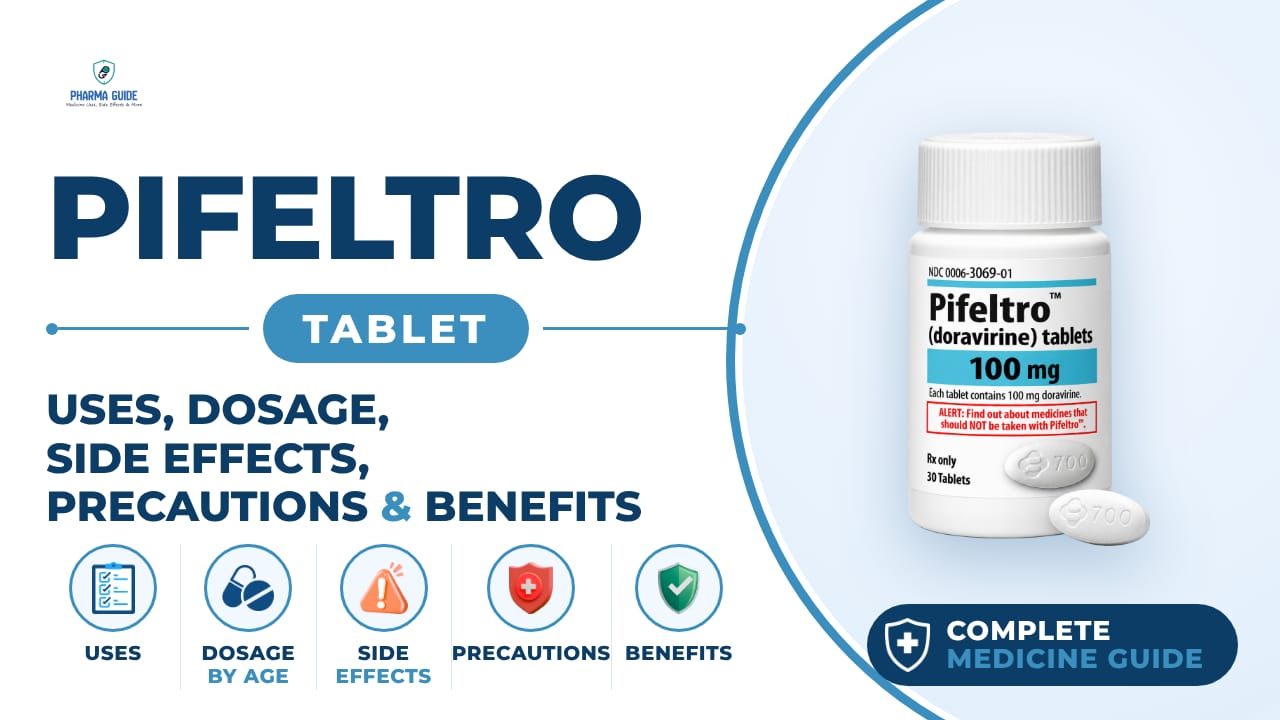
| Generic name | doravirine |
|---|---|
| Drug class | Non-nucleoside reverse transcriptase inhibitor (NNRTI) |
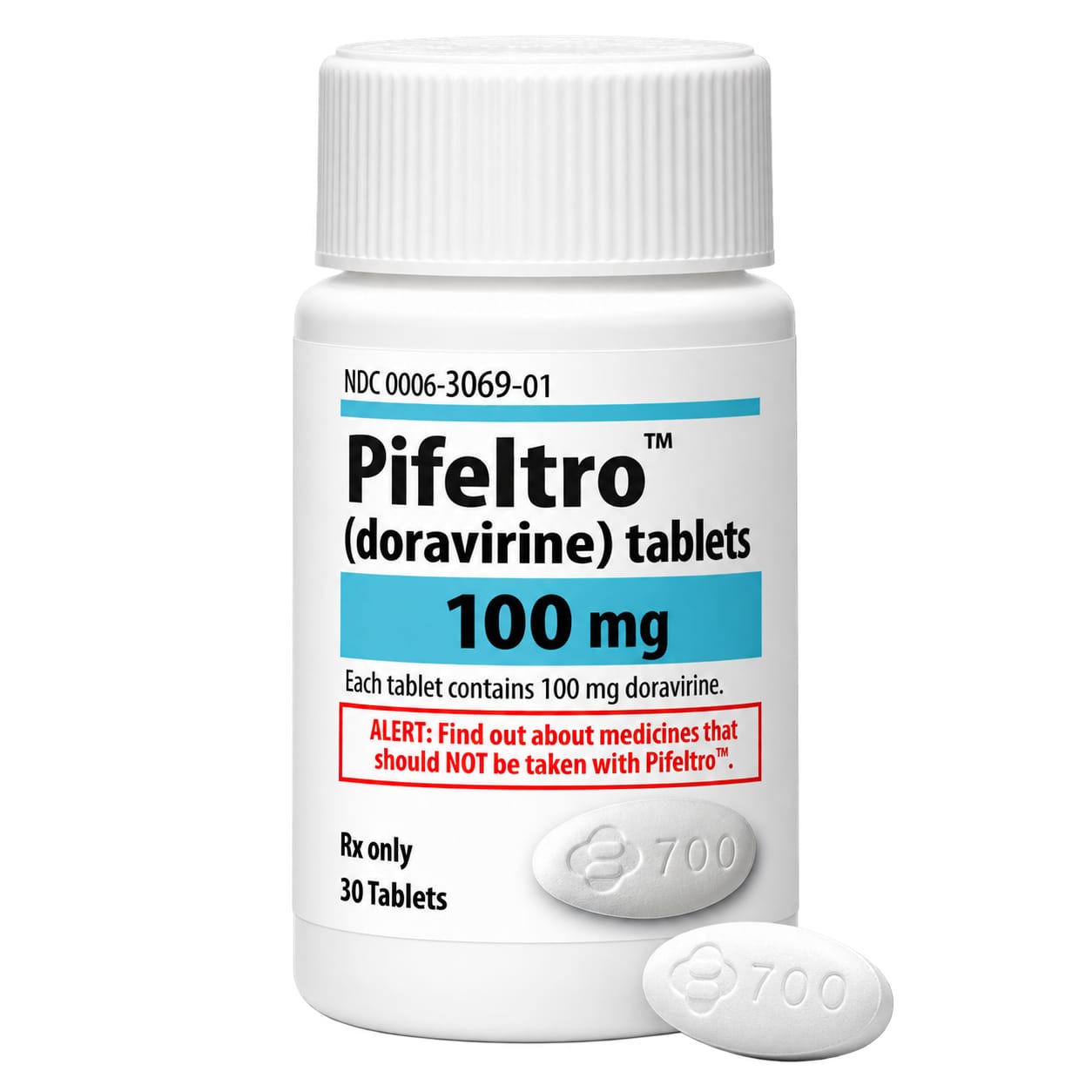
| Forms | Tablet (100 mg, film-coated, oral) |
Quick overview
Pifeltro Tablet (doravirine) is a prescription antiviral medicine belonging to the non-nucleoside reverse transcriptase inhibitor (NNRTI) drug class. It is used together with other HIV-1 medicines to treat HIV-1 infection in adults and certain children. It is not a cure for HIV or AIDS but helps control the virus when taken as part of a combination regimen. It is taken once daily, with or without food.
What is Pifeltro Tablet
Pifeltro is a prescription antiviral medicine that is used together with other HIV-1 medicines to treat HIV-1 infection. It is not a cure for HIV or AIDS, but it helps control the virus when taken as part of a combination regimen.
Pifeltro Tablet uses
- Treatment of HIV-1 infection in adults and children who weigh at least 77 pounds (35 kg), in combination with other HIV-1 medicines
- For people who have not taken HIV-1 medicines before
- To replace a current HIV-1 regimen in people whose healthcare provider determines they meet certain requirements, such as having a very low viral load with no history of treatment failure
Benefits of Pifeltro Tablet
- Taken only once a day, which is convenient
- Can be taken with or without food
- Generally safe for most people with kidney or liver problems
- Has shown a neutral to favorable effect on cholesterol levels in clinical studies
How Pifeltro Tablet works
Pifeltro blocks an enzyme called reverse transcriptase that HIV needs to make copies of itself, which helps lower the amount of HIV in the blood and can help the immune system recover.
Pifeltro Tablet dosage
Take it every day at about the same time, with or without food. It is important not to miss or skip doses, as this can lead to the virus becoming resistant to the medicine. If a dose is missed, take it as soon as remembered unless it is almost time for the next dose; in that case, skip the missed dose and take the next dose at the regular time. Do not take two doses at the same time.
If also taking the medicine rifabutin, take Pifeltro twice a day, about 12 hours apart, as directed by a healthcare provider. Keep taking Pifeltro and any other HIV medicines unless a healthcare provider says to stop. Get refills before supply runs low, since stopping the medicine even briefly can allow the virus to increase and become resistant.
| Age group | Dose |
|---|---|
| Under 18 years | Safety and effectiveness are not established for routine pediatric use |
| 18–64 years | 100 mg once daily |
| 65 years and older | Usually 100 mg once daily, with individualized monitoring |
Available forms and strengths
- Tablet (100 mg, film-coated, oral)
Side effects of Pifeltro Tablet
Common
- Nausea
- Dizziness
- Headache
- Fatigue (tiredness)
- Diarrhea
- Abdominal (stomach) pain
- Abnormal dreams
- Insomnia or trouble sleeping
- Sleepiness
- Rash
Serious
- Severe allergic reactions (hives, difficulty breathing, swelling of face, lips, tongue, or throat)
- Severe skin rash or hypersensitivity reaction with fever, blistering or peeling skin, mouth sores, or swelling of face or lymph nodes
- Immune reconstitution syndrome (new or worsening symptoms of hidden infections after starting treatment)
- Autoimmune disorders such as Graves' disease, polymyositis, Guillain-Barré syndrome, or autoimmune hepatitis, which can occur months after starting treatment
- Liver enzyme elevations
Warnings and precautions
- Pifeltro must not be taken together with certain drugs, including some anticonvulsants, the antibiotic rifampin or rifapentine, the cancer drugs enzalutamide or mitotane, and St. John's wort, because these can make Pifeltro not work as well and may lead to drug resistance.
- Starting HIV treatment can trigger immune reconstitution syndrome, where the immune system reacts strongly to hidden infections or, less commonly, attacks the body's own tissues months later.
- Taking rifabutin together with Pifeltro lowers the levels of Pifeltro in the body, so the dose needs to be adjusted to twice daily.
- Pifeltro does not stop the spread of HIV to other people through sexual contact, shared needles, or blood exposure, so safe practices should still be used.
- It is not known if Pifeltro can harm an unborn baby. Tell your doctor if you are pregnant or planning to become pregnant, and talk about joining a pregnancy registry that tracks outcomes for people who take Pifeltro during pregnancy.
- People with HIV-1 should not breastfeed while taking Pifeltro because of the risk of passing HIV-1 to the baby, even though it isn't known for certain whether the drug passes into breast milk.
- No dose change is needed for people with mild, moderate, or severe kidney problems, but the drug hasn't been well studied in people with end-stage kidney disease or those on dialysis.
- No dose change is needed for people with mild or moderate liver problems, but the drug hasn't been studied in people with severe liver impairment.
- Pifeltro may make you tired, dizzy, or sleepy, which can affect your ability to drive or use machines. Avoid these activities if you experience these symptoms.
Storage
- Store PIFELTRO tablets at room temperature between 68°F to 77°F (20°C to 25°C)
- Keep PIFELTRO in the original bottle
- Do not take the tablets out of the bottle to store in another container, such as a pill box
- Keep the bottle tightly closed to protect PIFELTRO from moisture
- The PIFELTRO bottle contains a desiccant to help keep the medicine dry; keep the desiccant in the bottle and do not eat it
- Keep PIFELTRO and all medicines out of the reach of children
When to see a doctor
- Get emergency medical help right away for signs of a severe allergic reaction, such as hives, trouble breathing, or swelling of the face, lips, tongue, or throat.
- Stop taking Pifeltro and get medical help immediately if a painful rash develops along with fever, blistering or peeling skin, feeling very unwell, mouth sores, or swelling of the face, lymph nodes, or eyes.
- Tell your healthcare provider right away if you notice any new symptoms of infection or inflammation after starting treatment, as this may be a sign of immune reconstitution syndrome.
Alternatives
- Dolutegravir-based regimens
- Bictegravir-based regimens
- Raltegravir-based regimens
Watch the video
FAQs
What is Pifeltro Tablet used for?
Pifeltro is used together with other HIV-1 medicines to treat HIV-1 infection in adults and children weighing at least 77 pounds (35 kg), including people new to treatment or switching regimens under certain conditions.
How should Pifeltro Tablet be taken?
Pifeltro is taken once daily at about the same time, with or without food. If taken with rifabutin, it should be taken twice daily, about 12 hours apart, as directed by a healthcare provider.
What are the common side effects of Pifeltro Tablet?
Common side effects include nausea, dizziness, headache, fatigue, diarrhea, abdominal pain, abnormal dreams, insomnia, sleepiness, and rash.
Can Pifeltro Tablet cure HIV or prevent its spread?
No, Pifeltro is not a cure for HIV or AIDS, and it does not stop the spread of HIV to others through sexual contact, shared needles, or blood exposure, so safe practices should still be used.
What should I do if I miss a dose of Pifeltro Tablet?
If a dose is missed, take it as soon as remembered unless it is almost time for the next dose; in that case, skip the missed dose and take the next dose at the regular time without doubling up.
General information, not medical advice
Your prescriber and the leaflet in your pack know your situation. This page does not.
- Follow your prescriber and the leaflet
- Don't start, stop, or change a dose on your own
- Doses and warnings differ by country and product
Sources
Video
Related medicines
Rilpivirine Tablet: Uses, Dosage, Side Effects, Precautions and Alternates
Non-nucleoside reverse transcriptase inhibitor (NNRTI)
Rilpivirine Tablet (Edurant) is an NNRTI used with other HIV medicines to treat HIV-1 infection. Learn its uses, dosage, side effects, and warnings.

Injectafer Injection: Uses, Dosage, Side Effects, Precautions and Alternates
Iron products
Injectafer (ferric carboxymaltose) treats iron deficiency anemia and heart failure-related iron deficiency via IV. Learn uses, dosage, side effects, and