
Safety
General information, not medical advice
Your prescriber and the leaflet in your pack know your situation. This page does not.
- Follow your prescriber and the leaflet
- Don't start, stop, or change a dose on your own
- Doses and warnings differ by country and product
Rilpivirine Tablet: Uses, Dosage, Side Effects, Precautions and Alternates
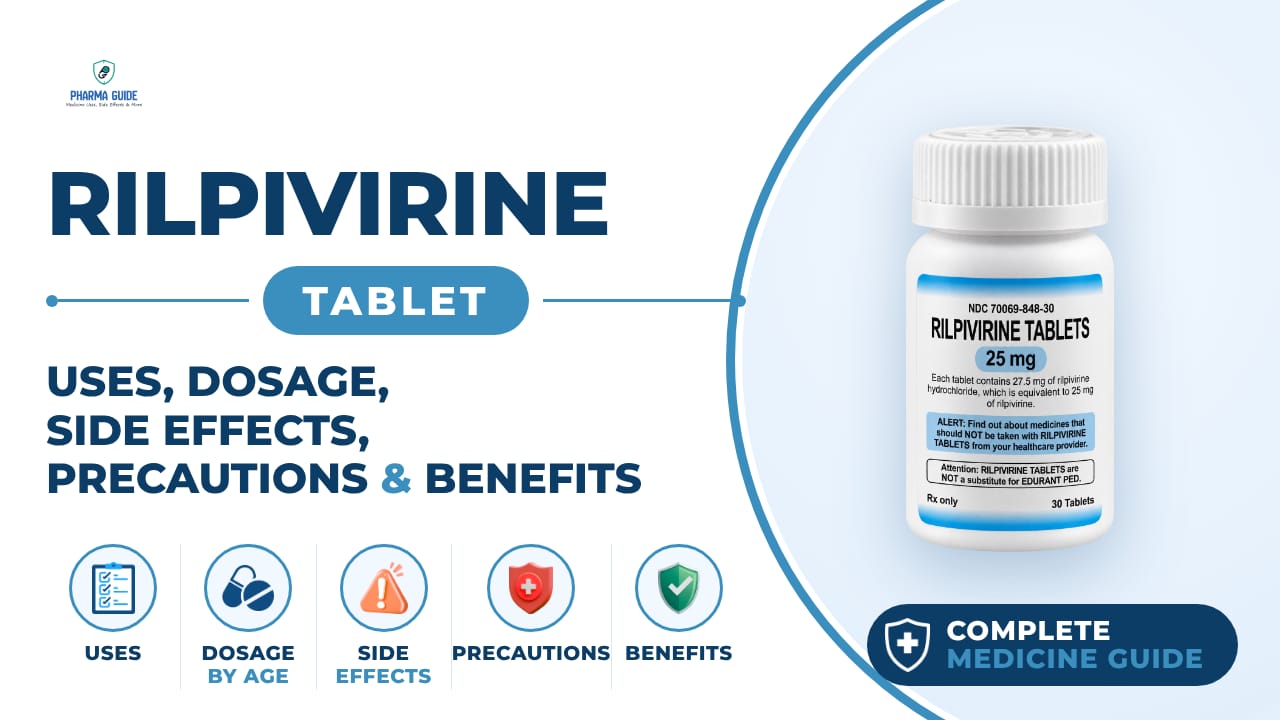
| Generic name | rilpivirine |
|---|---|
| Drug class | Non-nucleoside reverse transcriptase inhibitor (NNRTI) |
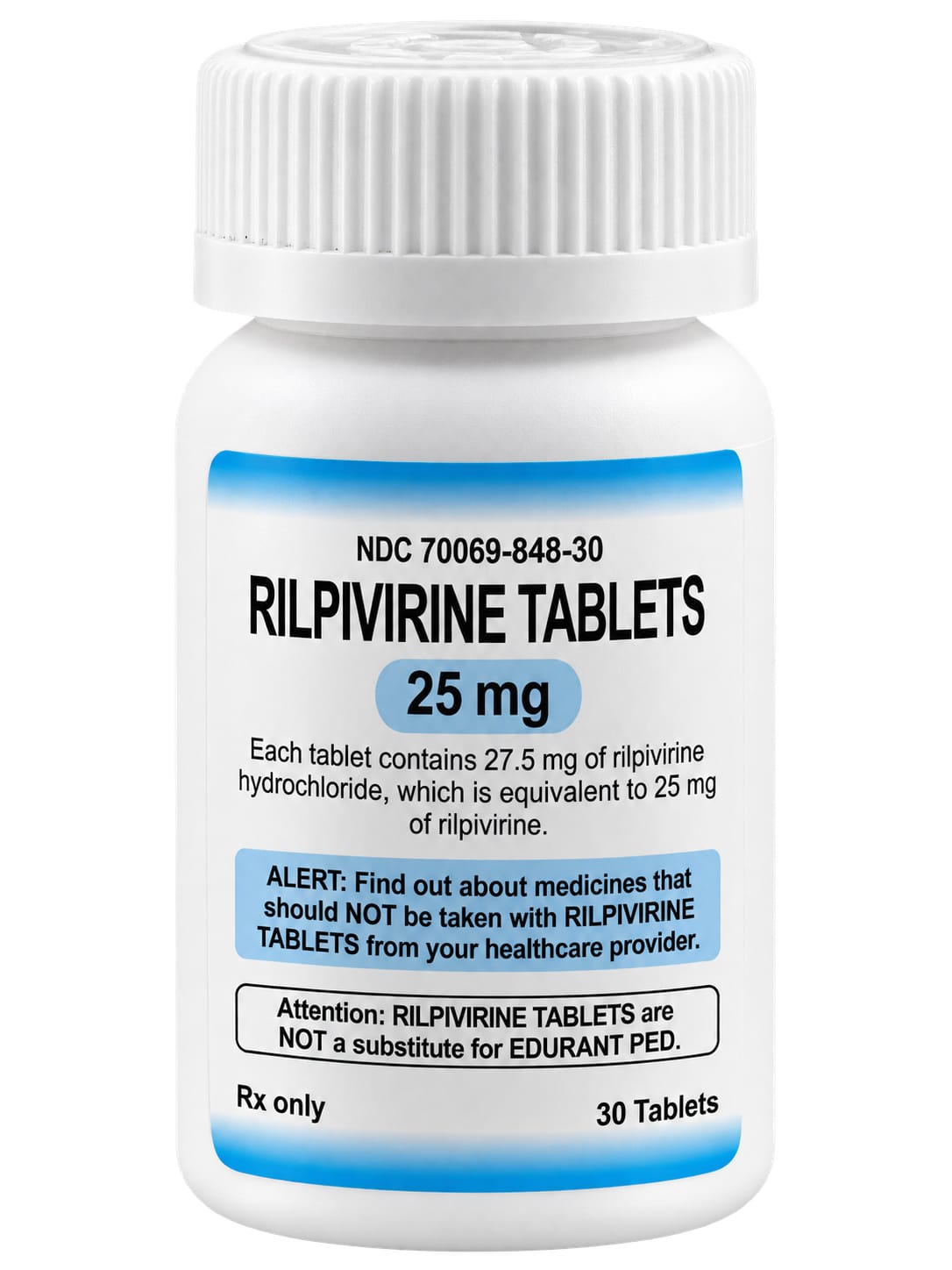
| Forms | 25 mg film-coated tablets, 2.5 mg tablets for oral suspension (EDURANT PED) |
Quick overview
Rilpivirine Tablet (Edurant) is a prescription antiviral medicine belonging to the non-nucleoside reverse transcriptase inhibitor (NNRTI) class. It is used together with other HIV medicines to treat HIV-1 infection and does not cure HIV or AIDS. It is taken once daily with a meal and is available as film-coated tablets and as tablets for oral suspension for younger patients.
What is Rilpivirine Tablet
Edurant is a prescription antiviral medicine used with other HIV medicines to treat HIV-1 infection. It belongs to a class of drugs called NNRTIs. It does not cure HIV or AIDS.
Rilpivirine Tablet uses
- Treatment of HIV-1 infection in combination with other antiretroviral agents in treatment-naive patients 2 years of age and older and weighing at least 14 kg (depending on formulation) with HIV-1 RNA less than or equal to 100,000 copies/mL
- Used in combination with VOCABRIA (cabotegravir) for short-term treatment of HIV-1 infection in adults and adolescents 12 years and older and weighing at least 35 kg who are virologically suppressed on a stable regimen
Benefits of Rilpivirine Tablet
- May help reduce the amount of HIV in the blood (viral load)
- May help increase CD4+ (T) cell counts, which can improve immune function and reduce the risk of opportunistic infections
- Supports long-term viral suppression
- Helps protect immune-system function
- Provides convenient once-daily oral dosing
- Helps reduce HIV-related complications when treatment is effective
How Rilpivirine Tablet works
Rilpivirine blocks an enzyme called HIV-1 reverse transcriptase that the virus needs to multiply, through non-competitive inhibition. It does not affect human cellular DNA polymerases.
Rilpivirine Tablet dosage
Take once daily with a meal; a protein drink or yogurt alone does not replace a meal. This medicine must always be used in combination with other antiretroviral drugs. Swallow tablets whole with water; do not alter the dose or stop therapy without consulting your doctor.
For the oral suspension tablets: disperse in drinking water and take immediately with a meal; do not crush, chew, or swallow whole.
If an H2-receptor antagonist (such as famotidine, cimetidine, nizatidine, or ranitidine) is taken, take it at least 12 hours before or at least 4 hours after this medicine. If antacids are taken, take them at least 2 hours before or at least 4 hours after this medicine.
If a dose is missed within 12 hours of the usual time, take it with a meal as soon as possible, then resume the normal schedule; if missed by more than 12 hours, skip the missed dose and resume the normal schedule. Do not take extra doses to make up for a missed dose.
When used with oral cabotegravir, take both medicines once a day at about the same time with a meal.
| Age group | Dose |
|---|---|
| Under 2 years | Safety and effectiveness not established |
| 2–11 years, 25 kg or more | 25 mg once daily with a meal |
| 12–17 years, 25 kg or more | 25 mg once daily with a meal |
Available forms and strengths
- 25 mg film-coated tablets
- 2.5 mg tablets for oral suspension (EDURANT PED)
Side effects of Rilpivirine Tablet
Common
- Depression
- Headache
- Trouble sleeping (insomnia)
- Rash
- Abnormal dreams
- Nausea
- Abdominal pain
- Fatigue
- Dizziness
- Decreased appetite
Serious
- Severe skin rash or allergic reaction, including DRESS (fever, blisters, mucosal involvement, conjunctivitis, facial swelling)
- Liver problems (jaundice, dark urine, loss of appetite, nausea, vomiting, pain in right side of stomach area)
- Severe depression, suicidal thoughts, or suicide attempts
- Immune reconstitution syndrome (new signs or symptoms of infection after starting treatment)
- Kidney problems such as nephrotic syndrome
Warnings and precautions
- Severe skin and allergic reactions, including DRESS, have occurred. Stop the medicine and seek medical help right away if a rash occurs with fever, blisters, mouth sores, swelling of the face, or signs of liver problems.
- Liver problems have occurred, including in people with no prior liver disease. People with hepatitis B or C infection are at higher risk and should have liver function monitored.
- Severe depression, including suicidal thoughts and suicide attempts, has been reported. Seek immediate medical help for severe depressive symptoms.
- This medicine must not be taken with certain other drugs because it can cause large decreases in drug levels, leading to loss of effectiveness and possible drug resistance.
- This medicine should not be combined with other drugs in its same class (NNRTIs).
- Caution is advised when combining this medicine with drugs known to have a risk of a serious heart rhythm problem called torsade de pointes.
- Immune reconstitution syndrome can occur, where the immune system responds to hidden infections after starting treatment, sometimes months later.
- It is not known if this medicine will harm an unborn baby. Tell your doctor if you are or plan to become pregnant; lower drug levels were seen during pregnancy, so viral load should be monitored closely.
- Women with HIV should not breastfeed due to risk of passing HIV to the baby and other potential risks.
- No dose adjustment is needed for mild or moderate kidney impairment, but caution and closer monitoring are needed in severe kidney impairment or end-stage kidney disease.
- No dose adjustment is needed for mild or moderate liver impairment; this medicine has not been studied in severe liver impairment.
- Heavy alcohol use may worsen liver-related concerns.
- Avoid driving if dizziness or fatigue occurs.
Storage
- Store at room temperature between 68°F to 77°F (20°C to 25°C), with excursions permitted to 59°-86°F (15°-30°C)
- Keep tablets in the original bottle to protect from light
- Keep oral suspension tablets in the original package to protect from light and moisture
- Keep out of the reach of children
When to see a doctor
- Stop taking this medicine and get medical help right away if you develop a rash along with fever, tiredness, muscle or joint aches, difficulty breathing or swallowing, blisters, mouth sores, swelling of the face, lips, tongue or throat, or redness/swelling of the eyes.
- Call your healthcare provider right away if you notice yellowing of your skin or eyes, light colored stools, dark or tea-colored urine, loss of appetite, pain on the right side of your stomach area, or nausea or vomiting, as these can be signs of liver problems.
- Call your healthcare provider right away if you feel sad, hopeless, anxious, restless, or have thoughts of hurting yourself.
- Tell your healthcare provider right away if you start having any new symptoms after starting your HIV-1 medicine, as this could be a sign of immune reconstitution syndrome.
- If you take too much of this medicine, call your healthcare provider or go to the nearest hospital emergency room right away.
Alternatives
- Dolutegravir-based regimens
- Bictegravir-based regimens
- Raltegravir-based regimens
Watch the video
FAQs
What is Rilpivirine Tablet used for?
Rilpivirine Tablet (Edurant) is used together with other HIV medicines to treat HIV-1 infection in treatment-naive patients 2 years and older weighing at least 14 kg, and with VOCABRIA (cabotegravir) for short-term treatment in virologically suppressed adults and adolescents 12 years and older weighing at least 35 kg. It does not cure HIV or AIDS.
How should I take Rilpivirine Tablet?
Take it once daily with a meal, swallowing the tablet whole with water; a protein drink or yogurt alone does not count as a meal. It must always be used with other antiretroviral drugs. The oral suspension tablets should be dispersed in drinking water and taken immediately with a meal, not crushed, chewed, or swallowed whole.
What should I do if I miss a dose?
If you miss a dose within 12 hours of your usual time, take it with a meal as soon as possible and then resume your normal schedule. If it has been more than 12 hours, skip the missed dose and resume your normal schedule. Do not take extra doses to make up for a missed one.
What are the serious side effects of Rilpivirine Tablet?
Serious side effects include severe skin or allergic reactions such as DRESS, liver problems, severe depression or suicidal thoughts, immune reconstitution syndrome, and kidney problems such as nephrotic syndrome.
Can Rilpivirine Tablet be taken with antacids or H2-receptor antagonists?
H2-receptor antagonists like famotidine, cimetidine, nizatidine, or ranitidine should be taken at least 12 hours before or 4 hours after this medicine. Antacids should be taken at least 2 hours before or 4 hours after this medicine.
General information, not medical advice
Your prescriber and the leaflet in your pack know your situation. This page does not.
- Follow your prescriber and the leaflet
- Don't start, stop, or change a dose on your own
- Doses and warnings differ by country and product
Sources
Video
Related medicines
Pifeltro Tablet: Uses, Dosage, Side Effects, Precautions and Alternates
Non-nucleoside reverse transcriptase inhibitor (NNRTI)
Pifeltro Tablet (doravirine) is an NNRTI used with other HIV-1 medicines to control infection. Learn its uses, dosage, side effects, and precautions.

Injectafer Injection: Uses, Dosage, Side Effects, Precautions and Alternates
Iron products
Injectafer (ferric carboxymaltose) treats iron deficiency anemia and heart failure-related iron deficiency via IV. Learn uses, dosage, side effects, and