
Safety
General information, not medical advice
Your prescriber and the leaflet in your pack know your situation. This page does not.
- Follow your prescriber and the leaflet
- Don't start, stop, or change a dose on your own
- Doses and warnings differ by country and product
Pilocarpine Eye Drops: Uses, Dosage, Side Effects, Precautions and Alternates
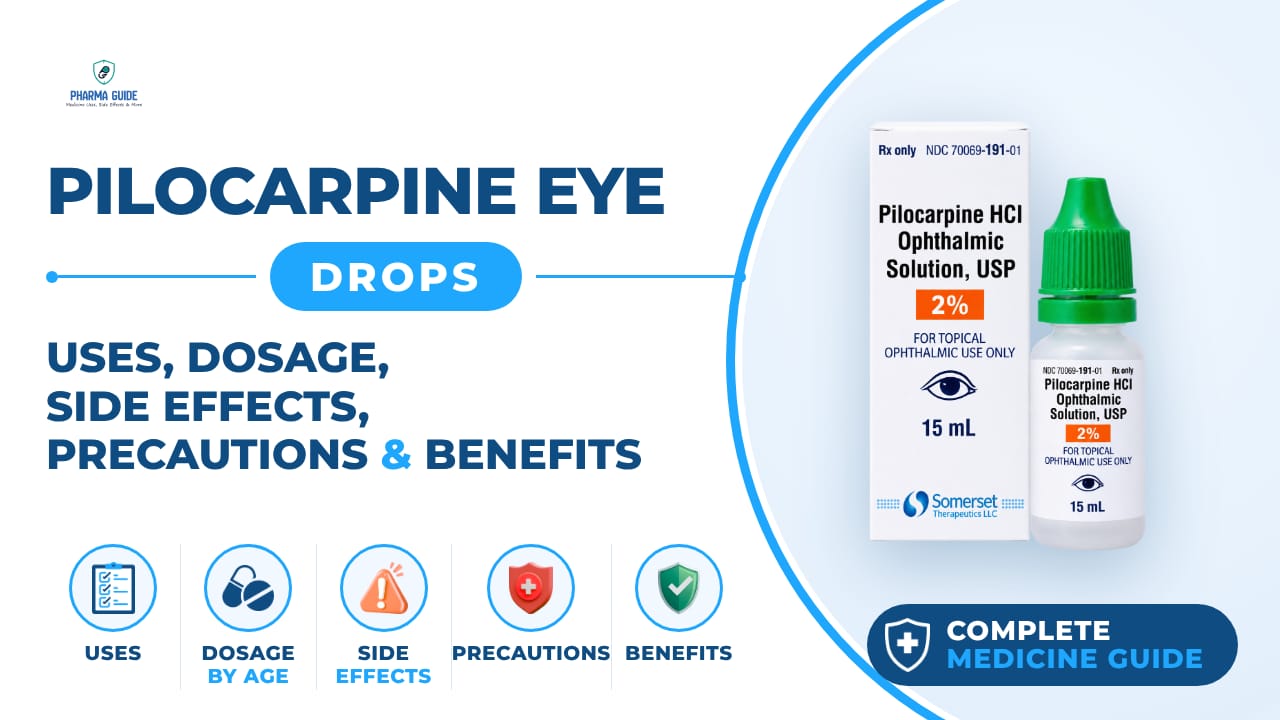
| Generic name | Pilocarpine hydrochloride |
|---|---|
| Drug class | Cholinergic anti-glaucoma agent (miotic) |
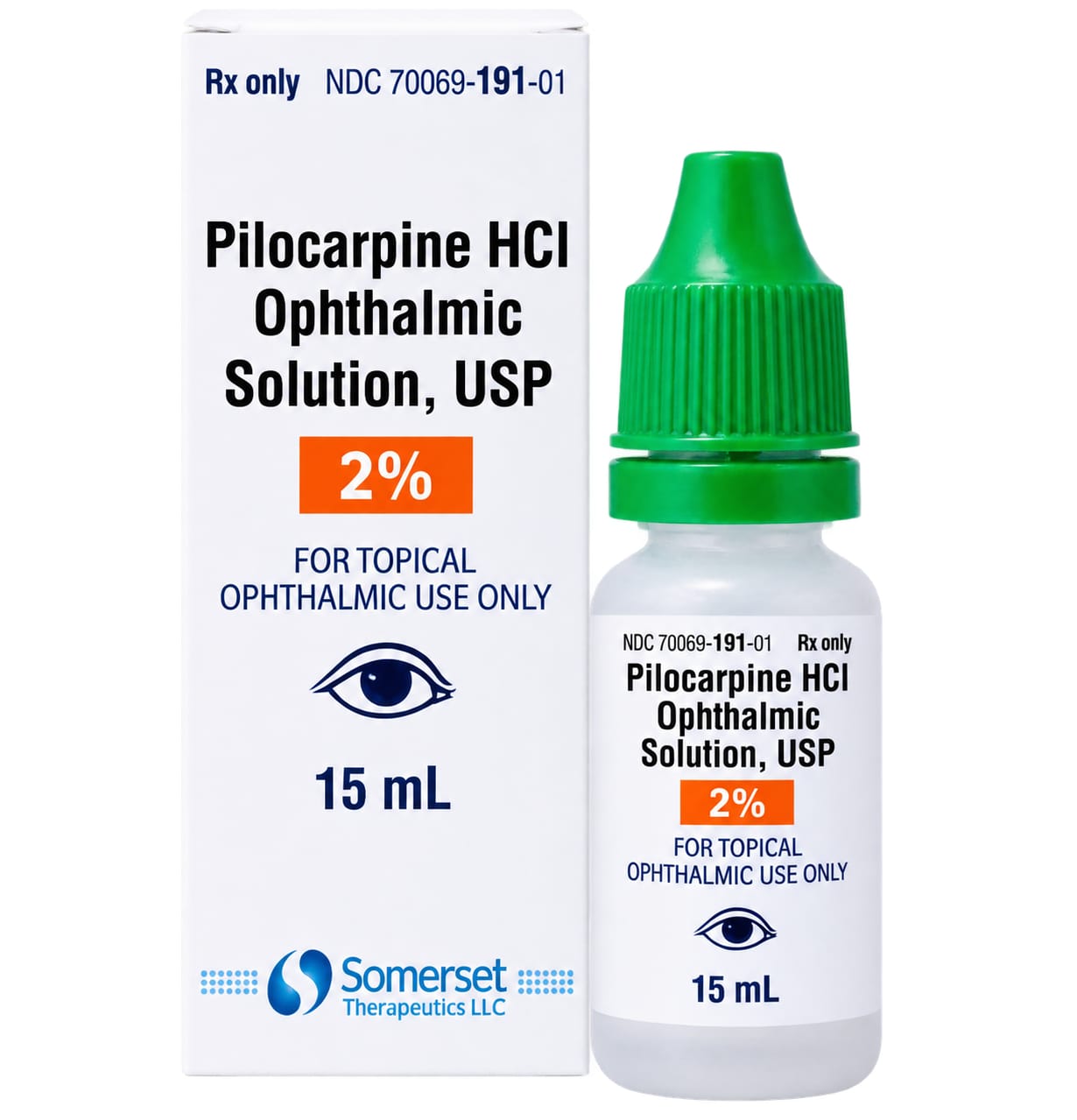
| Forms | Eye drop solution (2%, 4%, and 1.25%), Eye gel, Eye insert (ocular system) |
Quick overview
Pilocarpine Eye Drops (pilocarpine hydrochloride) is a prescription cholinergic anti-glaucoma agent, also called a miotic, used mainly to treat high pressure inside the eye caused by glaucoma or other eye conditions. It works by shrinking the pupil and helping fluid drain out of the eye, which lowers eye pressure. It is available as eye drops, and in some products as a gel or a small eye insert.
What is Pilocarpine Eye Drops
Pilocarpine is a prescription eye medicine used mainly to treat glaucoma and high pressure inside the eye. It comes as eye drops, and in some products, a gel or a small insert placed in the eye.
Pilocarpine Eye Drops uses
- Treats high pressure inside the eye caused by glaucoma or other eye diseases, including ocular hypertension
- Used with or without other eye medications
- May be used during certain eye surgeries
- Used to reverse the effects of drugs that enlarge the pupil, such as during an eye exam
- Some products are used to treat blurry near vision caused by aging (presbyopia)
Benefits of Pilocarpine Eye Drops
- Lowers high pressure inside the eye, which helps prevent blindness, vision loss, and nerve damage
- Can improve blurry near vision related to presbyopia in some products
How Pilocarpine Eye Drops works
Pilocarpine makes the pupil of the eye shrink and helps more fluid drain out of the eye, which lowers the pressure inside the eye.
Pilocarpine Eye Drops dosage
Use in the affected eye or eyes exactly as your doctor directs. Wash your hands before and after using the drops. Do not let the dropper tip touch your eye, eyelid, or any other surface. If you wear contact lenses, take them out before using the drops and wait at least 10 minutes before putting them back in.
Tilt your head back, pull down the lower eyelid to form a small pocket, and place the drop into that pocket. Close your eyes gently after the drop goes in and avoid blinking or rubbing your eye. Press a finger gently at the inner corner of the eye near the nose for one to two minutes after applying the drop, to keep the medicine from draining away. Wipe away any extra liquid with a tissue and replace the dropper cap after each use.
If you use more than one eye medicine, wait at least five minutes between products, and use eye drops before ointments or gels. Wait for your vision to clear before driving or using machinery.
Use the drops regularly and at the same times each day, even if you do not notice symptoms, since glaucoma often has no symptoms. If you miss a dose, use it as soon as you remember, unless it is almost time for the next dose — in that case skip the missed dose and continue your regular schedule; do not double up.
| Age group | Dose |
|---|---|
| Under 2 years | 1% solution: 1 drop in affected eye(s) 3 times daily; specialist supervision required |
| 2–17 years | Same as adults: 1 drop in affected eye(s) up to 4 times daily; specialist-directed use |
| 18–64 years | 1 drop in affected eye(s) up to 4 times daily |
| 65 years and older | 1 drop in affected eye(s) up to 4 times daily |
Available forms and strengths
- Eye drop solution (2%, 4%, and 1.25%)
- Eye gel
- Eye insert (ocular system)
Side effects of Pilocarpine Eye Drops
Common
- Temporary burning or stinging in the eye
- Temporary blurred vision
- Poor vision in dim light or trouble seeing at night
- Headache or brow ache
- Eye redness
- Eye irritation
- Watering of the eyes
- Dizziness
- Nausea
Serious
- Eye pain or severe eye irritation
- Vision changes such as seeing floaters or flashes of light
- Sudden loss of vision
- Signs of retinal tear or detachment, such as a curtain-like shadow across your vision
- Signs of an allergic reaction, such as rash, hives, itching, swelling of the face/lips/tongue/throat, severe dizziness, or trouble breathing or swallowing
- Increased sweating, muscle tremors, nausea, vomiting, or diarrhea
- Fast or slow heartbeat, chest tightness, or trouble breathing
- Fever, joint pain, stiffness, or swelling
Warnings and precautions
- This medicine should be used during pregnancy only if it's clearly needed. Talk with your doctor about the risks and benefits.
- It isn't known whether this medicine passes into breast milk. Check with your doctor before breastfeeding while using it.
- May reduce vision in low light. Use caution when driving at night or doing hazardous activities in poor lighting.
- Rare cases of retinal detachment have been reported. A retinal examination is recommended before starting treatment, particularly in patients with retinal disease.
- Pilocarpine is not recommended when iritis is present.
- Children with congenital glaucoma should use this medicine cautiously because it can occasionally cause a paradoxical increase in eye pressure.
- Remove contact lenses before use and wait 10 minutes before reinserting them.
- Keep at least 5 minutes between different ophthalmic medicines.
- Do not let the dropper tip touch the eye, fingers, or other surfaces to avoid contamination.
- Pilocarpine can cause accommodative spasm and difficulty changing focus. Do not drive if vision is unclear.
- This medicine can temporarily blur your vision and make it harder to see in dim light or at night. Do not drive, use machinery, or do anything that needs clear vision until you know how the medicine affects you and your vision has cleared.
- Rarely, serious eye problems such as a retinal tear or detachment can happen with this medicine. This risk may be higher in people with retinal disease.
- Tell your doctor before using this medicine if you have other eye problems, such as iritis or a detached retina.
- This medicine may be harmful if swallowed.
- Do not use this medicine if you have inflammation of the colored part of the eye (iritis or uveitis).
- Use with caution if you have asthma, heart disease, low or high blood pressure, an overactive thyroid, stomach ulcers, stomach spasms, urinary blockage, or Parkinson's disease, since this medicine could make these conditions worse.
- Older adults may have a higher risk of mental changes such as confusion, unusual thinking, or dementia-like symptoms while using this medicine.
Storage
- Different brands of this medication have different storage needs. Check the product package for instructions on how to store your brand, or ask your pharmacist.
- Keep all medications away from children and pets.
- If you are using single-use containers, discard any unused medication immediately after use.
- Do not flush medications down the toilet or pour them into a drain unless instructed to do so.
- Store at room temperature, away from heat, moisture, and direct light; keep from freezing.
- Some single-use vials should be stored in a refrigerator before opening, then can be kept at room temperature after opening and used within 30 days.
- Once a bottle has been opened, some formulations only keep for 2 weeks, so check your product's specific instructions.
When to see a doctor
- Get medical help right away if you notice signs of a serious allergic reaction, such as rash, itching or swelling of the face, tongue, or throat, severe dizziness, or trouble breathing.
- Call your doctor right away if you have eye pain or notice vision changes such as floaters or flashes of light.
- Get medical help right away if you start seeing flashing lights, floaters, a curtain-like shadow across your eye, or have sudden loss of eyesight, as these can be signs of a serious retinal problem.
- If you think someone has taken too much of this medicine and has serious symptoms like passing out or trouble breathing, get emergency help right away. Otherwise, contact your local poison control center.
- Call your doctor right away if you notice sudden loss of vision, sweating, nausea, vomiting, or diarrhea.
Alternatives
- Latanoprost
- Brimonidine
- Bimatoprost
Watch the video
FAQs
What is Pilocarpine Eye Drops used for?
It treats high pressure inside the eye caused by glaucoma or other eye diseases, including ocular hypertension. It may also be used with other eye medications, during certain eye surgeries, to reverse pupil-dilating drugs after an eye exam, and in some products to treat blurry near vision from presbyopia.
How does Pilocarpine Eye Drops work?
It makes the pupil of the eye shrink and helps more fluid drain out of the eye, which lowers the pressure inside the eye.
What are the common side effects of Pilocarpine Eye Drops?
Common side effects include temporary burning or stinging, temporary blurred vision, poor vision in dim light or trouble seeing at night, headache or brow ache, eye redness, irritation, watering of the eyes, dizziness, and nausea.
How should I use Pilocarpine Eye Drops if I wear contact lenses?
Take out your contact lenses before using the drops and wait at least 10 minutes before putting them back in.
What should I do if I miss a dose of Pilocarpine Eye Drops?
Use it as soon as you remember, unless it is almost time for the next dose, in which case skip the missed dose and continue your regular schedule without doubling up.
General information, not medical advice
Your prescriber and the leaflet in your pack know your situation. This page does not.
- Follow your prescriber and the leaflet
- Don't start, stop, or change a dose on your own
- Doses and warnings differ by country and product
Sources
Video
Related medicines

Injectafer Injection: Uses, Dosage, Side Effects, Precautions and Alternates
Iron products
Injectafer (ferric carboxymaltose) treats iron deficiency anemia and heart failure-related iron deficiency via IV. Learn uses, dosage, side effects, and

Gliclazide Tablet: Uses, Dosage, Side Effects, Precautions and Alternates
Sulfonylurea (hypoglycemic/antidiabetic agent)
Gliclazide Tablet is a sulfonylurea for type 2 diabetes that boosts insulin release. Learn about dosage, side effects, warnings, and precautions.