
Safety
General information, not medical advice
Your prescriber and the leaflet in your pack know your situation. This page does not.
- Follow your prescriber and the leaflet
- Don't start, stop, or change a dose on your own
- Doses and warnings differ by country and product
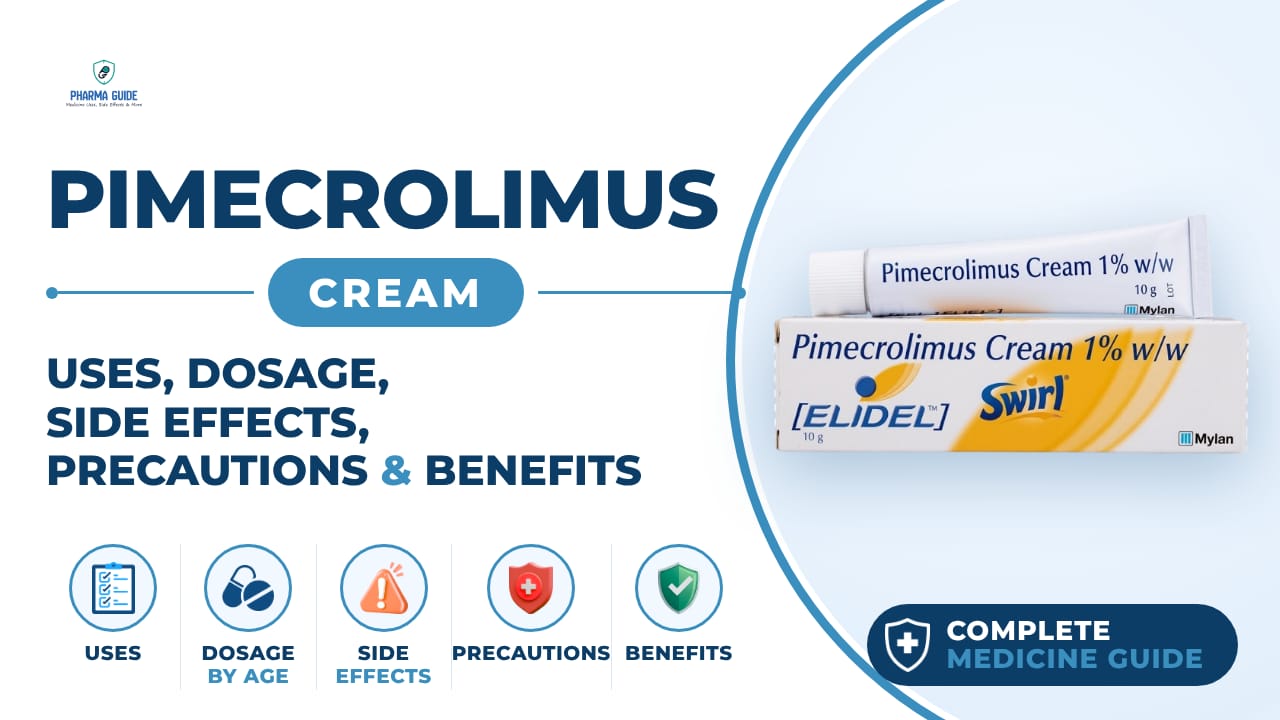
Pimecrolimus Cream: Uses, Dosage, Side Effects, Precautions and Alternates
| Generic name | pimecrolimus |
|---|---|
| Drug class | topical calcineurin inhibitor |
| Forms | Cream (1%) |
Quick overview
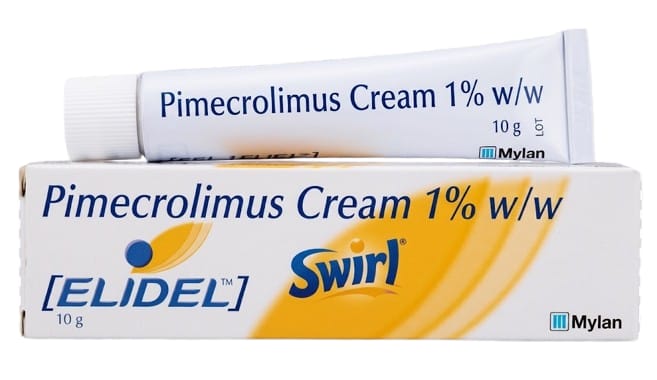
Pimecrolimus Cream (pimecrolimus) is a prescription topical calcineurin inhibitor used to treat mild to moderate eczema (atopic dermatitis). It is typically used after other prescription medicines have not worked, or when a doctor recommends avoiding other treatments. It helps relieve itching, redness, and inflammation associated with eczema.
What is Pimecrolimus Cream
Pimecrolimus cream is a prescription medicine applied to the skin to treat mild to moderate eczema (atopic dermatitis). It is used after other prescription medicines have not worked, or when a doctor recommends avoiding other treatments.
Pimecrolimus Cream uses
- Mild to moderate atopic dermatitis (eczema)
- Itchy skin caused by eczema
- Redness associated with eczema
- Inflamed skin associated with atopic dermatitis
- Recurring eczema symptoms
Benefits of Pimecrolimus Cream
- Helps reduce skin redness.
- Relieves itching and irritation.
- Reduces eczema-related inflammation.
- Helps improve skin comfort.
- Supports control of eczema flare-ups.
How Pimecrolimus Cream works
The cream calms down the skin's overactive immune response by blocking a protein called calcineurin, which helps reduce inflammation and relieve itching.
Pimecrolimus Cream dosage
Wash your hands before applying the cream. Make sure the skin is dry if you apply it after a bath or shower. Apply a thin layer only to the skin areas affected by eczema, twice a day, as directed by your doctor. Use the smallest amount needed to control your symptoms, and rub the cream in gently and completely. Wash your hands with soap and water afterward, unless you are treating your hands.
Do not bathe, shower, or swim right after applying the cream, as this can wash it off. You may wear normal clothing over treated areas, but do not use bandages, dressings, or wraps. You can apply moisturizer after the cream, once it has been absorbed; ask your doctor which products to use.
Stop using the cream when your eczema symptoms go away, or as your doctor directs. If you miss a dose, apply it as soon as you remember, but skip it if it's almost time for your next dose; do not double up. Call your doctor if symptoms get worse or do not improve after 6 weeks of treatment.
| Age group | Dose |
|---|---|
| Under 18 years | Not recommended |
| 18–64 years | 1% cream, twice/day |
| 65+ years | 1% cream, twice/day |
Available forms and strengths
- Cream (1%)
Side effects of Pimecrolimus Cream
Common
- Burning, warmth, stinging, soreness, or redness where applied
- Headache
- Common cold or stuffy nose, sore throat
- Cough
- Flu-like symptoms
- Fever
- Viral skin infections such as cold sores, chicken pox, shingles, or warts
- Swollen glands (lymph nodes)
- Nosebleed
- Diarrhea
- Painful menstrual periods
- Warts, bumps, or other growths on skin
- Eye irritation
Serious
- Signs of serious allergic reaction: hives, itching, swelling of the face, lips, tongue, throat, hands, feet, ankles, or lower legs
- Difficulty breathing or swallowing
- New or worsening rash
- Crusting, oozing, or blistering (signs of skin infection)
- Sore or red throat with fever or flu-like symptoms
- Ear pain or discharge
- Skin cancer or lymphoma (rare, link not proven)
Warnings and precautions
- It is not known if this cream is safe to use for a long time. A small number of people using it have developed cancer such as skin cancer or lymphoma, though a direct link has not been proven. Use it only on affected skin, for short periods, and not continuously for a long time.
- Do not use this cream on children younger than 2 years old.
- Avoid sun lamps, tanning beds, and ultraviolet light therapy, and limit time in the sun during treatment, even when the medicine is not on your skin.
- Do not cover the treated skin with bandages, dressings, or wraps; normal clothing is fine.
- This medicine is for skin use only. Avoid getting it in your eyes, nose, mouth, vagina, or rectum. If this happens, wipe off the cream and rinse with cold water.
- Do not use on skin areas with cancer or pre-cancerous changes.
- Tell your doctor if you have Netherton's syndrome, a weakened immune system, or any skin infection such as chicken pox, shingles, or herpes, since this medicine may not be right for you.
- It is not known if this medicine is safe for an unborn baby. Tell your doctor if you are or plan to become pregnant.
- It is not known if the medicine passes into breast milk. Talk to your doctor about whether to use the cream or breastfeed.
- Avoid excessive sunlight, tanning beds, and UV therapy.
- Do not cover treated skin with airtight bandages.
- Ask your doctor about drinking alcohol during treatment, since in rare cases it can make your face flushed, red, or feel hot.
- Inform your doctor if you have a weakened immune system.
Storage
- Store at 20°C to 25°C (68°F to 77°F), with brief exposure to 15°C to 30°C (59°F to 86°F) permitted
- Do not freeze
- Keep out of the reach of children
- Keep the medication in the container it came in, tightly closed, away from excess heat and moisture (not in the bathroom)
- Dispose of unneeded medication through a medicine take-back program; do not flush it down the toilet
When to see a doctor
- Call your doctor if you swallow the cream.
- Call your doctor if your eczema symptoms get worse or don't improve after 6 weeks of treatment.
- Get help right away for signs of a serious allergic reaction, such as difficulty breathing, swelling of the face or throat, or hives.
- Call your doctor right away if you are exposed to chicken pox, shingles, or similar viruses while using this medicine.
- Call your doctor if you have used the cream for 6 weeks and your symptoms have not improved, or if your eczema symptoms return after treatment.
Alternatives
- Eucrisa
- Tacrolimus Cream
- Elidel
Watch the video
FAQs
What is Pimecrolimus Cream used for?
It is used to treat mild to moderate eczema (atopic dermatitis), helping relieve itching, redness, and inflammation, typically after other prescription medicines have not worked.
How do you apply Pimecrolimus Cream?
Apply a thin layer only to the affected skin areas twice a day as directed, rubbing it in gently. Avoid bathing, showering, or swimming right after application, and do not cover treated skin with bandages or wraps.
What are the common side effects of Pimecrolimus Cream?
Common side effects include burning, warmth, stinging, or redness where applied, headache, cold or flu-like symptoms, cough, fever, nosebleed, diarrhea, and eye irritation.
Can children use Pimecrolimus Cream?
No, it should not be used on children younger than 2 years old, and it is not recommended for anyone under 18 years.
What precautions should be followed while using Pimecrolimus Cream?
Avoid sun lamps, tanning beds, and UV therapy, limit sun exposure, do not use airtight bandages over treated skin, and avoid contact with eyes, nose, mouth, vagina, or rectum.
General information, not medical advice
Your prescriber and the leaflet in your pack know your situation. This page does not.
- Follow your prescriber and the leaflet
- Don't start, stop, or change a dose on your own
- Doses and warnings differ by country and product
Sources
Video
Related medicines

Injectafer Injection: Uses, Dosage, Side Effects, Precautions and Alternates
Iron products
Injectafer (ferric carboxymaltose) treats iron deficiency anemia and heart failure-related iron deficiency via IV. Learn uses, dosage, side effects, and

Gliclazide Tablet: Uses, Dosage, Side Effects, Precautions and Alternates
Sulfonylurea (hypoglycemic/antidiabetic agent)
Gliclazide Tablet is a sulfonylurea for type 2 diabetes that boosts insulin release. Learn about dosage, side effects, warnings, and precautions.