
Safety
General information, not medical advice
Your prescriber and the leaflet in your pack know your situation. This page does not.
- Follow your prescriber and the leaflet
- Don't start, stop, or change a dose on your own
- Doses and warnings differ by country and product
Pioglitazone Tablet: Uses, Dosage, Side Effects, Precautions and Alternates
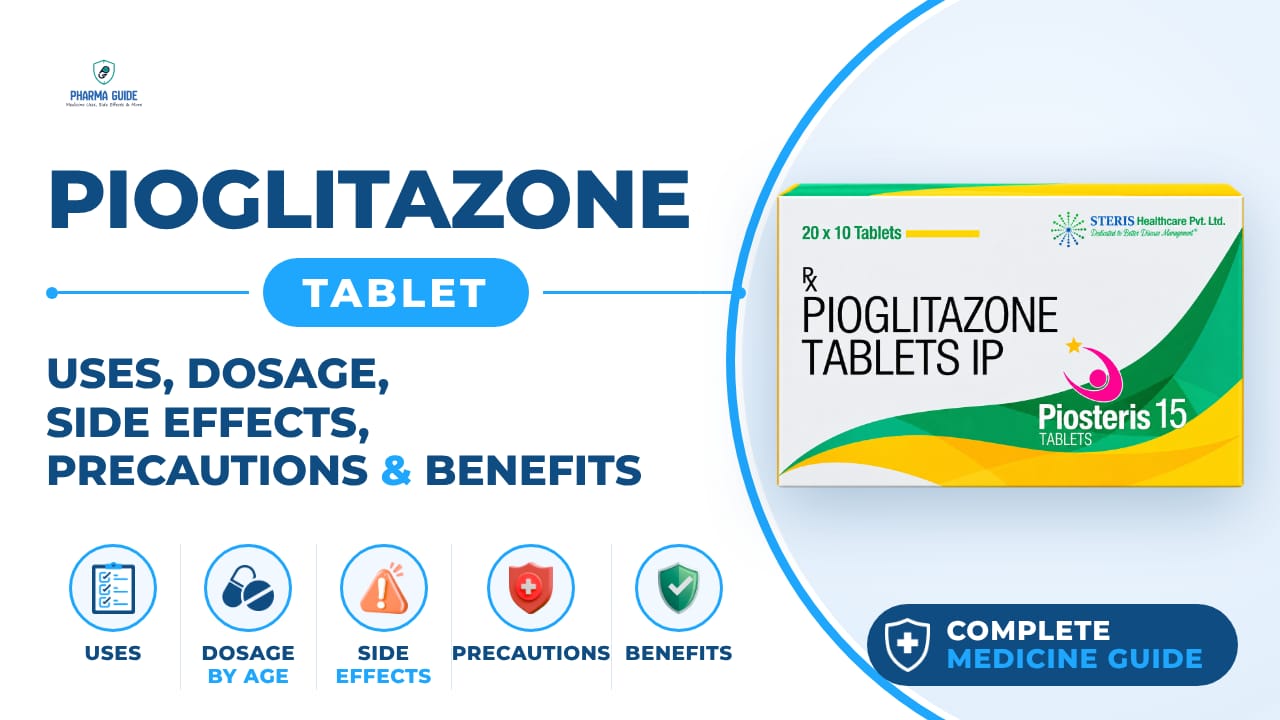
| Generic name | Pioglitazone |
|---|---|
| Drug class | Thiazolidinedione (TZD), Antidiabetic agent |
| Forms | Tablet |
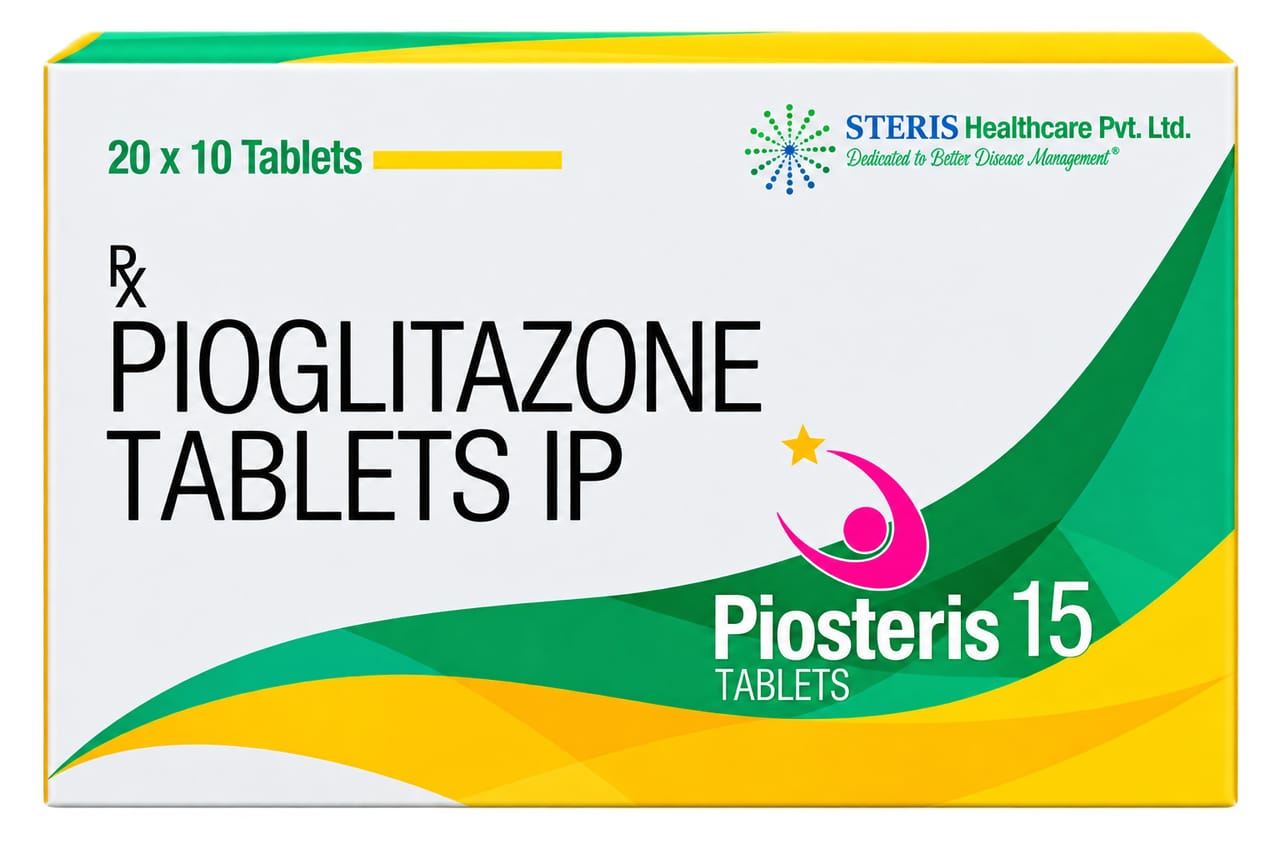
Quick overview
Pioglitazone Tablet is a thiazolidinedione medicine used along with diet and exercise to treat type 2 diabetes. It helps the body use insulin more effectively and lowers blood sugar levels by improving insulin sensitivity and reducing sugar production by the liver. It is also known by the brand name Actos.
What is Pioglitazone Tablet
Pioglitazone is a medicine used along with diet and exercise to treat type 2 diabetes. It helps the body use insulin more effectively and lowers blood sugar levels. The brand name is Actos.
Pioglitazone Tablet uses
- Type 2 diabetes mellitus (high blood sugar)
Benefits of Pioglitazone Tablet
- Helps lower high blood sugar levels in adults with type 2 diabetes.
- Improves the body's sensitivity to insulin.
- Helps muscle and fat cells use glucose more effectively.
- Helps reduce fasting blood glucose and improve overall glucose control.
- Helps lower HbA1c, supporting better long-term diabetes management.
- May be used alone or with other diabetes medicines when additional blood sugar control is needed.
How Pioglitazone Tablet works
Pioglitazone works by making your body respond better to insulin and by reducing the amount of sugar your liver makes.
Pioglitazone Tablet dosage
Take by mouth with a glass of water. Take your medication at the same time each day. Do not take more often than directed. The tablets may be taken with or without food. Do not break, crush, or chew the tablet; swallow it whole with an adequate amount of water. Follow the special diet your doctor gave you along with this medicine, and exercise regularly. Talk to your care team about use of this medication in children; special care may be needed. If you miss a dose, take it as soon as you can; if it is almost time for your next dose, take only that dose; do not take double or extra doses.
| Age group | Dose |
|---|---|
| Under 18 years | Not recommended; safety and effectiveness are not established |
| 18–64 years | Start 15–30 mg once daily |
| 65+ years | Usually start 15 mg once daily and increase cautiously |
| Heart failure (NYHA Class I–II) | Start 15 mg once daily with careful monitoring |
Available forms and strengths
- Tablet
Side effects of Pioglitazone Tablet
Common
- Headache
- Muscle pain or soreness
- Runny or stuffy nose
- Sore throat
- Blurred vision or other changes in vision
- Cough
- Dry mouth
- Increased hunger
- Increased thirst
- Increased urination
- Sweating
- Stomachache
- Weight gain
Serious
- Allergic reactions—skin rash, itching, hives, swelling of the face, lips, tongue, or throat
- Change in vision such as blurry vision, seeing halos around lights, vision loss
- Heart failure—shortness of breath, swelling of the ankles, feet, or hands, sudden weight gain, unusual weakness or fatigue
- Liver injury—right upper belly pain, loss of appetite, nausea, light-colored stool, dark yellow or brown urine, yellowing skin or eyes, unusual weakness or fatigue
- Red or dark brown urine, pain or trouble when passing urine, passing frequent amounts of urine
- Chest pain, decreased urine output, dilated neck veins, extreme fatigue, irregular breathing, irregular heartbeat, tightness in the chest, trouble breathing
- Pain or swelling in the arms or legs without an injury, pale skin, unusual bleeding or bruising
- Bladder cancer symptoms - blood in urine, frequent or urgent need to urinate, painful urination, pain in the back, lower abdomen, or stomach
- Bone fractures
Warnings and precautions
- Pregnancy: Pioglitazone is not recommended during pregnancy unless it is absolutely necessary. Talk to your doctor before taking it if you are pregnant.
- Breastfeeding: Pioglitazone is not recommended while breastfeeding because it may cause unwanted effects in your infant. Talk with your doctor about the risks and benefits first.
- Kidney: Tell your care team if you have kidney disease before taking this medicine.
- Liver: Use with caution if you have liver disease, as this medicine may make liver problems worse. Pioglitazone is not recommended if you have active liver disease.
- Alcohol: Avoid alcohol while taking pioglitazone because it can increase the risk of side effects and can affect blood sugar levels.
- Driving: Avoid driving or operating machinery if you experience visual disturbances while taking pioglitazone.
- This medicine should not be used if you have severe heart failure, type 1 diabetes, or diabetic ketoacidosis.
- Pioglitazone may increase the risk of bladder cancer if taken for more than 12 months. Tell your doctor right away about blood in the urine, urgent or frequent need to urinate, painful urination, or pain in the back, lower abdomen, or stomach.
- This medicine can cause fluid retention or swelling (edema) and may worsen or bring on heart failure, especially if you already have heart disease or fluid retention.
- This medicine may increase the risk of bone fractures, especially in women.
- This medicine may cause some women with irregular periods to start ovulating, which can increase the chance of pregnancy. Discuss birth control with your doctor.
- Use with caution if you have diabetic macular edema (swelling at the back of the eye), as this medicine may make the condition worse.
Storage
- Store at 20–25°C (68–77°F) at controlled room temperature.
- Keep in a cool, dry place away from excessive heat.
- Protect tablets from light and moisture.
- Keep in the original, tightly closed container until use.
- Avoid storing in bathrooms or other humid areas.
- Keep out of reach of children and pets.
When to see a doctor
- Get medical help right away if you have symptoms of a serious heart problem, such as rapid weight gain, shortness of breath, chest pain, extreme tiredness, irregular heartbeat, or swelling of the hands, wrists, ankles, or feet.
- Get medical help right away if you have signs of a liver problem, such as stomach pain, dark urine, loss of appetite, nausea or vomiting, unusual tiredness, or yellow eyes or skin.
- Check with your doctor right away if you notice blurred vision, decreased vision, or any other change in vision.
- Seek immediate medical attention if you have signs of an allergic reaction such as skin rash, itching or swelling of the face, tongue, or throat, severe dizziness, or difficulty breathing.
- If you think you have taken too much of this medicine, contact a poison control center or go to an emergency room right away.
- Get medical help right away if your blood sugar drops too low and you feel unable to care for yourself.
Alternatives
- Gliclazide
- Empagliflozin
- Semaglutide
- Sitagliptin
- Metformin
Watch the video
FAQs
What is Pioglitazone Tablet used for?
Pioglitazone is used along with diet and exercise to treat type 2 diabetes mellitus by helping the body use insulin more effectively and lowering blood sugar levels.
How does Pioglitazone work?
It works by making the body respond better to insulin and by reducing the amount of sugar the liver makes, helping muscle and fat cells use glucose more effectively.
What is the dosage of Pioglitazone for adults?
Adults aged 18–64 years usually start with 15–30 mg once daily, while those 65 and older typically start at 15 mg once daily and increase cautiously under medical supervision.
What are the serious side effects of Pioglitazone?
Serious side effects include allergic reactions, vision changes, heart failure symptoms, liver injury, bladder cancer symptoms, bone fractures, and signs of blood clots or unusual bleeding.
Can Pioglitazone be taken during pregnancy or breastfeeding?
Pioglitazone is not recommended during pregnancy unless absolutely necessary, and it is not recommended while breastfeeding because it may cause unwanted effects in the infant.
General information, not medical advice
Your prescriber and the leaflet in your pack know your situation. This page does not.
- Follow your prescriber and the leaflet
- Don't start, stop, or change a dose on your own
- Doses and warnings differ by country and product
Sources
Video
Related medicines

Injectafer Injection: Uses, Dosage, Side Effects, Precautions and Alternates
Iron products
Injectafer (ferric carboxymaltose) treats iron deficiency anemia and heart failure-related iron deficiency via IV. Learn uses, dosage, side effects, and

Gliclazide Tablet: Uses, Dosage, Side Effects, Precautions and Alternates
Sulfonylurea (hypoglycemic/antidiabetic agent)
Gliclazide Tablet is a sulfonylurea for type 2 diabetes that boosts insulin release. Learn about dosage, side effects, warnings, and precautions.