
Safety
General information, not medical advice
Your prescriber and the leaflet in your pack know your situation. This page does not.
- Follow your prescriber and the leaflet
- Don't start, stop, or change a dose on your own
- Doses and warnings differ by country and product
Piperacillin + Tazobactam Injection: Uses, Dosage, Side Effects, Precautions and Alternates

| Generic name | Piperacillin and tazobactam |
|---|---|
| Drug class | Penicillin antibiotic combined with a beta-lactamase inhibitor |
| Forms | Powder for solution, Solution (premixed, for injection into a vein) |
Quick overview
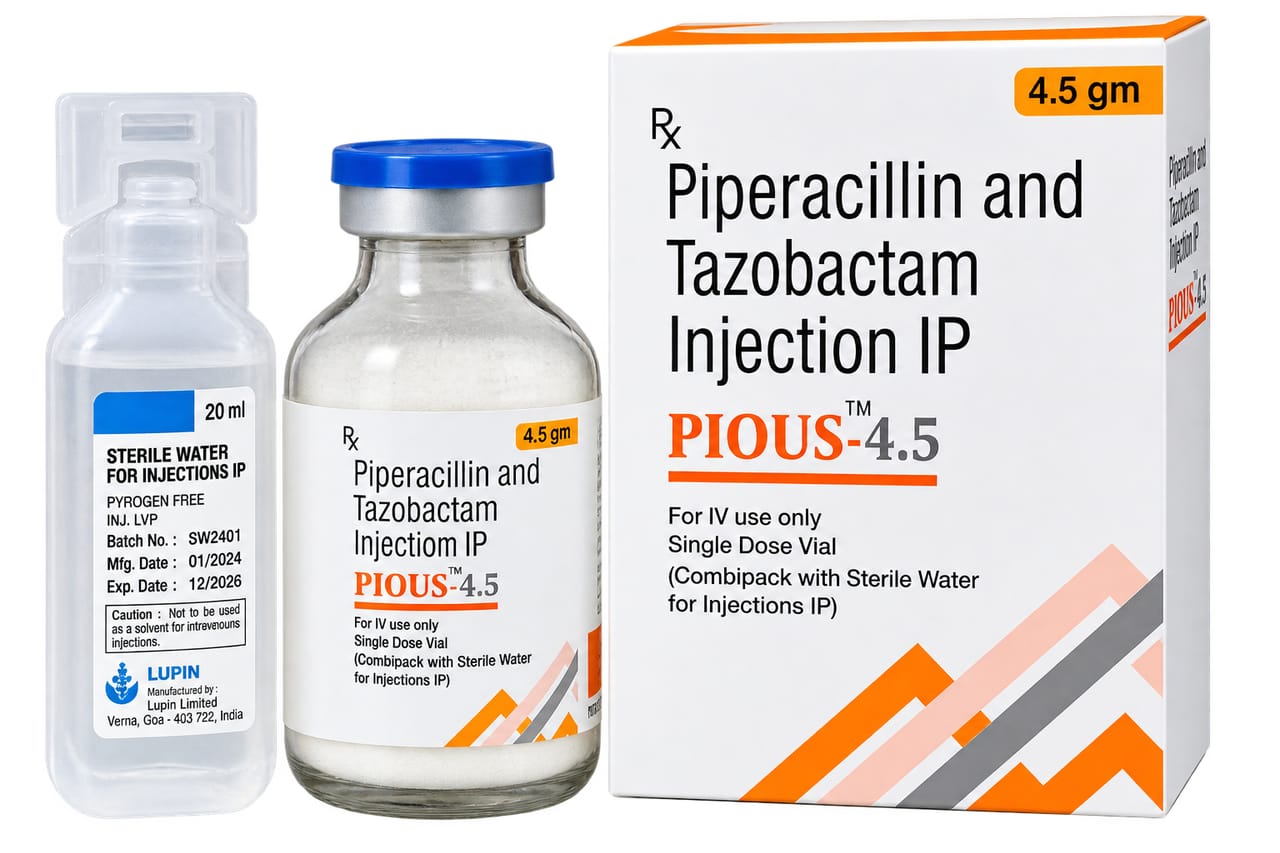
Piperacillin + Tazobactam Injection combines a penicillin antibiotic with a beta-lactamase inhibitor to treat bacterial infections in areas such as the stomach or bowel, lungs, skin, and female reproductive organs. It is given only by or under the direct supervision of a doctor or trained health professional, through a vein. It does not work against colds, flu, or other viral infections.
What is Piperacillin + Tazobactam Injection
Piperacillin and tazobactam combination injection is used to treat bacterial infections in different parts of the body, such as the stomach or bowel, lungs, skin, and female reproductive organs. It is given only by or under the direct supervision of a doctor or trained health professional.
Piperacillin + Tazobactam Injection uses
- Treats bacterial infections in different parts of the body such as the stomach or bowel, lungs, skin, and female reproductive organs
- Does not work for colds, flu, or other virus infections
Benefits of Piperacillin + Tazobactam Injection
- Kills bacteria that cause infection and stops them from growing
- Tazobactam helps prevent bacteria from destroying piperacillin, allowing it to keep working
How Piperacillin + Tazobactam Injection works
Piperacillin kills certain bacteria by stopping them from building their cell wall. Some bacteria make substances that would normally weaken piperacillin, but tazobactam blocks these substances so piperacillin can keep working.
Piperacillin + Tazobactam Injection dosage
This medicine is given through a needle placed in a vein, and the injection must be given slowly, so the needle stays in place for at least 30 minutes. It is given every 6 to 8 hours, with the length of treatment depending on your general health, the type of infection, and how well you respond.
You may receive this medicine in a hospital, or you may be shown how to give it to yourself at home. After your condition improves, your doctor may switch you to an antibiotic you take by mouth to finish treatment.
You should start to feel better within the first few days of treatment; call your doctor if your symptoms do not improve or get worse. Unless your doctor tells you otherwise, continue your normal diet while using this medicine.
Complete the full course of treatment even if your symptoms improve or go away, to reduce the risk of the infection becoming resistant to treatment.
| Age group | Dose |
|---|---|
| Under 2 months | Dosing not established in the U.S. label |
| 2–9 months | 90 mg/kg every 6–8 hours |
| >9 months–17 years, ≤40 kg | 112.5 mg/kg every 6–8 hours |
| >40 kg / Adults | Usually 3.375 g every 6 hours |
| Adults – hospital-acquired pneumonia | 4.5 g every 6 hours |
Available forms and strengths
- Powder for solution
- Solution (premixed, for injection into a vein)
Side effects of Piperacillin + Tazobactam Injection
Common
- Diarrhea
- Constipation
- Nausea, vomiting
- Heartburn, stomach pain
- Fever
- Headache
- Mouth sores
- Trouble falling asleep or staying asleep
Serious
- Severe allergic reactions, including anaphylaxis, with itching, hives, hoarseness, trouble breathing or swallowing, or swelling of hands, face, or mouth
- Serious skin reactions such as Stevens-Johnson syndrome, toxic epidermal necrolysis, AGEP, and DRESS, which may include black tarry stools, blistering or peeling skin, chest pain, fever, joint or muscle pain, sores or white spots in the mouth, swollen glands, or unusual bleeding or bruising
- Hemophagocytic lymphohistiocytosis (a severe immune system reaction) with fever, stomach pain, rash, swollen lymph glands, confusion, unsteady walk, or seizures
- Serious bleeding problems, including unusual bleeding or bruising, black tarry stools, or pinpoint red spots on the skin
- Nervous system problems such as seizures, muscle spasms or jerking, sudden loss of consciousness, or loss of bladder control
- Kidney problems, including bloody urine, reduced urine output, high blood pressure, increased thirst, loss of appetite, back or side pain, swelling of face, fingers, or legs, trouble breathing, or weight gain
- Severe or watery diarrhea, which may be bloody and can occur up to 2 months or more after stopping the medicine
- Blood disorders with symptoms like fever that doesn't go away, shortness of breath, pale or yellowish skin, easy bruising or bleeding, frequent infections, or unusual weakness
- Electrolyte changes causing weakness, muscle cramps, nausea, dizziness, confusion, or difficulty breathing
- Muscle pain or weakness with dark urine
Warnings and precautions
- This medicine should not be used in people with a history of allergy to cephalosporins, beta-lactams, or penicillins.
- Use with caution in people with congestive heart failure, diarrhea, heart disease, low potassium levels, kidney failure, those on a low-salt diet, or seizure disorders, as this medicine may make these conditions worse.
- People with cystic fibrosis may have an increased chance of fever and skin rash with this medicine.
- This medicine may decrease the effectiveness of hormonal birth control such as pills, patches, rings, and injections. Use another method of birth control while using this medicine.
- Serious diarrhea can occur, sometimes 2 months or more after stopping this medicine. Do not take diarrhea medicine without checking with your doctor first, as it may make things worse.
- If you have diabetes, this medicine can cause false results with certain urine glucose tests. Talk to your doctor about using other glucose tests while taking this medicine.
- It is not known if or how this medicine could affect pregnancy or harm an unborn baby. Tell your healthcare provider if you are or plan to become pregnant.
- This medicine passes into breast milk. Tell your healthcare provider if you are breastfeeding or plan to breastfeed so they can advise you.
- Use with caution in people with kidney disease, since the medicine may be removed from the body more slowly, increasing its effects. Kidney damage can also occur during treatment.
- Tell your healthcare provider if you have liver problems before using this medicine.
- It isn't known if alcohol affects this medicine, but heavy drinking can slow your immune response and make it harder for your body to fight infection.
Storage
- Your healthcare provider will tell you how to store your medication. Store your medication only as directed.
- Dispose of unneeded medications in a way so that pets, children, and other people cannot take them. Do not flush this medication down the toilet. Use a medicine take-back program.
- Keep all medication out of sight and reach of children, and always lock safety caps.
When to see a doctor
- Get medical help right away if you have signs of a serious allergic reaction, such as itching, hives, hoarseness, trouble breathing or swallowing, or swelling of the hands, face, or mouth.
- Get emergency help for signs of a severe skin reaction, such as black tarry stools, blistering or peeling skin, chest pain, fever, sore throat, mouth sores or white spots, swollen glands, or unusual bleeding or bruising.
- Check with your doctor right away if you have fever, upper right abdominal pain, rash, swollen or tender lymph glands, confusion, unsteady walking, tremors, or seizures, which could be signs of a severe inflammatory condition.
- Check with your doctor right away if you notice unusual bleeding or bruising, black tarry stools, or pinpoint red spots on the skin, which could be signs of a serious bleeding problem.
- Tell your doctor right away if you have seizures, muscle spasms or jerking, sudden loss of consciousness, or loss of bladder control, as these could be signs of a serious nervous system problem.
- Check with your doctor right away if you have bloody urine, reduced urine output, increased blood pressure, increased thirst, loss of appetite, back or side pain, nausea, swelling of the face, fingers, or legs, trouble breathing, unusual tiredness, vomiting, or weight gain, which could be signs of a serious kidney problem.
- Call your doctor right away if you have severe or watery diarrhea, which may be bloody, with or without fever and stomach cramps, even up to two months or more after finishing treatment.
- If you think you or someone else has used too much of this medicine, get medical help right away or contact a poison control center.
Alternatives
- Cefepime
- Ceftazidime
- Ceftriaxone
- Meropenem
- Imipenem + Cilastatin
- Ertapenem
Watch the video
FAQs
What is Piperacillin + Tazobactam Injection used for?
It is used to treat bacterial infections in different parts of the body such as the stomach or bowel, lungs, skin, and female reproductive organs. It does not work for colds, flu, or other virus infections.
How is Piperacillin + Tazobactam Injection given?
It is given through a needle placed in a vein, injected slowly so the needle stays in place for at least 30 minutes. It is usually given every 6 to 8 hours, with treatment length depending on your health, infection type, and response.
How does Piperacillin + Tazobactam Injection work?
Piperacillin kills certain bacteria by stopping them from building their cell wall. Tazobactam blocks substances that bacteria make to weaken piperacillin, allowing it to keep working.
What are the serious side effects of Piperacillin + Tazobactam Injection?
Serious side effects include severe allergic reactions, serious skin reactions, severe bleeding problems, nervous system problems like seizures, kidney problems, severe or watery diarrhea, blood disorders, and electrolyte changes.
Can Piperacillin + Tazobactam Injection affect birth control?
Yes, this medicine may decrease the effectiveness of hormonal birth control such as pills, patches, rings, and injections, so another method of birth control should be used while using this medicine.
General information, not medical advice
Your prescriber and the leaflet in your pack know your situation. This page does not.
- Follow your prescriber and the leaflet
- Don't start, stop, or change a dose on your own
- Doses and warnings differ by country and product
Sources
Video
Related medicines

Injectafer Injection: Uses, Dosage, Side Effects, Precautions and Alternates
Iron products
Injectafer (ferric carboxymaltose) treats iron deficiency anemia and heart failure-related iron deficiency via IV. Learn uses, dosage, side effects, and

Gliclazide Tablet: Uses, Dosage, Side Effects, Precautions and Alternates
Sulfonylurea (hypoglycemic/antidiabetic agent)
Gliclazide Tablet is a sulfonylurea for type 2 diabetes that boosts insulin release. Learn about dosage, side effects, warnings, and precautions.