
Safety
General information, not medical advice
Your prescriber and the leaflet in your pack know your situation. This page does not.
- Follow your prescriber and the leaflet
- Don't start, stop, or change a dose on your own
- Doses and warnings differ by country and product
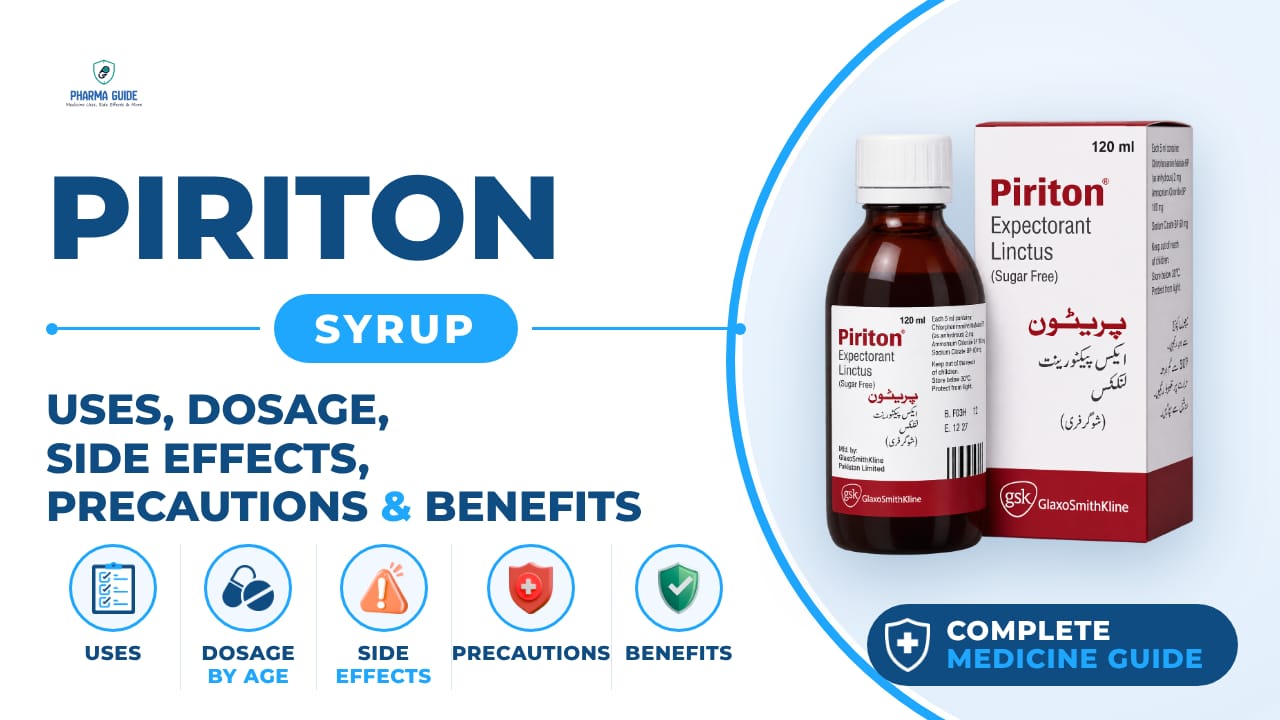
Piriton Syrup: Uses, Dosage, Side Effects, Precautions and Alternates
| Generic name | Chlorphenamine Maleate |
|---|---|
| Drug class | Antihistamine / Cough preparation |
| Forms | Syrup |
Quick overview
Piriton Syrup contains chlorphenamine maleate, an antihistamine used to relieve allergy symptoms and certain coughs. It works by blocking histamine, the chemical the body releases during an allergic reaction, which helps reduce swelling, itching, and related symptoms. It is available as a syrup and should be used as directed on the label or by your doctor or pharmacist.
What is Piriton Syrup
Piriton Syrup is a medicine used to relieve allergy symptoms. It contains chlorphenamine maleate, which helps reduce the effects of histamine, the chemical your body releases during an allergic reaction.
Piriton Syrup uses
- Relieving allergy symptoms such as sneezing and runny nose
- Relieving cough due to throat irritation
- Reducing itchy skin rashes
- Chest congestion and throat irritation
- Cold symptoms and seasonal allergies
- Helping loosen mucus for easier breathing
Benefits of Piriton Syrup
- Helps reduce the effects of histamine released during an allergic reaction
- Can help relieve symptoms of some allergies and itchy skin rashes
How Piriton Syrup works
The active ingredient, chlorphenamine maleate, is an antihistamine that blocks the action of histamine, a chemical your body releases during an allergic reaction. This helps reduce swelling, itching, and other allergy symptoms.
Piriton Syrup dosage
Always follow the label or patient leaflet. This medicine can be taken with or without food, and the bottle should be shaken well before use. It can make you sleepy, so avoid driving, cycling, or operating machinery if affected. Some children may become restless or excitable instead of sleepy. Do not take with other antihistamines unless a clinician advises. If you miss a dose, take it when you remember unless it is nearly time for the next dose; do not take a double dose. The minimum interval between doses should be several hours as directed on the label.
| Age group | Dose |
|---|---|
| Under 1 year | Not recommended unless prescribed by a doctor |
| 1–2 years | 2.5 mL, 2 times daily |
| 2–6 years | 2.5 mL every 4–6 hours |
| 6–12 years | 5 mL every 4–6 hours |
| 12 years & older & Adults | 10 mL every 4–6 hours |
Available forms and strengths
- Syrup
Side effects of Piriton Syrup
Common
- Drowsiness
- Dizziness
- Dry mouth
- Blurred vision
- Nausea
- Vomiting
- Weakness
- Tremors
- Headache
- Fatigue
- Impaired reactions
Serious
- Confusion
- Severe sedation
- Allergic reaction
- Palpitations
- Breathing difficulty
- Seizures
- Hallucinations
- Heart rhythm problems
Warnings and precautions
- Speak to a pharmacist or doctor before use if you are pregnant or breastfeeding. Talk to your doctor before using this medicine if you have kidney disease or liver disease. Be careful when drinking alcohol while using this medicine, as it can increase the effects of drinking. This medicine may cause dizziness, drowsiness, or blurred vision; do not drive or operate machinery until you are sure you are not affected.
- Do not use if you are allergic to chlorphenamine, any other antihistamines, or any of the other ingredients in this medicine.
- This medicine contains lactose. If you have been told by your doctor that you have an intolerance to some sugars, contact your doctor before using this medicine.
- Avoid using this medicine if you have severe liver disease or a history of drug hypersensitivity, or if you have been advised to avoid antihistamines.
- This medicine can make you sleepy. Avoid driving, cycling, or operating machinery if affected.
- Some children may become restless or excitable instead of sleepy after taking this medicine.
Storage
- Keep tightly closed and store in a cool, dry place
- Keep out of sight and reach of children
- Do not use after the expiry date
- Keep away from sunlight
- Store this medicine at room temperature, away from direct light and heat
When to see a doctor
If too much medicine is taken, seek urgent medical advice straight away. Taking too much can cause severe sleepiness, agitation, confusion, hallucinations, fits, or heart rhythm problems, so get medical help right away if this happens.
Alternatives
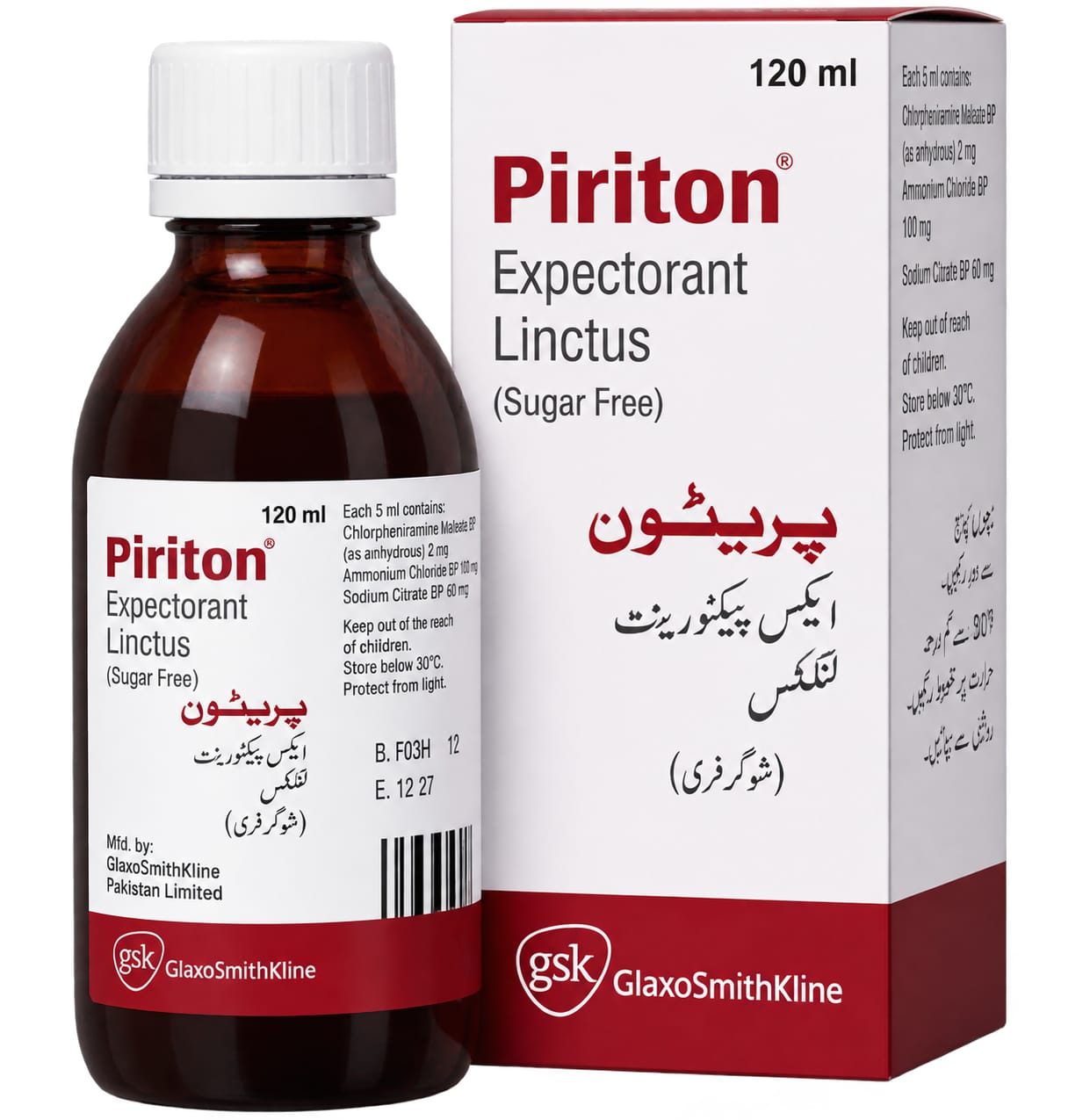
- Piriton Expectorant Linctus
- Piriton CS
- Cetirizine
- Loratadine
Watch the video
FAQs
What is Piriton Syrup used for?
Piriton Syrup is used to relieve allergy symptoms such as sneezing and runny nose, cough due to throat irritation, itchy skin rashes, chest congestion, and cold symptoms.
How does Piriton Syrup work?
It contains chlorphenamine maleate, an antihistamine that blocks the action of histamine, a chemical released during an allergic reaction, helping reduce swelling, itching, and other allergy symptoms.
What is the dosage of Piriton Syrup for children?
Dosage varies by age: 2.5 mL twice daily for 1–2 years, 2.5 mL every 4–6 hours for 2–6 years, and 5 mL every 4–6 hours for 6–12 years. It is not recommended for children under 1 year unless prescribed by a doctor.
What are the common side effects of Piriton Syrup?
Common side effects include drowsiness, dizziness, dry mouth, blurred vision, nausea, vomiting, weakness, tremors, headache, and fatigue.
Can I drive after taking Piriton Syrup?
Piriton Syrup can cause drowsiness, dizziness, or blurred vision, so you should avoid driving, cycling, or operating machinery until you know you are not affected.
General information, not medical advice
Your prescriber and the leaflet in your pack know your situation. This page does not.
- Follow your prescriber and the leaflet
- Don't start, stop, or change a dose on your own
- Doses and warnings differ by country and product
Sources
Video
Related medicines

Injectafer Injection: Uses, Dosage, Side Effects, Precautions and Alternates
Iron products
Injectafer (ferric carboxymaltose) treats iron deficiency anemia and heart failure-related iron deficiency via IV. Learn uses, dosage, side effects, and

Gliclazide Tablet: Uses, Dosage, Side Effects, Precautions and Alternates
Sulfonylurea (hypoglycemic/antidiabetic agent)
Gliclazide Tablet is a sulfonylurea for type 2 diabetes that boosts insulin release. Learn about dosage, side effects, warnings, and precautions.