
Safety
General information, not medical advice
Your prescriber and the leaflet in your pack know your situation. This page does not.
- Follow your prescriber and the leaflet
- Don't start, stop, or change a dose on your own
- Doses and warnings differ by country and product
Plavix Tablet: Uses, Dosage, Side Effects, Precautions and Alternates
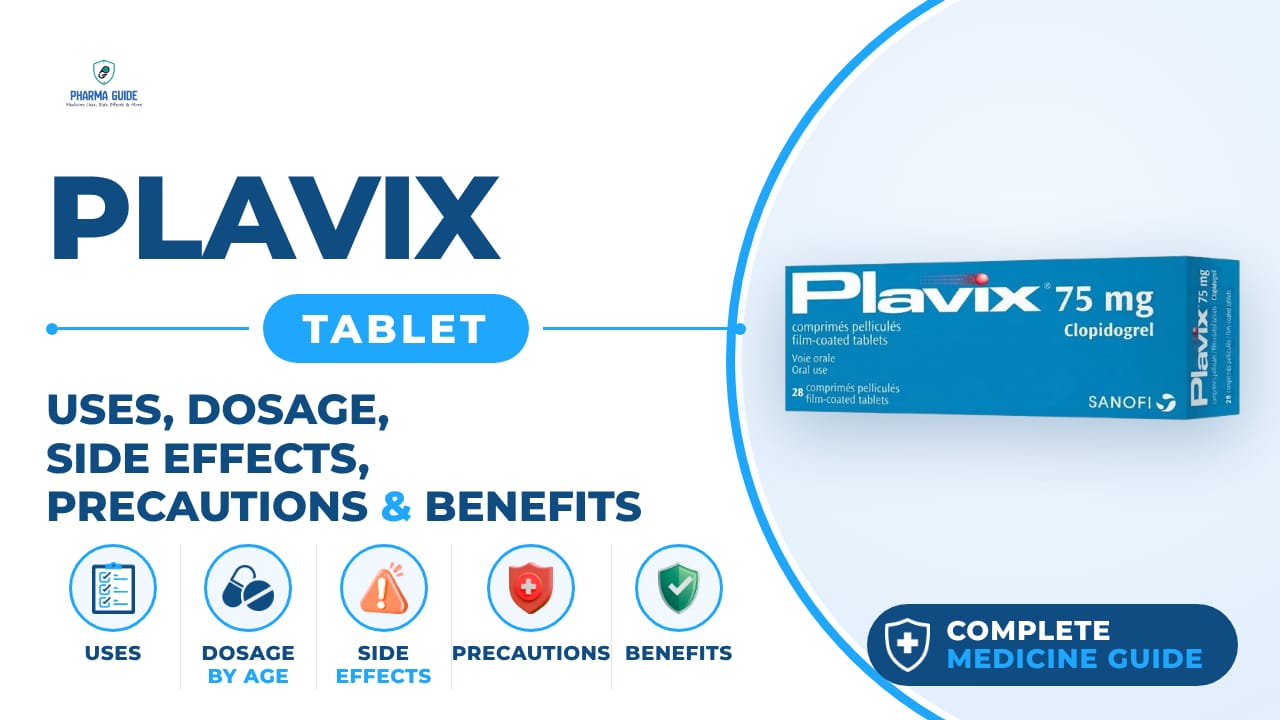
| Generic name | Clopidogrel (clopidogrel bisulfate) |
|---|---|
| Drug class | Platelet aggregation inhibitor (antiplatelet) |
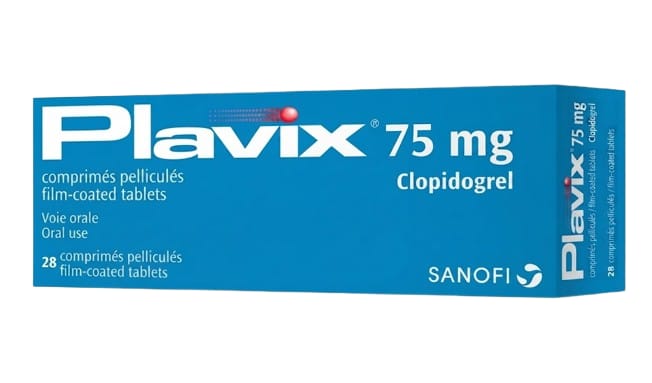
| Forms | Tablet (75 mg), Tablet (300 mg) |
Quick overview
Plavix Tablet contains clopidogrel, an antiplatelet medicine that stops blood platelets from sticking together and forming clots that could block an artery. It is used to lower the risk of stroke, heart attack, or other serious heart problems, often after a heart attack, severe chest pain, circulation problems, or certain cardiac procedures. It is available as 75 mg and 300 mg tablets and is taken exactly as prescribed by a doctor.
What is Plavix Tablet
Plavix is a prescription medicine that contains clopidogrel (clopidogrel bisulfate), which belongs to a class of medicines called platelet aggregation inhibitors (antiplatelets). It helps stop blood platelets from sticking together and forming clots that could block an artery, lowering the risk of stroke, heart attack, or other serious heart problems.
Plavix Tablet uses
- Lowering the risk of stroke, blood clot, or serious heart problem after a heart attack, severe chest pain (angina), or circulation problems
- Preventing clots in acute coronary syndrome (unstable angina, NSTEMI, STEMI), often combined with aspirin
- Preventing another heart attack or stroke in people who've had one recently
- Treating peripheral arterial disease
- Keeping blood vessels open and preventing clots after certain procedures, such as placement of a cardiac stent
Benefits of Plavix Tablet
- Helps keep blood flowing smoothly through narrowed or hardened arteries
- Reduces the chance of heart attack, stroke, or cardiovascular-related death in people with heart disease
- Helps prevent clots from forming inside stents or grafts after cardiac procedures
How Plavix Tablet works
Plavix stops blood platelets (small blood cells involved in clotting) from sticking together, which lowers the chance of a harmful blood clot forming and blocking an artery.
Plavix Tablet dosage
Take Plavix exactly as prescribed by your doctor, following your prescription label and any medication guides. It can be taken with or without food. Take it at the same time each day to help you remember and get the most benefit. Swallow the tablet whole with a glass of water; do not crush, split, or chew it.
Plavix is sometimes taken together with aspirin, but only take aspirin if your doctor tells you to. Keep taking this medicine regularly, even if you feel well; do not stop without talking to your doctor first. If you miss a dose, take it as soon as you remember, but skip it if it's almost time for your next dose — do not take two doses at once. Tell any doctor, dentist, or pharmacist you see that you are taking this medicine, especially before surgery or dental work.
| Age group | Dose |
|---|---|
| Under 18 years | Not routinely recommended; specialist advice required |
| 18 years & older | 75 mg once daily |
| Adults | 75 mg once daily |
| Acute coronary syndrome (adults) | 300–600 mg loading dose, followed by 75 mg once daily — hospital/doctor directed |
| Older adults | Usually 75 mg once daily; no routine age-based adjustment |
Available forms and strengths
- Tablet (75 mg)
- Tablet (300 mg)
Side effects of Plavix Tablet
Common
- Bleeding, such as from cuts that take longer than usual to stop, or nosebleeds
- Bruising more often than usual
- Fever
- Muscle pain or joint pain/stiffness
- Confusion
- Skin rash or itching
- Diarrhea
- Dizziness
- Headache
- Change in taste
- Stomach pain, heartburn, or indigestion
Serious
- Severe or life-threatening bleeding that won't stop
- Blood in urine or stool (red or black, tarry stool)
- Vomiting blood or vomit that looks like coffee grounds
- Coughing up blood
- Signs of a severe allergic reaction: hives, difficulty breathing, swelling of face, lips, tongue, or throat
- Thrombotic thrombocytopenic purpura (TTP): purple or discolored skin spots, pale skin, jaundice, tiredness, weakness, fever, fast heart rate, shortness of breath, headache, confusion, little or no urination
- Signs of a blood clot: sudden numbness or weakness, confusion, problems with vision or speech
- Yellowing of skin or eyes (jaundice)
- Seizure
- Low blood sugar symptoms: headache, hunger, sweating, irritability, dizziness, fast heart rate, feeling anxious or shaky
Warnings and precautions
This medicine increases your risk of bleeding, which can be severe or life-threatening. Get medical help right away if you have bleeding that won't stop, blood in your urine, black or bloody stools, or if you cough up blood or vomit that looks like coffee grounds.
Do not stop taking this medicine on your own without talking to your doctor first, even if you notice signs of bleeding, since stopping suddenly can increase your risk of heart attack or stroke. Do not take this medicine if you have any active bleeding, such as a stomach ulcer or bleeding in the brain.
This medicine may not work as well in people whose bodies cannot properly process it due to a genetic factor. A blood test may be done to check this. If you need surgery or dental work, tell your surgeon or dentist beforehand that you take this medicine, since it may need to be stopped for a period before the procedure. Avoid eating grapefruit or drinking grapefruit juice while taking this medicine unless your doctor says it's safe, as it can affect how the medicine works.
It is not known for certain if this medicine is safe during pregnancy. Tell your doctor if you are pregnant or plan to become pregnant so they can discuss the risks and benefits with you.
It is not known if this medicine passes into breast milk, so it is generally not recommended during breastfeeding. Talk to your doctor about whether you should breastfeed while using this medicine.
Tell your doctor if you have kidney problems before taking this medicine, as it may affect how well the medicine works for you.
Do not use this medicine if you have severe liver disease. Tell your doctor about any liver problems before starting treatment.
Avoid alcohol, as it can increase your risk of stomach bleeding while taking this medicine.
This medicine may cause faintness or dizziness in some people. Know how you react to it before driving or operating machinery, and don't drive if you feel faint or dizzy.
Storage
- Store at room temperature away from moisture and heat.
- Plavix tablets should be stored at room temperature (about 77°F/25°C) in a tightly sealed container away from light. Avoid storing this medication in areas where it could get damp or wet, such as in bathrooms.
- Keep in the blister pack until it is time to take them.
- Store it in a cool dry place where the temperature stays below 25°C away from moisture, heat or sunlight; for example, do not store it in the bathroom or near a sink, or in the car or on window sills.
- Keep it where young children cannot reach it.
- If you no longer need to use this medicine or it is out of date, take it to any pharmacy for safe disposal.
When to see a doctor
Get emergency help right away if you have signs of a severe allergic reaction: hives, difficulty breathing, or swelling of your face, lips, tongue, or throat.
Call your doctor right away or go to the emergency department if you notice bleeding or bruising more easily than normal, blood in your urine, or bloody/black bowel motions.
Call your doctor at once if you have nosebleeds, pale skin, easy bruising, purple spots under your skin or in your mouth, jaundice, fast heartbeats, shortness of breath, headache, fever, weakness, feeling tired, little or no urination, a seizure, or signs of low blood sugar.
Seek immediate medical attention if you think you have taken too much of this medicine, even if you don't feel any discomfort.
Tell your doctor immediately if you become pregnant while taking this medicine, or if you are injured, since it may take longer than usual to stop bleeding.
Alternatives
- Ecotrin (aspirin)
- Vazalore (aspirin)
- Bayer Aspirin
- Aspirin
- Ticagrelor (Brilinta)
- Prasugrel (Effient)
- Aspirin/dipyridamole (Aggrenox)
- Warfarin (Jantoven)
- Rivaroxaban (Xarelto)
- Apixaban (Eliquis)
- Edoxaban (Savaysa)
- Fondaparinux (Arixtra)
- Dabigatran (Pradaxa)
- Enoxaparin (Lovenox)
- Clopibloc 75 Tablet (suggested as a cheaper substitute)
Watch the video
FAQs
What is Plavix Tablet used for?
Plavix is used to lower the risk of stroke, heart attack, or other serious heart problems, often after a heart attack, severe chest pain, circulation problems, peripheral arterial disease, or certain cardiac procedures like stent placement.
How does Plavix Tablet work?
Plavix contains clopidogrel, which stops blood platelets from sticking together, lowering the chance of a harmful blood clot forming and blocking an artery.
What is the dosage of Plavix Tablet?
The usual adult dose is 75 mg once daily, taken with or without food at the same time each day. For acute coronary syndrome, a doctor may prescribe a 300–600 mg loading dose followed by 75 mg once daily.
What are the common side effects of Plavix Tablet?
Common side effects include bleeding or bruising more easily, fever, muscle or joint pain, confusion, skin rash or itching, diarrhea, dizziness, headache, change in taste, and stomach pain or indigestion.
Can I drink alcohol or eat grapefruit while taking Plavix Tablet?
Alcohol should be avoided as it can increase the risk of stomach bleeding, and grapefruit or grapefruit juice should be avoided unless your doctor says it's safe, as it can affect how the medicine works.
General information, not medical advice
Your prescriber and the leaflet in your pack know your situation. This page does not.
- Follow your prescriber and the leaflet
- Don't start, stop, or change a dose on your own
- Doses and warnings differ by country and product
Sources
Video
Related medicines

Injectafer Injection: Uses, Dosage, Side Effects, Precautions and Alternates
Iron products
Injectafer (ferric carboxymaltose) treats iron deficiency anemia and heart failure-related iron deficiency via IV. Learn uses, dosage, side effects, and

Gliclazide Tablet: Uses, Dosage, Side Effects, Precautions and Alternates
Sulfonylurea (hypoglycemic/antidiabetic agent)
Gliclazide Tablet is a sulfonylurea for type 2 diabetes that boosts insulin release. Learn about dosage, side effects, warnings, and precautions.