
Safety
General information, not medical advice
Your prescriber and the leaflet in your pack know your situation. This page does not.
- Follow your prescriber and the leaflet
- Don't start, stop, or change a dose on your own
- Doses and warnings differ by country and product
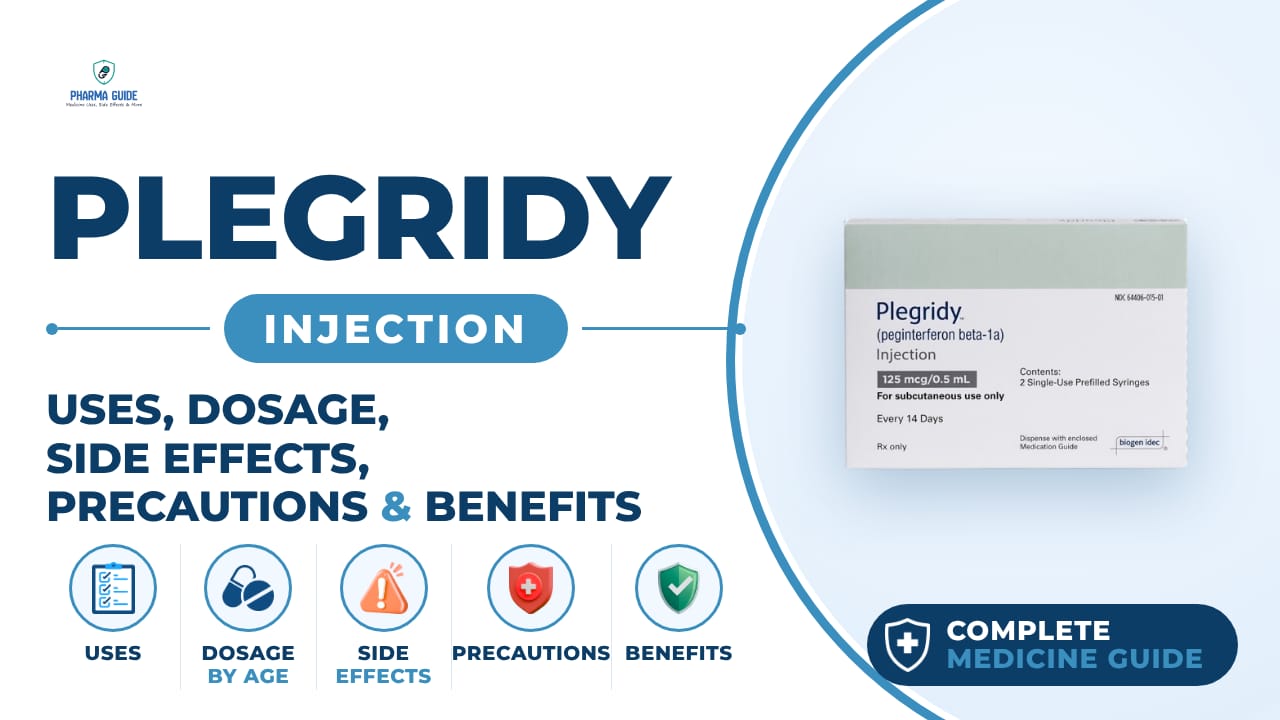
Plegridy Injection: Uses, Dosage, Side Effects, Precautions and Alternates
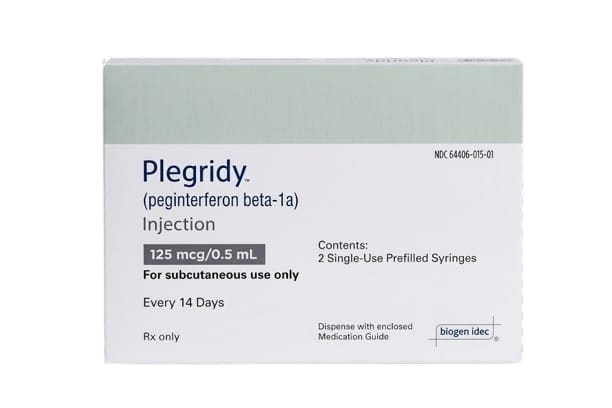
| Generic name | peginterferon beta-1a |
|---|---|
| Drug class | Interferon beta / immunomodulator |
| Forms | Single-dose prefilled syringe, Liquid solution for injection |
Quick overview
Plegridy Injection (peginterferon beta-1a) is a brand-name prescription medicine made from a lab-produced version of a human protein called interferon beta. It is given as an injection under the skin or into a muscle to treat certain forms of multiple sclerosis (MS) in adults. It belongs to the interferon beta / immunomodulator drug class and is typically given once every 2 weeks.
What is Plegridy Injection
Plegridy is a brand-name prescription medicine made from a lab-produced version of a human protein called interferon beta. It is given as an injection under the skin or into a muscle to treat certain forms of multiple sclerosis (MS) in adults.
Plegridy Injection uses
- Treats clinically isolated syndrome (CIS), a first episode of MS-like symptoms lasting at least 24 hours
- Treats relapsing-remitting multiple sclerosis, which involves flare-ups followed by periods without worsening
- Treats active secondary progressive MS, where symptoms keep getting worse without remission periods
Benefits of Plegridy Injection
- Can lower the chance of having an MS relapse over time
- Helps reduce the number and severity of MS symptom flare-ups
- May decrease inflammation that contributes to MS symptoms
How Plegridy Injection works
Plegridy is thought to work by stopping the immune system from attacking the protective covering around nerves (myelin sheath) and by reducing inflammation in the body, which leads to fewer MS relapses and less severe symptoms. It is not known exactly how it works.
Plegridy Injection dosage
Plegridy is given as an injection under the skin, or sometimes into a muscle, usually once every 2 weeks. Inject on the same day of the week each time to keep a steady amount of medication in the body. A healthcare provider will teach you how to give yourself the injection before you do it alone.
Rotate injection sites between the belly area, back of the upper arms, and thighs; do not inject into the same spot twice in a row. Do not inject into skin that is red, bruised, infected, or scarred. Check the injection site for redness, swelling, or pain about two hours after injecting.
Take the syringe or pen out of the refrigerator and let it reach room temperature for about 30 minutes before injecting; never warm it with hot water or sunlight. Do not use if the medicine has changed color or has particles in it. Each pen or syringe is for one use only; throw it away after use even if some medicine remains. Your doctor may suggest taking a pain reliever or fever reducer on injection days to help prevent flu-like symptoms.
| Age group | Dose |
|---|---|
| Under 18 years | Not recommended |
| 18–64 years | 125 mcg, once every 14 days |
| 65+ years | 125 mcg, once every 14 days |
Available forms and strengths
- Single-dose prefilled syringe
- Liquid solution for injection
Side effects of Plegridy Injection
Common
- Redness, pain, itching, or swelling where the injection was given
- Flu-like symptoms such as headache, fever, chills, or tiredness
- Muscle pain
- Weakness
- Joint pain
- Nausea
- Vomiting
Serious
- Liver problems, including hepatitis, liver failure, or death
- Depression and thoughts of suicide
- Seizures
- Severe injection site reactions, including necrosis (tissue death)
- Congestive heart failure and other heart problems
- Low white blood cell or platelet counts
- Autoimmune conditions, such as thyroid problems
- Thrombotic microangiopathy or thrombotic thrombocytopenic purpura (blood clots in small blood vessels)
- Pulmonary arterial hypertension (high blood pressure in the lung arteries)
- Severe allergic reaction
Warnings and precautions
- Plegridy can cause liver damage, which may be serious and can lead to liver failure or death. Watch for yellowing skin or eyes, dark urine, pale stools, nausea, loss of appetite, tiredness, or easy bruising and bleeding.
- Plegridy may cause new or worsening depression, anxiety, or thoughts of suicide. Tell your doctor right away about any changes in mood or if you have thoughts of harming yourself.
- Plegridy can cause serious blood vessel damage that leads to dangerous blood clots in small vessels, which can affect the brain or kidneys and must be treated right away.
- Serious injection site reactions can occur, including tissue death (necrosis), which may appear as dark purple or black skin, pain, or peeling at the injection site.
- Plegridy may cause or worsen heart problems, including congestive heart failure, abnormal heartbeat, or chest pain.
- Plegridy may cause seizures, even in people who have never had one before.
- Plegridy contains natural rubber latex in some forms and may cause allergic reactions in people with a latex allergy.
- Plegridy should not be used by anyone who has had an allergic reaction to interferon beta-1a, peginterferon, or any ingredient in the product.
- It is not known if Plegridy is safe to use during pregnancy. Talk with your doctor before starting this medicine if you are pregnant or planning to become pregnant, since the drug should only be used if the benefit outweighs possible risk.
- It is not known if Plegridy passes into breast milk or if it is safe during breastfeeding. Talk with your doctor before using this medicine if you are breastfeeding.
- Plegridy may cause new liver injury or make existing liver problems worse, including serious damage. Tell your doctor about any liver problems before starting, and you may need regular blood tests to monitor your liver during treatment.
- There are no known direct interactions between Plegridy and alcohol, but both can affect the liver, so drinking alcohol may raise your risk of liver problems during treatment. Ask your doctor how much alcohol, if any, is safe for you.
Storage
- Store in the original carton in a refrigerator, between 36°F and 46°F (2°C and 8°C)
- Protect from light until ready to use
- Never freeze; throw away the medicine if it has become frozen
- Can be stored at room temperature, up to 77°F (25°C), for a maximum of 30 days if refrigeration is not available, still protected from light
- Do not leave the medicine out of the refrigerator for longer than a total of 30 days, including all times taken out and put back
- Dispose of used syringes and pens in a puncture-proof sharps container, following state or local disposal rules
- Keep out of reach of children and pets
When to see a doctor
- Get emergency help right away for signs of a severe allergic reaction, such as hives, itching, trouble breathing, or swelling of the face, lips, tongue, or throat.
- Call your doctor right away if you notice yellowing of your skin or eyes, dark urine, unusual tiredness, confusion, or easy bruising, which can be signs of liver problems.
- Seek medical help right away if you have fever, tiredness, decreased urination, bruising, or nosebleeds, which may signal a serious blood vessel problem.
- Call your doctor if you have thoughts of hurting yourself or suicide, or if you feel hopeless or notice new or worsening depression.
- See your doctor right away if the skin around your injection site becomes very painful, swollen, or turns dark purple or black.
- Get medical help right away if you experience signs of a seizure, such as uncontrolled movements, confusion, or loss of consciousness.
- Call your doctor right away if you have symptoms of heart problems such as shortness of breath, swelling in your legs, rapid weight gain, or chest pain.
- If you think you have used too much Plegridy, get emergency medical help right away or contact a poison control center.
Alternatives
- Extavia
- Rebif
- Avonex
Watch the video
FAQs
What is Plegridy Injection used for?
Plegridy treats clinically isolated syndrome, relapsing-remitting multiple sclerosis, and active secondary progressive MS in adults.
How often is Plegridy Injection given?
Plegridy is given as an injection under the skin, or sometimes into a muscle, usually once every 2 weeks at a dose of 125 mcg, on the same day each time.
What are the common side effects of Plegridy Injection?
Common side effects include injection site redness, pain, itching or swelling, flu-like symptoms like headache, fever, chills, or tiredness, muscle pain, weakness, joint pain, nausea, and vomiting.
What serious risks are associated with Plegridy Injection?
Serious risks include liver problems, depression and suicidal thoughts, seizures, severe injection site reactions including tissue death, heart problems, low blood cell counts, autoimmune conditions, blood clots in small vessels, and pulmonary arterial hypertension.
How should Plegridy Injection be stored?
Store it in the original carton in a refrigerator between 36°F and 46°F, protected from light and never frozen. If needed, it can be kept at room temperature up to 77°F for a maximum of 30 days, still protected from light.
General information, not medical advice
Your prescriber and the leaflet in your pack know your situation. This page does not.
- Follow your prescriber and the leaflet
- Don't start, stop, or change a dose on your own
- Doses and warnings differ by country and product
Sources
Video
Related medicines

Injectafer Injection: Uses, Dosage, Side Effects, Precautions and Alternates
Iron products
Injectafer (ferric carboxymaltose) treats iron deficiency anemia and heart failure-related iron deficiency via IV. Learn uses, dosage, side effects, and

Gliclazide Tablet: Uses, Dosage, Side Effects, Precautions and Alternates
Sulfonylurea (hypoglycemic/antidiabetic agent)
Gliclazide Tablet is a sulfonylurea for type 2 diabetes that boosts insulin release. Learn about dosage, side effects, warnings, and precautions.