
Safety
General information, not medical advice
Your prescriber and the leaflet in your pack know your situation. This page does not.
- Follow your prescriber and the leaflet
- Don't start, stop, or change a dose on your own
- Doses and warnings differ by country and product
Polivy Injection: Uses, Dosage, Side Effects, Precautions and Alternates
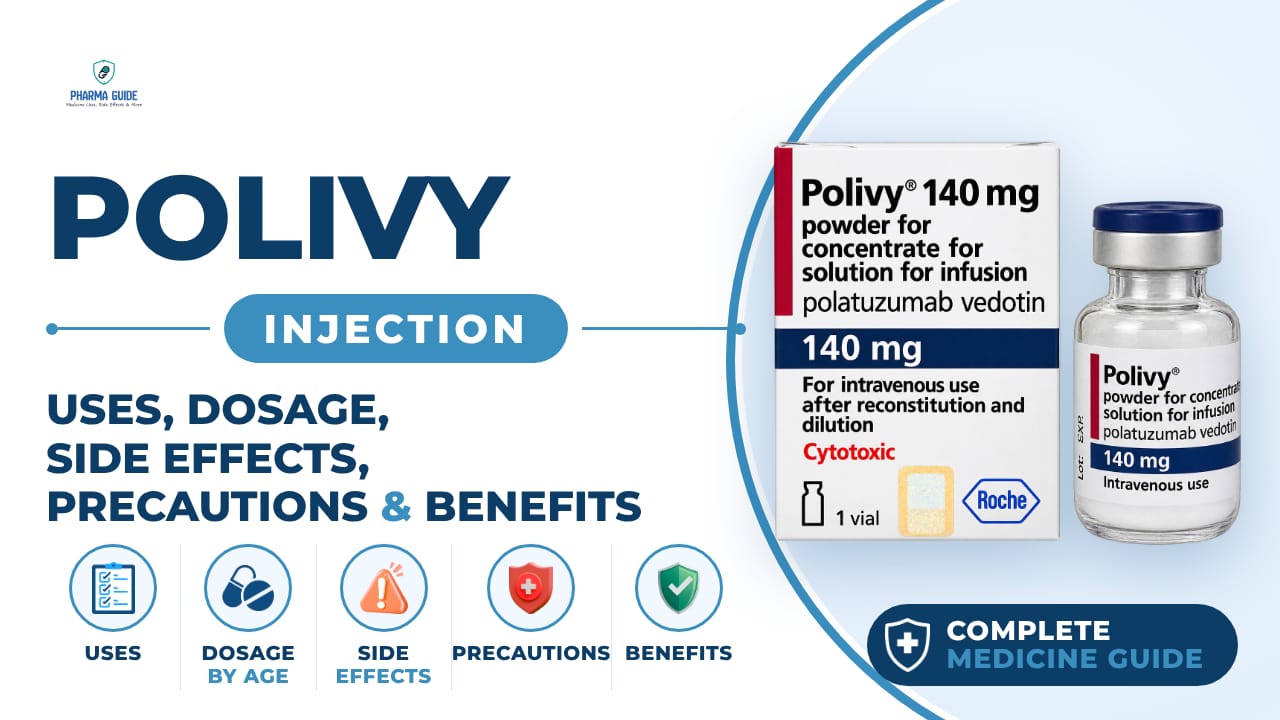
| Generic name | polatuzumab vedotin-piiq |
|---|---|
| Drug class | CD79b antibody-drug conjugate (antineoplastic) |
| Forms | Injection |
Quick overview
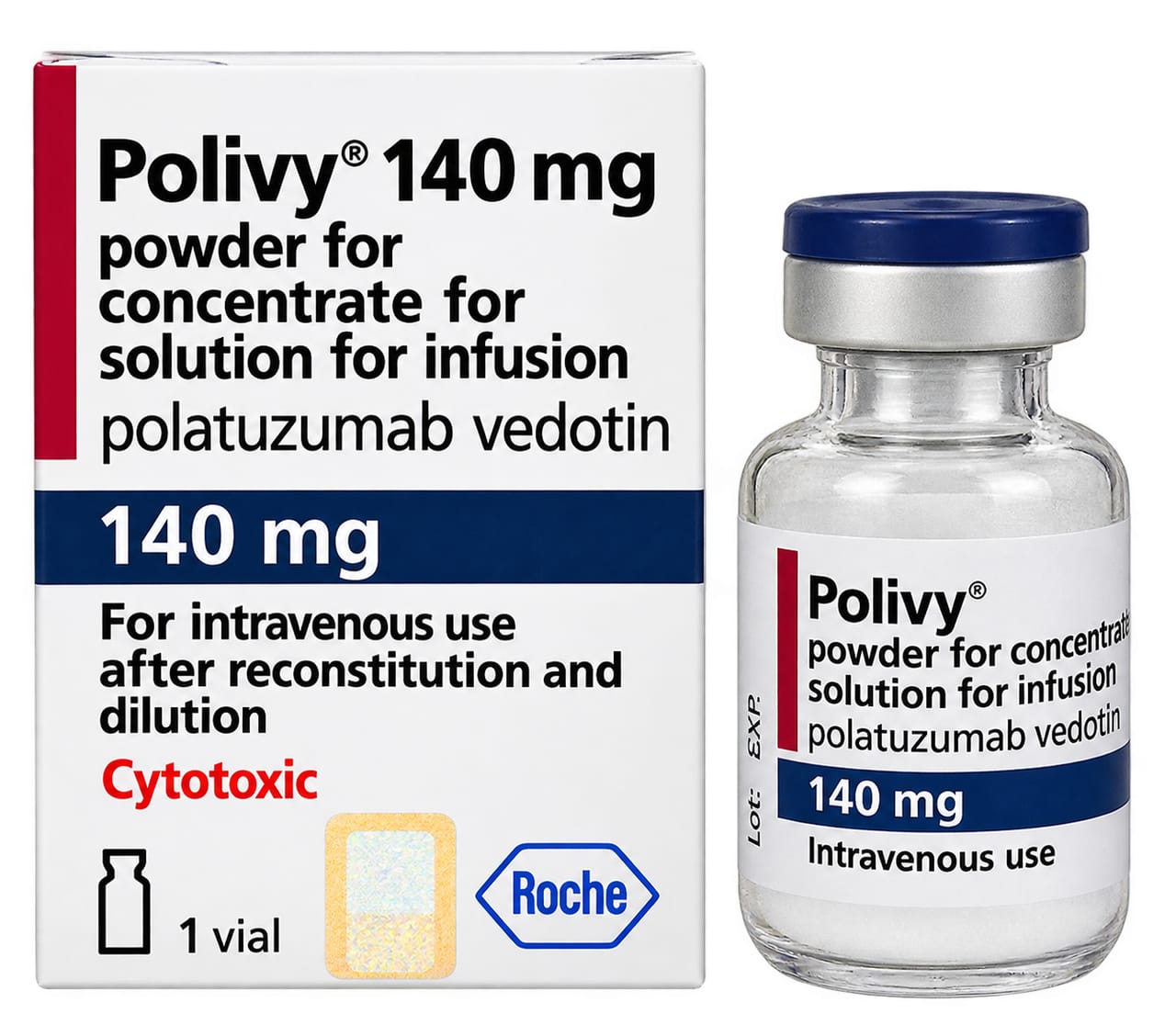
Polivy Injection contains polatuzumab vedotin-piiq, an antibody-drug conjugate used in cancer treatment. It is a prescription medicine given through an IV infusion by a healthcare professional to treat certain types of large B-cell lymphoma, a cancer of white blood cells. It works by targeting a protein on B cells and delivering a cell-killing drug directly into them. Polivy is given in combination with other cancer medicines on a set schedule determined by your doctor.
What is Polivy Injection
Polivy is a prescription medicine given through an IV infusion by a healthcare professional. It is used to treat certain types of large B-cell lymphoma, a cancer of white blood cells.
Polivy Injection uses
- Treatment of previously untreated moderate to high risk diffuse large B-cell lymphoma (DLBCL) not otherwise specified, given with a rituximab product, cyclophosphamide, doxorubicin, and prednisone (R-CHP)
- Treatment of previously untreated moderate to high risk high-grade B-cell lymphoma (HGBL), given with R-CHP
- Treatment of relapsed or refractory DLBCL after at least one or two prior treatments, given with bendamustine and a rituximab product, in patients who cannot have a stem cell transplant
Benefits of Polivy Injection
- Can help bring about complete or partial response in lymphoma that has come back or not responded to earlier treatment
- Targets cancerous B cells while aiming to spare more healthy cells than standard chemotherapy
How Polivy Injection works
Polivy is an antibody attached to a cell-killing drug. It attaches to a protein called CD79b found on B cells, including cancer cells, then releases its drug inside the cell to destroy it.
Polivy Injection dosage
Polivy is given as a slow drip into a vein by a healthcare professional at a hospital or infusion clinic. You will usually receive medicines beforehand to help prevent fever, allergic reactions, or infusion reactions. Your first infusion will be given slowly over about 90 minutes; later infusions may be shortened to about 30 minutes if you tolerated the first one well. Treatment is typically repeated every three weeks for up to six cycles. It's used together with other cancer medicines, so tell your doctor about all other treatments you are receiving. If you miss an infusion appointment, contact the clinic to reschedule as soon as possible rather than waiting for your next planned visit.
| Age group | Dose |
|---|---|
| Under 18 years | Not recommended |
| 18–64 years | 1.8 mg/kg, once every 3 weeks |
| 65+ years | 1.8 mg/kg, once every 3 weeks |
Available forms and strengths
- Injection
Side effects of Polivy Injection
Common
- Fever
- Diarrhea or vomiting
- Reduced appetite
- Fatigue
- Dizziness
- Upper respiratory infection, such as the common cold
- Weight loss
- Low blood levels of potassium, calcium, or albumin
- Nausea
- Constipation
- Hair loss
- Mouth sores
- Nerve problems such as numbness, tingling, or weakness in hands or feet
- High blood uric acid levels
- Low red or white blood cell counts
Serious
- Serious infection, such as pneumonia, which may lead to sepsis
- Peripheral neuropathy (nerve damage) causing numbness, tingling, pain, or muscle weakness
- Infusion-related reaction, which can occur up to 24 hours after an infusion, with symptoms such as fever, chills, flushing, low blood pressure, hives, or shortness of breath
- Progressive multifocal leukoencephalopathy (PML), a serious viral brain infection with symptoms like confusion, weakness, loss of balance, or vision problems
- Tumor lysis syndrome from rapid breakdown of cancer cells, with symptoms like nausea, vomiting, diarrhea, muscle spasms, or seizures
- Increased liver enzymes or liver damage, with symptoms such as abdominal pain, dark urine, or jaundice
- Anemia (low red blood cells), with symptoms like pale skin, fatigue, or lightheadedness
- Low platelet levels, causing easy bruising or bleeding
- Low white blood cell counts, which may occur with or without fever
- Severe allergic reaction, including swelling of the face, lips, tongue, or throat and difficulty breathing
- Skin or tissue damage if the drug leaks out of the vein during infusion (extravasation)
Warnings and precautions
- Polivy can cause serious or life-threatening infections, including unusual infections.
- Polivy can severely lower blood cell counts, affecting your ability to fight infection, carry oxygen, or stop bleeding.
- Nerve damage (peripheral neuropathy) can occur, sometimes worsening with each dose, and may require a dose change or stopping treatment.
- A rare, serious brain infection called PML can occur and can be fatal.
- Tumor lysis syndrome, caused by rapid breakdown of cancer cells, can occur and requires close monitoring.
- Polivy can leak out of the vein during infusion and cause tissue damage, from mild redness and swelling to severe blistering or tissue death.
- Polivy may cause serious liver damage.
- It is not safe to use Polivy during pregnancy because it may harm an unborn baby. Your doctor may test for pregnancy before starting treatment, and effective birth control is needed during and for some months after treatment.
- Breastfeeding is not recommended during Polivy treatment and for a period after the last dose, since it is not known if the drug passes into breast milk.
- No dose adjustment is needed for mild or moderate kidney problems. Polivy has not been well studied in people with severe kidney impairment, so a recommended dose has not been determined for them.
- Polivy should generally be avoided in people with moderate or severe liver problems, as it has not been well studied in this group and may increase the risk of side effects. Your doctor will monitor your liver function with blood tests before and during treatment.
- There is no known direct interaction between Polivy and alcohol, but because Polivy can affect the liver, your doctor may suggest limiting alcohol during treatment.
- Polivy can cause dizziness, tiredness, and nerve problems, so you should avoid driving or operating machinery if you experience these effects.
Storage
- Store unopened vials in a refrigerator between 2°C and 8°C
- Keep the vial in its outer carton to protect it from light
- Do not freeze
- Do not shake
- Do not use after the expiry date on the carton
- Medicines should not be disposed of via wastewater or household waste; your healthcare provider will dispose of unused medicine properly
When to see a doctor
- Get immediate medical help for signs of a severe allergic reaction: swelling of the face, lips, tongue, or throat, difficulty breathing, wheezing, or widespread hives.
- Call your doctor or nurse right away if you have signs of infection, such as fever, chills, or ongoing illness.
- Tell your doctor immediately if you develop numbness, tingling, burning pain, or weakness in your hands or feet, or difficulty walking.
- Seek help right away for symptoms during or soon after an infusion, such as fever, chills, rash, breathing trouble, or low blood pressure.
- Tell your doctor immediately if you notice memory loss, trouble speaking, difficulty walking, or vision problems, which may signal a serious brain infection.
- Report signs of tumor lysis syndrome right away, including nausea, vomiting, diarrhea, muscle cramps, or seizures.
- Tell your doctor right away if you notice yellowing of the skin or eyes, dark urine, or stomach pain, which could indicate liver damage.
- If you notice burning, tingling, pain, swelling, or redness at the infusion site, even after leaving the clinic, report it right away.
Alternatives
- Zynlonta
- Lunsumio
- Columvi
Watch the video
FAQs
What is Polivy Injection used for?
Polivy is used with other cancer medicines to treat previously untreated moderate to high risk diffuse large B-cell lymphoma (DLBCL) or high-grade B-cell lymphoma, and relapsed or refractory DLBCL in patients who cannot have a stem cell transplant.
How is Polivy given?
Polivy is given as a slow IV infusion by a healthcare professional, usually every three weeks for up to six cycles, along with other cancer medicines.
How does Polivy work?
Polivy is an antibody attached to a cell-killing drug. It attaches to a protein called CD79b found on B cells, including cancer cells, then releases its drug inside the cell to destroy it.
What are the serious side effects of Polivy?
Serious side effects include serious infections, peripheral neuropathy, infusion-related reactions, a rare brain infection called PML, tumor lysis syndrome, liver damage, low blood cell counts, and severe allergic reactions.
Can Polivy be used during pregnancy?
No, Polivy is not safe during pregnancy because it may harm an unborn baby, and effective birth control is needed during and for some months after treatment.
General information, not medical advice
Your prescriber and the leaflet in your pack know your situation. This page does not.
- Follow your prescriber and the leaflet
- Don't start, stop, or change a dose on your own
- Doses and warnings differ by country and product
Sources
Video
Related medicines

Injectafer Injection: Uses, Dosage, Side Effects, Precautions and Alternates
Iron products
Injectafer (ferric carboxymaltose) treats iron deficiency anemia and heart failure-related iron deficiency via IV. Learn uses, dosage, side effects, and

Gliclazide Tablet: Uses, Dosage, Side Effects, Precautions and Alternates
Sulfonylurea (hypoglycemic/antidiabetic agent)
Gliclazide Tablet is a sulfonylurea for type 2 diabetes that boosts insulin release. Learn about dosage, side effects, warnings, and precautions.