
Safety
General information, not medical advice
Your prescriber and the leaflet in your pack know your situation. This page does not.
- Follow your prescriber and the leaflet
- Don't start, stop, or change a dose on your own
- Doses and warnings differ by country and product
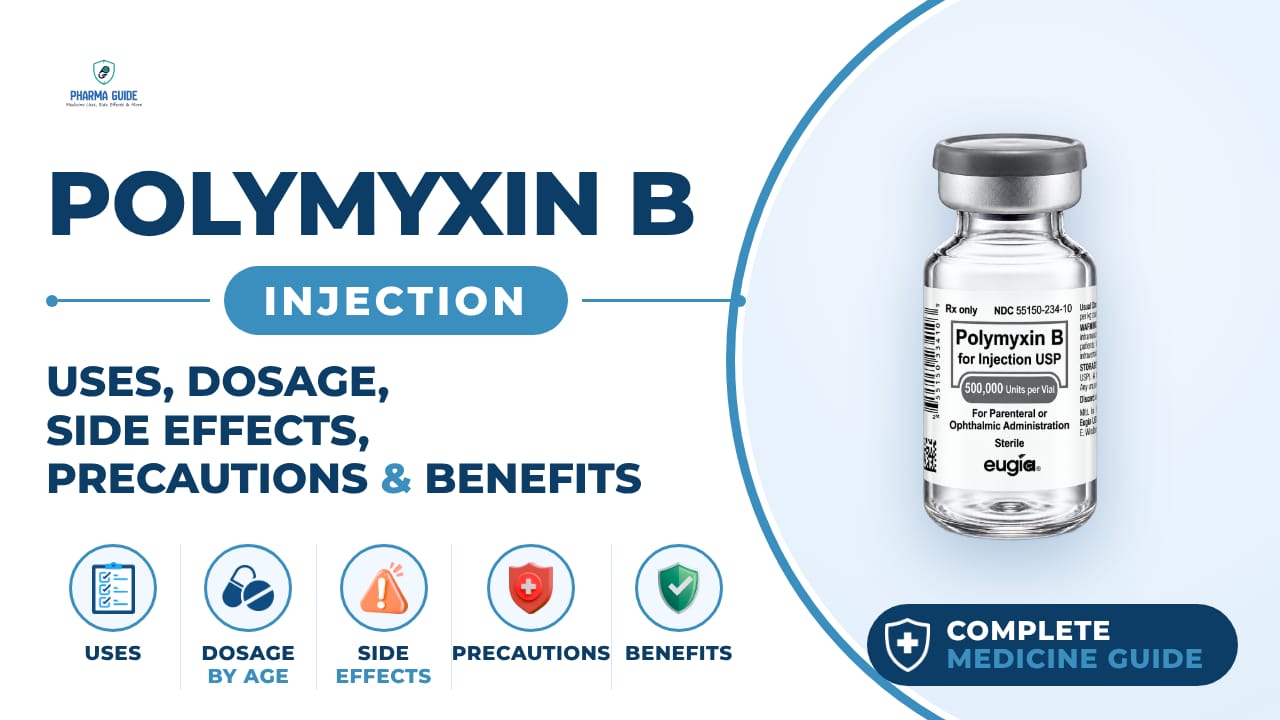
Polymyxin B Injection: Uses, Dosage, Side Effects, Precautions and Alternates
| Generic name | Polymyxin B sulfate |
|---|---|
| Drug class | Antibiotic (polypeptide antibiotic) |
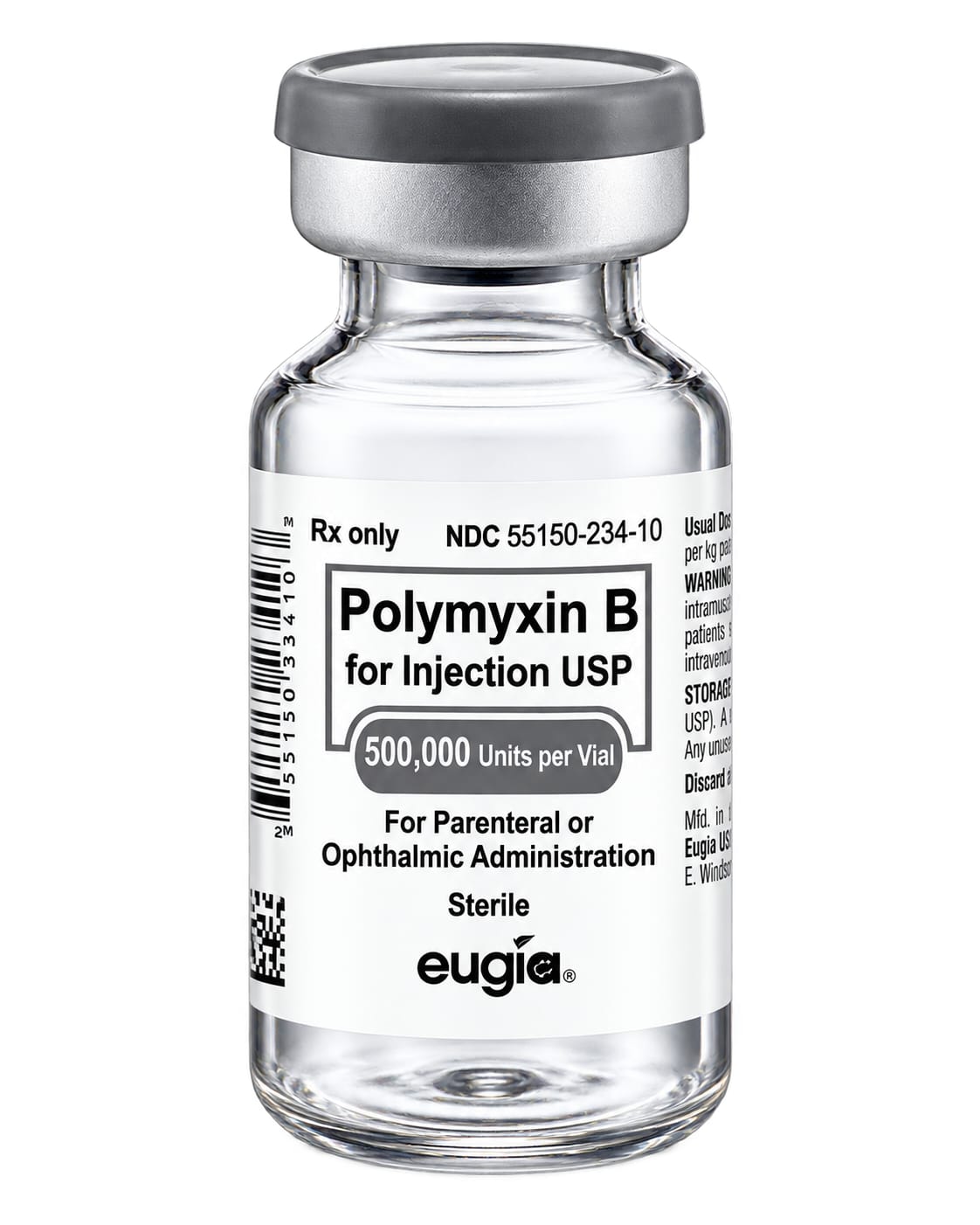
| Forms | Injection (powder in a vial for making a solution) |
Quick overview
Polymyxin B Injection (polymyxin B sulfate) is a polypeptide antibiotic used to treat serious bacterial infections, often when other antibiotics have not worked. It is given as an infusion into a vein by a healthcare provider, and when given into the muscle or spinal fluid, it is only used in hospitalized patients under close medical supervision. It can affect the kidneys and nerves, so monitoring is important during treatment.
What is Polymyxin B Injection
Polymyxin B is a polypeptide antibiotic that belongs to a family of five related compounds (Polymyxin A-E). It is used to treat serious bacterial infections and is often reserved as a last option when other antibiotics do not work, because it can be hard on the kidneys and nerves.
Polymyxin B Injection uses
- Urinary tract infections
- Infections of the meninges (lining around the brain), including meningitis
- Bloodstream infections
- Eye infections
- Infections caused by susceptible strains of Pseudomonas aeruginosa
Benefits of Polymyxin B Injection
- Can treat serious infections caused by bacteria that other antibiotics cannot control
- Considered a good choice for some resistant bacteria that don't respond well to safer, first-choice antibiotics
- May remain active against some multidrug-resistant infections
How Polymyxin B Injection works
Polymyxin B works by damaging the outer covering (membrane) of certain bacteria, which kills the bacteria.
Polymyxin B Injection dosage
Polymyxin B Injection is given as an infusion into a vein by a healthcare provider. It should only be given into the muscle or into the spinal fluid to patients who are in the hospital, so a doctor can watch for problems closely.
| Age group | Dose |
|---|---|
| Children 1–11 years | 15,000–25,000 units/kg/day IV, usually divided every 12 hours |
| 12–17 years | 15,000–25,000 units/kg/day IV, usually divided every 12 hours |
| 18–64 years | 15,000–25,000 units/kg/day IV, usually divided every 12 hours |
Available forms and strengths
- Injection (powder in a vial for making a solution)
Side effects of Polymyxin B Injection
Common
- Redness
- Pain
- Swelling
- Temporary eye stinging or itchiness
- Temporary blurred vision, if used as eye drops
Serious
- Dizziness
- Drowsiness
- Loss of coordination
- Headache
- Fever
- Back pain
- Stiff neck
- Hives
- Numbness or tingling in the hands or feet
- Kidney problems (shown by protein in urine, cell casts, and rising waste products in the blood)
- Nerve problems such as irritability, weakness, drowsiness, unsteady movements, numbness around the mouth, numbness in the arms or legs, and blurred vision
- Breathing problems caused by muscle weakness, especially if given soon after anesthesia or muscle relaxants
- Severe diarrhea that can occur with many antibiotics, including this one
Warnings and precautions
- When given into the muscle or into the spinal fluid, this drug should only be given to patients who are already in the hospital, so a doctor can supervise them constantly.
- This medicine can cause nerve-related problems such as irritability, weakness, drowsiness, unsteady movement, numbness around the mouth, numbness in the hands or feet, and blurred vision. These are more likely in people with impaired kidney function or kidney damage from the drug.
- Taking this medicine along with certain other antibiotics that can also harm nerves or kidneys—such as bacitracin, streptomycin, neomycin, kanamycin, gentamicin, tobramycin, amikacin, cephaloridine, paromomycin, viomycin, and colistin—should be avoided.
- Nerve-related side effects from this drug can lead to breathing failure caused by muscle weakness, especially if the drug is given soon after anesthesia or muscle relaxant medicines.
- This medicine should not be used in people who have had an allergic reaction to polymyxin antibiotics in the past.
- Severe diarrhea linked to the bowel infection Clostridium difficile has been reported with almost all antibiotics, including this one, and can range from mild to life-threatening.
- This medicine should not be used over large areas of the body.
- The safety of this drug during human pregnancy has not been established.
- Use Polymyxin B with caution while breastfeeding. It is not clearly known how much systemic polymyxin B passes into human breast milk. Because serious adverse effects are possible, treatment should be used only when clearly needed and under medical supervision.
- Kidney function should be checked carefully before and during treatment. People with kidney damage or buildup of nitrogen waste in the blood need a lower dose. Signs of kidney harm from this medicine include protein in the urine, cell casts, and high nitrogen waste levels. A drop in urine output or rising waste levels mean the medicine should be stopped.
- No standard liver-specific adjustment is generally specified, but overall organ function should be monitored.
- Avoiding alcohol during a serious infection and IV antibiotic treatment is advisable.
- Dizziness, drowsiness, weakness, or neurologic effects can make driving unsafe.
When to see a doctor
- Contact your doctor right away if you notice dizziness, drowsiness, loss of coordination, headache, fever, back pain, stiff neck, hives, or numbness/tingling in the hands or feet.
- If your problem does not improve even after a week of using this medicine, contact your doctor.
- A drop in how much urine you make, or rising waste levels in your blood tests, are signs this medicine should be stopped—tell your doctor right away if this happens.
Alternatives
- Cefiderocol
- Colistin
- Meropenem
Watch the video
FAQs
What is Polymyxin B Injection used for?
It is used to treat serious bacterial infections, including urinary tract infections, meningitis, bloodstream infections, eye infections, and infections caused by susceptible strains of Pseudomonas aeruginosa, often when other antibiotics have not worked.
How is Polymyxin B Injection given?
It is given as an infusion into a vein by a healthcare provider. When given into the muscle or spinal fluid, it is only used in hospitalized patients under close medical supervision.
What are the serious side effects of Polymyxin B Injection?
Serious side effects include dizziness, drowsiness, loss of coordination, headache, fever, back pain, stiff neck, hives, numbness or tingling in the hands or feet, kidney problems, nerve problems, breathing problems from muscle weakness, and severe diarrhea.
How does Polymyxin B Injection work?
It works by damaging the outer covering (membrane) of certain bacteria, which kills the bacteria.
Who should avoid Polymyxin B Injection?
It should not be used in people who have had an allergic reaction to polymyxin antibiotics in the past, and it should be avoided along with certain other antibiotics that can harm nerves or kidneys, such as bacitracin, streptomycin, neomycin, kanamycin, gentamicin, tobramycin, amikacin, cephaloridine, paromomycin, viomycin, and colistin.
General information, not medical advice
Your prescriber and the leaflet in your pack know your situation. This page does not.
- Follow your prescriber and the leaflet
- Don't start, stop, or change a dose on your own
- Doses and warnings differ by country and product
Sources
Video
Related medicines

Injectafer Injection: Uses, Dosage, Side Effects, Precautions and Alternates
Iron products
Injectafer (ferric carboxymaltose) treats iron deficiency anemia and heart failure-related iron deficiency via IV. Learn uses, dosage, side effects, and

Gliclazide Tablet: Uses, Dosage, Side Effects, Precautions and Alternates
Sulfonylurea (hypoglycemic/antidiabetic agent)
Gliclazide Tablet is a sulfonylurea for type 2 diabetes that boosts insulin release. Learn about dosage, side effects, warnings, and precautions.