
Safety
General information, not medical advice
Your prescriber and the leaflet in your pack know your situation. This page does not.
- Follow your prescriber and the leaflet
- Don't start, stop, or change a dose on your own
- Doses and warnings differ by country and product
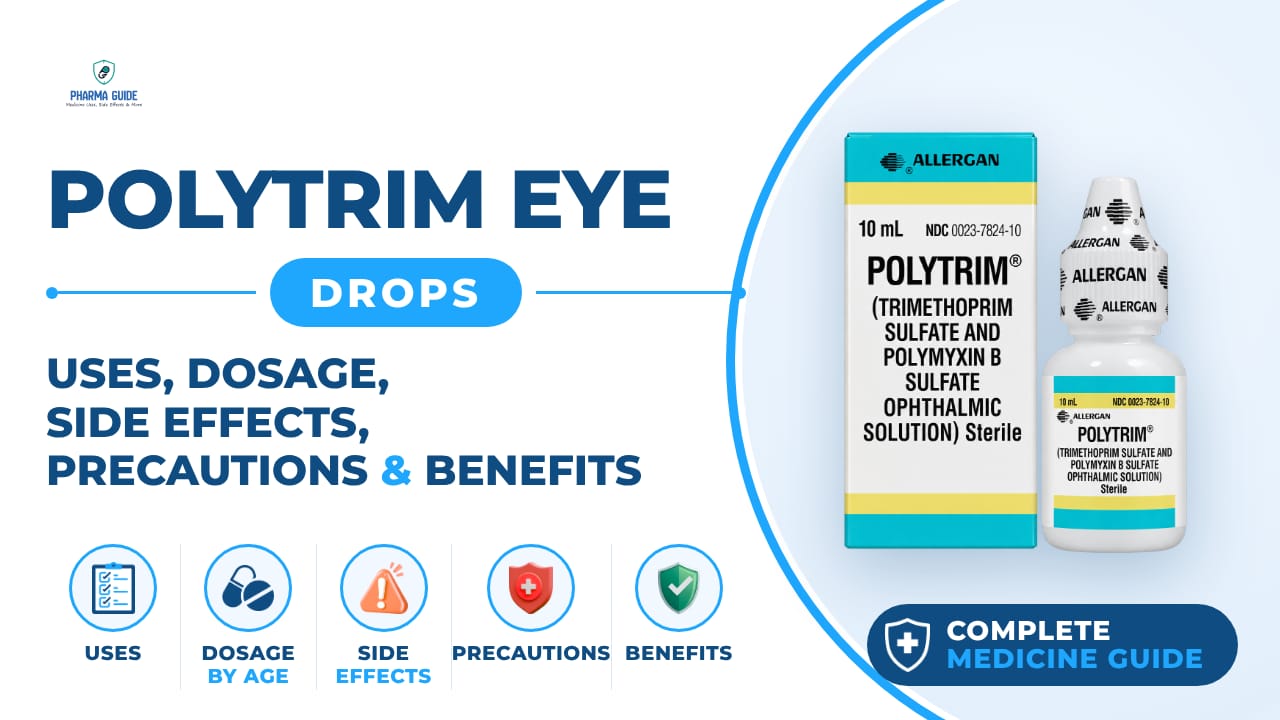
Polytrim Eye Drops: Uses, Dosage, Side Effects, Precautions and Alternates
| Generic name | polymyxin B/trimethoprim ophthalmic |
|---|---|
| Drug class | ophthalmic combination antibiotic |
| Forms | eye drops (ophthalmic solution) |
Quick overview
Polytrim Eye Drops combine two antibiotics, polymyxin B and trimethoprim, used to treat certain bacterial eye infections such as conjunctivitis, blepharoconjunctivitis, and blepharitis. The two antibiotics work together to stop bacteria from growing and to weaken their outer cell wall. Polytrim is applied directly into the eye and is generally used for 7 to 10 days as directed by a doctor.
What is Polytrim Eye Drops
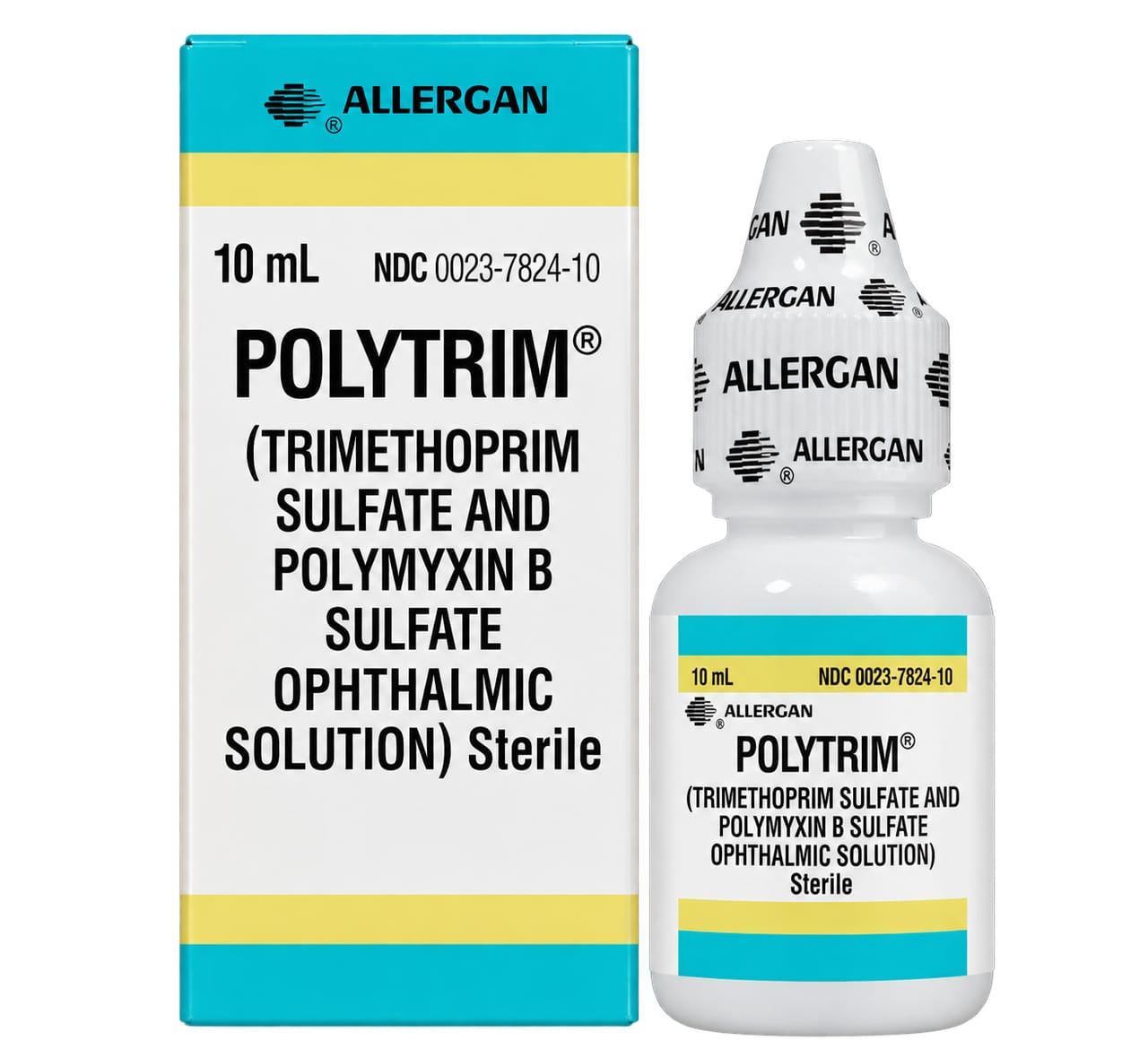
Polytrim is a combination of two antibiotics, polymyxin B and trimethoprim, given as eye drops to treat certain bacterial eye infections.
Polytrim Eye Drops uses
- Conjunctivitis (pink eye), which is a condition in which part of your eye is inflamed, sometimes from bacteria
- Blepharoconjunctivitis, which is a condition in which part of your eye and eyelid is inflamed, sometimes from bacteria
- Blepharitis (irritation along the eye lid)
Benefits of Polytrim Eye Drops
- Helps treat bacterial eye infections, especially bacterial conjunctivitis.
- Provides activity against a broad range of susceptible bacteria.
- Helps reduce redness, discharge, irritation, and discomfort caused by bacterial infection.
- Combines two antibiotics that work in different ways to help clear the infection effectively.
- Provides direct antibiotic treatment in the eye.
How Polytrim Eye Drops works
Polytrim kills certain bacteria by stopping them from making proteins and other substances they need to grow, and by weakening their outer cell wall.
Polytrim Eye Drops dosage
Wash your hands before using the eye drops. Shake the bottle so the liquid mixes evenly before each use. Tilt your head back and gently pull the lower eyelid down to make a small pouch. Place the drop into this pouch, then let go of the eyelid and gently close your eyes without blinking.
Keep your eyes closed and press gently on the inner corner of your eye for a minute or two to stop the medicine from being absorbed into your body. Wash your hands again afterward to remove any drops that got on them.
Do not let the dropper tip touch your eye, fingers, or any other surface. Do not wear contact lenses while using this medicine.
Use the drops for the full length of time your doctor recommends, even if your symptoms improve, to reduce the chance of the infection coming back.
If you miss a dose, use it as soon as you remember; if it is almost time for the next dose, skip the missed one and continue your regular schedule. Do not use extra drops to make up for a missed dose.
| Age group | Dose |
|---|---|
| Under 2 months | Safety and effectiveness not established |
| 2 months–11 years | 1 drop in affected eye(s) every 3 hours, maximum 6 doses daily, for 7–10 days |
| 12–17 years | 1 drop every 3 hours, maximum 6 doses daily, for 7–10 days |
| 18–64 years | 1 drop every 3 hours, maximum 6 doses daily, for 7–10 days |
| 65+ years | Same adult dosage |
Available forms and strengths
- eye drops (ophthalmic solution)
Side effects of Polytrim Eye Drops
Common
- Eye redness or itching
- Eye burning or stinging
Serious
- Signs of a serious allergic reaction such as breathing problems or wheezing, racing heart, fever or general ill feeling, swollen lymph nodes, swelling of the face, lips, mouth, tongue, or throat, trouble swallowing or throat tightness, itching or skin rash, hives, nausea or vomiting, dizziness or fainting, stomach cramps, or joint pain
- Getting another infection, such as a fungal infection, from using the drops for a long time
Warnings and precautions
- This medicine is only for use in the eye. Do not let the dropper tip touch your eye, fingers, or any other surface, and do not inject it into the eye.
- Do not wear contact lenses while you are being treated with this medicine.
- Do not share this medicine with anyone else, even if they have the same symptoms, since it could harm them.
- Using this medicine for a long time can lead to a new infection with other germs, such as fungi.
- It is not known if this medicine could affect pregnancy or harm a fetus. When used correctly, very little of the medicine is absorbed into the body, and it may be used during pregnancy if the benefits outweigh the risks. Talk to your doctor.
- It is not known if this medicine passes into breast milk, but very little is absorbed into the body when used correctly. It may be used while breastfeeding if the benefit to the mother outweighs the risk to the baby. Talk to your doctor.
- It isn't known if alcohol affects this medicine, but heavy drinking can weaken your immune system and make it harder for your body to fight the infection.
Storage
- Store at 15–25°C (59–77°F) at controlled room temperature.
- Keep the bottle tightly closed when not in use.
- Protect from excessive heat and direct sunlight.
- Do not freeze, and avoid touching the dropper tip to prevent contamination.
- Keep out of reach and sight of children and pets.
When to see a doctor
- Stop using the medicine and get medical help right away if you have signs of a serious allergic reaction, such as trouble breathing, swelling of the face or throat, nausea and vomiting, or stomach cramps.
- Call your doctor as soon as possible if you notice signs of an allergic reaction like eyelid swelling, itching, more redness, tearing, or a rash.
- Call your doctor if your eye infection does not improve or gets worse.
- If you or someone else uses too much of this medicine, get medical help right away or contact a poison control center.
Alternatives
- Moxifloxacin (Vigamox) Eye Drops
- Ofloxacin (Ocuflox) Eye Drops
- Ciprofloxacin (Ciloxan) Eye Drops
- Gentamicin Eye Drops
- Tobramycin Eye Drops
Watch the video
FAQs
What is Polytrim Eye Drops used for?
Polytrim Eye Drops are used to treat bacterial eye infections such as conjunctivitis (pink eye), blepharoconjunctivitis, and blepharitis.
How does Polytrim Eye Drops work?
Polytrim kills certain bacteria by stopping them from making proteins and other substances they need to grow, and by weakening their outer cell wall.
What is the typical dosage for Polytrim Eye Drops?
For most age groups from 2 months and older, the usual dose is 1 drop in the affected eye(s) every 3 hours, up to a maximum of 6 doses daily, for 7 to 10 days as directed by a doctor.
Can I wear contact lenses while using Polytrim Eye Drops?
No, you should not wear contact lenses while being treated with this medicine.
What are the common side effects of Polytrim Eye Drops?
Common side effects include eye redness or itching and eye burning or stinging.
General information, not medical advice
Your prescriber and the leaflet in your pack know your situation. This page does not.
- Follow your prescriber and the leaflet
- Don't start, stop, or change a dose on your own
- Doses and warnings differ by country and product
Sources
Video
Related medicines

Injectafer Injection: Uses, Dosage, Side Effects, Precautions and Alternates
Iron products
Injectafer (ferric carboxymaltose) treats iron deficiency anemia and heart failure-related iron deficiency via IV. Learn uses, dosage, side effects, and

Gliclazide Tablet: Uses, Dosage, Side Effects, Precautions and Alternates
Sulfonylurea (hypoglycemic/antidiabetic agent)
Gliclazide Tablet is a sulfonylurea for type 2 diabetes that boosts insulin release. Learn about dosage, side effects, warnings, and precautions.