
Safety
General information, not medical advice
Your prescriber and the leaflet in your pack know your situation. This page does not.
- Follow your prescriber and the leaflet
- Don't start, stop, or change a dose on your own
- Doses and warnings differ by country and product
Pomalyst Capsule: Uses, Dosage, Side Effects, Precautions and Alternates
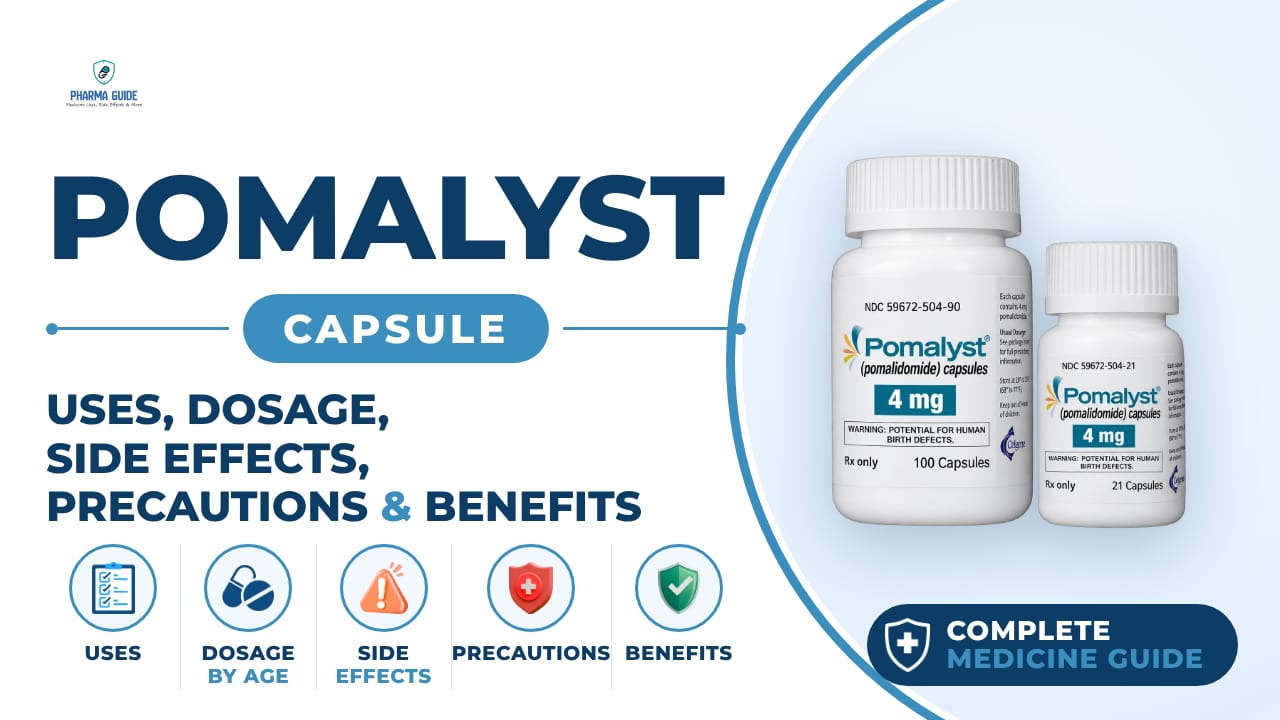
| Generic name | pomalidomide |
|---|---|
| Drug class | Thalidomide analogue (immunomodulatory agent); also described as a miscellaneous antineoplastic and immunosuppressant |
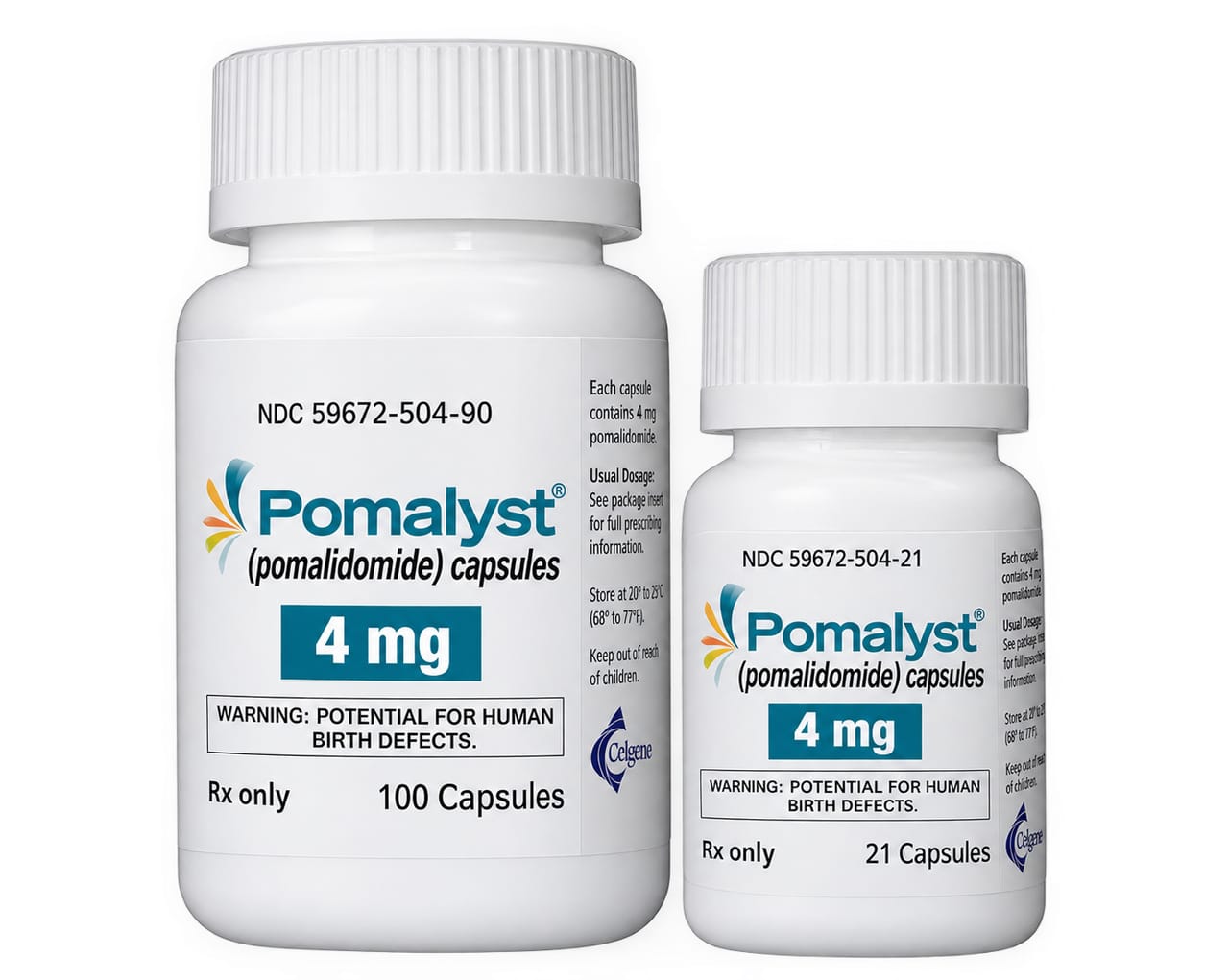
| Forms | Oral capsule in 1 mg, 2 mg, 3 mg, and 4 mg strengths |
Quick overview
Pomalyst Capsule contains the active ingredient pomalidomide, a thalidomide analogue classified as an immunomodulatory agent, antineoplastic, and immunosuppressant. It is a prescription capsule used to treat multiple myeloma and certain forms of Kaposi sarcoma. Pomalyst works by affecting the immune system and acting directly on cancer cells, and it carries an FDA boxed warning due to serious risks including birth defects and blood clots.
What is Pomalyst Capsule
Pomalyst is a prescription capsule medicine used to treat certain cancers. It contains the active ingredient pomalidomide and affects the immune system to help fight cancer cells.
Pomalyst Capsule uses
- Treating multiple myeloma (a cancer of plasma cells), usually in combination with dexamethasone, in adults who have already tried at least two other treatments that did not work well enough
- Treating AIDS-related Kaposi sarcoma in adults whose HIV treatment has not worked well enough or has stopped working
- Treating Kaposi sarcoma in adults who are HIV-negative
Benefits of Pomalyst Capsule
- Can slow or shrink multiple myeloma that has not responded to other treatments
- Taken once a day by mouth instead of by injection
- Shown in studies to lengthen the time before the cancer gets worse and to lengthen survival compared with high-dose dexamethasone alone
How Pomalyst Capsule works
Pomalyst works by helping the immune system recognize and attack cancer cells. It also acts directly on cancer cells to stop them from growing, and it helps block the blood supply that tumors need to grow.
Pomalyst Capsule dosage
Take this medicine exactly as prescribed by your doctor and follow all instructions on the label. Take each dose with a full glass of water, at about the same time every day, with or without food. Swallow the capsule whole — do not break, chew, or open it, since the medicine inside can be harmful if it touches your skin, eyes, mouth, or nose. If you are on hemodialysis, take your dose after your dialysis session on dialysis days. If you miss a dose, take it as soon as you remember, but skip it if it has been more than 12 hours since your usual time — do not take two doses at once. Do not share this medicine with anyone else, even if they have a similar condition. You will need frequent blood tests while taking this medicine.
| Age group | Dose |
|---|---|
| Under 18 years | Not recommended |
| 18–64 years | 4 mg, once/day |
| 65+ years | 4 mg, once/day |
Available forms and strengths
Oral capsule in 1 mg, 2 mg, 3 mg, and 4 mg strengths.
Side effects of Pomalyst Capsule
Common
- Weakness or tiredness
- Low white blood cell counts (neutropenia)
- Low red blood cell counts (anemia)
- Low platelet counts
- Nausea
- Constipation
- Diarrhea
- Shortness of breath
- Infection of the nose or throat (cold-like symptoms, sore throat, runny or stuffy nose, sneezing, cough)
- Back pain
- Fever
- High blood sugar level
- Confusion
- Slight skin rash
- Dizziness
Serious
- New cancers, such as leukemia (fever, fatigue, weakness, weight loss)
- Peripheral neuropathy/nerve damage (numbness, tingling, burning pain, weakness, loss of coordination in hands or feet)
- Liver problems, including liver failure (nausea, vomiting, jaundice, dark urine, upper right abdominal pain)
- Severe drop in blood cell counts (fever, chills, unusual bleeding or bruising, pale skin, feeling light-headed)
- Serious skin reactions such as Stevens-Johnson syndrome or toxic epidermal necrolysis (painful blisters, skin peeling, sores in mouth or around eyes, fever)
- Cardiac problems such as heart attack, atrial fibrillation, angina, or heart failure (chest pain spreading to jaw/arm, swelling in limbs, shortness of breath)
- Blood clots, including in the lungs or legs, which can lead to heart attack or stroke (chest pain, shortness of breath, leg swelling or pain, sudden weakness or numbness, slurred speech)
- Severe allergic reaction, including a reaction called DRESS affecting multiple organs (swelling of face/mouth/throat, trouble breathing, widespread rash, fever, swollen glands)
- Tumor lysis syndrome from fast breakdown of cancer cells (confusion, muscle cramps, nausea, vomiting, irregular heartbeat, decreased urination)
- Harm to an unborn baby if taken during pregnancy
Warnings and precautions
- This medicine carries the FDA's most serious type of warning (a boxed warning) for two reasons: it can cause severe birth defects or death to an unborn baby, and it can increase the risk of blood clots, heart attack, and stroke.
- Because of the risk to unborn babies, this medicine is only available through a special restricted program. Patients, doctors, and pharmacies must all be enrolled, and patients must follow pregnancy testing and birth control rules.
- This medicine can lower white blood cells, red blood cells, and platelets, raising the risk of infection, anemia, and bleeding. Blood counts are checked regularly during treatment.
- Serious, sometimes fatal liver failure can occur. Liver function is checked monthly during treatment.
- Severe allergic and skin reactions, including swelling of the face/throat and serious skin peeling reactions, can occur and require stopping the medicine right away.
- This medicine may increase the risk of developing new cancers, such as acute myeloid leukemia.
- Tumor lysis syndrome, a serious reaction from rapid breakdown of cancer cells, can occur, particularly in patients with a high amount of cancer in the body before treatment.
- Smoking may make this medicine less effective and may increase the risk of stroke or blood clots while taking it.
- Patients should not donate blood while taking this medicine and for one month after stopping, since the blood could be given to a pregnant person.
- Pomalyst must not be taken during pregnancy because it can cause severe, life-threatening birth defects or death of the baby, even from a single dose.
- Women who can become pregnant must have negative pregnancy tests before starting and regularly during treatment, and must use two effective forms of birth control starting four weeks before treatment, throughout treatment, and for four weeks after stopping.
- Men taking this medicine must use condoms during sex and must not donate sperm, since the drug passes into semen.
- It is not known if this medicine passes into breast milk, but because of possible harm to a nursing baby, you should not breastfeed while taking it.
- Tell your doctor if you have kidney problems or are on dialysis, since your dose may need to be lowered or timed around your dialysis sessions.
- Tell your doctor if you have liver problems, as your dose may need to be lowered. This medicine can also cause liver damage, including rare but fatal liver failure, so liver function will be monitored during treatment.
- Moderate alcohol use is believed to be safe with this medicine, since there's no known interaction. However, drinking large amounts of alcohol may increase the risk of liver problems, which is also a possible side effect of this medicine. Talk to your doctor about how much alcohol is safe for you.
- This medicine can cause dizziness and confusion, so avoid driving or doing anything that requires alertness until you know how it affects you.
Storage
- Store at room temperature, between 68°F and 77°F (20°C and 25°C)
- Brief exposure to temperatures between 59°F and 86°F (15°C and 30°C) is acceptable, such as during transport
- Store in a cool, dry place, away from moisture and heat
- Return any unused medicine to your doctor or pharmacy, or dispose of it as directed — do not simply throw it away
When to see a doctor
- Get emergency help right away for signs of a blood clot or heart attack, such as chest pain, shortness of breath, coughing up blood, sudden arm or leg swelling, or sudden weakness or numbness on one side of the body, severe headache, or trouble speaking.
- Get emergency help for signs of a severe allergic reaction, such as swelling of the face, lips, tongue or throat, trouble breathing, hives, or a severe skin reaction with blistering, peeling, or painful sores.
- Call your doctor right away if you notice signs of liver problems, such as nausea, vomiting, yellowing of the skin or eyes, dark urine, or pain in the upper right side of your stomach.
- Call your doctor right away if you have signs of low blood cell counts, such as fever, chills, unusual bleeding or bruising, or feeling very tired.
- Call your doctor right away if you have numbness, tingling, or burning pain in your hands or feet, which may be signs of nerve damage.
- Call your doctor right away if you think you might be pregnant, miss your period, or have unusual menstrual bleeding while taking this medicine.
- Call your doctor right away if you have signs of tumor lysis syndrome, such as confusion, muscle cramps, nausea, vomiting, irregular heartbeat, or decreased urination.
Alternatives
- Revlimid
- Thalomid
- Imnovid
Watch the video
FAQs
What is Pomalyst Capsule used for?
Pomalyst is used to treat multiple myeloma, usually combined with dexamethasone, in adults who have already tried at least two other treatments that didn't work well enough. It's also used to treat AIDS-related Kaposi sarcoma when HIV treatment has failed, and Kaposi sarcoma in HIV-negative adults.
How is Pomalyst Capsule taken?
Pomalyst is taken once a day by mouth, with or without food, swallowed whole with a full glass of water. The capsule should not be broken, chewed, or opened because the medicine inside can be harmful if it touches skin, eyes, mouth, or nose. The usual dose for adults is 4 mg once daily.
What is the boxed warning for Pomalyst Capsule?
Pomalyst carries an FDA boxed warning because it can cause severe birth defects or death to an unborn baby, even from a single dose, and because it can increase the risk of blood clots, heart attack, and stroke. Due to the pregnancy risk, it is only available through a restricted program requiring pregnancy testing and birth control.
What are the serious side effects of Pomalyst Capsule?
Serious side effects include new cancers such as leukemia, peripheral neuropathy, liver problems including liver failure, severe drops in blood cell counts, serious skin reactions, cardiac problems, blood clots, severe allergic reactions including DRESS, and tumor lysis syndrome.
Can I drink alcohol while taking Pomalyst Capsule?
Moderate alcohol use is believed to be safe since there's no known interaction, but drinking large amounts of alcohol may increase the risk of liver problems, which is also a possible side effect of this medicine. Talk to your doctor about how much alcohol is safe for you.
General information, not medical advice
Your prescriber and the leaflet in your pack know your situation. This page does not.
- Follow your prescriber and the leaflet
- Don't start, stop, or change a dose on your own
- Doses and warnings differ by country and product
Sources
Video
Related medicines

Injectafer Injection: Uses, Dosage, Side Effects, Precautions and Alternates
Iron products
Injectafer (ferric carboxymaltose) treats iron deficiency anemia and heart failure-related iron deficiency via IV. Learn uses, dosage, side effects, and

Gliclazide Tablet: Uses, Dosage, Side Effects, Precautions and Alternates
Sulfonylurea (hypoglycemic/antidiabetic agent)
Gliclazide Tablet is a sulfonylurea for type 2 diabetes that boosts insulin release. Learn about dosage, side effects, warnings, and precautions.