
Safety
General information, not medical advice
Your prescriber and the leaflet in your pack know your situation. This page does not.
- Follow your prescriber and the leaflet
- Don't start, stop, or change a dose on your own
- Doses and warnings differ by country and product
Pradaxa Capsule: Uses, Dosage, Side Effects, Precautions and Alternates
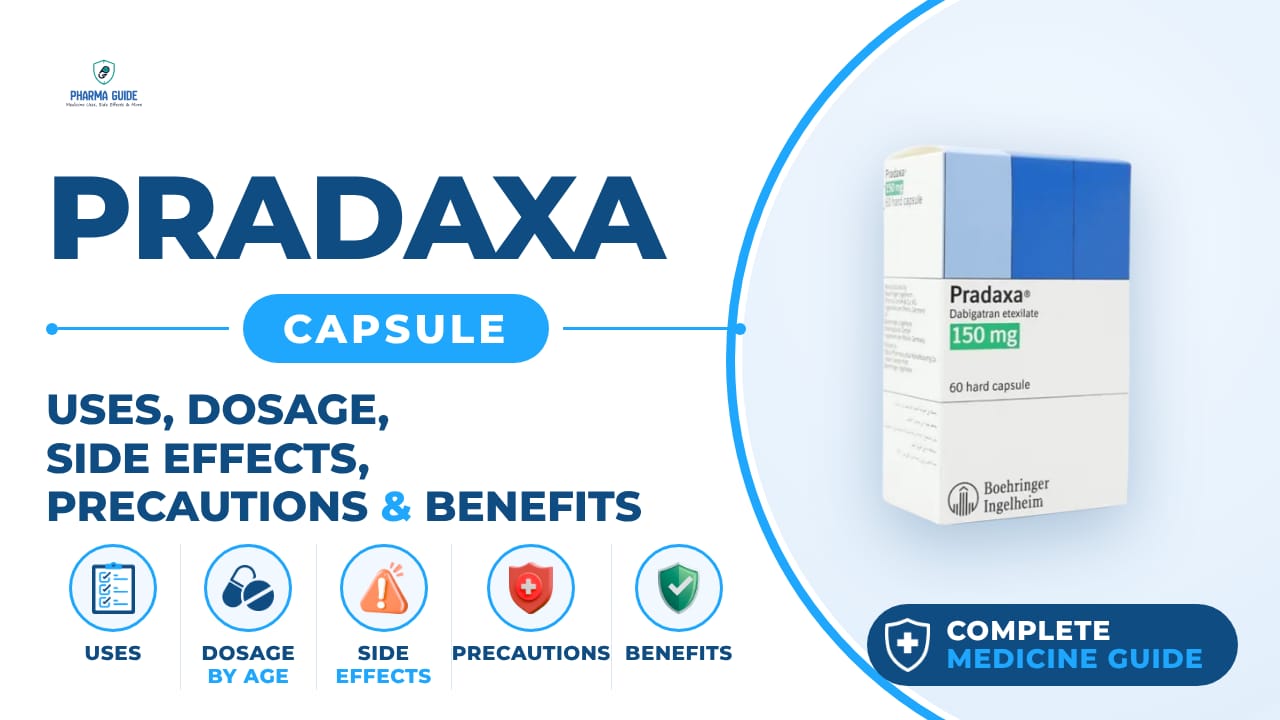
| Generic name | dabigatran etexilate (dabigatran) |
|---|---|
| Drug class | Direct thrombin inhibitor (anticoagulant) |
| Forms | Capsules (75 mg, 110 mg, 150 mg), Coated granules/oral pellets (20 mg, 30 mg, 40 mg, 50 mg, 110 mg, 150 mg), Oral solution |
Quick overview
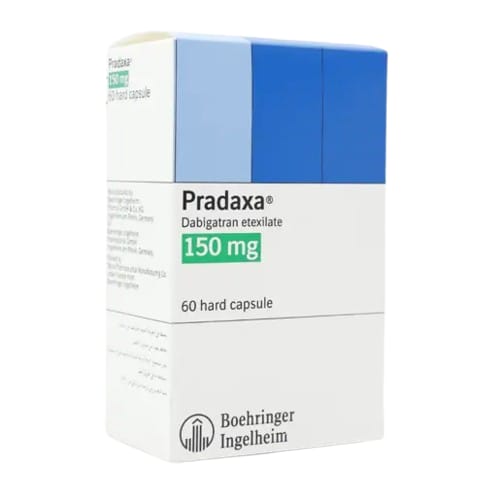
Pradaxa Capsule contains dabigatran etexilate, a direct thrombin inhibitor used as an anticoagulant (blood thinner). It helps prevent and treat harmful blood clots, including after knee or hip replacement surgery, in atrial fibrillation, and in deep vein thrombosis or pulmonary embolism. It works by blocking thrombin, a substance needed for blood clots to form. It is available as capsules, oral pellets, and an oral solution.
What is Pradaxa Capsule
Pradaxa is a prescription anticoagulant medicine, sometimes called a blood thinner, that contains dabigatran etexilate. It helps stop harmful blood clots from forming.
Pradaxa Capsule uses
- Prevent blood clots in the veins after knee or hip replacement surgery in adults
- Reduce the risk of stroke and blood clots in adults with an irregular heartbeat called nonvalvular atrial fibrillation
- Treat blood clots in the veins of the legs (deep vein thrombosis) and lungs (pulmonary embolism)
- Prevent blood clots in the legs and lungs from coming back
- Treat and prevent recurrence of venous thromboembolic events in children
Benefits of Pradaxa Capsule
- Helps prevent blood clots that can lead to stroke
- Helps treat existing blood clots in the legs and lungs
- Reduces the chance of blood clots returning after treatment
- Does not usually require routine blood clotting tests unlike some older blood thinners
How Pradaxa Capsule works
Dabigatran blocks a substance in the blood called thrombin, which is needed to form blood clots. By blocking thrombin, the medicine prevents clots from forming.
Pradaxa Capsule dosage
Capsules can be taken with or without food. Swallow the capsule whole with a full glass of water. Do not break, chew, or empty the pellets from the capsule, since this may increase the risk of bleeding. Do not sprinkle the pellets on food or mix with liquids. Take the medicine at about the same time each day.
Keep capsules in the blister pack until it is time to take them; do not repackage into pill organizers. Only open a new bottle after all capsules in the previous bottle are finished.
For children who cannot swallow capsules, oral pellets can be given before a meal, or mixed with apple juice or certain soft foods, and should be used right away or within 30 minutes of mixing. If a child does not finish all of the oral pellets in a dose, do not give an extra dose at that time; return to the regular schedule.
| Age group | Dose |
|---|---|
| Under 18 years | Specialist-directed dosing required |
| 18–74 years | 150 mg twice daily for atrial fibrillation when kidney function is adequate |
| 75–79 years | 150 mg twice daily; lower dose may be considered based on bleeding/kidney risk |
| 80 years & older | 110 mg twice daily is commonly used in some countries |
Available forms and strengths
- Capsules (75 mg, 110 mg, 150 mg)
- Coated granules/oral pellets (20 mg, 30 mg, 40 mg, 50 mg, 110 mg, 150 mg)
- Oral solution
Side effects of Pradaxa Capsule
Common
- Bruising
- Nose bleeds
- Stomach ache
- Itchy skin, rash
- Diarrhoea
- Indigestion
- Feeling sick
- Cough
- Painful, swollen joints
- Sore nasal passages and throat
- Discomfort when swallowing
- Hair loss
- Frequent infections including fever, severe chills, sore throat or mouth ulcers
- Heartburn or burning feeling in the stomach
Serious
- Long or excessive bleeding
- Exceptional weakness
- Tiredness, headaches, dizziness and looking pale
- Chest pain or being short of breath
- Swelling of hands, ankles and feet
- Red or dark brown urine
- Red or black bowel motions
- Blood in urine, reduced urine output, swelling of legs, ankles and feet, increased time for blood to clot, heavy bleeding (signs of anticoagulant-related nephropathy)
- Signs of an allergic reaction: rash, itching, swelling of the face, lips, tongue or other parts of the body, shortness of breath, wheezing or troubled breathing
- Signs of a blood clot around the spinal cord: back pain, numbness or muscle weakness in the lower body, or loss of bladder or bowel control
Warnings and precautions
- Stopping Pradaxa early increases the risk of a blood clot or stroke; never stop taking it without talking to your doctor first.
- Pradaxa can cause a serious blood clot around the spinal cord in people who have a spinal tap or spinal anesthesia, which could lead to long-term or permanent paralysis.
- Pradaxa can make it easier to bleed, even from a minor injury like a fall or bump on the head.
- Do not use Pradaxa if you have a mechanical prosthetic heart valve or active bleeding.
- Tell any doctor, dentist or pharmacist that you are taking Pradaxa, especially before any surgery or dental procedure, as treatment may need to be temporarily stopped.
- Do not take Pradaxa if you are pregnant, as it may affect your developing baby. Check with your doctor if you are pregnant or planning to become pregnant.
- Do not breastfeed while taking Pradaxa, since the medicine passes into breast milk.
- People with severely reduced kidney function should not take Pradaxa, and kidney function may need to be checked regularly during treatment.
- Pradaxa should not be used if you have liver problems or liver disease.
- The interaction between alcohol and Pradaxa is unknown, so check with your doctor before drinking alcohol while taking this medicine.
- Be careful driving or using machines until you know how Pradaxa affects you, and avoid driving or operating machinery for some time after orthopaedic surgery.
Storage
- Keep your capsules in their blister pack until it is time to take them
- Keep Pradaxa in a cool dry place where the temperature stays below 30°C
- Store it in a cool dry place away from moisture, heat or sunlight; for example, do not store it in the bathroom or near a sink, or in the car or on window sills
- Keep it where young children cannot reach it
- If you no longer need to use this medicine or it is out of date, take it to any pharmacy for safe disposal
- Do not use this medicine after the expiry date
- Throw away any unused Pradaxa capsules if it has been longer than 4 months since you first opened the bottle
- Store Pradaxa oral pellets at room temperature, away from moisture and heat, in the original silver aluminum bag; use within 6 months of opening the bag
When to see a doctor
- Get emergency help if you have signs of an allergic reaction such as hives, rash, itching, chest pain or tightness, difficulty breathing or wheezing, dizziness or fainting, or swelling of the face, lips, tongue or throat.
- Seek emergency care if you have symptoms of a blood clot around the spine, such as back pain, numbness, tingling, muscle weakness in the lower body, or loss of bladder or bowel control.
- Call your doctor right away if you have bruising or bleeding that will not stop, such as nosebleeds, bleeding gums, or heavy menstrual bleeding.
- Call your doctor if you notice headache, weakness, dizziness, or feeling like you might pass out.
- Call your doctor if you have bloody or tarry stools, or if you cough up blood or vomit material that looks like coffee grounds.
- Call your doctor if your urine looks red, pink, or brown.
- Tell your doctor immediately or go to the emergency department if you notice leg swelling, cough, or shortness of breath, which could be signs of a blood clot.
- If you think you have taken too much Pradaxa, seek urgent medical attention right away, even if you feel fine.
- Tell your doctor or seek urgent medical attention if you fall or hit your head during treatment, as you may be at increased risk of bleeding.
Alternatives
- Dabigat 150 Capsule
- Afogatran 150 Capsule
- Dabiclot 150 Capsule
- Dabigza 150 Capsule
- Dablexa 150 Capsule
- Pradaxa 110 Capsule
- Pradaxa 75 mg Capsule
Watch the video
FAQs
What is Pradaxa Capsule used for?
Pradaxa is used to prevent blood clots after knee or hip replacement surgery, reduce stroke risk in nonvalvular atrial fibrillation, treat deep vein thrombosis and pulmonary embolism, and prevent clots from recurring.
How does Pradaxa Capsule work?
It contains dabigatran etexilate, which blocks thrombin, a substance needed for blood clots to form, thereby preventing clot formation.
How should Pradaxa Capsule be taken?
Capsules should be swallowed whole with a full glass of water, with or without food, at about the same time each day. They should not be broken, chewed, or have the pellets emptied out, as this may increase bleeding risk.
Can I stop taking Pradaxa Capsule on my own?
No, stopping Pradaxa early increases the risk of a blood clot or stroke, so you should never stop taking it without talking to your doctor first.
What are the serious side effects of Pradaxa Capsule?
Serious effects include long or excessive bleeding, chest pain or shortness of breath, red or dark brown urine, black or red bowel motions, signs of a blood clot around the spinal cord, and signs of an allergic reaction.
General information, not medical advice
Your prescriber and the leaflet in your pack know your situation. This page does not.
- Follow your prescriber and the leaflet
- Don't start, stop, or change a dose on your own
- Doses and warnings differ by country and product
Sources
- PRADAXA® Summary of Product Characteristics. Boehringer Ingelheim.
- PRADAXA Consumer Medicine Information (CMI), Boehringer Ingelheim Pty Limited, July 2025
- Drugs.com Pradaxa page, medically reviewed by Philip Thornton, DipPharm, last updated Aug 26, 2026
- Practo Pradaxa 150 Capsule medicine info page, last updated 14 Feb 2023
- Medical News Today, Pradaxa (dabigatran) article, medically reviewed by Victor Nguyen, PharmD, MBA, updated November 8, 2021
Video
Related medicines

Injectafer Injection: Uses, Dosage, Side Effects, Precautions and Alternates
Iron products
Injectafer (ferric carboxymaltose) treats iron deficiency anemia and heart failure-related iron deficiency via IV. Learn uses, dosage, side effects, and

Gliclazide Tablet: Uses, Dosage, Side Effects, Precautions and Alternates
Sulfonylurea (hypoglycemic/antidiabetic agent)
Gliclazide Tablet is a sulfonylurea for type 2 diabetes that boosts insulin release. Learn about dosage, side effects, warnings, and precautions.