
Safety
General information, not medical advice
Your prescriber and the leaflet in your pack know your situation. This page does not.
- Follow your prescriber and the leaflet
- Don't start, stop, or change a dose on your own
- Doses and warnings differ by country and product
Praluent Injection: Uses, Dosage, Side Effects, Precautions and Alternates
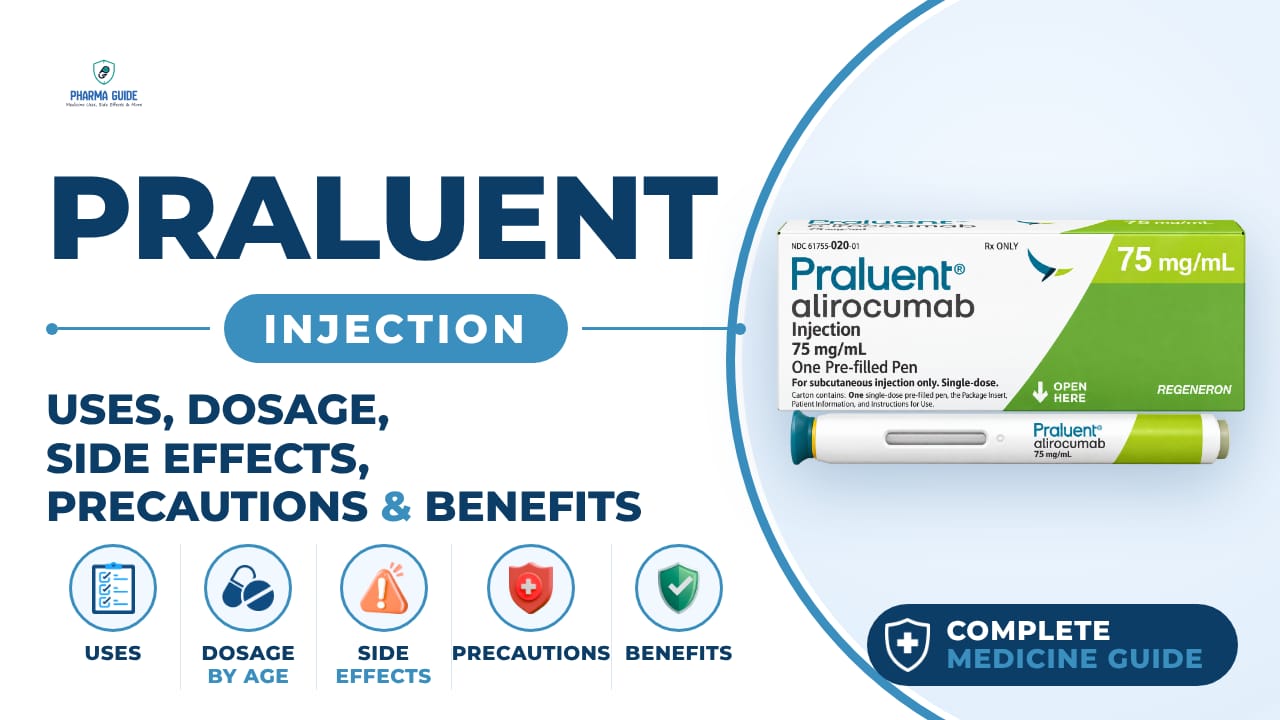
| Generic name | alirocumab |
|---|---|
| Drug class | PCSK9 (Proprotein Convertase Subtilisin Kexin Type 9) inhibitor antibody |
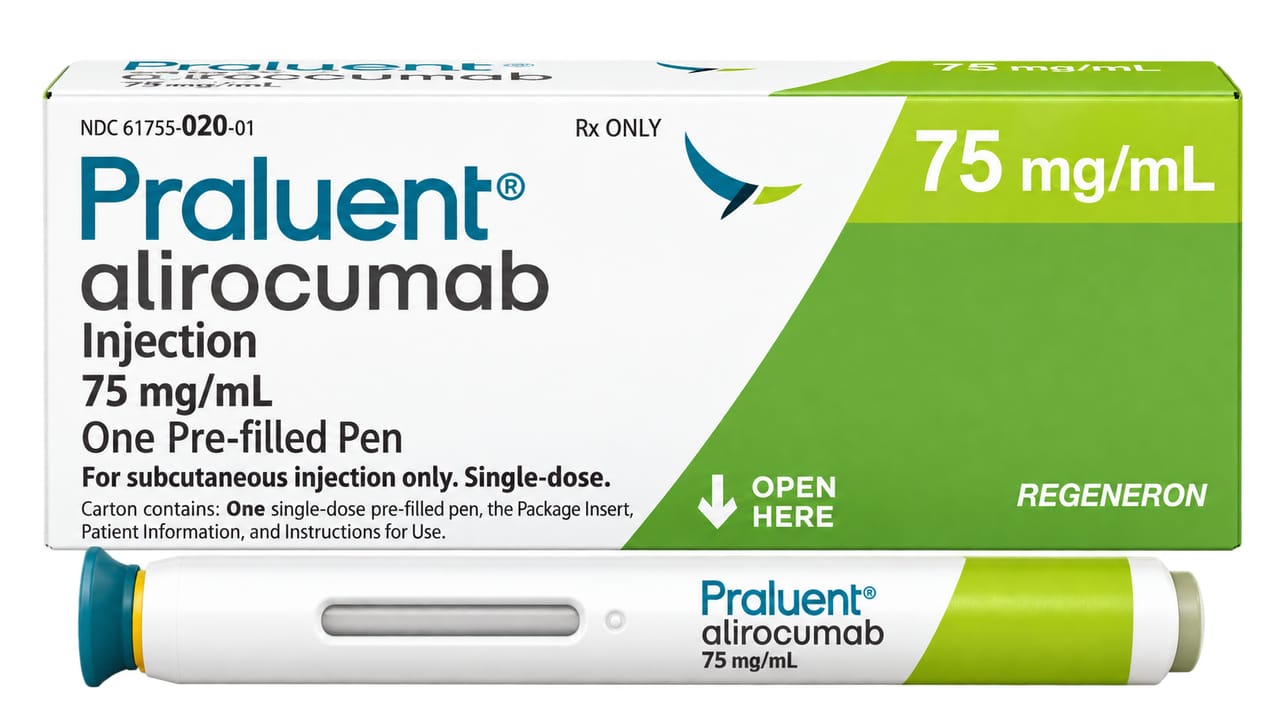
| Forms | Injection: 75 mg/mL solution in a single-dose pre-filled pen, Injection: 150 mg/mL solution in a single-dose pre-filled pen, Injection: 75 mg/mL solution in a single-dose pre-filled syringe, Injection: 150 mg/mL solution in a single-dose pre-filled syringe, Injection: 300 mg solution in a single-dose pre-filled pen (2 mL) |
Quick overview
Praluent Injection (alirocumab) is a PCSK9 inhibitor antibody given by injection to help lower LDL ("bad") cholesterol. It is used in adults with heterozygous familial hypercholesterolemia or atherosclerotic heart disease who need additional LDL-lowering along with diet and statin therapy, in adults with established atherosclerotic cardiovascular disease to reduce cardiovascular risk, and in children 8 years and older with heterozygous familial hypercholesterolemia. It is injected under the skin every 2 weeks or every 4 weeks, depending on the prescribed dose.
What is Praluent Injection
Praluent is an injectable prescription medicine called a PCSK9 inhibitor. It is a monoclonal antibody, a type of specialized protein designed to attach to a target substance in the body, and it binds to a protein called PCSK9.
Praluent Injection uses
- Treatment of adults with heterozygous familial hypercholesterolemia (an inherited condition that causes high levels of LDL cholesterol) or atherosclerotic heart problems who need additional lowering of LDL cholesterol, used along with diet and maximally tolerated statin therapy
- Used in adults with established atherosclerotic cardiovascular disease to reduce cardiovascular risk by lowering LDL-C levels
- Used in children and adolescents 8 years of age and older with heterozygous familial hypercholesterolemia (per EU label)
Benefits of Praluent Injection
- LDL Cholesterol Reduction: Helps significantly lower LDL ("bad") cholesterol.
- Familial Hypercholesterolemia Support: Used for certain inherited cholesterol disorders.
- Cardiovascular Risk Reduction: Helps reduce the risk of heart attack and stroke in appropriate patients.
- PCSK9 Inhibition: Helps the liver remove more LDL cholesterol from the bloodstream.
- Additional Lipid Control: Can be used with statins or other lipid-lowering medicines when additional LDL reduction is needed.
How Praluent Injection works
Praluent blocks a protein called PCSK9. Normally, PCSK9 reduces the number of LDL receptors on liver cells, which are what remove bad cholesterol from the blood. By blocking PCSK9, Praluent increases the number of these receptors, allowing the liver to clear more bad cholesterol from the blood, which lowers LDL cholesterol levels.
Praluent Injection dosage
Use Praluent exactly as your healthcare provider tells you to use it. Praluent comes as a single-dose pre-filled pen (autoinjector) or a single-dose pre-filled syringe; your healthcare provider will prescribe the type and dose that is best for you. If you or a caregiver will give the injections, you should receive training on the right way to prepare and give the injection before trying it yourself.
Praluent is injected under the skin every 2 weeks or every 4 weeks (monthly), depending on your prescribed dose. If you are prescribed the monthly dose, you will give yourself 2 separate injections in a row, using a different syringe or pen for each injection and two different injection sites. Do not inject Praluent together with other injectable medicines at the same injection site. Always check the label of your pen or syringe to make sure you have the correct medicine and dose before each injection.
Allow the pre-filled pen or syringe to warm to room temperature for 30 to 40 minutes before use (do not heat it artificially and do not put it back in the refrigerator). Inject into the thigh, abdomen (avoiding the area around the navel), or upper arm; rotate the injection site with each injection. Do not inject into areas of active skin disease or injury such as sunburn, rashes, inflammation, or infections, and avoid areas with visible veins, scars, or stretch marks. It may take up to 20 seconds for the pen to deliver the full injection; hold the pen in place until the window turns completely yellow.
If you forget a dose, inject the missed dose as soon as you remember, within 7 days, then resume your original schedule; if more than 7 days have passed, follow your doctor's or pharmacist's specific instructions for restarting. Do not stop using Praluent without talking with your healthcare provider, since your cholesterol levels can increase if you stop. Continue following your cholesterol-lowering diet while using this medicine.
| Age group | Dose |
|---|---|
| 8–17 Years | 75 mg subcutaneously once every 2 weeks or 300 mg once every 4 weeks, depending on the indication and response |
| Adults (18–64 Years) | 75 mg every 2 weeks or 300 mg once every 4 weeks; may be adjusted according to LDL-C response |
| Older Adults (65+ Years) | 75 mg every 2 weeks or 300 mg once every 4 weeks, with monitoring as appropriate |
Available forms and strengths
- Injection: 75 mg/mL solution in a single-dose pre-filled pen
- Injection: 150 mg/mL solution in a single-dose pre-filled pen
- Injection: 75 mg/mL solution in a single-dose pre-filled syringe
- Injection: 150 mg/mL solution in a single-dose pre-filled syringe
- Injection: 300 mg solution in a single-dose pre-filled pen (2 mL)
Side effects of Praluent Injection
Common
- Nasopharyngitis (common cold symptoms)
- Injection site reactions (redness, itching, swelling, pain/tenderness)
- Influenza or flu-like symptoms
- Urinary tract infection
- Diarrhea
- Bronchitis
- Muscle pain (myalgia)
- Muscle spasms
- Sinusitis
- Cough
- Bruising (contusion)
- Musculoskeletal pain
- Upper respiratory tract signs and symptoms such as sore throat, runny nose, sneezing
- Itching (pruritus)
Serious
- Serious allergic reactions including hypersensitivity vasculitis and reactions requiring hospitalization
- Hives (urticaria)
- Nummular eczema (reddish skin spots sometimes with blisters)
- Angioedema (swelling of the face, lips, throat, or tongue, or difficulty breathing)
- Elevated liver enzymes
Warnings and precautions
- Praluent can cause allergic reactions that may be severe and require treatment in a hospital. Seek medical help right away if you notice a severe rash, redness, severe itching, a swollen face, or trouble breathing.
- Do not use Praluent if you have had a serious allergic reaction to it in the past.
- Do not stop using Praluent without talking to your healthcare provider, because your cholesterol levels can rise again if you stop.
- Do not inject Praluent into areas of active skin problems such as sunburn, rashes, inflammation, or infections, or near visible veins, scars, or stretch marks.
- Do not give Praluent injections together with other injectable medicines at the same injection site.
- Safety and effectiveness in children under 8 years old have not been established.
- It is not known if Praluent will harm an unborn baby, and there is no data on its use in pregnant women. The European label advises against use in pregnancy unless clearly needed. Tell your healthcare provider if you become pregnant while using this medicine.
- It is not known if Praluent passes into breast milk or affects a breastfed baby. You and your healthcare provider should decide together whether you will use Praluent or breastfeed.
- Praluent should be used with caution in people with severe kidney impairment, since there is limited information in this group. No dose adjustment is needed for mild or moderate kidney impairment.
- Praluent should be used with caution in people with severe liver impairment, since this group has not been studied. No dose adjustment is needed for mild or moderate liver impairment.
- Praluent is not expected to affect your ability to drive or use machines.
Storage
- Store in a refrigerator at 36°F to 46°F (2°C to 8°C) in the original carton to protect from light
- Do not freeze
- Do not expose to extreme heat or direct sunlight
- Do not shake
- Allow to warm to room temperature for 30 to 40 minutes before use
- If needed, Praluent may be kept at room temperature up to 77°F (25°C) for a maximum of 30 days in the original carton, protected from light; do not store above 77°F (25°C)
- After removal from the refrigerator, Praluent must be used within 30 days or discarded
- Keep Praluent and all medicines out of the sight and reach of children
- After use, place the pen or syringe into a puncture-resistant sharps container immediately; do not recycle the container; do not put the needle cap back on; follow your community guidelines for disposing of the full sharps container
When to see a doctor
- Stop using Praluent and get medical help right away, or go to the nearest hospital emergency room, if you have symptoms of a severe allergic reaction such as a severe rash, redness, severe itching, a swollen face, or trouble breathing.
- If you develop signs of a serious allergic reaction such as difficulty breathing or swelling of the face, lips, throat, or tongue, stop using Praluent and talk to your doctor right away.
- Tell your healthcare provider about any side effect that bothers you or does not go away.
Alternatives
- Repatha (Evolocumab)
- Inclisiran
- Atorvastatin
- Rosuvastatin
Watch the video
FAQs
How often is Praluent injected?
Praluent is injected under the skin every 2 weeks or every 4 weeks (monthly), depending on the prescribed dose. The monthly dose requires 2 separate injections given at different sites.
What is Praluent used for?
Praluent is used in adults with heterozygous familial hypercholesterolemia or atherosclerotic heart disease needing additional LDL lowering, in adults with established atherosclerotic cardiovascular disease to reduce cardiovascular risk, and in children 8 years and older with heterozygous familial hypercholesterolemia.
How does Praluent lower cholesterol?
Praluent blocks PCSK9, a protein that normally reduces LDL receptors on liver cells. By blocking it, Praluent increases these receptors, allowing the liver to clear more LDL cholesterol from the blood.
What should I do if I miss a dose of Praluent?
If you forget a dose, inject it as soon as you remember within 7 days, then resume your original schedule. If more than 7 days have passed, follow your doctor's or pharmacist's specific instructions for restarting.
How should Praluent be stored?
Store Praluent in the refrigerator at 36°F to 46°F in its original carton, protected from light, and do not freeze. If needed, it can be kept at room temperature up to 77°F for a maximum of 30 days before use or disposal.
General information, not medical advice
Your prescriber and the leaflet in your pack know your situation. This page does not.
- Follow your prescriber and the leaflet
- Don't start, stop, or change a dose on your own
- Doses and warnings differ by country and product
Sources
- https://www.accessdata.fda.gov/drugsatfda_docs/label/2017/125559s002lbl.pdf
- https://www.ema.europa.eu/en/documents/product-information/praluent-epar-product-information_en.pdf
- https://pro.campus.sanofi/dam/Portal/UK/Resources/Cardiology/dyslipidaemia/Praluent-Injection-Guide-300-mg---Digital---Mar-24.pdf
Video
Related medicines

Injectafer Injection: Uses, Dosage, Side Effects, Precautions and Alternates
Iron products
Injectafer (ferric carboxymaltose) treats iron deficiency anemia and heart failure-related iron deficiency via IV. Learn uses, dosage, side effects, and

Gliclazide Tablet: Uses, Dosage, Side Effects, Precautions and Alternates
Sulfonylurea (hypoglycemic/antidiabetic agent)
Gliclazide Tablet is a sulfonylurea for type 2 diabetes that boosts insulin release. Learn about dosage, side effects, warnings, and precautions.