
Safety
General information, not medical advice
Your prescriber and the leaflet in your pack know your situation. This page does not.
- Follow your prescriber and the leaflet
- Don't start, stop, or change a dose on your own
- Doses and warnings differ by country and product
Prandin Tablet: Uses, Dosage, Side Effects, Precautions and Alternates
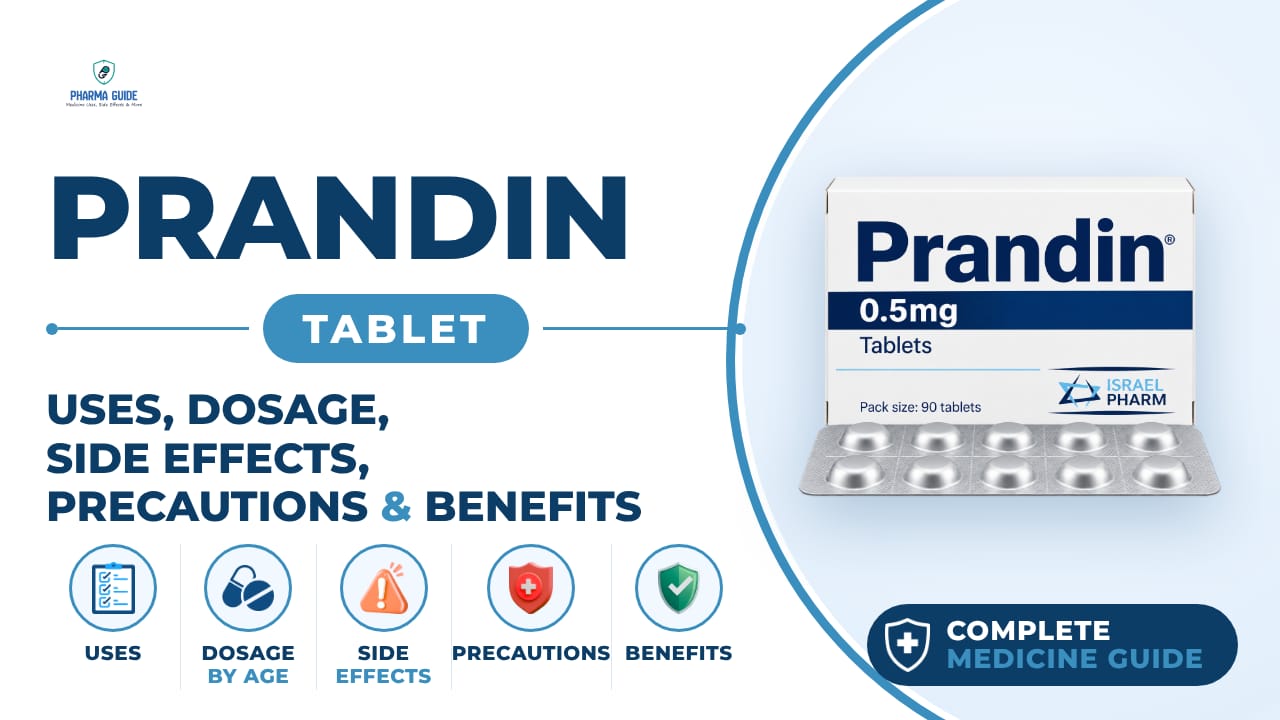
| Generic name | repaglinide |
|---|---|
| Drug class | Meglitinide (glinide) |
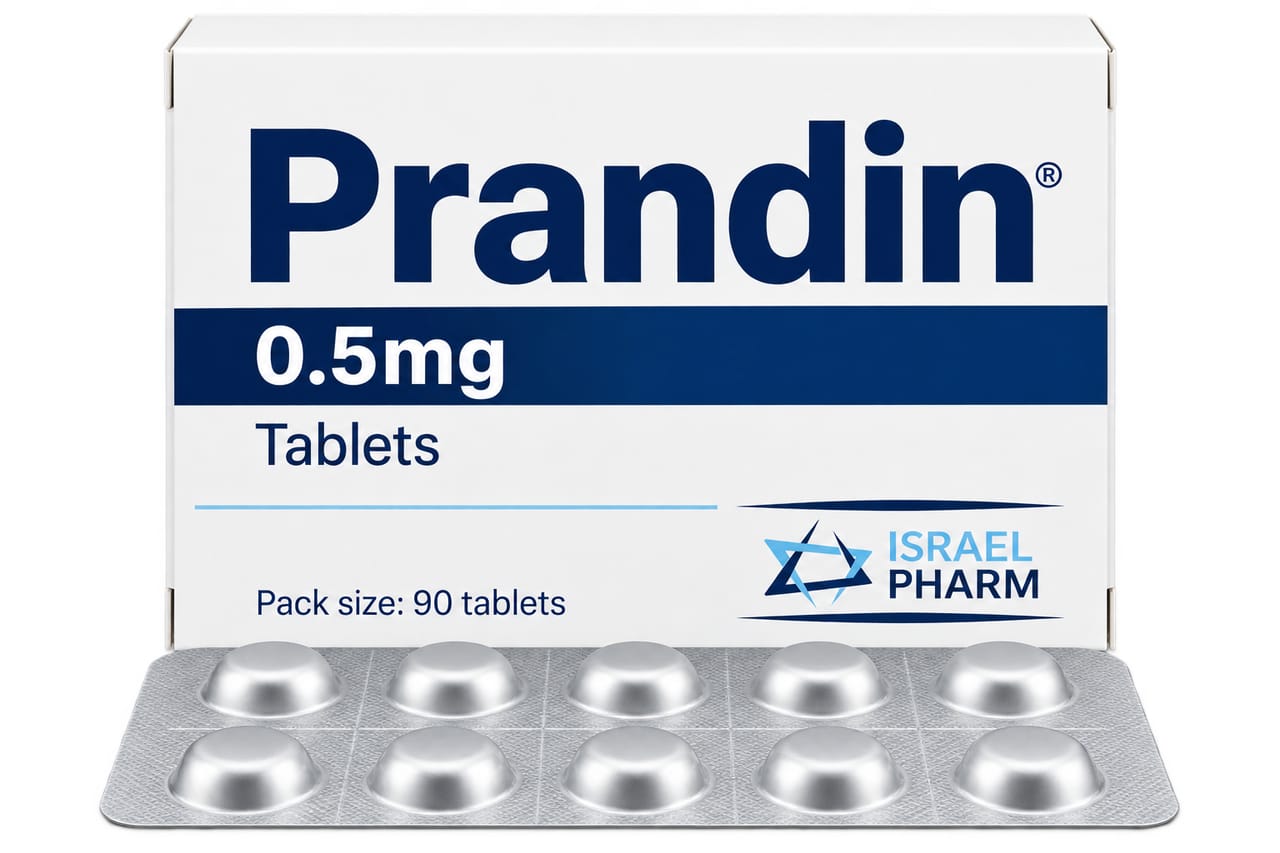
| Forms | Tablets: 0.5 mg, 1 mg, 2 mg |
Quick overview
Prandin Tablet (repaglinide) is an oral diabetes medicine belonging to the meglitinide class. It helps control blood sugar levels by causing the pancreas to produce insulin, and is used together with diet and exercise to improve blood sugar control in adults with type 2 diabetes. It can be used alone or in combination with metformin.
What is Prandin Tablet
Prandin is an oral diabetes medicine that helps control blood sugar levels by causing the pancreas to produce insulin. It is used together with diet and exercise to improve blood sugar control in adults with type 2 diabetes.
Prandin Tablet uses
- Adjunct to diet and exercise to improve glycemic control in adults with type 2 diabetes mellitus
- Can be used in combination with metformin in adults not satisfactorily controlled on metformin alone
- Not for treating type 1 diabetes or diabetic ketoacidosis
Benefits of Prandin Tablet
- Helps lower blood sugar (glucose) levels by stimulating insulin release in relation to meals
- Dose-dependent decrease in blood glucose demonstrated in type 2 diabetic patients
- Works rapidly around meals
- Allows flexible meal-related dosing
- Helps control post-meal glucose spikes
- Can be used alone or with selected other diabetes medicines
How Prandin Tablet works
Repaglinide lowers blood sugar by helping the pancreas release more insulin after meals. It blocks tiny channels in pancreas cells, which triggers a chain reaction that leads to insulin being released, but only when blood sugar is present.
Prandin Tablet dosage
Take Prandin before main meals; doses are usually taken within 30 minutes before eating, and timing can range from right before the meal up to 30 minutes before it. If you skip a meal, skip that dose of the medicine to lower your risk of low blood sugar; do not double up at the next meal. Prandin can be taken 2, 3, or 4 times a day depending on how many meals you eat. Swallow tablets with a glass of water.
Prandin is not recommended for use in children or teenagers under 18. No clinical studies have been done in people over 75 years old, so caution is advised in this age group. People with liver or kidney problems may need closer monitoring and more careful dose adjustments.
| Age group | Dose |
|---|---|
| Under 18 years | Safety and effectiveness are not established; no standard pediatric dose |
| 18–64 years | Usually 0.5 mg before each meal if HbA1c is near target, or 1–2 mg before each meal if HbA1c is higher; adjusted according to blood-glucose response |
| 65–74 years | Same adult dosing may be used, but lower starting doses and closer glucose monitoring may be appropriate |
| 75 years and older | Individualized cautiously because hypoglycemia risk may be greater |
Available forms and strengths
- Tablets: 0.5 mg, 1 mg, 2 mg
Side effects of Prandin Tablet
Common
- Low blood sugar (hypoglycemia)
- Nausea
- Diarrhea
- Headache
- Back pain
- Joint pain
- Upper respiratory infection, stuffy nose, sneezing, sore throat
- Sinusitis
- Abdominal pain
- Constipation
- Vomiting
Serious
- Severe hypoglycemia with seizures, loss of consciousness, or coma
- Serious cardiovascular events including myocardial ischemia, especially when combined with NPH-insulin
- Severe allergic reaction (anaphylaxis) with swelling, difficulty breathing, rapid heartbeat, dizziness, sweating
- Severe skin reactions such as Stevens-Johnson Syndrome
- Severe liver problems including jaundice and hepatitis
- Pancreatitis - severe pain in the upper stomach spreading to the back, with nausea and vomiting
- Hemolytic anemia
- Pale or yellowed skin, dark colored urine, fever, confusion or weakness (possible signs of liver or blood problems)
Warnings and precautions
- This medicine can cause low blood sugar, which can be serious. Always take it before a meal, and skip the dose entirely if you skip that meal.
- This medicine should not be used together with NPH-insulin because of a higher chance of serious heart-related problems.
- Do not take this medicine if you also take gemfibrozil, a cholesterol medicine, because it greatly increases levels of this drug in the body.
- There is no proof that this medicine reduces the risk of heart and blood vessel complications from diabetes.
- When under physical stress such as fever, infection, trauma, or surgery, blood sugar control may be lost and temporary insulin treatment may be needed instead.
- Pregnant women should avoid this medicine, since poorly controlled diabetes carries risks to both mother and baby, and there isn't enough safety data in pregnancy.
- This medicine is not recommended while breastfeeding because it may cause low blood sugar in the nursing infant.
- People with severe kidney problems should start with a lower dose and be monitored carefully, since the body may not clear the drug as quickly.
- People with liver problems should use this medicine with caution, since the drug can build up to higher levels and stay in the body longer, and longer waits between dose changes may be needed.
- Alcohol can change how well this medicine lowers blood sugar, so watch for signs of low blood sugar if you drink.
- This medicine does not directly affect your ability to drive, but low blood sugar can impair concentration and reaction time, which could be dangerous while driving or using machinery.
Storage
- Store at room temperature, between 68°F and 77°F (20°C to 25°C)
- Protect from moisture
- Keep bottles tightly closed
- Dispense in tight containers with safety closures
- Store in the original package in order to protect from moisture
- Keep out of the sight and reach of children
- Do not throw away any medicines via wastewater or household waste; ask your pharmacist how to dispose of medicines you no longer use
When to see a doctor
- Get emergency help right away if you have signs of a severe allergic reaction, such as hives, trouble breathing, or swelling of the face or throat.
- Call your doctor right away if you notice yellowing of the skin or eyes, dark urine, fever, confusion, or weakness, as these may be signs of a liver problem.
- Seek medical care immediately for severe stomach pain that spreads to your back along with nausea and vomiting, which may signal pancreatitis.
- If you suspect an overdose, get emergency medical help right away, as low blood sugar from an overdose can be life-threatening.
- If someone loses consciousness from low blood sugar, others should turn them on their side and get medical help immediately, without giving food or drink.
Alternatives
- Glimepiride
- Glipizide
- Gliclazide
Watch the video
FAQs
What is Prandin Tablet used for?
Prandin is used along with diet and exercise to improve blood sugar control in adults with type 2 diabetes. It can be used alone or combined with metformin, but not for type 1 diabetes or diabetic ketoacidosis.
How should I take Prandin Tablet?
Take Prandin before main meals, usually within 30 minutes before eating. If you skip a meal, skip that dose to lower the risk of low blood sugar, and do not double up at the next meal.
What are the common side effects of Prandin Tablet?
Common side effects include low blood sugar, nausea, diarrhea, headache, back pain, joint pain, upper respiratory infection, sinusitis, abdominal pain, constipation, and vomiting.
Can Prandin Tablet be taken with other medicines?
Prandin should not be used with NPH-insulin due to higher risk of heart-related problems, and should not be taken with gemfibrozil because it greatly increases drug levels in the body.
Is Prandin Tablet safe during pregnancy or breastfeeding?
Pregnant women should avoid Prandin due to insufficient safety data, and it is not recommended while breastfeeding because it may cause low blood sugar in the nursing infant.
General information, not medical advice
Your prescriber and the leaflet in your pack know your situation. This page does not.
- Follow your prescriber and the leaflet
- Don't start, stop, or change a dose on your own
- Doses and warnings differ by country and product
Sources
Video
Related medicines

Injectafer Injection: Uses, Dosage, Side Effects, Precautions and Alternates
Iron products
Injectafer (ferric carboxymaltose) treats iron deficiency anemia and heart failure-related iron deficiency via IV. Learn uses, dosage, side effects, and

Gliclazide Tablet: Uses, Dosage, Side Effects, Precautions and Alternates
Sulfonylurea (hypoglycemic/antidiabetic agent)
Gliclazide Tablet is a sulfonylurea for type 2 diabetes that boosts insulin release. Learn about dosage, side effects, warnings, and precautions.