
Safety
General information, not medical advice
Your prescriber and the leaflet in your pack know your situation. This page does not.
- Follow your prescriber and the leaflet
- Don't start, stop, or change a dose on your own
- Doses and warnings differ by country and product
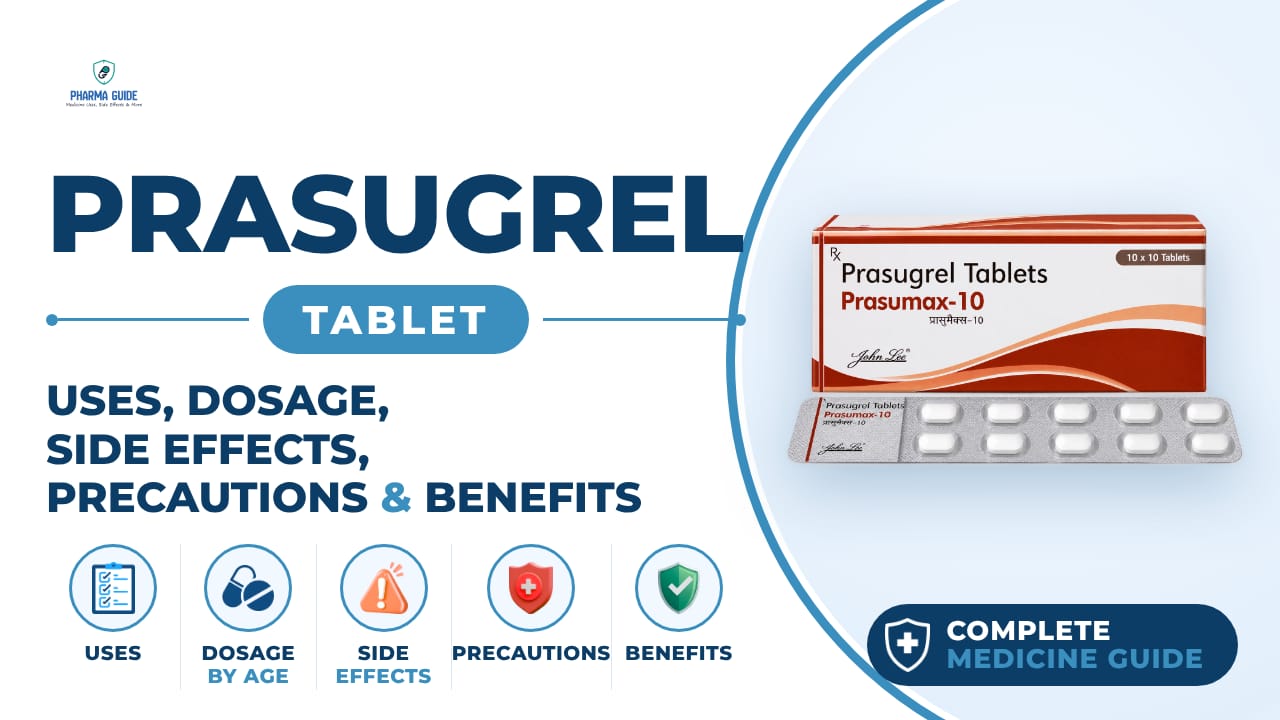
Prasugrel Tablet: Uses, Dosage, Side Effects, Precautions and Alternates
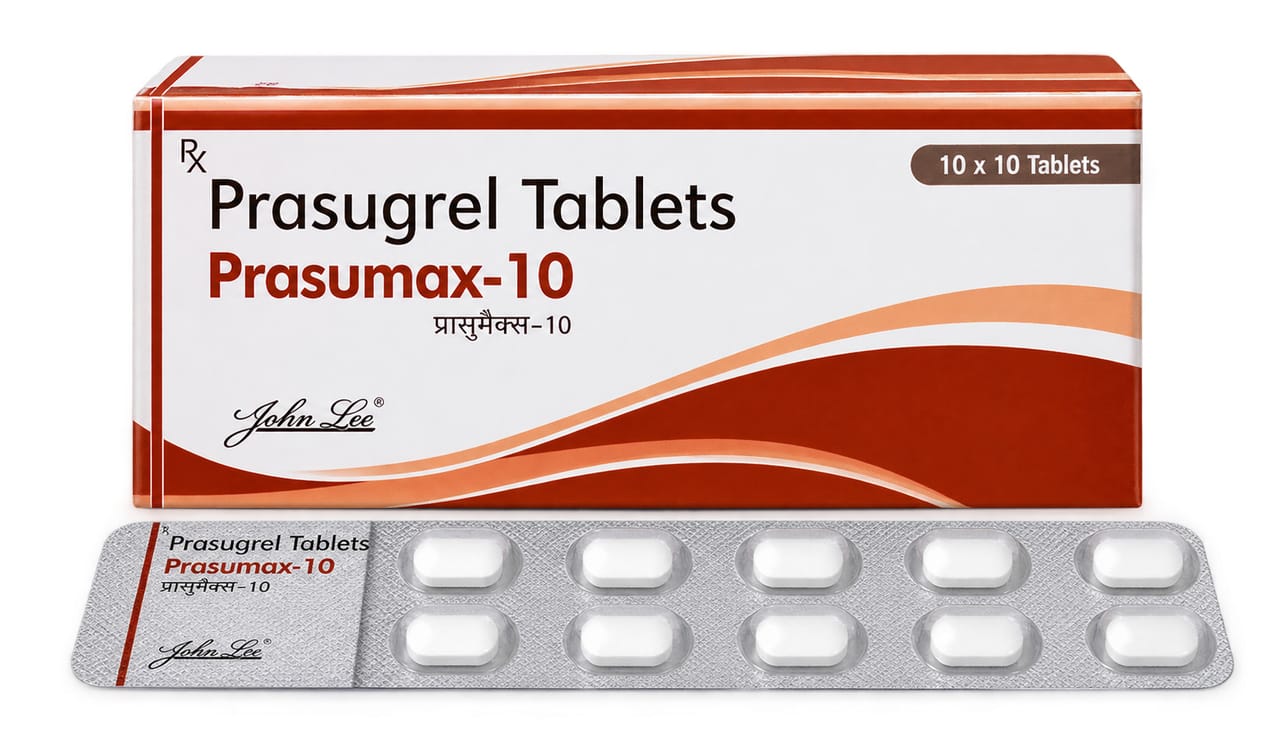
| Generic name | prasugrel hydrochloride |
|---|---|
| Drug class | anti-platelet agent (thienopyridine, P2Y12 inhibitor) |
| Forms | film-coated tablet |
Quick overview
Prasugrel Tablet (prasugrel hydrochloride) is a prescription anti-platelet medicine from the thienopyridine, P2Y12 inhibitor class. It is used to help prevent blood clots in people who have had a heart attack or severe chest pain and have been treated with a procedure to open a blocked artery, such as angioplasty or a stent. It is typically taken once daily, often alongside aspirin, and carries a risk of serious bleeding that requires careful monitoring.
What is Prasugrel Tablet
Prasugrel is a prescription anti-platelet medicine used to help prevent blood clots in people who have had a heart attack or severe chest pain and have been treated with a procedure to open a blocked artery, such as angioplasty or a stent.
Prasugrel Tablet uses
- Lower the chance of another heart attack, stroke, blood clots in a stent, or death after a heart attack or severe chest pain
- Treatment of acute coronary syndrome (ACS)
- Protection for patients with cardiac stents
- Management of unstable angina
- Treatment following percutaneous coronary intervention (PCI)
Benefits of Prasugrel Tablet
- Reduces the chance of having another serious heart or blood vessel problem, such as another heart attack, stroke, blood clots in a stent, or death
- Works better than other similar medications
How Prasugrel Tablet works
Prasugrel is changed by the liver into an active form that blocks a receptor called P2Y12 on platelets. This stops platelets from sticking together and forming clots that could block an artery or a stent.
Prasugrel Tablet dosage
Take prasugrel one time each day, at around the same time every day. It can be taken with or without food. Swallow the tablet whole; do not split, break, chew, or crush it. You will likely need to take aspirin together with prasugrel, as instructed by your doctor.
Do not stop taking prasugrel without talking to the doctor who prescribed it, since stopping too soon raises the risk of a heart attack or blood clot in a stent. If you miss a dose, take it as soon as you remember; if it is almost time for your next dose, skip the missed dose and take your next dose at the regular time; do not take two doses at once.
Tell your doctors and dentists that you take prasugrel before any surgery or dental procedure, and do not stop taking it before surgery unless your doctor tells you to.
| Age group | Dose |
|---|---|
| Under 18 years | Not recommended |
| 18–64 years | 10 mg, once/day |
| 65+ years | 10 mg, once/day |
Available forms and strengths
- Film-coated tablet
Side effects of Prasugrel Tablet
Common
- Bleeding, bruising more easily, and nosebleeds
- Bleeding that takes longer than usual to stop
- Dizziness and headache
- Back or limb pain
- Cough
- Excessive tiredness
- Nausea, diarrhea
- Small red bruises or blood under the skin at injection sites
- Low red blood cell count (anemia)
Serious
- Severe or uncontrolled bleeding, including pink or brown urine, red or black tarry stools, blood in vomit or vomit that looks like coffee grounds, or coughing up blood
- Signs of a stroke, such as sudden slurred speech, sudden weakness or numbness on one side of the body, sudden blurry vision, or sudden severe headache
- Thrombotic Thrombocytopenic Purpura (TTP): fever, purplish spots on skin or in the mouth, paleness or yellowing of skin/eyes, weakness, fast heart rate, shortness of breath, confusion, seizures, decreased or pink/bloody urine, stomach pain, nausea, vomiting
- Serious allergic reaction: swelling or hives of face, lips, mouth, or throat; trouble breathing or swallowing; chest pain or pressure; dizziness or fainting
Warnings and precautions
- Prasugrel can cause serious bleeding that may be life-threatening. Do not start prasugrel if you are likely to need heart bypass surgery soon, since this raises your bleeding risk.
- Do not take prasugrel if you currently have abnormal bleeding, have had a stroke or mini-stroke (TIA), or are allergic to prasugrel or its ingredients.
- Do not stop taking prasugrel without talking to your doctor first. Stopping too soon, especially if you have a stent, raises the risk of a blood clot, heart attack, or death.
- If you need surgery, including dental surgery, tell your doctor or dentist you take prasugrel. It should usually be stopped at least 7 days before surgery if possible, as instructed by your doctor.
- Prasugrel can cause a rare but serious blood clotting condition called TTP, sometimes within the first two weeks of starting treatment.
- People age 75 or older, those weighing less than 132 pounds (60 kg), and those with recent surgery, injury, or certain stomach bleeding history have a higher risk of bleeding on this medicine.
- Tell your doctor if you are pregnant or planning to become pregnant, since it is not known if prasugrel could harm an unborn baby. You and your doctor should discuss the benefits and risks before use.
- It isn't known if prasugrel passes into breast milk. You and your doctor should decide together whether you will take prasugrel or breastfeed.
- Tell your doctor if you have kidney problems, since moderate to severe kidney disease can raise your risk of bleeding while taking prasugrel.
- Tell your doctor if you have liver problems. People with severe liver disease should not take this medicine, and those with moderate liver problems have a higher risk of bleeding.
- It's best to avoid alcohol while taking prasugrel, since alcohol can raise the risk of bleeding even though it doesn't directly interact with the medicine.
- Prasugrel is unlikely to affect your ability to drive or use machines.
Storage
- Keep prasugrel tablets at room temperature between 59°F to 86°F (15°C to 30°C)
- Keep and dispense only in original container
- Keep the container closed tightly with the gray cylinder inside
- Protect prasugrel tablets from moisture
- Keep prasugrel tablets and all medicines out of the reach of children
- Do not store above 25°C
- Do not throw away any medicines via wastewater or household waste; ask your pharmacist how to dispose of medicines you no longer use
- Dispose of unneeded medications in a way so that pets, children, and other people cannot take them; do not flush this medication down the toilet; use a medicine take-back program
When to see a doctor
- Get medical help right away if you have signs of a stroke, such as sudden slurred speech, sudden weakness or numbness on one side of the body, sudden blurry vision, or a sudden severe headache.
- Call your doctor right away if you notice signs of bleeding, such as unexpected or severe bleeding, pink or brown urine, red or black tarry stool, unexplained or growing bruises, or coughing up or vomiting blood.
- Get medical help right away if you have signs of TTP, such as purple spots on the skin, paleness or yellowing of the skin or eyes, tiredness, fever, fast heart rate, shortness of breath, confusion, or decreased or bloody urine.
- Get medical help right away if you have signs of a severe allergic reaction, such as swelling of the face, lips, mouth, or throat, trouble breathing or swallowing, chest pain, or dizziness/fainting.
- Call your doctor right away if you fall or hit your head, since you may need to be checked for bleeding even if you feel fine.
- If you take too much prasugrel, contact your doctor or emergency services right away because of the risk of excessive bleeding.
Alternatives
- Aspirin
- Ticagrelor
- Clopidogrel
Watch the video
FAQs
What is Prasugrel Tablet used for?
It is used to lower the chance of another heart attack, stroke, blood clots in a stent, or death in people who have had a heart attack or severe chest pain and were treated with angioplasty or a stent. It is also used for acute coronary syndrome, unstable angina, and after percutaneous coronary intervention (PCI).
How should I take Prasugrel Tablet?
Take it once daily at around the same time, with or without food. Swallow the tablet whole without splitting, breaking, chewing, or crushing it. It is usually taken together with aspirin as instructed by your doctor.
What is the dosage of Prasugrel Tablet for adults?
For adults aged 18 to 64 and those 65 and older, the typical dose is 10 mg once a day. It is not recommended for use in people under 18 years old.
What are the serious side effects of Prasugrel Tablet?
Serious side effects include severe or uncontrolled bleeding, signs of stroke, thrombotic thrombocytopenic purpura (TTP), and serious allergic reactions involving swelling, trouble breathing, or chest pain.
Can I stop taking Prasugrel Tablet before surgery?
You should not stop taking prasugrel without talking to your doctor first, as stopping too soon raises the risk of a heart attack or blood clot in a stent. If surgery is needed, it should usually be stopped at least 7 days beforehand, as instructed by your doctor.
General information, not medical advice
Your prescriber and the leaflet in your pack know your situation. This page does not.
- Follow your prescriber and the leaflet
- Don't start, stop, or change a dose on your own
- Doses and warnings differ by country and product
Sources
Video
Related medicines

Injectafer Injection: Uses, Dosage, Side Effects, Precautions and Alternates
Iron products
Injectafer (ferric carboxymaltose) treats iron deficiency anemia and heart failure-related iron deficiency via IV. Learn uses, dosage, side effects, and

Gliclazide Tablet: Uses, Dosage, Side Effects, Precautions and Alternates
Sulfonylurea (hypoglycemic/antidiabetic agent)
Gliclazide Tablet is a sulfonylurea for type 2 diabetes that boosts insulin release. Learn about dosage, side effects, warnings, and precautions.