
Safety
General information, not medical advice
Your prescriber and the leaflet in your pack know your situation. This page does not.
- Follow your prescriber and the leaflet
- Don't start, stop, or change a dose on your own
- Doses and warnings differ by country and product
Praziquantel Tablet: Uses, Dosage, Side Effects, Precautions and Alternates
| Generic name | Praziquantel |
|---|---|
| Drug class | Anthelmintic (antiparasitic medication) |
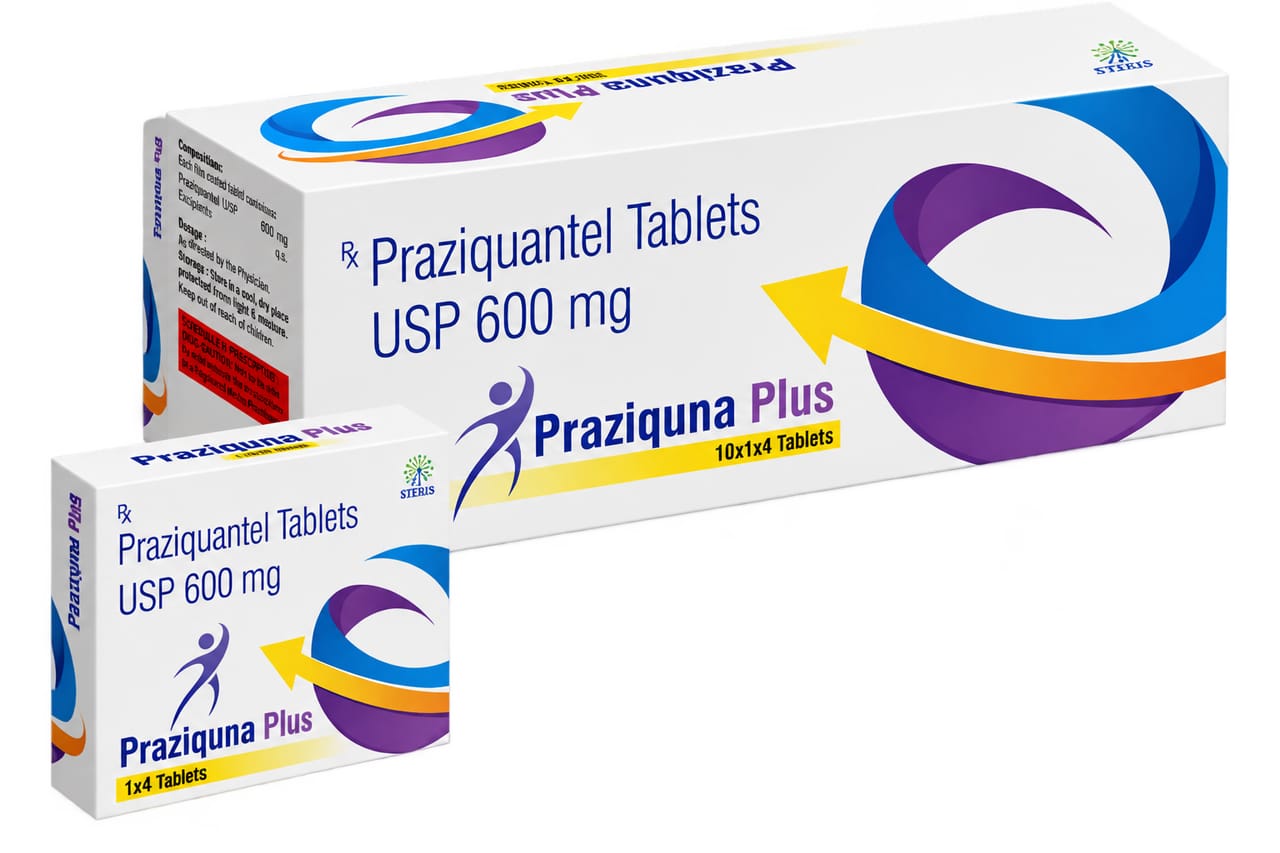
| Forms | Tablet, film coated, Tablet, coated, Paste, Powder |
Quick overview
Praziquantel Tablet is an anthelmintic medication used to treat parasitic flatworm infections such as schistosomiasis, clonorchiasis, and opisthorchiasis. It works by paralyzing worms and damaging their outer surface so the body can destroy them. It is taken by mouth with water during meals, and dosing is based on body weight. As with any medicine, it carries possible side effects and precautions that should be discussed with your doctor.
What is Praziquantel Tablet
Praziquantel is an anti-worm medication used to treat parasitic flatworm infections. It comes as a film-coated tablet taken by mouth.
Praziquantel Tablet uses
- Schistosomiasis (infection caused by blood flukes such as Schistosoma mekongi, Schistosoma japonicum, Schistosoma mansoni and Schistosoma hematobium)
- Clonorchiasis (liver fluke infection caused by Clonorchis sinensis)
- Opisthorchiasis (liver fluke infection caused by Opisthorchis viverrini)
Benefits of Praziquantel Tablet
- Treats worm infections such as Schistosoma infection (worms that live in the blood) and liver fluke (worms that live in the liver)
How Praziquantel Tablet works
Praziquantel works by making the worms' muscles contract and paralyzing them, damaging their outer surface so the body's defenses can kill them. The exact way it works is not fully known.
Praziquantel Tablet dosage
Take tablets with water during meals. Do not chew the tablets or keep them in your mouth, as the bitter taste may cause gagging or vomiting. For children under 6 years of age, the tablets may be crushed or mixed with soft food or liquid to prevent choking, and should be used within 1 hour of mixing. Doses on the same day should be spaced 4 to 6 hours apart, as directed by your doctor. Complete the full course of treatment as prescribed by your doctor. If you miss a dose, take it as soon as you remember; if it is almost time for your next dose, skip the missed one and do not double up. Do not take more than the dose your doctor prescribed.
| Age group | Dose |
|---|---|
| Under 1 year | Not established / specialist-directed |
| 1–11 years | 20 mg/kg, 3 times daily for 1 day |
| 12–17 years | 20 mg/kg, 3 times daily for 1 day |
| Adults ≥18 years | 20 mg/kg, 3 times daily for 1 day for schistosomiasis |
Available forms and strengths
- Tablet, film coated
- Tablet, coated
- Paste
- Powder
Side effects of Praziquantel Tablet
Common
- Headache
- Dizziness
- Abdominal discomfort or pain
- Nausea and vomiting
- Malaise
- Fever (pyrexia)
- Hives (urticaria)
- Loss of appetite
- Diarrhea
- Itching or rash
- Drowsiness
- Increased sweating
- Vertigo (sudden spinning sensation)
- Tiredness
Serious
- Convulsions or seizures
- Irregular heartbeat (arrhythmia, including slow heartbeat, ectopic rhythms, ventricular fibrillation, and heart block)
- Severe allergic reaction (anaphylaxis) or generalized hypersensitivity
- Stevens-Johnson syndrome (a severe skin reaction)
- Hepatitis (liver inflammation)
- Breathing problems such as wheezing or shortness of breath
- Clinical deterioration during the acute phase of schistosomiasis, which can lead to life-threatening problems like respiratory failure, brain swelling, or inflammation of blood vessels in the brain
Warnings and precautions
- Do not use this medicine if you have ocular cysticercosis (a tapeworm cyst infection in the eye), because killing the parasite can cause permanent eye damage.
- This medicine can cause potentially life-threatening reactions in people being treated during the acute phase of schistosomiasis, including breathing failure, brain problems, or swelling in the eye.
- This medicine can worsen central nervous system problems related to certain infections. Talk to your doctor if you have a history of seizures or brain-related symptoms before taking it.
- This medicine can cause heart rhythm problems, including slow heartbeat and dangerous rhythms. Your heart may need to be monitored during treatment if you have arrhythmia.
- Do not take this medicine together with rifampin or similar strong enzyme-inducing drugs, since it may not work properly.
- Avoid grapefruit juice, since it can increase the amount of this medicine in your blood and increase side effects.
- This medicine is not recommended for children younger than 4 years old, and safety in babies younger than 1 year has not been established.
- Praziquantel is only recommended during pregnancy if it is really needed. Studies have not found a link between praziquantel use in pregnancy and major birth defects, miscarriage, or other bad outcomes, but you should talk with your doctor about the risks and benefits.
- Small amounts of praziquantel can pass into breast milk. It's recommended only if necessary, and you may need to avoid breastfeeding on the day of the dose and for a few days afterward.
- No dose change is usually needed for kidney problems, but the drug is removed from the body mainly through the kidneys, and excretion may be slower if the kidneys are damaged.
- People with moderate to severe liver problems can have much higher and longer-lasting levels of the medicine in their blood, so doctors should watch closely for side effects.
- It isn't known how this medicine interacts with alcohol, so check with your doctor before drinking.
- Do not drive or operate heavy machinery on the day you take this medicine and the day after, since it can affect your alertness and cause dizziness.
Storage
- Store at 20° to 25°C (68° to 77°F); brief exposure to temperatures between 15° and 30°C (59° and 86°F) is permitted.
When to see a doctor
- Get medical help right away if you notice signs of a serious allergic reaction, such as rash, itching, or swelling of the face, lips, or throat.
- Seek emergency care if you think you have taken too much of this medicine.
- Tell your doctor right away about any irregular heartbeat you notice while taking this medicine.
Alternatives
- Albendazole
- Niclosamide
- Arpraziquantel
- Oxamniquine
Watch the video
FAQs
What is Praziquantel Tablet used for?
It is used to treat parasitic flatworm infections such as schistosomiasis, clonorchiasis, and opisthorchiasis.
How does Praziquantel Tablet work?
It works by making the worms' muscles contract and paralyzing them, damaging their outer surface so the body's defenses can kill them. The exact way it works is not fully known.
How should I take Praziquantel Tablet?
Take tablets with water during meals. Do not chew the tablets or keep them in your mouth, as the bitter taste may cause gagging or vomiting. Doses on the same day should be spaced 4 to 6 hours apart, as directed by your doctor.
What should I avoid while taking Praziquantel Tablet?
Avoid grapefruit juice, since it can increase the amount of this medicine in your blood and increase side effects. Also avoid taking it with rifampin or similar strong enzyme-inducing drugs, and do not drive or operate heavy machinery on the day you take this medicine and the day after.
Can Praziquantel Tablet be used during pregnancy or breastfeeding?
It is only recommended during pregnancy if really needed, and studies have not found a link between its use in pregnancy and major birth defects or miscarriage. Small amounts can pass into breast milk, so you may need to avoid breastfeeding on the day of the dose and for a few days afterward.
General information, not medical advice
Your prescriber and the leaflet in your pack know your situation. This page does not.
- Follow your prescriber and the leaflet
- Don't start, stop, or change a dose on your own
- Doses and warnings differ by country and product
Sources
- DrugBank: Praziquantel (https://go.drugbank.com/drugs/DB01058)
- Practo Medicine Info: Praziquantel (https://www.practo.com/medicine-info/praziquantel-308-api)
- FDA Prescribing Information: Praziquantel Tablets, Endo USA, Inc.
Video
Related medicines

Injectafer Injection: Uses, Dosage, Side Effects, Precautions and Alternates
Iron products
Injectafer (ferric carboxymaltose) treats iron deficiency anemia and heart failure-related iron deficiency via IV. Learn uses, dosage, side effects, and

Gliclazide Tablet: Uses, Dosage, Side Effects, Precautions and Alternates
Sulfonylurea (hypoglycemic/antidiabetic agent)
Gliclazide Tablet is a sulfonylurea for type 2 diabetes that boosts insulin release. Learn about dosage, side effects, warnings, and precautions.