
Safety
General information, not medical advice
Your prescriber and the leaflet in your pack know your situation. This page does not.
- Follow your prescriber and the leaflet
- Don't start, stop, or change a dose on your own
- Doses and warnings differ by country and product
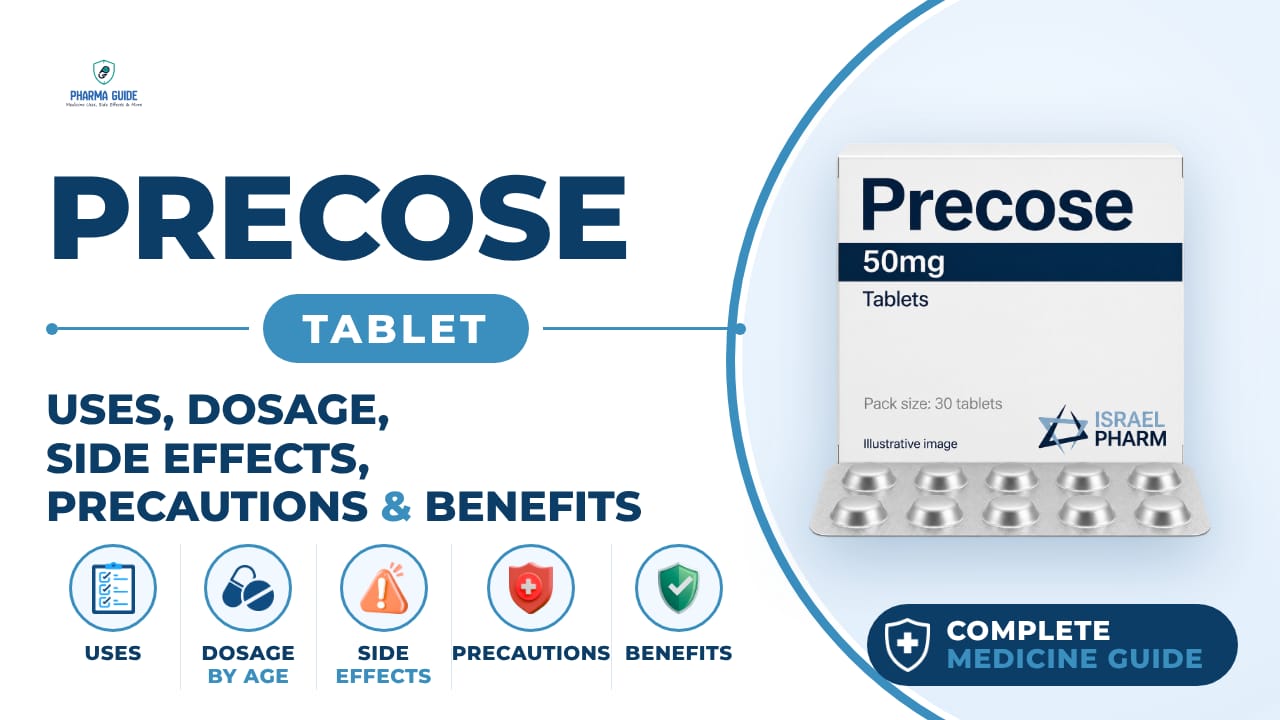
Precose Tablet: Uses, Dosage, Side Effects, Precautions and Alternates
| Generic name | acarbose |
|---|---|
| Drug class | Antidiabetics, Alpha-Glucosidase Inhibitors |
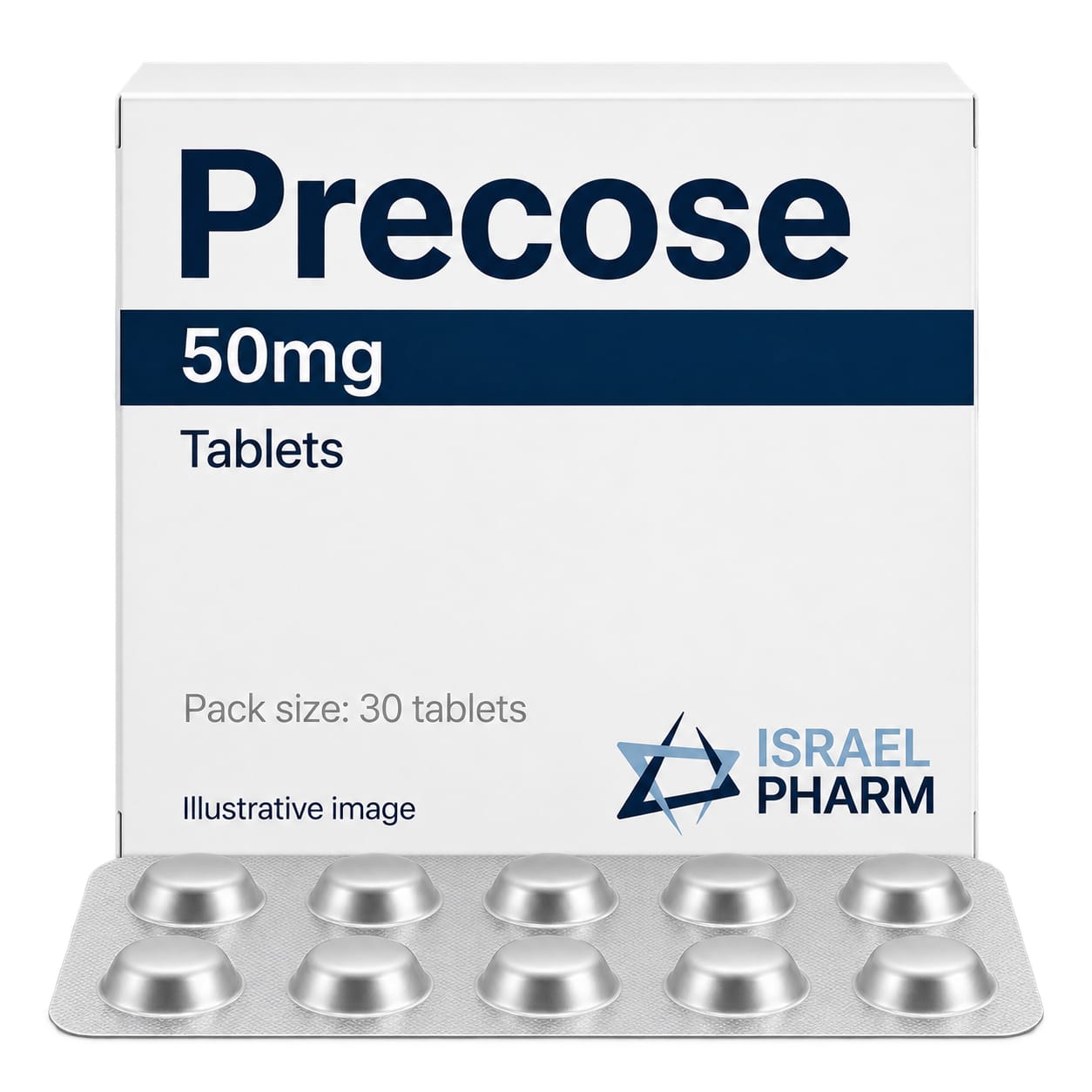
| Forms | Tablet (25 mg, 50 mg, and 100 mg strengths) |
Quick overview
Precose Tablet (acarbose) is a prescription medicine belonging to the Antidiabetics class, specifically the Alpha-Glucosidase Inhibitors group. It is used along with diet and exercise to help control blood sugar in adults with type 2 diabetes. It works by slowing the breakdown of carbohydrates in the intestine, helping prevent sharp rises in blood sugar after meals.
What is Precose Tablet
Precose is a prescription tablet used along with diet and exercise to help control blood sugar in adults with type 2 diabetes. It belongs to a group of medicines called alpha-glucosidase inhibitors.
Precose Tablet uses
- Helps improve blood sugar control in adults with type 2 diabetes mellitus, used together with diet and exercise
Benefits of Precose Tablet
- Helps reduce post-meal blood glucose
- Slows digestion and absorption of carbohydrates
- Helps improve HbA1c
- Used for type 2 diabetes
- Can be combined with other diabetes treatments
How Precose Tablet works
Precose slows down the breakdown of starches and some sugars from food in the intestine. This means sugar is absorbed more slowly into the blood, so blood sugar does not rise as much after meals.
Precose Tablet dosage
Take by mouth three times a day, with the first bite of each main meal. Some people may start with one dose a day and gradually increase to three times a day to reduce stomach side effects. Keep following your prescribed diabetes diet and exercise plan, and test your blood or urine sugar as instructed. Doses are usually increased gradually every few weeks based on how well it is working and how well it is tolerated. Safety and effectiveness have not been established in children. Elderly patients may have somewhat higher drug levels than younger adults, though this has not been shown to cause more safety problems.
| Age group | Dose |
|---|---|
| 18–64 years | Usually starts at 25 mg three times daily with the first bite of each main meal |
Available forms and strengths
- Tablet (25 mg, 50 mg, and 100 mg strengths)
Side effects of Precose Tablet
Common
- Stomach or abdominal pain
- Bloating or gas
- Diarrhea
- Upset stomach
Serious
- Yellow eyes or skin (jaundice)
- Severe stomach or abdominal pain
- Rectal bleeding
- Persistent nausea or vomiting
- Unusual tiredness
- Dark urine
- Skin rash or itching
Warnings and precautions
- Pregnancy: It is not known if Precose is safe during pregnancy. It should only be used in pregnancy if clearly needed, and your doctor may switch you to insulin instead to control blood sugar during pregnancy.
- Breastfeeding: It is not known whether Precose passes into human breast milk. Because many drugs do pass into breast milk, Precose should not be used by breastfeeding mothers.
- Kidney: Precose is not recommended for people with significant kidney problems, since drug levels build up much higher in people with poor kidney function and this has not been well studied.
- Liver: Precose should not be used by people with cirrhosis (a type of liver disease). It can also raise liver enzyme levels, especially at higher doses, so your doctor may check your liver blood tests regularly, particularly during the first year of treatment.
- Alcohol: Drinking alcohol while taking this medicine may cause severe low blood sugar. Talk to your healthcare team about alcohol use.
- Do not use Precose if you have diabetic ketoacidosis (a serious diabetes emergency), cirrhosis, inflammatory bowel disease, colon ulcers, a partial bowel blockage, or any condition that puts you at risk for bowel blockage or that could get worse from increased gas in the intestine.
- Because Precose blocks the breakdown of table sugar (sucrose), you must use glucose (dextrose) tablets or gel, not regular table sugar or sugary soft drinks, to treat low blood sugar if it happens.
- Taking Precose together with other diabetes medicines like sulfonylureas or insulin can increase the risk of low blood sugar (hypoglycemia).
- Rare cases of serious, sometimes fatal, liver inflammation (hepatitis) have been reported with this medicine.
- A rare bowel condition called pneumatosis cystoides intestinalis, where gas-filled cysts form in the bowel wall, has been reported with this type of medicine and can cause serious bowel complications.
- Do not take charcoal or digestive enzyme products (like those containing amylase or pancreatin) at the same time as Precose, as they can make it less effective.
- Certain medicines, including water pills (diuretics), steroids, thyroid medicine, estrogens, birth control pills, some seizure medicines, and others, can raise blood sugar and reduce how well your diabetes is controlled while taking Precose.
- Precose can change how much digoxin (a heart medicine) is absorbed by the body, so your doctor may need to adjust your digoxin dose if you take both.
- During times of illness, infection, fever, injury, or surgery, blood sugar control may temporarily get worse, and short-term insulin treatment may be needed.
Storage
- Do not store above 25°C (77°F)
- Protect from moisture
- For bottles, keep container tightly closed
- Store between 20°-25°C (68°-77°F) for repackaged supply; see USP Controlled Room Temperature
- Dispense in a tight, light-resistant container as defined by USP
- Keep this and all drugs out of the reach of children
When to see a doctor
- Get medical help right away if you notice yellowing of the eyes or skin, dark urine, severe stomach pain, rectal bleeding, persistent nausea or vomiting, or unusual tiredness — these can be signs of a serious liver or bowel problem.
- Seek help if you have symptoms of low blood sugar such as anxiety, confusion, cold sweats, shakiness, fast heartbeat, blurred vision, or unusual tiredness, especially if you also take insulin or a sulfonylurea medicine.
- Call your doctor if you have symptoms of high blood sugar such as increased thirst, frequent urination, blurred vision, or nausea, since this can mean your diabetes treatment needs adjusting.
- Contact your doctor if stomach or bowel symptoms become severe or very bothersome even though you are following your diabetic diet, since your dose may need to be changed.
Alternatives
- Metformin
- Sitagliptin
- Empagliflozin
Watch the video
FAQs
What is Precose Tablet used for?
Precose is used along with diet and exercise to help control blood sugar in adults with type 2 diabetes mellitus.
How does Precose Tablet work?
It slows down the breakdown of starches and some sugars from food in the intestine, so sugar is absorbed more slowly into the blood and blood sugar does not rise as much after meals.
How should I take Precose Tablet?
Precose is taken by mouth three times a day, with the first bite of each main meal. Some people start with one dose a day and gradually increase to three times daily to reduce stomach side effects, with doses increased gradually every few weeks.
What should I use to treat low blood sugar while on Precose?
Because Precose blocks the breakdown of table sugar, you must use glucose (dextrose) tablets or gel, not regular table sugar or sugary soft drinks, to treat low blood sugar.
What are the common side effects of Precose Tablet?
Common side effects include stomach or abdominal pain, bloating or gas, diarrhea, and upset stomach.
General information, not medical advice
Your prescriber and the leaflet in your pack know your situation. This page does not.
- Follow your prescriber and the leaflet
- Don't start, stop, or change a dose on your own
- Doses and warnings differ by country and product
Sources
Video
Related medicines

Injectafer Injection: Uses, Dosage, Side Effects, Precautions and Alternates
Iron products
Injectafer (ferric carboxymaltose) treats iron deficiency anemia and heart failure-related iron deficiency via IV. Learn uses, dosage, side effects, and

Gliclazide Tablet: Uses, Dosage, Side Effects, Precautions and Alternates
Sulfonylurea (hypoglycemic/antidiabetic agent)
Gliclazide Tablet is a sulfonylurea for type 2 diabetes that boosts insulin release. Learn about dosage, side effects, warnings, and precautions.