
Safety
General information, not medical advice
Your prescriber and the leaflet in your pack know your situation. This page does not.
- Follow your prescriber and the leaflet
- Don't start, stop, or change a dose on your own
- Doses and warnings differ by country and product
Prednisolone Eye Drops: Uses, Dosage, Side Effects, Precautions and Alternates
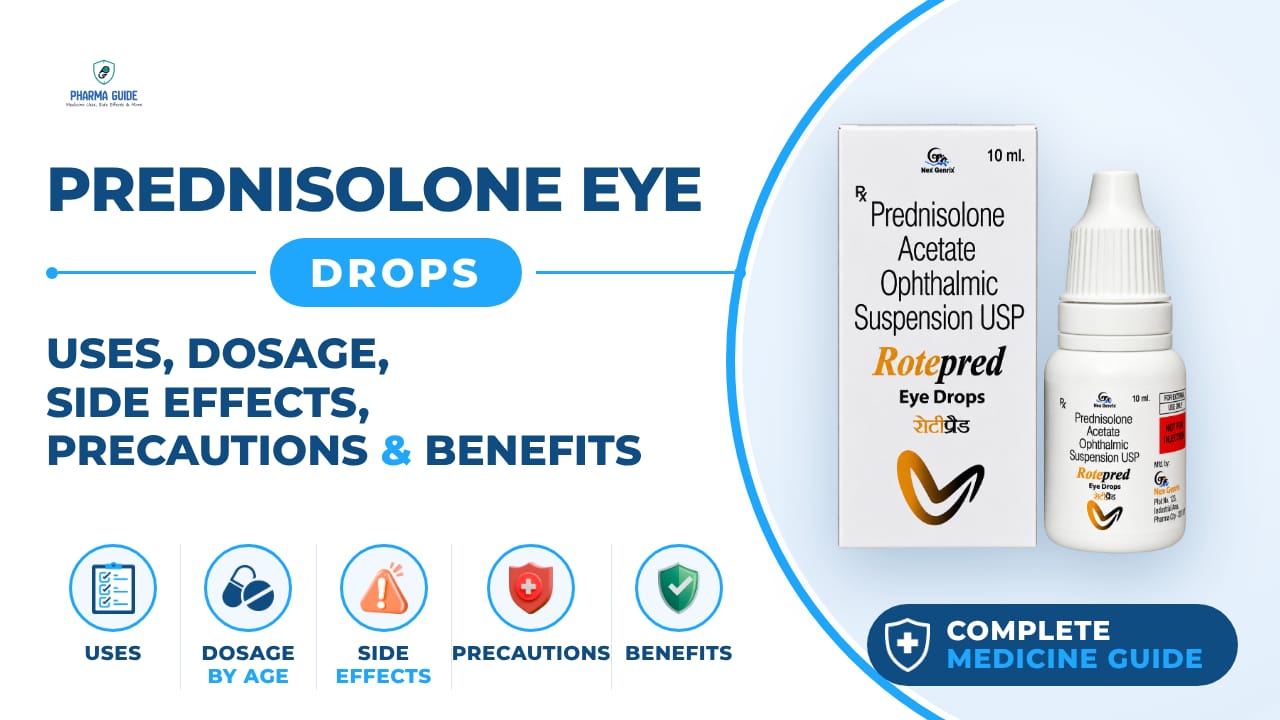
| Generic name | prednisolone acetate / prednisolone sodium phosphate |
|---|---|
| Drug class | Corticosteroid (ophthalmic steroid) |
| Forms | Ophthalmic solution (prednisolone sodium phosphate 1%) |
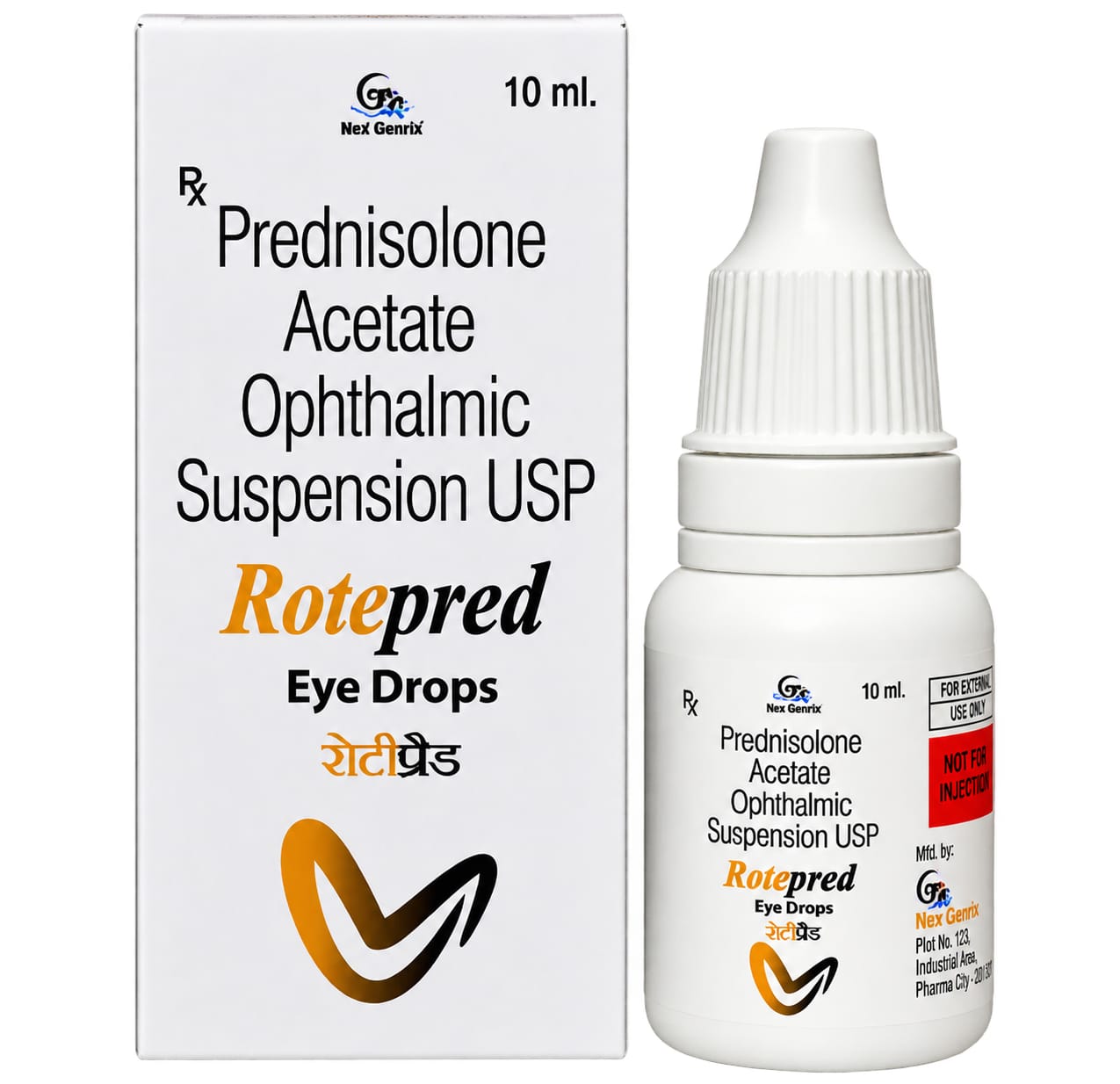
Quick overview
Prednisolone Eye Drops (prednisolone acetate / prednisolone sodium phosphate) is an ophthalmic corticosteroid used for a short time to reduce swelling and irritation in the eye. It comes as an ophthalmic suspension or an ophthalmic solution and is used to treat steroid-responsive inflammation, eye allergies, certain eye infections, eye injuries, and inflammation following eye surgery. It should be used exactly as prescribed and is generally not used for longer than 10 days without close monitoring.
What is Prednisolone Eye Drops
Prednisolone eye drops are a steroid medicine given directly into the eye. They come as an ophthalmic suspension (prednisolone acetate) or an ophthalmic solution (prednisolone sodium phosphate) and are used for a short time to reduce swelling and irritation in the eye.
Prednisolone Eye Drops uses
- Treating steroid-responsive inflammation of the eyelid lining, white of the eye, cornea, and front part of the eye
- Eye inflammation caused by allergies, severe acne, shingles (herpes zoster), eye injury, or chemical burns
- Acute eye allergy symptoms
- Certain eye infections such as stromal herpesvirus (not epithelial)
- Injuries to the eye, including chemical or heat burns
- Recovery from eye surgery such as cataract surgery, glaucoma surgery, or LASIK
- Corneal scratches (abrasions) from a foreign object
Benefits of Prednisolone Eye Drops
- Inflammation Control: Helps reduce eye inflammation and swelling.
- Redness Relief: Helps decrease redness caused by inflammatory conditions.
- Post-Surgery Care: Supports recovery after certain eye procedures when prescribed.
- Allergy Symptom Relief: Helps manage inflammation related to some eye allergies.
- Eye Comfort Improvement: Reduces discomfort caused by inflammatory eye conditions.
How Prednisolone Eye Drops works
Prednisolone is a corticosteroid that reduces inflammation. It works by calming swelling, irritation, burning, redness, and other symptoms caused by inflammation in the eye.
Prednisolone Eye Drops dosage
Always use the drops exactly as your healthcare professional has instructed; do not stop or change your dose without talking to them first. Shake the bottle well before using, unless your specific product's label says not to shake it. Wash your hands before using the eye drops.
Tilt your head back, pull down the lower eyelid to make a small pocket, and place the drop inside without letting the dropper tip touch your eye or any other surface. Close your eyes for a short time (about 30 seconds to a couple of minutes) after putting in the drop.
If using more than one eye drop or ointment, leave about 15 minutes between different products, and apply any ointment last. If you wear soft contact lenses, remove them before using the drops and wait at least 15 minutes before putting them back in.
Do not use the bottle if the tamper-proof seal was broken before first use. Close the bottle tightly right after use and do not share your eye drops with anyone else.
Do not stop using this medicine suddenly after long-term use; your doctor may want you to taper the dose gradually. Call your doctor if your symptoms do not improve after 2 days of treatment.
If you miss a dose, apply it as soon as you remember, then return to your normal schedule; do not use two doses at once to make up for a missed one. This product is usually not used for longer than 10 days without close monitoring by your doctor.
| Age group | Dose |
|---|---|
| Under 18 Years | Use only if prescribed by an eye specialist |
| Adults (18–64 Years) | 1–2 drops in affected eye(s) 2–4 times daily (as prescribed) |
| Older Adults (65+ years) | 1–2 drops in affected eye(s) 2–4 times daily; monitor response |
Available forms and strengths
- Ophthalmic solution (prednisolone sodium phosphate 1%)
Side effects of Prednisolone Eye Drops
Common
- Stinging or burning feeling in the eyes
- Increased eye pressure
- Mild allergic reactions such as rash or itching
- Foreign body sensation (feeling like something is in your eye)
- Altered or change in taste
- Headache
- Blurred vision or other visual disturbances
- Large (dilated) pupils
- Slow wound healing
Serious
- Glaucoma and optic nerve damage from increased eye pressure, which can cause blurred vision or vision loss
- New or worsening eye infection (bacterial, fungal, or viral), with redness, pain, itching, swelling, discharge, or crusting
- Cataracts (clouding of the eye lens), causing blurry, dim, or faded vision, or trouble seeing at night
- Severe allergic reaction: rash, hives, swelling of the face, lips, tongue, or throat, or difficulty breathing or swallowing
- Scleral or corneal thinning or perforation (a tear or hole in the eye), with blurry vision, excess tearing, redness, or light sensitivity
- Eyelid drooping (ptosis)
Warnings and precautions
- Do not use this medicine for more than 10 days unless your eye doctor is closely monitoring your eye pressure, since long-term use raises the risk of serious eye damage.
- Avoid this medicine if you have certain eye infections, such as herpes simplex, fungal infections, or tuberculosis of the eye, because steroids can hide or worsen these infections.
- The suspension form contains a preservative called sodium bisulfite, which can cause serious, potentially life-threatening allergic or asthma reactions in some people, especially those with asthma.
- If you wear soft contact lenses, remove them before using the drops, since a preservative in the product can permanently discolor the lenses. Wait at least 15 minutes before putting your lenses back in.
- Using this medicine after cataract surgery may slow healing and increase the chance of fluid-filled blisters (blebs) forming in the eye.
- Do not touch the dropper tip to your eye or any other surface, and don't share the bottle with others, since this can spread infection.
- Do not stop using this medicine suddenly after long-term use. Your doctor will likely have you slowly reduce your dose to avoid symptoms like fatigue and eye irritation.
- It isn't fully known whether prednisolone eye drops are safe during pregnancy.
- Animal studies with corticosteroids applied to the eyes showed increased birth defects, but there isn't enough human data. It should only be used if the benefit is thought to outweigh the risk to the baby.
- It isn't known if enough of the drug passes into breast milk to affect a nursing baby, but because corticosteroids taken by mouth do appear in breast milk and could affect infant growth, a decision must be made between stopping breastfeeding or stopping the drug.
- There are no known direct interactions between prednisolone eye drops and alcohol, but heavy drinking can weaken your body's ability to fight infection, which may add to the drug's risk of causing eye infections.
- This medicine can cause temporary blurred vision after you put the drops in. Do not drive or use machinery until your vision has cleared.
Storage
- Store in an upright position at 15 to 25°C (room temperature).
- Protect from freezing.
- Keep out of reach and sight of children.
- Discard any unused solution 4 weeks after opening (specific product).
When to see a doctor
- Get emergency help right away if you have signs of a serious allergic reaction, such as hives, difficulty breathing, or swelling of your face, lips, tongue, or throat.
- Call your doctor right away if you have blurred vision, tunnel vision, eye pain, or see halos around lights, as these can be signs of increased eye pressure or glaucoma.
- Contact your doctor immediately if you notice signs of an eye infection, such as swelling, redness, severe discomfort, crusting, or drainage.
- Seek medical help if you develop small white or yellow patches on the surface of your eye or pain behind your eyes.
- Consider new or worsening eye pain an emergency and contact your eye doctor immediately.
Alternatives
- Dexamethasone Eye Drops
- Fluorometholone Eye Drops
- Nepafenac Eye Drops
Watch the video
FAQs
How long can I use Prednisolone Eye Drops?
It is generally not used for longer than 10 days without close monitoring by your doctor, since long-term use raises the risk of serious eye damage.
What are the common side effects of Prednisolone Eye Drops?
Common side effects include stinging or burning in the eyes, increased eye pressure, mild allergic reactions, foreign body sensation, altered taste, headache, blurred vision, dilated pupils, and slow wound healing.
Can I wear contact lenses while using Prednisolone Eye Drops?
If you wear soft contact lenses, remove them before using the drops, since a preservative in the product can permanently discolor the lenses, and wait at least 15 minutes before putting them back in.
Is it safe to use Prednisolone Eye Drops during pregnancy?
It isn't fully known whether prednisolone eye drops are safe during pregnancy. Animal studies showed increased birth defects, but there isn't enough human data, so it should only be used if the benefit outweighs the risk to the baby.
What should I do if I miss a dose of Prednisolone Eye Drops?
Apply the missed dose as soon as you remember, then return to your normal schedule; do not use two doses at once to make up for a missed one.
General information, not medical advice
Your prescriber and the leaflet in your pack know your situation. This page does not.
- Follow your prescriber and the leaflet
- Don't start, stop, or change a dose on your own
- Doses and warnings differ by country and product
Sources
Video
Related medicines

Injectafer Injection: Uses, Dosage, Side Effects, Precautions and Alternates
Iron products
Injectafer (ferric carboxymaltose) treats iron deficiency anemia and heart failure-related iron deficiency via IV. Learn uses, dosage, side effects, and

Gliclazide Tablet: Uses, Dosage, Side Effects, Precautions and Alternates
Sulfonylurea (hypoglycemic/antidiabetic agent)
Gliclazide Tablet is a sulfonylurea for type 2 diabetes that boosts insulin release. Learn about dosage, side effects, warnings, and precautions.