
Safety
General information, not medical advice
Your prescriber and the leaflet in your pack know your situation. This page does not.
- Follow your prescriber and the leaflet
- Don't start, stop, or change a dose on your own
- Doses and warnings differ by country and product
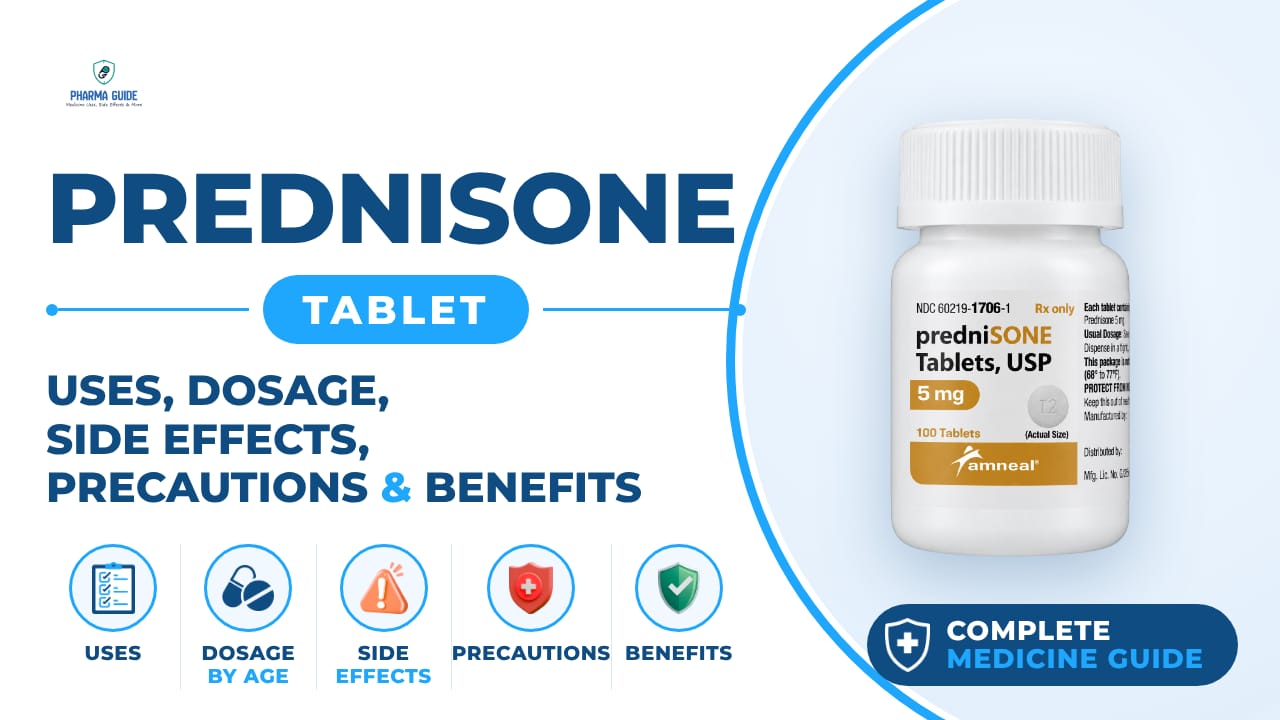
Prednisone Tablet: Uses, Dosage, Side Effects, Precautions and Alternates
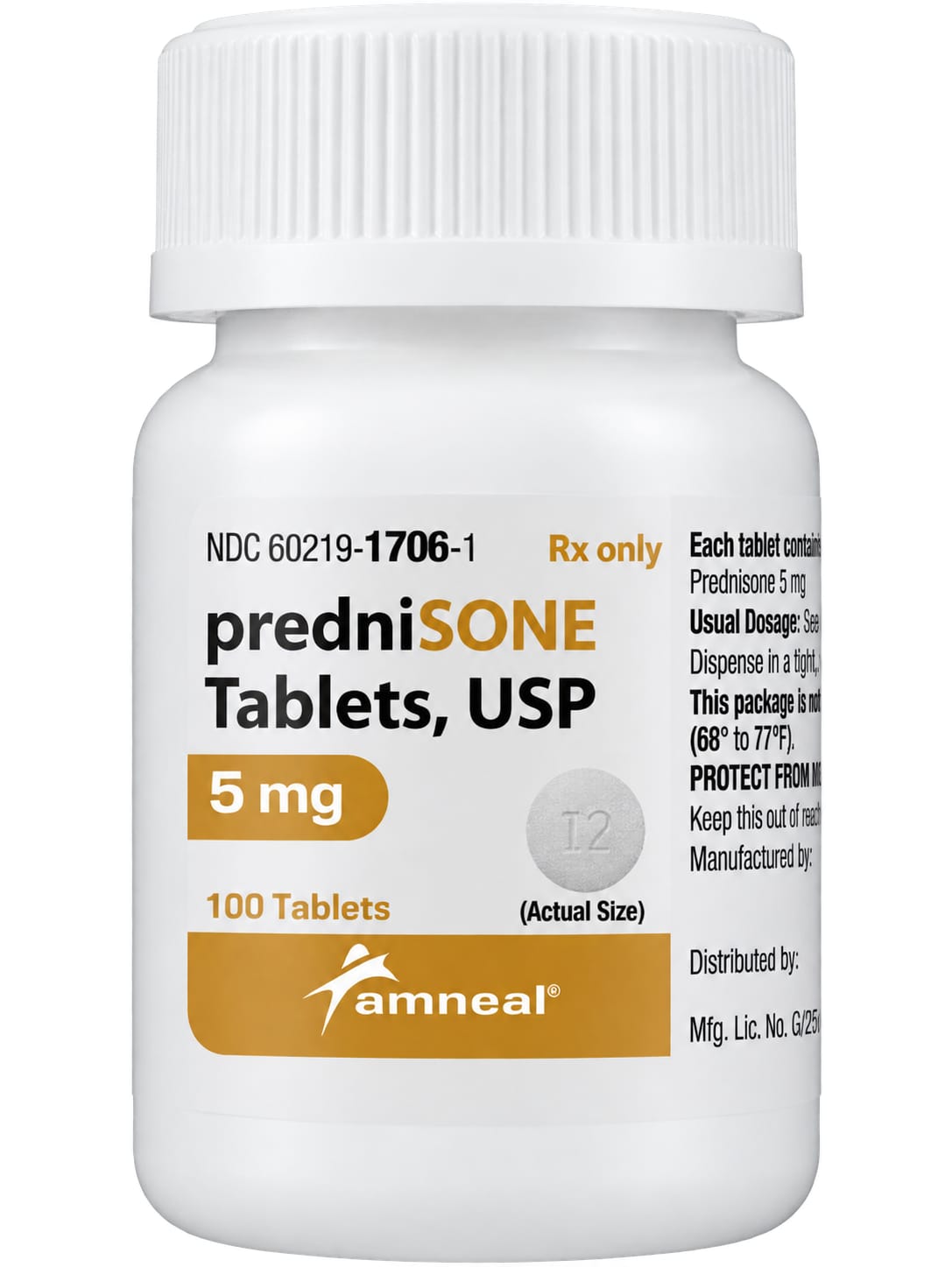
| Generic name | Prednisone |
|---|---|
| Drug class | Glucocorticoids (corticosteroids) |
| Forms | Tablets (immediate-release), Delayed-release tablets, Oral solution, Concentrated oral solution (measured with a dropper) |
Quick overview
Prednisone Tablet is a prescription corticosteroid medicine used to reduce inflammation and calm an overactive immune system. It is prescribed for conditions such as severe allergies, asthma and COPD flare-ups, arthritis, lupus, skin conditions, and certain bowel, blood, and kidney disorders. It is taken exactly as prescribed, often with food, and should not be stopped suddenly after extended use. As with other corticosteroids, it carries a range of possible side effects and precautions that should be discussed with a doctor.
What is Prednisone Tablet
Prednisone is a prescription corticosteroid (steroid) medicine belonging to the glucocorticoid drug class. It is a man-made version of hormones your adrenal glands make naturally, and it is different from the anabolic steroids some athletes use to build muscle.
Prednisone Tablet uses
- Severe allergies and allergic reactions
- Asthma and COPD flare-ups
- Rheumatoid arthritis and other forms of arthritis
- Lupus
- Psoriasis and other skin conditions
- Ulcerative colitis and Crohn's disease
- Eye inflammation
- Some blood disorders
- Low adrenal hormone levels (adrenal insufficiency)
- Multiple sclerosis flare-ups
- Certain cancers such as leukemia and lymphoma (used with other treatments)
- Nephrotic syndrome and other kidney disorders
Benefits of Prednisone Tablet
- Reduces inflammation and swelling
- Calms an overactive immune system
- Can improve pain, stiffness, and joint swelling within a few days
How Prednisone Tablet works
Prednisone copies the natural hormone cortisol. It works by reducing inflammation and calming down an overactive immune system, which lowers swelling, pain, and other symptoms of disease.
Prednisone Tablet dosage
Take prednisone exactly as your doctor prescribes; do not change your dose or stop without medical advice. Take it with food or milk to help protect your stomach. If you take it once a day, take it in the morning. Swallow delayed-release tablets whole; do not crush, break, or chew them.
If using liquid prednisone, measure it with a proper measuring device such as an oral syringe, dosing spoon, or medicine cup, not a kitchen spoon. Use the dropper provided with the concentrated oral solution. You may mix the concentrated solution with juice or a soft food such as applesauce.
Tell your doctor about any serious illness, fever, infection, surgery, or emergency, since you may need a higher dose for a short time. You may need regular blood tests, blood pressure checks, and eye checks during long-term treatment. Wear a medical alert tag or carry a card saying you take a steroid. Do not stop taking this medicine suddenly after using it for more than a few days; your doctor will lower the dose gradually.
| Age group | Dose |
|---|---|
| Children | Dose based on body weight and medical condition (as prescribed) |
| Adults (18–64 Years) | 5–60 mg daily depending on condition and response |
| Older Adults (65+ years) | Lowest effective dose; adjusted based on condition and health status |
| Pregnancy | Dose determined by doctor based on medical need |
Available forms and strengths
- Tablets (immediate-release)
- Delayed-release tablets
- Oral solution
- Concentrated oral solution (measured with a dropper)
Side effects of Prednisone Tablet
Common
- Trouble sleeping
- Mood changes
- Increased appetite and weight gain
- Fluid retention and swelling
- Increased sweating
- Acne
- Thinning skin that bruises easily
- Slow wound healing
- Higher blood sugar
- Indigestion and stomach upset
- Dizziness
- Confusion
- Restlessness
- Headache
- Nausea and vomiting
- Blurred vision
- Increased blood pressure
Serious
- Signs of allergic reaction: hives, difficulty breathing, or swelling of face, lips, tongue, or throat
- Signs of infection such as fever, chills, sore throat, cough, or a wound that is not healing
- Blurred vision, eye pain, or seeing halos around lights (possible glaucoma or cataracts)
- Severe upper stomach pain spreading to the back, with nausea and vomiting (possible pancreatitis)
- Bloody or black, tarry stools, or vomit that looks like coffee grounds (possible stomach bleeding)
- Severe depression, unusual excitement, confusion, changes in personality or behavior, or a seizure
- Swelling, rapid weight gain, or shortness of breath (possible fluid retention or heart failure)
- Signs of low potassium such as confusion, uneven heartbeat, extreme thirst, passing more urine than usual, leg discomfort, or muscle weakness
- Very high blood pressure with severe headache, blurred vision, ringing in ears, chest pain, or shortness of breath
- Sudden pain, swelling, or bruising in a tendon, especially at the back of the ankle
- New bone pain, especially in a hip, shoulder, or knee
- Flat, painless red or purple spots on light skin, or bluish, brown, or black spots on dark skin (possible Kaposi's sarcoma)
- Irregular or missed periods, unwanted facial hair growth, and body fat changes in women
- Osteoporosis and broken bones with long-term use
- Cataracts and glaucoma
- Diabetes and high blood pressure with long-term use
- Cushing's syndrome
- Adrenal suppression
- Slowed growth in children with long-term use
Warnings and precautions
Do not take prednisone if you have a systemic fungal infection (a fungal infection that has spread through your body). Prednisone weakens your immune system, making infections more likely and harder to notice, and it can reactivate old infections such as tuberculosis or hepatitis B.
Stay away from people who are sick. Chickenpox and measles can be serious or even fatal in someone taking a steroid. Call your doctor right away if you are exposed to either one. Do not have a live vaccine while taking prednisone unless your doctor says it is safe.
Do not stop taking prednisone suddenly after more than a few days of treatment. Your body needs time to start making its own steroid hormones again, so your doctor will lower your dose in steps. Long-term steroid use can cause bone loss. Your risk is higher if you smoke, do not exercise, do not get enough calcium or vitamin D, or if osteoporosis runs in your family.
Prednisone crosses the placenta. Taking it in the first trimester may raise the risk of birth defects, and higher doses later in pregnancy may affect the baby's growth and adrenal glands. Tell your doctor if you are pregnant or planning to become pregnant, since this is a decision to make together rather than stopping the medicine on your own.
Prednisone passes into breast milk in small amounts. Tell your doctor if you are breastfeeding so you can discuss the dose and timing of feeds.
Tell your doctor if you have kidney disease, since prednisone should be used with caution in this case. Tell your doctor if you have liver disease such as cirrhosis, since prednisone can have a stronger effect in people with liver problems.
Limit alcohol while taking prednisone. Both alcohol and prednisone irritate the stomach lining, so together they raise the risk of stomach bleeding.
Prednisone can have minor or moderate effects on your ability to drive or use machinery, so be careful until you know how it affects you.
Storage
- Store prednisone at room temperature, away from moisture and heat.
- Throw away any unused concentrated solution 90 days after you first open the bottle.
- Keep out of reach and sight of children.
- Store at or below 30°C. Protect from heat, light and moisture. Keep container tightly closed.
When to see a doctor
- Get emergency medical help if you have signs of an allergic reaction: hives, difficult breathing, or swelling of your face, lips, tongue, or throat.
- Call your doctor right away if you have signs of infection, such as fever, chills, sore throat, cough, or a wound that is not healing.
- Call your doctor if you have blurred vision, eye pain, or see halos around lights, which can be signs of glaucoma or cataracts.
- Call your doctor if you have severe upper stomach pain that spreads to your back, with nausea and vomiting, which can be a sign of pancreatitis.
- Call your doctor if you have bloody or black, tarry stools, or vomit that looks like coffee grounds, which can be signs of a bleeding stomach ulcer.
- Call your doctor if you have severe depression, unusual excitement, confusion, changes in personality or behavior, or a seizure.
- Call your doctor if you have swelling, rapid weight gain, or shortness of breath, which can be signs of fluid retention or heart failure.
- Call your doctor if you have signs of low potassium, such as confusion, an uneven heartbeat, extreme thirst, passing more urine than usual, leg discomfort, or muscle weakness.
- Call your doctor if you have sudden pain, swelling, or bruising in a tendon, especially at the back of the ankle, since prednisone can weaken tendons.
- Call your doctor if you have new bone pain, especially in a hip, shoulder, or knee.
- If you feel unwell while your dose is being lowered or after you finish treatment, call your doctor, as this can be a sign your body needs more time to recover.
- If you think you have taken too much prednisone, contact your doctor or seek emergency medical attention, even if you have no symptoms.
Alternatives
- Prednisolone
- Methylprednisolone
- Betamethasone
Watch the video
FAQs
What is Prednisone Tablet used for?
It is used for severe allergies, asthma and COPD flare-ups, arthritis, lupus, psoriasis and other skin conditions, ulcerative colitis and Crohn's disease, eye inflammation, some blood disorders, adrenal insufficiency, multiple sclerosis flare-ups, certain cancers, and kidney disorders like nephrotic syndrome.
How should I take Prednisone Tablet?
Take it exactly as prescribed, usually with food or milk to protect your stomach, and in the morning if taken once daily. Delayed-release tablets should be swallowed whole, not crushed, broken, or chewed.
Can I stop taking Prednisone Tablet suddenly?
No, you should not stop suddenly after using it for more than a few days. Your doctor will lower the dose gradually so your body can resume making its own steroid hormones.
What are the common side effects of Prednisone Tablet?
Common side effects include trouble sleeping, mood changes, increased appetite and weight gain, fluid retention, acne, thinning skin, higher blood sugar, indigestion, dizziness, headache, and increased blood pressure.
Is Prednisone Tablet safe during pregnancy?
Prednisone crosses the placenta, and taking it in the first trimester may raise the risk of birth defects, while higher doses later in pregnancy may affect the baby's growth and adrenal glands. Discuss this with your doctor rather than stopping the medicine on your own.
General information, not medical advice
Your prescriber and the leaflet in your pack know your situation. This page does not.
- Follow your prescriber and the leaflet
- Don't start, stop, or change a dose on your own
- Doses and warnings differ by country and product
Sources
- Drugs.com - Prednisone
- APO-PREDNISONE Prescribing Information - Apotex Inc.
- CareHospitals - Prednisone Tablet: Uses, Side Effects, Dosage, Precautions & More
- New Zealand Data Sheet - Prednisone Tablets
- Medical News Today - Prednisone, oral tablet
- Australian Rheumatology Association - Patient Information on Prednisolone/Prednisone
Video
Related medicines

Injectafer Injection: Uses, Dosage, Side Effects, Precautions and Alternates
Iron products
Injectafer (ferric carboxymaltose) treats iron deficiency anemia and heart failure-related iron deficiency via IV. Learn uses, dosage, side effects, and

Gliclazide Tablet: Uses, Dosage, Side Effects, Precautions and Alternates
Sulfonylurea (hypoglycemic/antidiabetic agent)
Gliclazide Tablet is a sulfonylurea for type 2 diabetes that boosts insulin release. Learn about dosage, side effects, warnings, and precautions.