
Safety
General information, not medical advice
Your prescriber and the leaflet in your pack know your situation. This page does not.
- Follow your prescriber and the leaflet
- Don't start, stop, or change a dose on your own
- Doses and warnings differ by country and product
Pregabalin M Capsule: Uses, Dosage, Side Effects, Precautions and Alternates
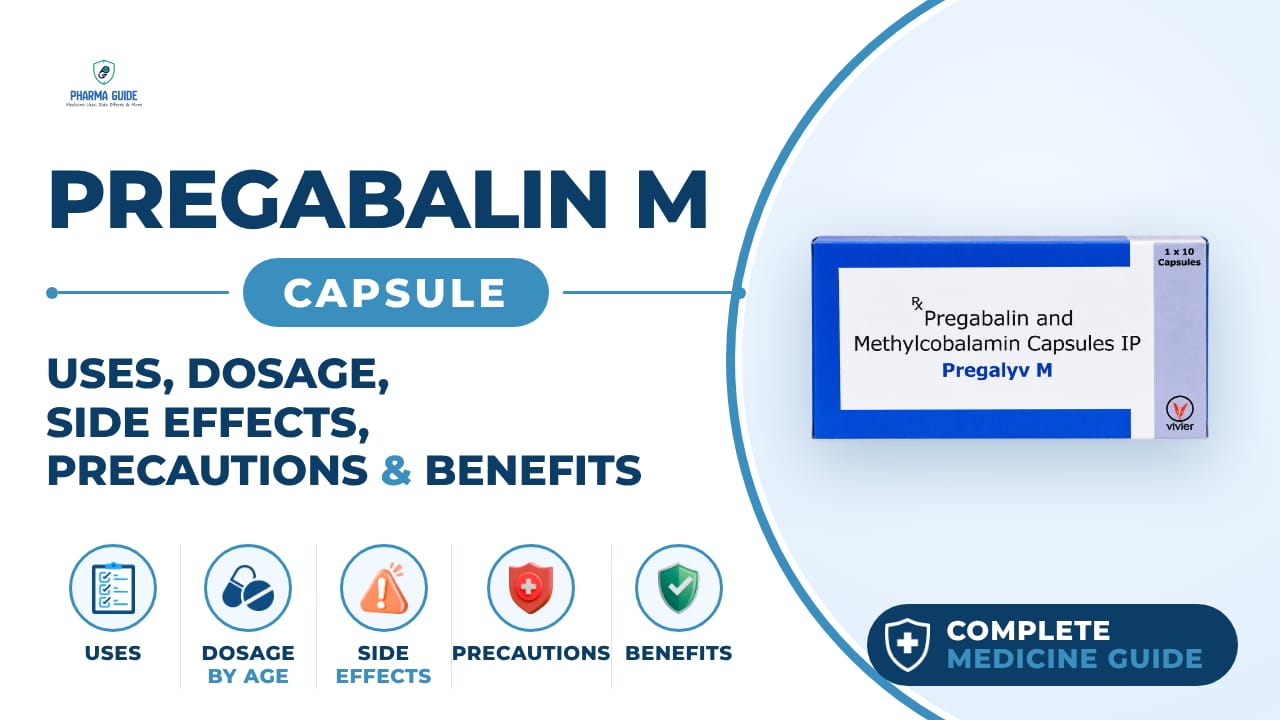
| Generic name | pregabalin |
|---|---|
| Drug class | Gabapentinoids (anticonvulsant/analgesic agent) |
| Forms | Capsules, Oral solution (liquid), Extended-release tablets |

Quick overview
Pregabalin M Capsule contains pregabalin, a gabapentinoid used to manage nerve pain from diabetes, nerve pain following shingles, fibromyalgia, nerve pain after spinal cord injury, and, together with other medicines, partial-onset seizures. It works by calming overactive or damaged nerves to reduce pain signals and help control seizures. It is a Schedule V controlled substance with a low but real potential for misuse, and dosing should always follow your doctor's instructions.
What is Pregabalin M Capsule
Pregabalin is a prescription medicine that was first approved as an anti-seizure drug. It also affects chemicals in the brain that send pain signals through the nervous system. It is a Schedule V controlled substance, meaning it has a low but real potential for misuse.
Pregabalin M Capsule uses
- Nerve pain caused by diabetes (diabetic peripheral neuropathy)
- Nerve pain that follows healing of shingles (post-herpetic neuralgia)
- Fibromyalgia (widespread pain, muscle stiffness, tiredness, and sleep problems)
- Nerve pain after a spinal cord injury
- Used together with other medicines to treat partial-onset seizures in adults and children
Benefits of Pregabalin M Capsule
- Can reduce nerve pain, sometimes starting within the first week of treatment
- Can help control seizures when used with other seizure medicines
- Can reduce widespread pain and improve overall symptoms in fibromyalgia
How Pregabalin M Capsule works
Pregabalin calms down overactive or damaged nerves in the body, which helps reduce pain signals and can help control seizures. Experts do not know exactly how it works.
Pregabalin M Capsule dosage
Take pregabalin capsules at the same time each day, exactly as your doctor prescribes. Capsules can be taken with or without food. Do not take a larger dose, take it more often, or take it longer than prescribed. Continue taking pregabalin even if you feel well; it may take several weeks to feel the full benefit.
Do not stop taking pregabalin suddenly, even if you feel fine, because this can cause withdrawal symptoms or more seizures; your doctor will lower your dose gradually over at least one week. If you miss a dose, take it as soon as you remember unless it is almost time for your next dose, in which case skip the missed dose; do not double up doses. Wear or carry medical identification showing you take a seizure medicine, in case of emergency.
| Age group | Dose |
|---|---|
| Under 18 Years | Use only if prescribed by a healthcare professional |
| Adults (18–64 Years) | Pregabalin 75–150 mg/day + Methylcobalamin as per formulation, adjusted according to condition |
| Older Adults (65+ Years) | Lower starting dose (usually 25–75 mg/day Pregabalin); adjusted based on kidney function |
Available forms and strengths
- Capsules
- Oral solution (liquid)
- Extended-release tablets
Side effects of Pregabalin M Capsule
Common
- Dizziness
- Drowsiness/sleepiness
- Dry mouth
- Nausea
- Constipation
- Gas and bloating
- Blurred vision
- Trouble concentrating or paying attention
- Difficulty remembering or forgetfulness
- Increased appetite
- Weight gain
- Swelling in the hands and feet
- Feeling "high" or elevated mood
- Lack of coordination or unsteadiness
- Back pain
Serious
- Serious, even life-threatening, allergic reactions with swelling of the face, mouth, lips, gums, tongue, throat, or neck, trouble breathing, rash, hives, or blisters
- Suicidal thoughts or actions
- Serious breathing problems (slow or shallow breathing), especially when combined with opioids or other sedating medicines
- Swelling of the hands, legs, and feet, which can be serious for people with heart problems
- Vision problems, including blurred or double vision
- Unexplained muscle pain, tenderness, or weakness, especially with fever
- Easy bruising or unusual bleeding
Warnings and precautions
- Pregabalin should generally not be used during pregnancy because it can cause major birth defects if taken in the first trimester. Seizure control is important during pregnancy, so do not start or stop the medicine without your doctor's advice, and tell your doctor right away if you become pregnant.
- Pregabalin passes into breast milk and it is not known if it can harm a nursing baby. You and your doctor should decide whether you should take pregabalin or breastfeed, but not both.
- Pregabalin is removed from the body mainly by the kidneys, so people with kidney disease or reduced kidney function may need a lower dose and closer monitoring.
- Caution is advised in patients with a history of liver disease, since some reports of a serious brain problem called encephalopathy occurred in patients with underlying liver or kidney disease.
- Avoid drinking alcohol while taking pregabalin, since alcohol can increase drowsiness, dizziness, and other side effects.
- Do not drive, operate machinery, or do other hazardous activities until you know how pregabalin affects you, since it can cause dizziness and drowsiness that could impair your reactions.
- Pregabalin can cause serious, even life-threatening, allergic reactions including swelling of the face, mouth, lips, gums, tongue, throat, or neck, trouble breathing, and rash, hives, or blisters. Stop the medicine and get emergency help right away if this happens.
- Like other anti-seizure medicines, pregabalin may cause suicidal thoughts or actions in a small number of people, about 1 in 500. Call a healthcare provider right away if you notice new or worsening depression, anxiety, agitation, or other unusual mood or behavior changes.
- Do not stop taking pregabalin suddenly, even if you feel fine, because this can cause withdrawal symptoms or increased seizures. Your doctor should lower your dose gradually over at least one week.
- Combining pregabalin with opioids, benzodiazepines, alcohol, or other central nervous system depressants can cause severe drowsiness, breathing problems, coma, and death.
- Pregabalin may cause swelling in the hands, legs, and feet, which can be a serious problem for people with heart conditions.
- Pregabalin can cause dizziness and sleepiness that may affect your ability to drive or use machinery safely.
Storage
- Store at room temperature between 59°F and 86°F (15°C to 30°C) in the original package
- Keep away from moisture, heat, and light
- Keep out of the reach and sight of children
- Safely throw away medicine that is out of date or no longer needed through a medicine take-back program rather than flushing it down the toilet
When to see a doctor
- Get emergency medical help right away if you have signs of a serious allergic reaction, such as swelling of the face, mouth, lips, gums, tongue, or throat, trouble breathing, or hives and blisters
- Seek immediate help if you have very slow or weak breathing, blue-colored skin, lips, or fingertips, or if you are hard to wake up
- Call your healthcare provider right away if you have thoughts about suicide or dying, new or worsening depression or anxiety, agitation, panic attacks, trouble sleeping, aggressive or violent behavior, or other unusual changes in mood or behavior
- Tell your doctor right away if you notice new sores or skin problems, especially if you have diabetes
- Call your doctor if you have unexplained muscle pain, tenderness, or weakness, especially with fever, as this could be a sign of a serious muscle problem
- If you think you or someone else has taken too much pregabalin, contact a healthcare professional, hospital emergency department, or poison control right away, even without symptoms
Alternatives
- Gabapentin
- Amitriptyline
- Venlafaxine
Watch the video
FAQs
What is Pregabalin M Capsule used for?
It is used for nerve pain caused by diabetes, nerve pain following shingles, fibromyalgia, nerve pain after spinal cord injury, and, along with other medicines, for partial-onset seizures.
How does Pregabalin M Capsule work?
It calms overactive or damaged nerves in the body, which helps reduce pain signals and can help control seizures, though experts do not know exactly how it works.
Can I stop taking Pregabalin M Capsule suddenly?
No, you should not stop suddenly even if you feel fine, as this can cause withdrawal symptoms or increased seizures. Your doctor should lower your dose gradually over at least one week.
What are the common side effects of Pregabalin M Capsule?
Common side effects include dizziness, drowsiness, dry mouth, nausea, constipation, gas and bloating, blurred vision, trouble concentrating, weight gain, and swelling in the hands and feet.
Is Pregabalin M Capsule safe during pregnancy?
It should generally not be used during pregnancy because it can cause major birth defects if taken in the first trimester, so you should not start or stop it without your doctor's advice.
General information, not medical advice
Your prescriber and the leaflet in your pack know your situation. This page does not.
- Follow your prescriber and the leaflet
- Don't start, stop, or change a dose on your own
- Doses and warnings differ by country and product
Sources
Video
Related medicines

Injectafer Injection: Uses, Dosage, Side Effects, Precautions and Alternates
Iron products
Injectafer (ferric carboxymaltose) treats iron deficiency anemia and heart failure-related iron deficiency via IV. Learn uses, dosage, side effects, and

Gliclazide Tablet: Uses, Dosage, Side Effects, Precautions and Alternates
Sulfonylurea (hypoglycemic/antidiabetic agent)
Gliclazide Tablet is a sulfonylurea for type 2 diabetes that boosts insulin release. Learn about dosage, side effects, warnings, and precautions.