
Safety
General information, not medical advice
Your prescriber and the leaflet in your pack know your situation. This page does not.
- Follow your prescriber and the leaflet
- Don't start, stop, or change a dose on your own
- Doses and warnings differ by country and product
Pretomanid Tablet: Uses, Dosage, Side Effects, Precautions and Alternates
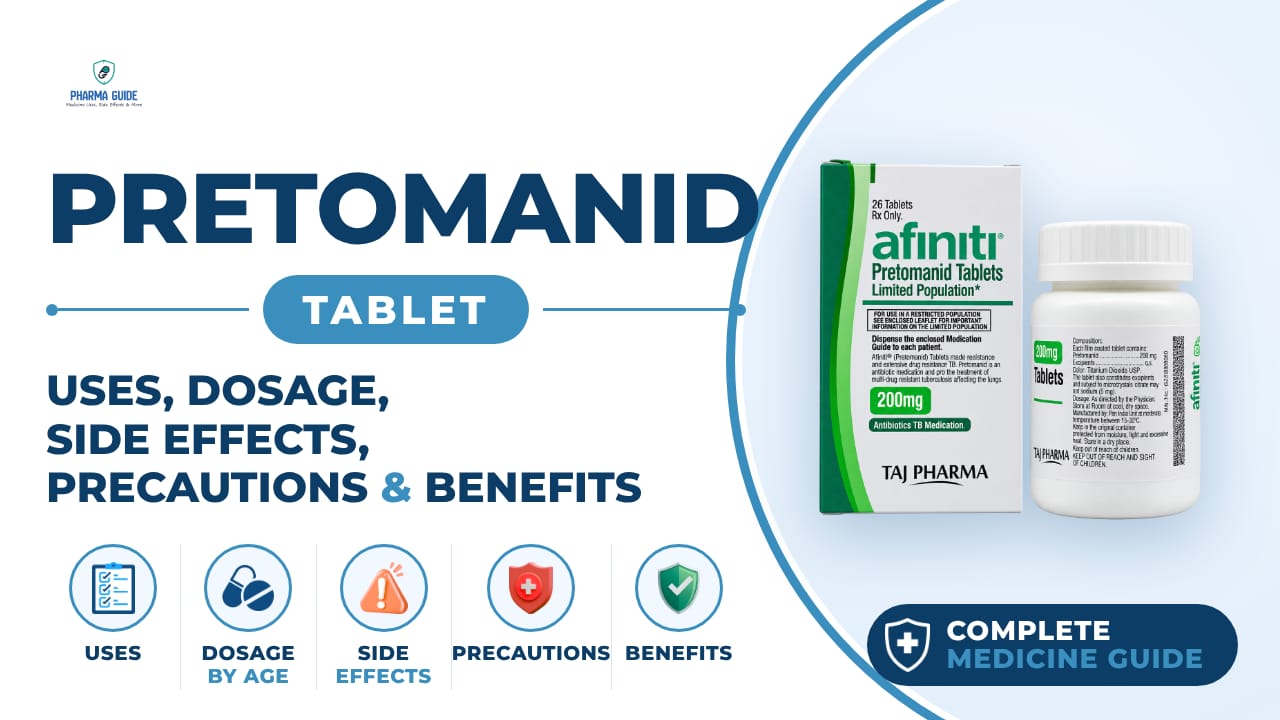
| Generic name | pretomanid |
|---|---|
| Drug class | Miscellaneous antituberculosis agents (nitroimidazooxazine antimycobacterial drug) |
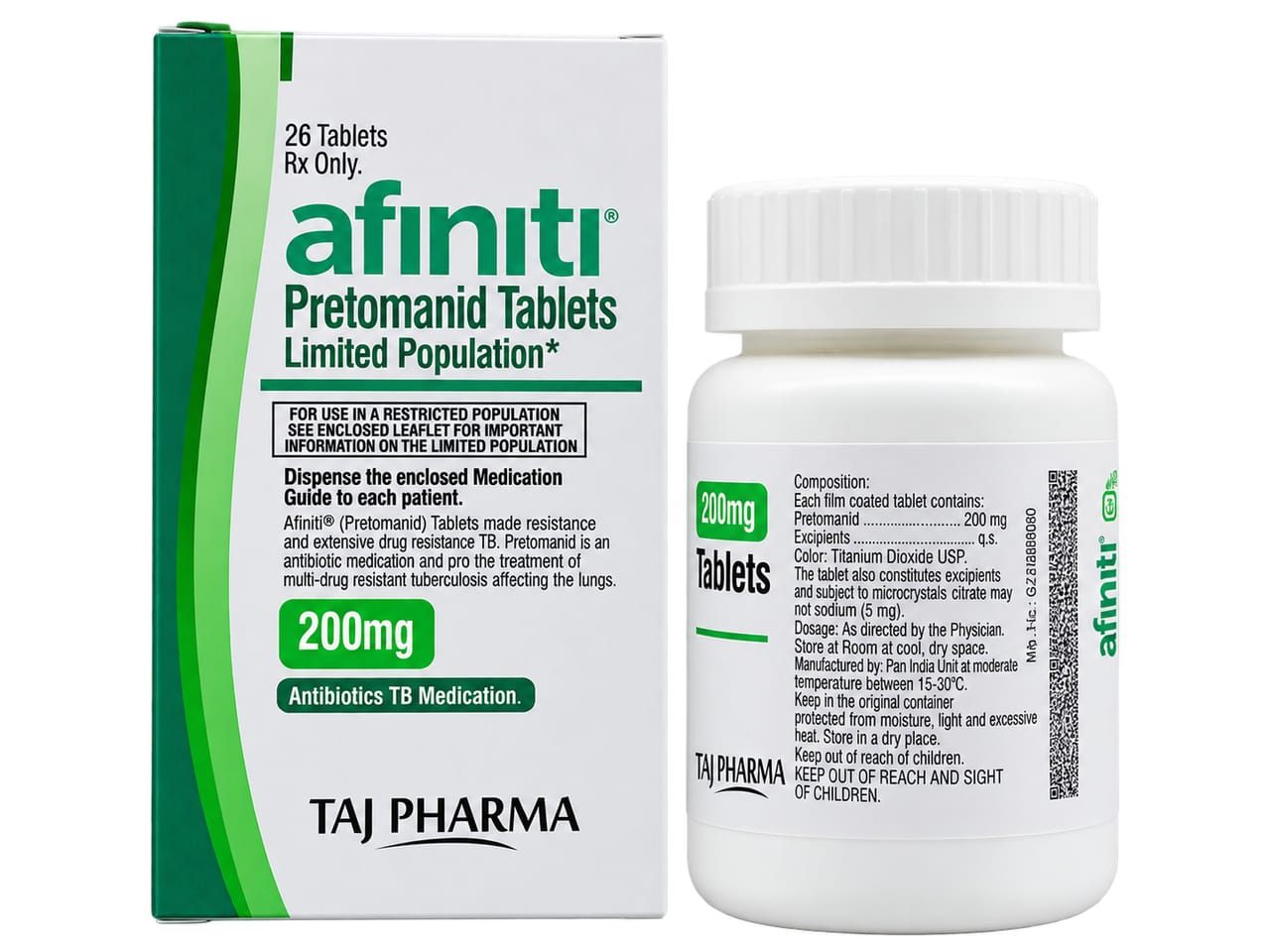
| Forms | Tablet (200 mg) |
Quick overview
Pretomanid is an antibiotic tablet used only as part of a 3-drug combination with bedaquiline and linezolid to treat a serious, hard-to-treat form of pulmonary tuberculosis. It is never used by itself. The combination regimen is typically taken as 200 mg once daily for 26 weeks with food, and requires regular monitoring for liver, blood, nerve, and heart-related effects.
What is Pretomanid Tablet
Pretomanid is an antibiotic belonging to the miscellaneous antituberculosis agents class (nitroimidazooxazine antimycobacterial drug). It is used only as part of a 3-drug combination with bedaquiline and linezolid to treat a serious, hard-to-treat form of tuberculosis (TB) of the lungs. It is not used by itself.
Pretomanid Tablet uses
- Treats pulmonary tuberculosis that is extensively drug resistant (XDR-TB) or multidrug-resistant (MDR-TB) that cannot be treated with standard therapy, when used together with bedaquiline and linezolid
- Not for drug-sensitive TB, latent TB infection, or TB outside the lungs
- Not for MDR-TB that responds to standard treatment
Benefits of Pretomanid Tablet
- Treats selected drug-resistant pulmonary tuberculosis
- Provides an oral component of multidrug-resistant TB therapy
- Helps eliminate resistant Mycobacterium tuberculosis
- Used in combination therapy to improve treatment effectiveness
- Can form part of a 26-week treatment regimen
How Pretomanid Tablet works
Pretomanid kills actively growing TB bacteria by blocking production of their cell wall, and it also acts as a poison to bacteria that are dormant (not actively growing) in low-oxygen conditions. A special bacterial enzyme must activate pretomanid inside the TB bacteria for it to work.
Pretomanid Tablet dosage
Pretomanid must only be taken together with bedaquiline and linezolid as directed by your healthcare provider — never alone. Take it with food. Swallow the tablet whole with water; do not crush, chew, or break it unless your healthcare provider gives you crushing or soaking instructions for swallowing difficulties.
A healthcare provider or caregiver will usually watch you take each dose (directly observed therapy). Complete the full prescribed course even if you feel better early — skipping doses can make treatment less effective and increase the chance the TB becomes harder to treat. Doses missed for safety reasons (as directed by your provider) can be made up at the end of treatment; missed linezolid doses due to linezolid side effects should not be made up. This medicine is not approved for use in children. Talk to your doctor if you miss a dose and are not sure what to do.
| Age group | Dose |
|---|---|
| Under 18 years | Safety and effectiveness have not been established |
| 18–64 years | 200 mg once daily for 26 weeks, with food, as part of the prescribed combination regimen |
| 65 years and older | 200 mg once daily for 26 weeks, with individualized specialist monitoring |
Available forms and strengths
- Tablet (200 mg)
Side effects of Pretomanid Tablet
Common
- Nerve problems (numbness, burning, tingling)
- Nausea, vomiting, heartburn, stomach pain, decreased appetite, diarrhea
- Headache
- Muscle and bone pain
- Acne, rash, itching, dry skin
- Abnormal blood tests related to liver or pancreas function
- Cough, chest pain
- Unusual weight loss
- Low blood sugar
Serious
- Liver problems (unusual tiredness, loss of appetite, nausea, yellowing of skin or eyes, dark urine, stomach tenderness)
- Low blood cell counts (anemia, low white cells, low platelets) — fever, easy bruising, unusual bleeding, pale skin, feeling light-headed
- Nerve problems in arms, hands, legs, feet (numbness, burning, pins and needles, tremors, balance problems, weakness)
- Vision problems from nerve damage in the eyes
- Heart rhythm problems (QT prolongation) — fast or irregular heartbeat, dizziness, fainting
- Build-up of acid in the blood (lactic acidosis) — repeated nausea and vomiting
- Possible effects on male fertility
- Allergic reaction — hives, difficulty breathing, swelling of face, lips, tongue, or throat
Warnings and precautions
- This combination regimen can cause liver damage. Blood tests to check liver function are needed before starting, after two weeks, and then monthly. Treatment may need to be stopped if signs of liver injury appear.
- The regimen can lower blood cell counts (red cells, white cells, platelets), which can be serious. Regular blood counts are needed, and the linezolid dose may need to be reduced or stopped if this happens.
- Nerve damage in the arms, legs, or eyes can occur, including vision problems. Report any vision changes right away so an eye exam can be done.
- This medicine can affect heart rhythm (QT prolongation). Regular heart tracings (ECGs) are needed, and treatment may need to stop if a serious heart rhythm problem develops.
- Animal studies showed this medicine caused testicle shrinkage and fertility problems in male rats; its effects on human male fertility are not fully known.
- A build-up of acid in the blood (lactic acidosis) can occur. Treatment may need to be interrupted if this becomes significant.
- Avoid taking certain medicines (strong or moderate CYP3A4 inducers such as rifampin or efavirenz) together with this regimen, as they can make pretomanid less effective.
There is no information on whether pretomanid harms an unborn baby. Tell your doctor if you are pregnant or planning pregnancy; the benefits of treating TB may outweigh possible risks, and this should be discussed with your healthcare provider.
Breastfeeding while taking this medicine is not recommended, and it isn't known if pretomanid passes into breast milk.
The effects of kidney problems on this medicine are not known. Tell your doctor if you have a history of kidney problems.
The effects of liver problems on this medicine are not known, and liver injury is a risk of the combination regimen. Tell your doctor if you have a history of liver problems.
Avoid alcohol while taking this medicine, since it can increase the risk of liver damage.
Storage
- Store below 86°F (30°C)
- Keep in the original container with the container tightly closed
- Keep out of the reach of children
When to see a doctor
- Get emergency help right away for signs of a severe allergic reaction: hives, trouble breathing, or swelling of the face, lips, tongue, or throat.
- Call your doctor right away for fast or pounding heartbeats, fluttering in your chest, shortness of breath, or sudden dizziness like you might pass out.
- Call your doctor right away if you have tremors, weakness, or problems with balance.
- Call your doctor right away if you notice any changes in your vision.
- Call your doctor right away for severe ongoing nausea and vomiting.
- Call your doctor right away if you cough up mucus or blood.
- Call your doctor right away for shortness of breath or chest pain that worsens with breathing or coughing.
- Call your doctor right away for nerve symptoms like numbness, tingling, burning, or a prickly feeling in your arms, hands, legs, or feet.
- Call your doctor right away for signs of liver problems: nausea, loss of appetite, upper right stomach pain, tiredness, itching, dark urine, or yellowing of skin or eyes.
- Call your doctor right away for signs of low blood cell counts: fever, easy bruising, unusual bleeding, pale skin, cold hands and feet, or feeling light-headed.
- If you think you have taken too much, seek emergency medical attention right away or contact poison control.
Alternatives
- Bedaquiline-containing multidrug TB regimens
- Linezolid-containing multidrug TB regimens
- Delamanid-based regimens where appropriate
Watch the video
FAQs
What is Pretomanid Tablet used for?
Pretomanid is used only as part of a 3-drug combination with bedaquiline and linezolid to treat extensively drug-resistant (XDR-TB) or multidrug-resistant (MDR-TB) pulmonary tuberculosis that cannot be treated with standard therapy. It is not used alone and is not for drug-sensitive TB, latent TB, or TB outside the lungs.
What is the dosage for Pretomanid Tablet?
The typical regimen is 200 mg once daily for 26 weeks, taken with food, along with bedaquiline and linezolid as directed by a healthcare provider. The tablet should be swallowed whole with water unless your provider gives other instructions. It is not approved for use in children.
What are the common side effects of Pretomanid Tablet?
Common side effects include nerve problems like numbness, burning, or tingling, nausea, vomiting, heartburn, stomach pain, decreased appetite, diarrhea, headache, muscle and bone pain, skin issues like acne or rash, abnormal liver or pancreas blood tests, cough, chest pain, unusual weight loss, and low blood sugar.
What serious warnings are associated with Pretomanid Tablet?
This combination regimen can cause liver damage, lower blood cell counts, nerve damage including vision problems, and heart rhythm changes (QT prolongation). It may also cause a build-up of acid in the blood (lactic acidosis) and possible effects on male fertility. Regular monitoring with blood tests, eye exams, and ECGs is needed during treatment.
Can Pretomanid Tablet be taken during pregnancy or breastfeeding?
There is no information on whether pretomanid harms an unborn baby, so you should tell your doctor if you are pregnant or planning pregnancy to discuss benefits and risks. Breastfeeding while taking this medicine is not recommended, as it isn't known if pretomanid passes into breast milk.
General information, not medical advice
Your prescriber and the leaflet in your pack know your situation. This page does not.
- Follow your prescriber and the leaflet
- Don't start, stop, or change a dose on your own
- Doses and warnings differ by country and product
Sources
Video
Related medicines

Injectafer Injection: Uses, Dosage, Side Effects, Precautions and Alternates
Iron products
Injectafer (ferric carboxymaltose) treats iron deficiency anemia and heart failure-related iron deficiency via IV. Learn uses, dosage, side effects, and

Gliclazide Tablet: Uses, Dosage, Side Effects, Precautions and Alternates
Sulfonylurea (hypoglycemic/antidiabetic agent)
Gliclazide Tablet is a sulfonylurea for type 2 diabetes that boosts insulin release. Learn about dosage, side effects, warnings, and precautions.