
Safety
General information, not medical advice
Your prescriber and the leaflet in your pack know your situation. This page does not.
- Follow your prescriber and the leaflet
- Don't start, stop, or change a dose on your own
- Doses and warnings differ by country and product
Prevacid Capsule: Uses, Dosage, Side Effects, Precautions and Alternates
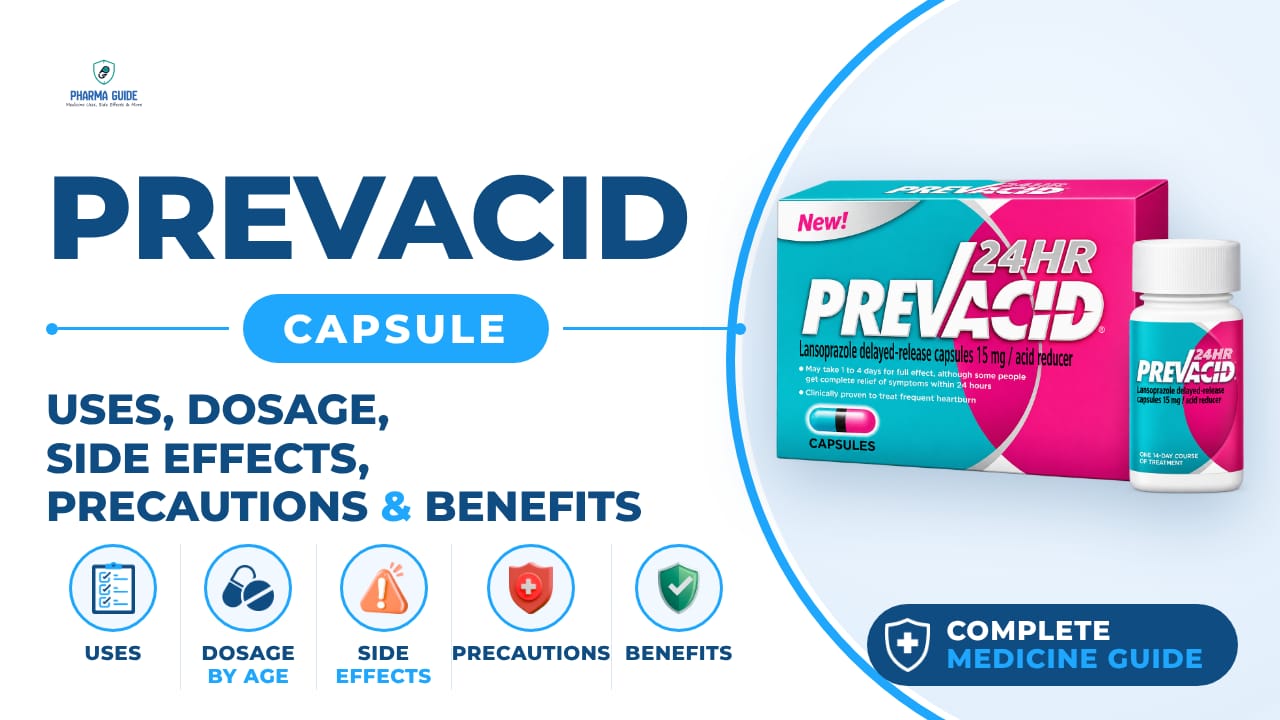
| Generic name | lansoprazole |
|---|---|
| Drug class | Proton pump inhibitor (PPI) |
| Forms | Delayed-release capsule, Delayed-release orally disintegrating tablet (SoluTab) |
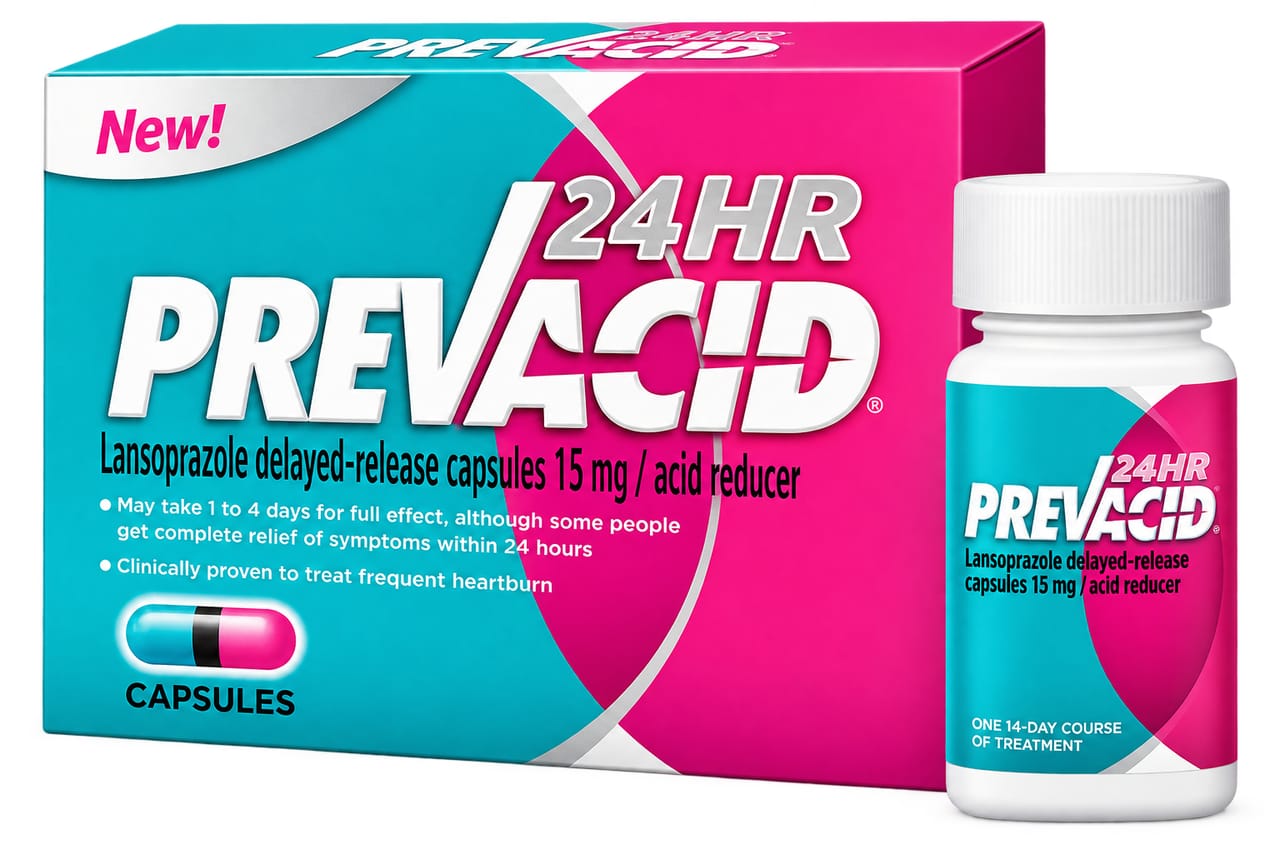
Quick overview
Prevacid Capsule (lansoprazole) is a proton pump inhibitor (PPI) that decreases the amount of acid produced in the stomach. It comes as delayed-release capsules and as orally disintegrating tablets (Prevacid SoluTab). It is used to treat and prevent ulcers, erosive esophagitis, GERD, Zollinger-Ellison syndrome, and frequent heartburn, and to help eradicate H. pylori infection when combined with antibiotics.
What is Prevacid Capsule
Prevacid is a proton pump inhibitor that decreases the amount of acid produced in the stomach. It comes as delayed-release capsules and as orally disintegrating tablets (Prevacid SoluTab).
Prevacid Capsule uses
- Treating and preventing stomach and intestinal (duodenal) ulcers
- Treating erosive esophagitis (damage to the esophagus from stomach acid)
- Treating conditions with excessive stomach acid, such as Zollinger-Ellison syndrome
- Treating gastroesophageal reflux disease (GERD) symptoms like heartburn
- Helping to eradicate H. pylori infection when combined with antibiotics
- Treating frequent heartburn that happens 2 or more days a week (over-the-counter use)
Benefits of Prevacid Capsule
- Reduces stomach acid production.
- Treats GERD and acid reflux symptoms.
- Helps heal erosive esophagitis.
- Helps treat and prevent certain stomach and duodenal ulcers.
- Used with antibiotics for H. pylori–associated duodenal ulcers.
- Helps control excessive acid in Zollinger–Ellison syndrome.
How Prevacid Capsule works
Prevacid reduces the amount of acid your stomach makes by blocking the acid pump in stomach cells, which helps relieve symptoms and heal acid-related damage.
Prevacid Capsule dosage
Take before eating; Prevacid OTC should be taken in the morning before breakfast. Swallow the delayed-release capsule whole. Do not crush, chew, break, or open it.
If you cannot swallow the capsule whole, open it and sprinkle the contents on a spoonful of soft food such as applesauce, pudding, yogurt, cottage cheese, or strained pears, and swallow right away without chewing. The capsule contents can also be mixed into apple, orange, or tomato juice and swallowed right away without chewing; do not prepare the mixture ahead of time.
For the orally disintegrating tablet, do not break, chew, or cut it; let it dissolve on the tongue without chewing, with or without water. If you can't dissolve the tablet in your mouth, it can be dispersed in water using an oral syringe and given within 15 minutes of mixing.
If you also take sucralfate, take Prevacid at least 30 minutes before the sucralfate. Take it regularly, at the same time each day, for the full length of time prescribed even if you feel better.
Prevacid OTC should be taken once daily for 14 days, and you should wait at least 4 months before starting another 14-day course.
If you miss a dose, take it as soon as you remember, but skip it if it's almost time for your next dose; do not take two doses at once.
| Age group | Dose |
|---|---|
| 1–11 years, ≤30 kg | 15 mg once daily |
| 1–11 years, >30 kg | 30 mg once daily |
| 12–17 years | 15–30 mg once daily, depending on indication |
| 18–64 years | Usually 15–30 mg once daily, depending on condition |
| 65+ years | Usually adult dosing; use the lowest effective dose when long-term therapy is needed |
Available forms and strengths
- Delayed-release capsule
- Delayed-release orally disintegrating tablet (SoluTab)
Side effects of Prevacid Capsule
Common
- Nausea
- Stomach pain
- Diarrhea
- Constipation
- Headache
Serious
- Kidney problems (fever, nausea, little or no urination, blood in urine, swelling, rapid weight gain)
- Severe or watery/bloody diarrhea, which may signal a new infection
- New or unusual pain in the wrist, back, hip, or thigh (possible bone fracture)
- Seizures
- Low magnesium levels (dizziness, fast or irregular heart rate, tremors, jitteriness, muscle cramps or spasms, cough or choking feeling)
- New or worsening symptoms of lupus (joint pain, skin rash on cheeks or arms that worsens in sunlight)
- Severe allergic reaction (hives, difficulty breathing, swelling of face, lips, tongue, or throat)
- Severe skin reactions with blistering, peeling, or bleeding of the skin
- Low vitamin B12 levels with long-term use
Warnings and precautions
- Ask a doctor before using this medicine if you are pregnant. Animal studies suggest a possible risk to the developing baby's bones, so your doctor should weigh the benefits and risks.
- Ask a doctor before using this medicine if you are breastfeeding, since it isn't known whether the medicine passes into breast milk.
- Prevacid can cause a kidney problem called acute tubulointerstitial nephritis. Tell your doctor if you are urinating less than usual or have blood in your urine.
- Tell your doctor if you have liver disease. People with severe liver impairment need a lower dose.
- Take Prevacid at the lowest dose and for the shortest time needed, since it can cause serious side effects even while helping your symptoms.
- You may be more likely to break a bone, especially in the hip, wrist, or spine, if you take this medicine long-term or more than once a day.
- Using this medicine for more than 3 years may lead to low vitamin B-12 levels.
- Do not take this medicine at the same time as sucralfate, since it can make it harder for your body to absorb Prevacid. Wait at least 30 minutes.
- Do not use this medicine if you take rilpivirine-containing HIV medicines.
- Do not give this medicine to a child younger than 1 year old, as it may not work and could cause harm.
- Prevacid SoluTab tablets contain phenylalanine, which can be harmful for people with phenylketonuria (PKU).
Storage
- Store at room temperature away from moisture, heat, and light.
- Do not freeze the liquid medicine.
- Store PREVACID capsules and PREVACID SoluTab at room temperature between 68°F to 77°F (20°C to 25°C).
- Keep PREVACID and PREVACID SoluTab and all medicines out of the reach of children.
When to see a doctor
- Get emergency medical help right away if you have signs of a serious allergic reaction, such as hives, trouble breathing, or swelling of your face, lips, tongue, or throat.
- Get emergency help if you have chest pain that spreads to your jaw or shoulder along with anxiety or lightheadedness, since heartburn can mimic early signs of a heart attack.
- Call your doctor right away if you have watery or bloody diarrhea along with stomach pain, since this could be a sign of a serious intestinal infection.
- Call your doctor right away if you notice a decrease in how much you urinate or see blood in your urine, which could mean a kidney problem.
- Call your doctor right away if you develop new or worsening joint pain or a rash on your cheeks or arms that gets worse in sunlight.
- Stop taking Prevacid and call your doctor right away if you develop a skin rash with blistering, peeling, or bleeding, possibly with fever or swollen glands, since this could be a severe skin reaction.
- Call your doctor if your symptoms do not improve or get worse while taking this medicine.
Alternatives
- Nizatidine
- Dexlansoprazole
- Pantoprazole
- Omeprazole
- Antacid (Aluminum/Magnesium Hydroxide)
Watch the video
FAQs
What is Prevacid Capsule used for?
It treats and prevents stomach and duodenal ulcers, erosive esophagitis, GERD, Zollinger-Ellison syndrome, frequent heartburn, and helps eradicate H. pylori infection when combined with antibiotics.
How should I take Prevacid Capsule?
Take it before eating, swallowing the delayed-release capsule whole without crushing, chewing, or opening it. If you can't swallow it whole, you can open it and sprinkle contents on soft food or mix into certain juices and swallow right away. Take it at the same time each day.
Can I take Prevacid with sucralfate?
If you also take sucralfate, take Prevacid at least 30 minutes before the sucralfate, since taking them together can make it harder for your body to absorb Prevacid.
What are the serious side effects of Prevacid Capsule?
Serious side effects include kidney problems, severe or watery/bloody diarrhea, new or unusual bone pain (possible fracture), seizures, low magnesium levels, lupus-like symptoms, severe allergic reactions, severe skin reactions, and low vitamin B12 with long-term use.
What is the OTC dosing schedule for Prevacid?
Prevacid OTC should be taken once daily for 14 days, and you should wait at least 4 months before starting another 14-day course.
General information, not medical advice
Your prescriber and the leaflet in your pack know your situation. This page does not.
- Follow your prescriber and the leaflet
- Don't start, stop, or change a dose on your own
- Doses and warnings differ by country and product
Sources
- https://www.drugs.com/prevacid.html
- https://www.healio.com/clinical-guidance/drugs/prevacid
- file:///C:/Users/usama/Downloads/20250718_71ba78cb-7e46-43eb-9425-fa130f537f84.pdf
Video
Related medicines
Dexlansoprazole Capsule: Uses, Dosage, Side Effects, Precautions and Alternates
Proton pump inhibitor (PPI)
Dexlansoprazole Capsule is a PPI that reduces stomach acid to treat heartburn, GERD, and erosive esophagitis. Learn dosage, side effects, and warnings.
Ppi Rabium Tablet: Uses, Dosage, Side Effects, Precautions and Alternates
Proton pump inhibitor (PPI)
Ppi Rabium Tablet (rabeprazole) reduces stomach acid to treat GERD, ulcers, H. pylori infections, and heartburn. Learn uses, dosage, and side effects.