
Safety
General information, not medical advice
Your prescriber and the leaflet in your pack know your situation. This page does not.
- Follow your prescriber and the leaflet
- Don't start, stop, or change a dose on your own
- Doses and warnings differ by country and product
Prevnar 20 Injection: Uses, Dosage, Side Effects, Precautions and Alternates
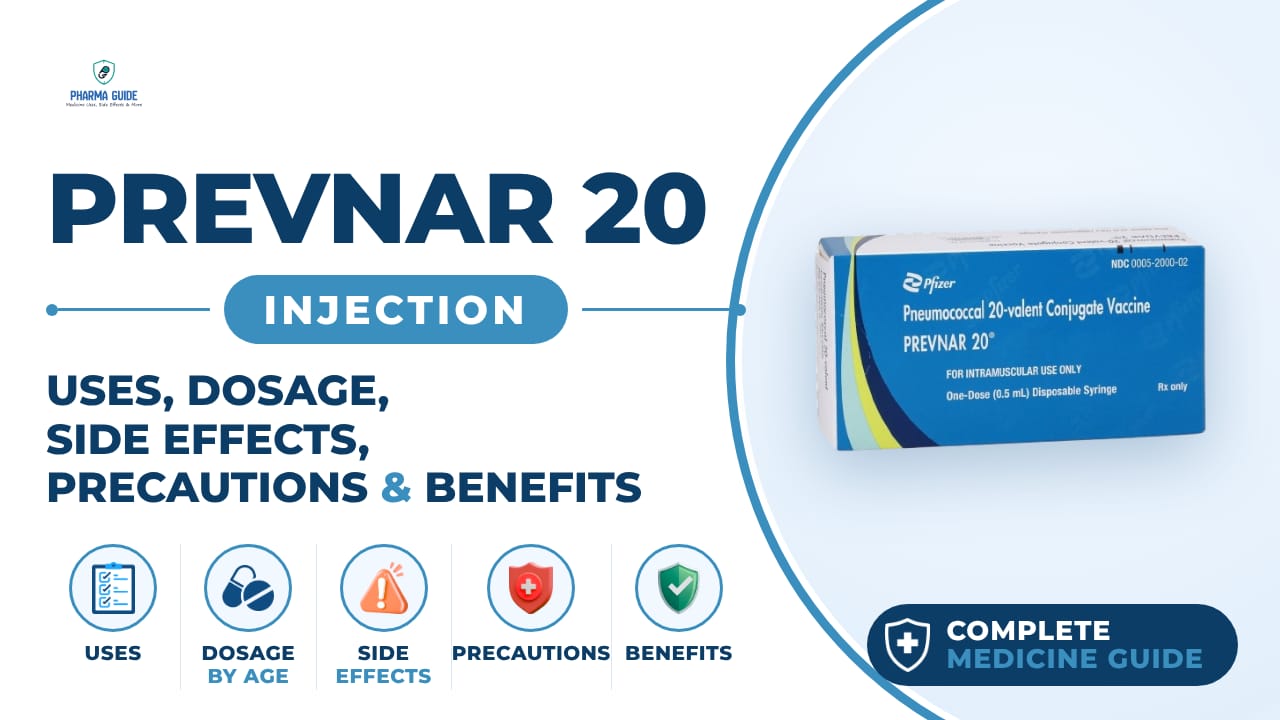
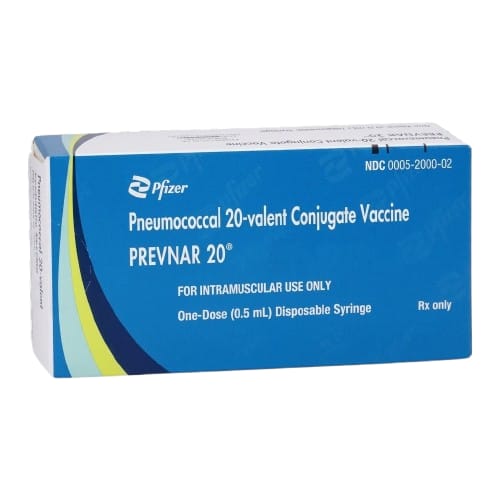
| Generic name | Pneumococcal 20-valent conjugate vaccine |
|---|---|
| Drug class | Bacterial vaccines (inactivated vaccine) |
| Forms | Injection |
Quick overview
Prevnar 20 Injection (Pneumococcal 20-valent Conjugate Vaccine) is a bacterial vaccine used to help prevent pneumococcal disease, a serious infection that can affect the lungs, blood, brain, ears, and sinuses. It protects against 20 types of Streptococcus pneumoniae bacteria and is given as a shot into a muscle. Adults receive a single dose, while babies and children receive a series of four shots.
What is Prevnar 20 Injection
Prevnar 20 is a vaccine used to prevent pneumococcal disease, a serious bacterial infection that can affect the lungs (pneumonia), blood (bacteremia), brain (meningitis), ears, and sinuses. It protects against 20 types of Streptococcus pneumoniae bacteria. It is given as a shot into a muscle. Adults get one dose, while babies and children get a series of four shots.
Prevnar 20 Injection uses
- Prevents invasive pneumococcal disease (such as blood or brain infections) in people 6 weeks of age and older
- Prevents pneumonia (lung infection) caused by pneumococcal bacteria in people 18 years of age and older
- Prevents ear infections (otitis media) caused by pneumococcal bacteria in children 6 weeks through 5 years of age
Benefits of Prevnar 20 Injection
- Helps the body build immunity against 20 types of pneumococcal bacteria
- Can reduce the risk of serious infections like meningitis, bacteremia, and pneumonia
- Single-dose protection for adults 18 years and older
How Prevnar 20 Injection works
The vaccine exposes your body to a small part of the pneumococcal bacteria. This helps your immune system make antibodies so it can recognize and fight off the bacteria if you're exposed to them later. It does not treat an infection you already have.
Prevnar 20 Injection dosage
Prevnar 20 is given as an injection into a muscle by a healthcare provider. Adults 18 years and older receive a single dose. Infants and children receive a series of four doses, usually starting at 2 months of age and finishing between 12 and 15 months of age. If a dose or booster is missed, contact your vaccination provider as soon as possible; there is no need to start the series over. Keep up with other recommended childhood immunizations on their normal schedule, and follow your doctor's instructions about any restrictions on food, drinks, or activity around the time of vaccination.
| Age group | Dose |
|---|---|
| Under 18 years | 0.5 mL, once |
| 18–60 years | 0.5 mL, once |
| 60+ years | 0.5 mL, once |
Available forms and strengths
- Injection
Side effects of Prevnar 20 Injection
Common
- Pain, swelling, or redness at the injection site
- Irritability (in infants and young children)
- Drowsiness or tiredness
- Decreased appetite (in infants and young children)
- Fever
- Muscle pain
- Headache
- Joint pain (mostly in adults)
Serious
- Severe stomach pain, severe vomiting, or diarrhea
- Wheezing or trouble breathing
- High fever (102°F or higher)
- Seizure (convulsions)
- Severe pain, itching, irritation, or skin changes where the shot was given
- Signs of a severe allergic reaction such as hives, difficulty breathing, or swelling of the face, lips, tongue, or throat
Warnings and precautions
- Some infants born prematurely have had breathing pauses (apnea) after getting this vaccine. The decision on when to vaccinate a premature infant should weigh the baby's health and the benefits and risks of the shot.
- You should not get a booster dose of this vaccine if you had a life-threatening allergic reaction after the first shot.
- Do not get Prevnar 20 if you have ever had a severe allergic reaction to a pneumococcal vaccine or to a diphtheria toxoid vaccine.
- People with weakened immune systems may not respond as well to the vaccine, and safety information for these groups is limited.
- Do not use this vaccine if you have had a previous severe allergic reaction to PCV20 or any of its components.
- Vaccination may be postponed if you have a moderate or severe illness or high fever.
- It is not known if Prevnar 20 can affect pregnancy or harm an unborn baby. Tell your healthcare provider if you are pregnant or planning to become pregnant, and consult your healthcare provider before use in pregnancy.
- It is not known if Prevnar 20 passes into breast milk. Tell your healthcare provider if you are breastfeeding so they can advise you.
- It isn't known whether drinking alcohol affects this vaccine.
Storage
- After shipping, Prevnar 20 may arrive at temperatures between 2°C to 25°C (36°F to 77°F)
- Upon receipt, store refrigerated at 2°C to 8°C (36°F to 46°F)
- Syringes should be stored in the refrigerator horizontally to minimize the resuspension time
- Do not freeze. Discard if the vaccine has been frozen
- Prevnar 20 should be administered as soon as possible after being removed from refrigeration
- Prevnar 20 is usually given by a healthcare provider in a hospital or clinic; you will not store it at home
When to see a doctor
- Get emergency medical help right away if you have signs of a severe allergic reaction, including hives, trouble breathing, or swelling of the face, lips, tongue, or throat.
- Call your doctor right away if you have severe stomach pain, severe vomiting or diarrhea, wheezing or trouble breathing, a high fever of 102°F or higher, a seizure, or severe pain, itching, irritation, or skin changes at the injection site.
Alternatives
- Synflorix
- Vaxneuvance
- Prevnar 13
Watch the video
FAQs
What is Prevnar 20 Injection used for?
Prevnar 20 is used to prevent invasive pneumococcal disease in people 6 weeks and older, pneumonia in adults 18 and older, and ear infections in children 6 weeks through 5 years of age.
How is Prevnar 20 dosed?
Adults 18 years and older receive a single 0.5 mL dose. Infants and children receive a series of four doses, usually starting at 2 months of age and finishing between 12 and 15 months of age.
What are the common side effects of Prevnar 20?
Common side effects include pain, swelling, or redness at the injection site, irritability in infants, drowsiness, decreased appetite, fever, muscle pain, headache, and joint pain mostly in adults.
Who should not get Prevnar 20?
People who have had a severe allergic reaction to a pneumococcal vaccine, a diphtheria toxoid vaccine, or any component of Prevnar 20 should not receive it.
What should I do if I miss a dose of Prevnar 20?
If a dose or booster is missed, contact your vaccination provider as soon as possible; there is no need to start the series over.
General information, not medical advice
Your prescriber and the leaflet in your pack know your situation. This page does not.
- Follow your prescriber and the leaflet
- Don't start, stop, or change a dose on your own
- Doses and warnings differ by country and product
Sources
Video
Related medicines

Injectafer Injection: Uses, Dosage, Side Effects, Precautions and Alternates
Iron products
Injectafer (ferric carboxymaltose) treats iron deficiency anemia and heart failure-related iron deficiency via IV. Learn uses, dosage, side effects, and

Gliclazide Tablet: Uses, Dosage, Side Effects, Precautions and Alternates
Sulfonylurea (hypoglycemic/antidiabetic agent)
Gliclazide Tablet is a sulfonylurea for type 2 diabetes that boosts insulin release. Learn about dosage, side effects, warnings, and precautions.