
Safety
General information, not medical advice
Your prescriber and the leaflet in your pack know your situation. This page does not.
- Follow your prescriber and the leaflet
- Don't start, stop, or change a dose on your own
- Doses and warnings differ by country and product
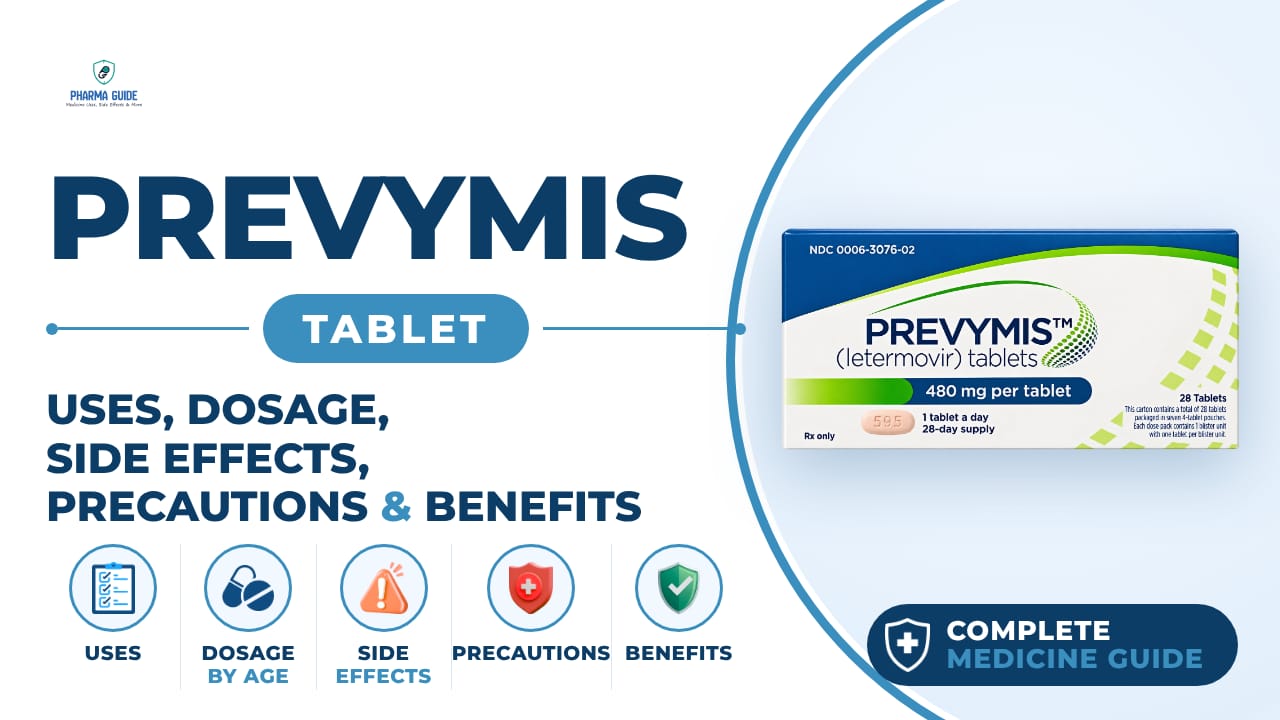
Prevymis Tablet: Uses, Dosage, Side Effects, Precautions and Alternates
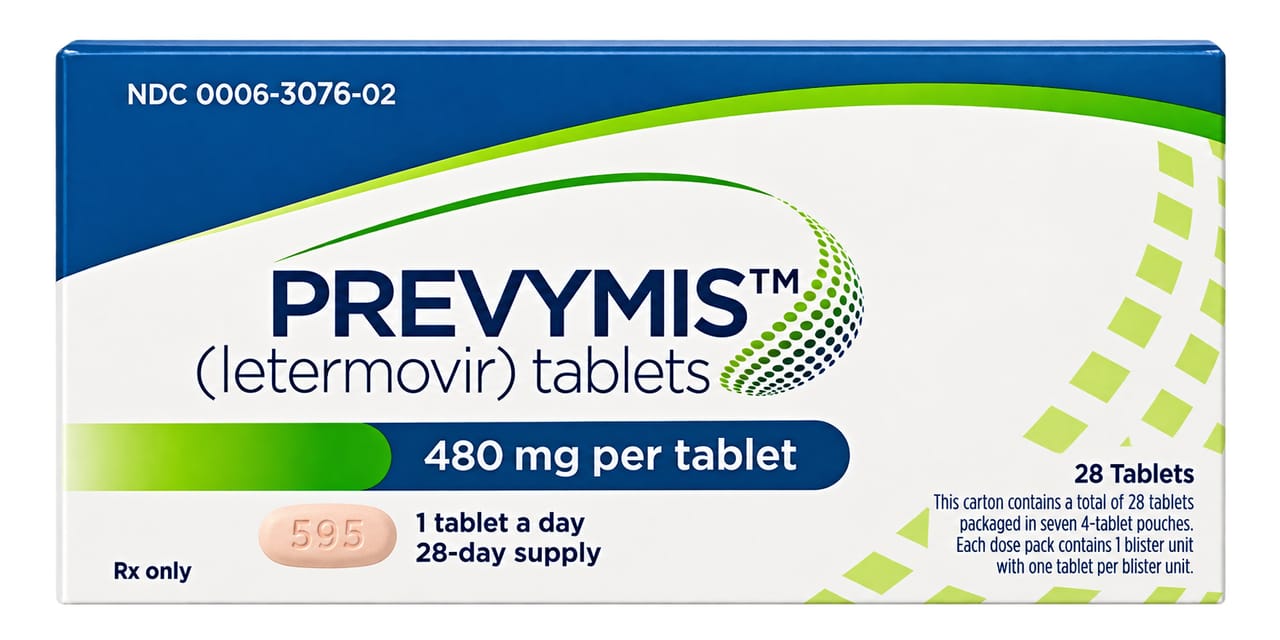
| Generic name | letermovir |
|---|---|
| Drug class | Miscellaneous antivirals |
| Forms | Oral tablets, Oral pellets, Injection for intravenous use |
Quick overview
Prevymis Tablet (letermovir) is a prescription antiviral medicine used to help prevent cytomegalovirus (CMV) infection and disease in people who have received a stem cell transplant or a kidney transplant and are at high risk for CMV disease. It works by blocking a part of the CMV virus needed to package its DNA, stopping the virus from multiplying. Prevymis is taken as prescribed, with common side effects including nausea, vomiting, and fatigue, and it requires certain precautions around other medicines and existing health conditions.
What is Prevymis Tablet
Prevymis is a prescription antiviral medicine used to help prevent cytomegalovirus (CMV) infection and disease in people who have received a stem cell transplant or a kidney transplant and who are at high risk for getting CMV disease.
Prevymis Tablet uses
- Prevents CMV infection and disease in adults and children 6 months and older who received a stem cell transplant and are CMV seropositive
- Prevents CMV infection and disease in adults and children 12 and older who received a kidney transplant and are at high risk for CMV disease
Benefits of Prevymis Tablet
- Lowers the risk of serious CMV-related illness in people with weakened immune systems after a transplant
- Helps prevent CMV reactivation in people who already carry the virus
How Prevymis Tablet works
Prevymis works by blocking a part of the CMV virus needed to package its DNA, which stops the virus from multiplying and reduces the risk of serious CMV disease.
Prevymis Tablet dosage
Use this medicine for the full prescribed length of time, even if you have no symptoms; skipping doses may increase the risk of a resistant infection. Tablets can be taken with or without food. Swallow tablets whole; do not crush, break, or chew them. Take the medicine at about the same time each day.
Oral pellets can be mixed with soft food and taken by mouth, or given through a nasogastric or gastric feeding tube; do not crush or chew the pellets. If a dose is missed, take it as soon as remembered, but skip it if it is almost time for the next dose; do not take a double dose. The IV form is given as a slow infusion into a vein by a healthcare provider, usually once a day.
| Age group | Dose |
|---|---|
| Under 18 years | Not recommended |
| 18–64 years | 480 mg, once/day |
| 65+ years | 480 mg, once/day |
Available forms and strengths
- Oral tablets
- Oral pellets
- Injection for intravenous use
Side effects of Prevymis Tablet
Common
- Nausea
- Vomiting
- Stomach (abdominal) pain
- Diarrhea
- Fatigue or tiredness
- Headache
- Cough
- Swelling in the arms or legs (peripheral edema)
- Low number of white blood cells
Serious
- Severe allergic reactions including hives, difficulty breathing, fast heartbeat, or swelling of the face, lips, tongue, or throat
- Fever or general ill feeling with swollen lymph nodes
- Trouble swallowing or throat tightness
- Dizziness, feeling lightheaded, or fainting
- Irregular heart rhythm (atrial fibrillation)
- Shortness of breath (dyspnea)
Warnings and precautions
- Prevymis can interact with other medicines such as pimozide, ergot alkaloids, and certain statins like pitavastatin or simvastatin, especially when combined with cyclosporine, which can cause serious problems.
- The IV form contains an ingredient that in animal studies has shown potential to affect hearing, and it may build up in the body if you have kidney problems.
- Do not stop taking Prevymis or lower the dose without checking with your doctor first, and never share it with anyone else.
- It is not known whether Prevymis is safe for an unborn baby. Tell your doctor if you are pregnant or planning to become pregnant so they can weigh the benefits and risks.
- It is not known whether Prevymis passes into breast milk or could affect a nursing baby. Tell your doctor if you are breastfeeding.
- Tell your doctor if you have ever had kidney disease, since this may affect how Prevymis is used, especially the IV form.
- Tell your doctor if you have liver disease before taking Prevymis.
- There are no known interactions between Prevymis and alcohol, but heavy drinking can slow your immune response and make it harder for your body to fight infection.
- Driving: Usually does not directly impair driving; avoid driving if dizziness or weakness occurs.
Storage
- Store Prevymis tablets, oral pellets, and injection at room temperature between 68°F to 77°F (20°C to 25°C)
- Store the tablets in their original package until ready to take them to protect them from moisture
- Store the oral pellets in their original packet until ready to take them
- Store the injection in the original carton to protect it from exposure to light
- Store PREVYMIS tablets below 30°C and keep them in the blister pack until it is time to take them
- Store PREVYMIS concentrated injection for infusion vials below 25°C in the original carton to protect from light
- If no longer needed or out of date, take it to a pharmacy for safe disposal; do not dispose of it via waste water or household waste
When to see a doctor
- Get emergency medical help right away if you have signs of a serious allergic reaction, such as hives, trouble breathing, fast heartbeat, or swelling of the face, lips, tongue, or throat. Seek urgent medical attention if you think you have taken too much Prevymis, even if you feel fine.
- Stop using Prevymis and get help right away if you have breathing problems, wheezing, racing heart, fever, swollen lymph nodes, swelling of the face or throat, trouble swallowing, hives, dizziness, or fainting.
Alternatives
- Cidofovir
- Foscarnet
- Ganciclovir
- Valganciclovir
Watch the video
FAQs
What is Prevymis Tablet used for?
Prevymis is a prescription antiviral medicine used to help prevent cytomegalovirus (CMV) infection and disease in people who have received a stem cell transplant or a kidney transplant and are at high risk for CMV disease.
How does Prevymis Tablet work?
Prevymis works by blocking a part of the CMV virus needed to package its DNA, which stops the virus from multiplying and reduces the risk of serious CMV disease.
What is the dosage of Prevymis for adults?
For adults aged 18 to 64 and those 65 and older, the recommended dose is 480 mg once a day. Prevymis is not recommended for use in people under 18 years old.
What are the common side effects of Prevymis Tablet?
Common side effects include nausea, vomiting, stomach pain, diarrhea, fatigue, headache, cough, swelling in the arms or legs, and a low number of white blood cells.
Can Prevymis Tablet be taken with food?
Yes, Prevymis tablets can be taken with or without food, but they should be swallowed whole and not crushed, broken, or chewed.
General information, not medical advice
Your prescriber and the leaflet in your pack know your situation. This page does not.
- Follow your prescriber and the leaflet
- Don't start, stop, or change a dose on your own
- Doses and warnings differ by country and product
Sources
Video
Related medicines

Injectafer Injection: Uses, Dosage, Side Effects, Precautions and Alternates
Iron products
Injectafer (ferric carboxymaltose) treats iron deficiency anemia and heart failure-related iron deficiency via IV. Learn uses, dosage, side effects, and

Gliclazide Tablet: Uses, Dosage, Side Effects, Precautions and Alternates
Sulfonylurea (hypoglycemic/antidiabetic agent)
Gliclazide Tablet is a sulfonylurea for type 2 diabetes that boosts insulin release. Learn about dosage, side effects, warnings, and precautions.