
Safety
General information, not medical advice
Your prescriber and the leaflet in your pack know your situation. This page does not.
- Follow your prescriber and the leaflet
- Don't start, stop, or change a dose on your own
- Doses and warnings differ by country and product
Priftin Tablet: Uses, Dosage, Side Effects, Precautions and Alternates
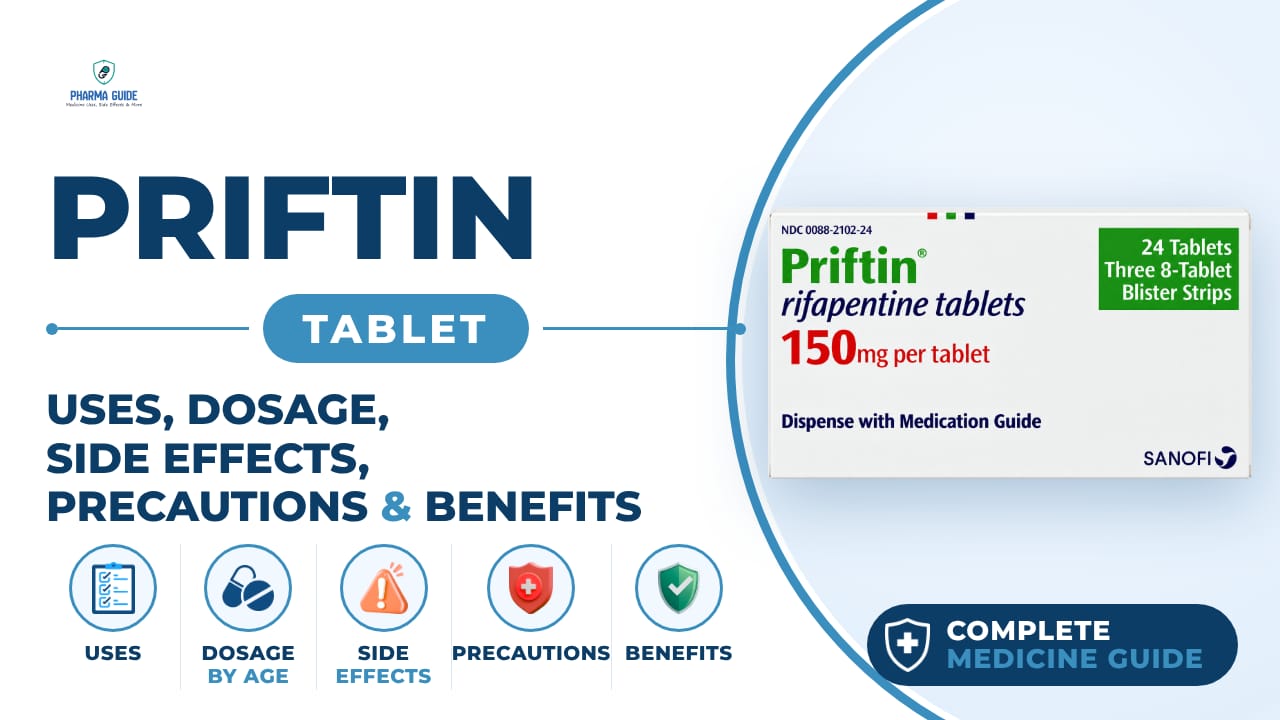
| Generic name | Rifapentine |
|---|---|
| Drug class | Rifamycin antimycobacterial |
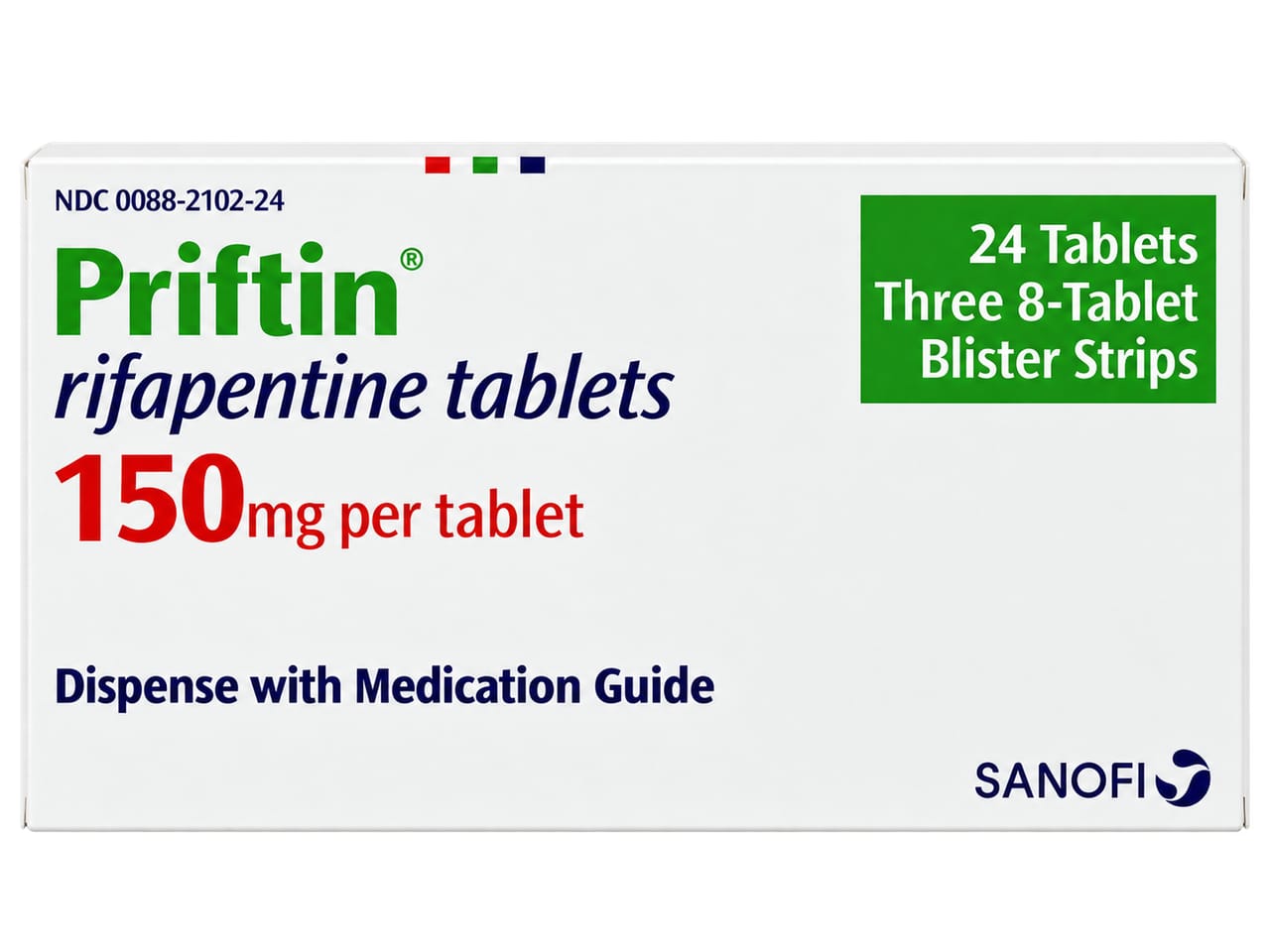
| Forms | Film-coated tablet (150 mg) |
Quick overview
Priftin Tablet contains Rifapentine, a rifamycin antimycobacterial medicine. It is a prescription antibiotic used along with other tuberculosis medicines to treat active TB disease of the lungs or to prevent inactive (latent) TB infection from becoming active disease. It is used in combination with other anti-TB drugs or with isoniazid, depending on the type of TB being treated.
What is Priftin Tablet
Priftin is a prescription antibiotic used along with other tuberculosis medicines to treat active TB disease of the lungs or to prevent inactive (latent) TB infection from becoming active disease.
Priftin Tablet uses
- Treatment of active pulmonary tuberculosis in combination with other anti-TB drugs in patients 12 years and older
- Treatment of latent tuberculosis infection in combination with isoniazid in patients 2 years and older who are at high risk of developing active TB disease
Benefits of Priftin Tablet
- Helps kill the bacteria that cause tuberculosis when used with other TB medicines
- Once-weekly dosing in combination with isoniazid can help prevent progression from latent TB infection to active TB disease
- Treats latent tuberculosis infection
- Used as part of treatment for active pulmonary tuberculosis
- Long half-life allows less-frequent dosing in appropriate regimens
- Helps prevent latent TB from progressing to active disease
How Priftin Tablet works
Rifapentine stops the TB bacteria's machinery for copying its genetic material, which blocks the bacteria from multiplying and leads to their death.
Priftin Tablet dosage
Take Priftin with food to help the body absorb it better and to reduce stomach upset, nausea, or vomiting. If you cannot swallow the tablets whole, they may be crushed and mixed into a small amount of soft food, and this should be eaten right away. It is important to take every dose exactly as prescribed and not to skip doses, since missing doses can make treatment less effective. Priftin is always given together with other TB medicines such as isoniazid, never alone. If you also take antacids, space them apart from Priftin by about an hour before or two hours after.
| Age group | Dose |
|---|---|
| 2–11 years, 10–14 kg | 300 mg once weekly for latent TB, with isoniazid |
| 2–11 years, 14.1–25 kg | 450 mg once weekly |
| 2–11 years, 25.1–32 kg | 600 mg once weekly |
Available forms and strengths
- Film-coated tablet (150 mg)
Side effects of Priftin Tablet
Common
- Headache
- Nausea
- Hypersensitivity (allergic) reaction
- Skin rash or reaction
- Fatigue
- Fever
- Chills
- Joint pain
- Muscle pain
- Increased sweating
- Cough
- Back pain
- Decreased appetite
- Flu-like illness
Serious
- Liver problems (hepatitis/hepatotoxicity)
- Severe allergic reactions including anaphylaxis
- Severe skin reactions such as Stevens-Johnson syndrome and DRESS syndrome
- Clostridioides difficile-associated diarrhea, which can be severe or fatal
- Relapse of active TB disease
- Worsening of porphyria
- Low blood cell counts (anemia, low white blood cells, low platelets or high platelets)
Warnings and precautions
- Priftin can cause serious liver injury; liver function should be checked before and during treatment, and the medicine should be stopped if liver injury occurs.
- Allergic (hypersensitivity) reactions can occur, with symptoms like low blood pressure, hives, swelling, wheezing, or flu-like illness; treatment should be stopped if these occur.
- Serious skin reactions such as Stevens-Johnson syndrome and DRESS syndrome have been reported; treatment must stop immediately if a rash or other skin/mucosal reaction appears.
- This medicine should not be used once-weekly in HIV-infected patients with active TB during the continuation phase, due to a higher risk of treatment failure or relapse with resistant bacteria.
- Priftin can interact with many other medicines, including HIV medicines and hormonal birth control, reducing their effectiveness; tell your doctor about all medicines you take.
- Priftin can turn body fluids such as urine, sweat, tears, and saliva a red-orange color, and may permanently stain contact lenses or dentures.
- Diarrhea during or after treatment could be a sign of a serious intestinal infection and should be reported to a doctor right away.
- People with porphyria should avoid this medicine since it may worsen the condition.
- Priftin may cause harm to an unborn baby based on animal studies, so it should only be used during pregnancy if the benefit outweighs the risk, and your doctor may check your blood clotting if used late in pregnancy.
- It is not known if Priftin passes into breast milk, but it may turn breast milk a red-orange color, and nursing infants should be watched for signs of liver problems.
- No dose change is needed for kidney problems, though the effect of reduced kidney function on this medicine is not fully known.
- People with liver problems should only use Priftin if truly necessary and with close medical supervision, including regular liver blood tests.
- Avoid or limit alcohol because it can increase the risk of liver injury.
Storage
- Store at room temperature between 68°F to 77°F (20°C to 25°C)
- Keep PRIFTIN dry and away from heat
- Keep PRIFTIN and all medicines out of reach of children
When to see a doctor
- Stop the medicine and get medical help right away if you notice nausea, stomach pain, tiredness, yellowing of skin or eyes, vomiting, loss of appetite, or dark urine, as these can be signs of liver problems.
- Seek emergency care if you develop signs of a severe allergic or flu-like reaction, including low blood pressure, hives, trouble breathing, wheezing, red eyes, fainting, or chest pain.
- Stop the medicine immediately and get emergency help if you develop a rash, red or peeling skin, blisters, or sores in the mouth, or swelling of the face, lips, mouth, tongue, or throat.
- Tell your doctor right away if you have diarrhea during or after taking this medicine, since it could signal a serious intestinal infection.
Alternatives
- Rifampin
- Rifabutin
- Isoniazid-based TB regimens
Watch the video
FAQs
What is Priftin Tablet used for?
Priftin is a prescription antibiotic used along with other tuberculosis medicines to treat active TB disease of the lungs or to prevent inactive (latent) TB infection from becoming active disease.
How should Priftin Tablet be taken?
Take Priftin with food to help absorption and reduce stomach upset. If you cannot swallow tablets whole, they may be crushed and mixed into a small amount of soft food and eaten right away. Take every dose exactly as prescribed, and if taking antacids, space them about an hour before or two hours after Priftin.
Can Priftin Tablet be used alone to treat TB?
No, Priftin is always given together with other TB medicines such as isoniazid, never alone.
What are the serious side effects of Priftin Tablet?
Serious side effects include liver problems (hepatitis/hepatotoxicity), severe allergic reactions including anaphylaxis, severe skin reactions such as Stevens-Johnson syndrome and DRESS syndrome, Clostridioides difficile-associated diarrhea, relapse of active TB disease, worsening of porphyria, and low blood cell counts.
Does Priftin Tablet cause any unusual body changes?
Yes, Priftin can turn body fluids such as urine, sweat, tears, and saliva a red-orange color, and may permanently stain contact lenses or dentures.
General information, not medical advice
Your prescriber and the leaflet in your pack know your situation. This page does not.
- Follow your prescriber and the leaflet
- Don't start, stop, or change a dose on your own
- Doses and warnings differ by country and product
Sources
Video
Related medicines

Injectafer Injection: Uses, Dosage, Side Effects, Precautions and Alternates
Iron products
Injectafer (ferric carboxymaltose) treats iron deficiency anemia and heart failure-related iron deficiency via IV. Learn uses, dosage, side effects, and

Gliclazide Tablet: Uses, Dosage, Side Effects, Precautions and Alternates
Sulfonylurea (hypoglycemic/antidiabetic agent)
Gliclazide Tablet is a sulfonylurea for type 2 diabetes that boosts insulin release. Learn about dosage, side effects, warnings, and precautions.