
Safety
General information, not medical advice
Your prescriber and the leaflet in your pack know your situation. This page does not.
- Follow your prescriber and the leaflet
- Don't start, stop, or change a dose on your own
- Doses and warnings differ by country and product
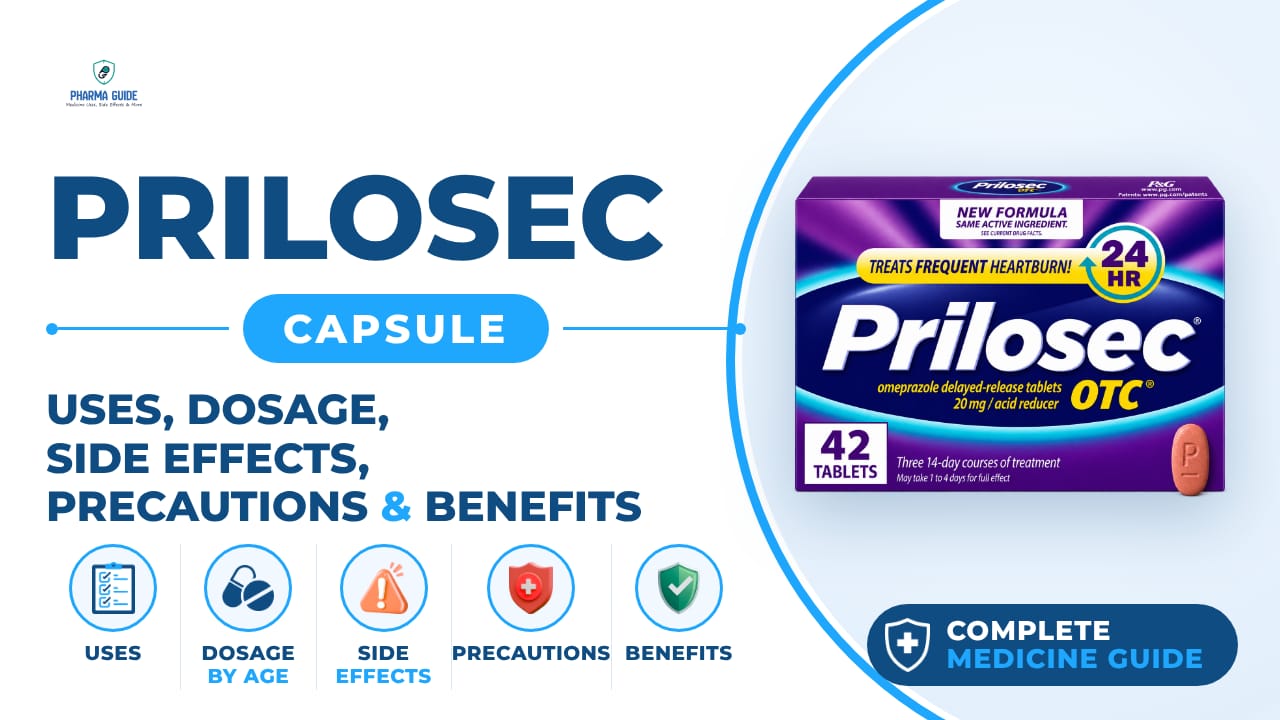
Prilosec Capsule: Uses, Dosage, Side Effects, Precautions and Alternates
| Generic name | omeprazole |
|---|---|
| Drug class | Proton pump inhibitors |
| Forms | Capsule, Tablet (delayed-release), Powder for suspension |
Quick overview
Prilosec Capsule (omeprazole) is a proton pump inhibitor that decreases the amount of acid produced in the stomach. It is used to treat GERD, erosive esophagitis, and other conditions caused by excess stomach acid, sometimes alongside antibiotics for H. pylori-related ulcers. It works by blocking the acid-producing pumps in the stomach lining and should be used exactly as directed by a doctor or pharmacist.
What is Prilosec Capsule
Prilosec is a proton pump inhibitor that decreases the amount of acid produced in the stomach.
Prilosec Capsule uses
- Treats symptoms of gastroesophageal reflux disease (GERD) and other conditions caused by excess stomach acid
- Promotes healing of erosive esophagitis (damage to your esophagus caused by stomach acid)
- May be given together with antibiotics to treat gastric ulcer caused by infection with Helicobacter pylori (H. pylori)
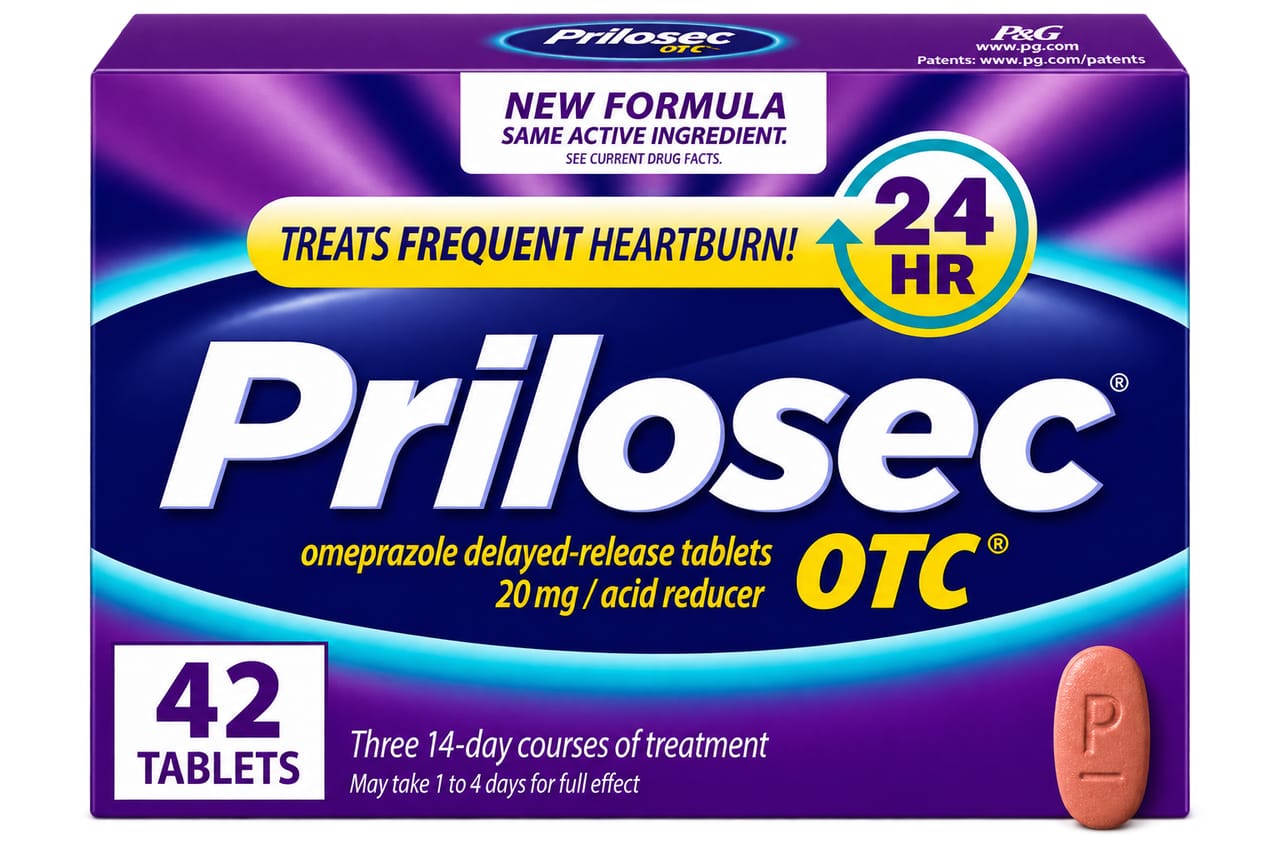
- Over-the-counter Prilosec OTC is used in adults to help control heartburn that occurs 2 or more days per week
- Treats certain stomach and esophagus problems such as acid reflux and ulcers
- Relieves symptoms such as heartburn, difficulty swallowing, and cough
- Helps heal acid damage to the stomach and esophagus and helps prevent ulcers
Benefits of Prilosec Capsule
- May help prevent cancer of the esophagus
- Helps heal acid damage to the stomach and esophagus
How Prilosec Capsule works
Prilosec reduces the amount of acid your stomach makes by blocking the pumps in the stomach lining that produce acid.
Prilosec Capsule dosage
Take this medicine before a meal. Follow all directions on your prescription label and read all medication guides or instruction sheets. If you cannot swallow a capsule whole, open it and sprinkle the medicine into a spoonful of applesauce, then swallow the mixture right away without chewing; do not save it for later use. Prilosec powder must be dissolved in a small amount of water; this mixture can either be swallowed or given through a nasogastric feeding tube using a catheter-tipped syringe.
Use this medicine for the full prescribed length of time, even if your symptoms quickly improve. OTC Prilosec should be taken for only 14 days in a row, and it may take 1 to 4 days before symptoms improve; allow at least 4 months before starting a new 14-day course. Some conditions are treated with a combination of Prilosec and antibiotics, so use all medications as directed.
Take it by mouth as directed, usually once daily before a meal. Do not increase your dose or take this drug more often than directed. Use this medication regularly and try to take it at the same time each day. If needed, antacids may be taken along with this medication. If you are also taking sucralfate, take omeprazole at least 30 minutes before sucralfate.
Swallow whole; do not chew or crush. Take one pill with a glass of water before eating in the morning for 14 days. Do not take more than one tablet a day.
| Age group | Dose |
|---|---|
| Under 1 year | Doctor's advice required |
| 1–11 years | 10–20 mg once daily |
| 12–17 years | 20–40 mg once daily |
| 18 years & older | 20–40 mg once daily |
| Adults | 20–40 mg once daily |
Available forms and strengths
- Capsule
- Tablet (delayed-release)
- Powder for suspension
Side effects of Prilosec Capsule
Common
- Stuffy nose, sneezing, sore throat (especially in children)
- Fever (especially in children)
- Stomach pain, gas
- Nausea, vomiting, diarrhea
- Headache
- Abdominal pain
- Flatulence
- Back pain
- Chest pain
- Constipation
- Cough
- Dizziness
- General weakness
- Sore throat
- Upper respiratory infection
Serious
- Severe stomach pain, diarrhea that is watery or bloody
- New or unusual pain in your wrist, thigh, hip, or back
- Seizure (convulsions)
- Kidney problems - fever, rash, nausea, loss of appetite, joint pain, urinating less than usual, blood in your urine, weight gain
- Low magnesium - dizziness, irregular heartbeats, feeling jittery, muscle cramps, muscle spasms, cough or choking feeling
- New or worsening symptoms of lupus - joint pain, and a skin rash on your cheeks or arms that worsens in sunlight
- Severe skin reactions - skin rash with blistering, peeling, or bleeding, fever, chills, body aches, shortness of breath, or enlarged lymph nodes
- Signs of an allergic reaction - hives, difficulty breathing, swelling of your face, lips, tongue, or throat
- Development of stomach growths called fundic gland polyps with long-term use
- Vitamin B-12 deficiency if used longer than 3 years
Warnings and precautions
- Ask a doctor before using this medicine if you are pregnant. Ask a doctor before using this medicine if you are breastfeeding.
- Omeprazole can cause kidney problems. Tell your doctor if you are urinating less than usual, or if you have blood in your urine
- . Ask a doctor or pharmacist if this medicine is safe to use if you have liver disease.
- Take before meals, preferably as directed by your doctor. Swallow the capsule whole; do not crush or chew delayed-release capsules.
- Do not use for prolonged periods without medical supervision. Tell your doctor if you have liver disease.
- Prilosec is not meant to give quick relief of heartburn symptoms.
- Heartburn can be mistaken for the early signs of a heart attack. Get emergency medical help right away if you have chest pain or a heavy feeling, pain spreading to the arm or shoulder, nausea, sweating, and a general ill feeling.
- Diarrhea while taking this medicine could be a sign of a new infection. Call your doctor if you have diarrhea that is watery or bloody.
- Prilosec may cause new or worsening symptoms of lupus. Tell your doctor if you develop joint pain and a skin rash on your cheeks or arms that gets worse in sunlight.
- You may be more likely to break a bone while taking this medicine long-term or more than once a day.
- OTC Prilosec should not be taken for more than 14 days in a row, and you should wait at least 4 months before starting another 14-day course.
- You should not use Prilosec if you are allergic to omeprazole or similar medicines, had breathing or kidney problems or a severe allergic reaction after taking it before, or if you take HIV medication containing rilpivirine.
- Do not give Prilosec to a child without medical advice.
Storage
Store at room temperature away from moisture and heat. Store at room temperature away from light and moisture. Do not store in the bathroom. Keep all medications away from children and pets. Do not flush medications down the toilet or pour them into a drain unless instructed to do so. Properly discard this product when it is expired or no longer needed. Consult your pharmacist or local waste disposal company.
When to see a doctor
- Get emergency medical help if you have chest pain that spreads to your jaw or shoulder along with sweating or feeling light-headed, as this could be a heart attack rather than heartburn.
- Get emergency medical help if you have signs of an allergic reaction: hives, difficulty breathing, or swelling of your face, lips, tongue, or throat.
- Stop using Prilosec and call your doctor right away if you have severe stomach pain or watery or bloody diarrhea; new or unusual pain in your wrist, thigh, hip, or back; a seizure; signs of kidney problems such as fever, rash, nausea, loss of appetite, joint pain, urinating less than usual, blood in your urine, or weight gain; signs of low magnesium such as dizziness, irregular heartbeat, jitteriness, muscle cramps or spasms, or a cough or choking feeling; new or worsening lupus symptoms; or a severe skin reaction with blistering, peeling, or bleeding skin, fever, chills, body aches, shortness of breath, or swollen lymph nodes.
- Call your doctor if your symptoms do not improve or if they get worse.
- If you have watery or bloody diarrhea, call your doctor before using anti-diarrhea medicine, since it may be a sign of a new infection.
- Seek emergency medical attention or contact a poison control center if you think you have taken too much of this medicine.
Alternatives
- Protonix (pantoprazole)
- Nexium
- Dexilant
- Aciphex
- Prevacid
- Prilosec OTC
- Dexlansoprazole
- Rabeprazole
- Lansoprazole
Watch the video
FAQs
What is Prilosec Capsule used for?
It treats GERD and other conditions caused by excess stomach acid, promotes healing of erosive esophagitis, and may be used with antibiotics to treat gastric ulcers caused by H. pylori infection.
How should I take Prilosec Capsule?
Take it by mouth before a meal, usually once daily. If you cannot swallow a capsule whole, open it and sprinkle the medicine into a spoonful of applesauce and swallow right away without chewing. Use it regularly at the same time each day and for the full prescribed length of time.
How long can I take OTC Prilosec?
OTC Prilosec should be taken for only 14 days in a row, and it may take 1 to 4 days before symptoms improve. Wait at least 4 months before starting a new 14-day course.
What are the serious side effects of Prilosec Capsule?
Serious side effects include severe or bloody diarrhea, new bone pain, seizures, kidney problems, low magnesium, lupus symptoms, severe skin reactions, allergic reactions, fundic gland polyps, and vitamin B-12 deficiency with long-term use.
What should I avoid while taking Prilosec Capsule?
Do not use Prilosec if you are allergic to omeprazole or similar medicines, had breathing or kidney problems or a severe allergic reaction after taking it before, or if you take HIV medication containing rilpivirine.
General information, not medical advice
Your prescriber and the leaflet in your pack know your situation. This page does not.
- Follow your prescriber and the leaflet
- Don't start, stop, or change a dose on your own
- Doses and warnings differ by country and product
Sources
Video
Related medicines

Injectafer Injection: Uses, Dosage, Side Effects, Precautions and Alternates
Iron products
Injectafer (ferric carboxymaltose) treats iron deficiency anemia and heart failure-related iron deficiency via IV. Learn uses, dosage, side effects, and

Gliclazide Tablet: Uses, Dosage, Side Effects, Precautions and Alternates
Sulfonylurea (hypoglycemic/antidiabetic agent)
Gliclazide Tablet is a sulfonylurea for type 2 diabetes that boosts insulin release. Learn about dosage, side effects, warnings, and precautions.