
Safety
General information, not medical advice
Your prescriber and the leaflet in your pack know your situation. This page does not.
- Follow your prescriber and the leaflet
- Don't start, stop, or change a dose on your own
- Doses and warnings differ by country and product
Primacor Injection: Uses, Dosage, Side Effects, Precautions and Alternates
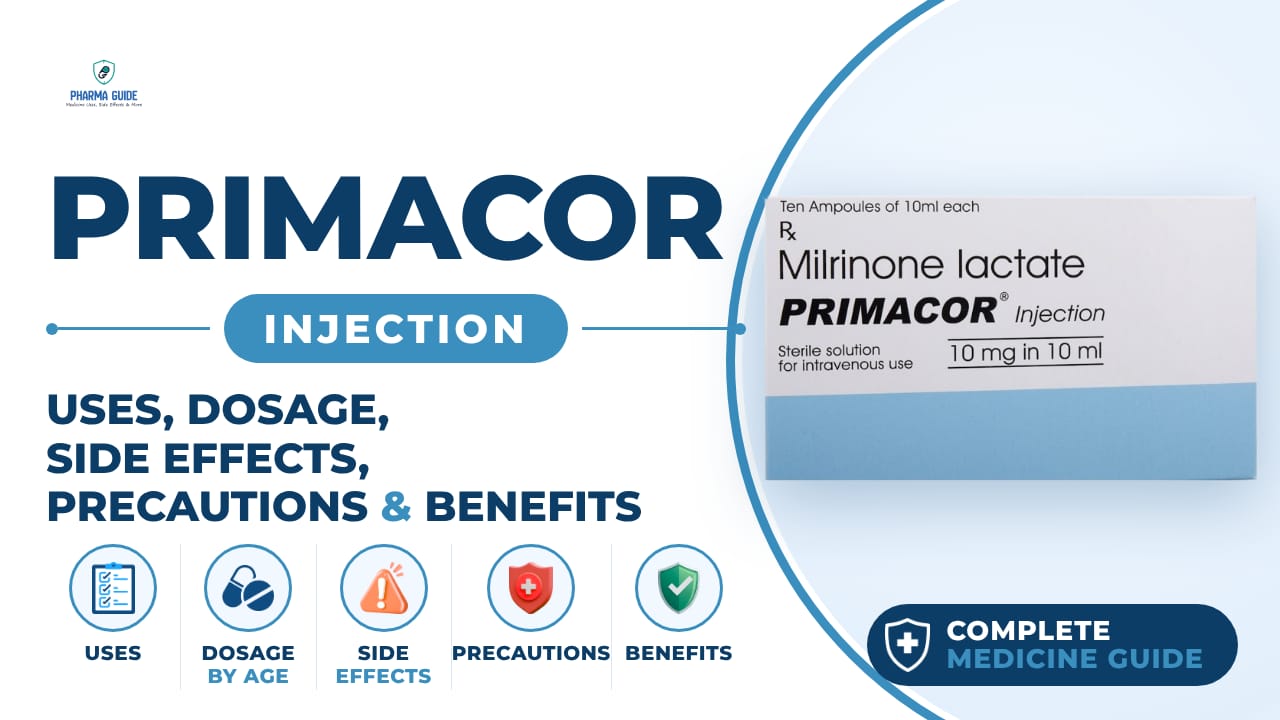
| Generic name | Milrinone |
|---|---|
| Drug class | Inotropic agent / phosphodiesterase inhibitor |
| Forms | Injection (solution for intravenous infusion) |
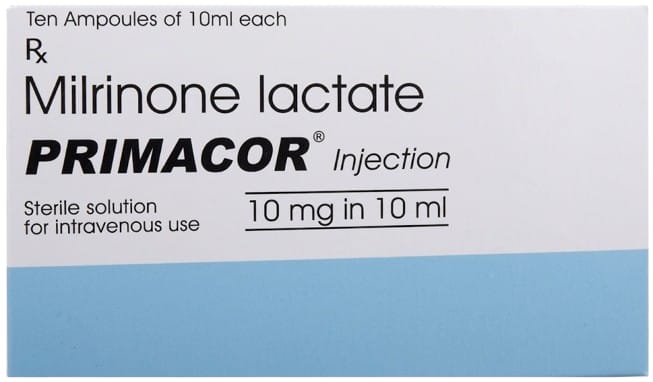
Quick overview
Primacor Injection contains milrinone, an inotropic agent and phosphodiesterase inhibitor. It is given in a hospital setting for short-term treatment of serious heart failure, helping the heart pump more effectively and relaxing blood vessels. It is administered directly into a vein under close medical monitoring. It carries important warnings, including risks of abnormal heart rhythms and limits on how long it should be used.
What is Primacor Injection
Primacor is an injectable medicine used in hospitals for short-term treatment of serious heart failure. It contains milrinone, which helps the heart pump more effectively and relaxes blood vessels.
Primacor Injection uses
- Short-term treatment of acute decompensated heart failure
- Support for poorly functioning hearts after cardiac surgery
- Improvement of cardiac output in heart failure
- Enhancement of heart function when other medicines fail
- Reduction of preload and afterload in heart failure
Benefits of Primacor Injection
- Helps the heart pump more blood with each beat
- Relaxes blood vessels to ease the heart's workload
- Can improve symptoms of heart failure such as shortness of breath and fatigue
How Primacor Injection works
Milrinone blocks an enzyme called phosphodiesterase, which raises levels of a substance (cAMP) in heart and blood vessel cells. This makes the heart contract more strongly, helps the heart chambers fill and relax better between beats, and relaxes blood vessels so blood flows more easily, reducing the workload on the heart.
Primacor Injection dosage
This medicine must be given by a healthcare professional in a hospital setting; do not try to give it to yourself. It is given directly into a vein, usually starting with a short infusion followed by a continuous drip. Your blood pressure, heart rate, and heart rhythm (ECG) will be monitored closely while you receive this medicine. Treatment usually continues until your heart function stabilizes, and your doctor will decide how long you need it. People with kidney problems may need a slower infusion rate. There are no special dosing changes needed for older adults, but they will be monitored closely. Safety and effectiveness have not been established for use in children in some sources, so caution is advised for patients under 18.
| Age group | Dose |
|---|---|
| Under 18 years | Not recommended |
| 18–64 years | 20 mg, once/day |
| 65+ years | 20 mg, once/day |
Available forms and strengths
- Injection (solution for intravenous infusion)
Side effects of Primacor Injection
Common
- Headache
- Tremor
- Easy bruising or bleeding
- Low blood pressure (hypotension)
- Irregular or fast heartbeat
Serious
- Hives, difficulty breathing, or swelling of face, lips, tongue, or throat (allergic reaction)
- Chest pain or chest tightness
- Wheezing or trouble breathing (bronchospasm)
- Fast, irregular, or pounding heartbeats, or fluttering in the chest
- Fainting, severe dizziness, or lightheadedness
- Signs of low potassium: confusion, extreme thirst, increased urination, leg cramps, muscle weakness, or a limp feeling
- Severe headache, confusion, slurred speech, arm or leg weakness, trouble walking, loss of coordination, feeling unsteady, very stiff muscles, high fever, profuse sweating, or tremors
- Sudden vision changes such as vision loss, blurred vision, tunnel vision, eye pain or swelling, or seeing halos around lights
- Easy bleeding or low platelet counts
- Liver function test abnormalities
- Skin rash or other skin reactions
- Infusion site reactions
Warnings and precautions
- This medicine has not been shown to be safe for longer-term use (more than 48 hours). In a large study, long-term use by mouth was linked to no symptom improvement and a higher risk of hospital stays and death, especially in people with more severe heart failure.
- This medicine can increase the chance of abnormal heart rhythms, including dangerous fast heartbeats. Because of this, your heart rhythm will be continuously monitored while you receive it.
- This medicine should not be used as a replacement for surgery in people with severe narrowing of certain heart valves, since it could make the blockage worse.
- This medicine is contraindicated in people who are allergic to it or to any of its ingredients, and in people with severely low blood volume.
- Furosemide (a water pill) should not be given through the same IV line as this medicine, because it can form a precipitate (solid particles) when mixed together.
- Primacor should only be used during pregnancy if your doctor decides the benefit outweighs the potential risk to the baby. There isn't enough research in pregnant women to be fully sure of its safety.
- It is not known whether this medicine passes into breast milk. Your doctor will weigh the benefits of breastfeeding against the benefits of your treatment before deciding whether you should breastfeed.
- If you have kidney problems, your doctor may need to lower your dose because the medicine stays in your body longer and is cleared more slowly.
- If you have liver problems, your doctor will check your liver function before starting treatment and may monitor you closely during it.
- You should avoid drinking alcohol while being treated with this medicine.
- This medicine can cause headaches, low blood pressure, or dizziness, which may affect your ability to drive or operate machinery safely.
Storage
- Store Primacor at controlled room temperature, not exceeding 25°C
- Keep the ampoules protected from light
- Store in the original packaging until ready for use
- Keep out of reach of children
- Do not use after the expiry date printed on the packaging
- Protect from freezing
When to see a doctor
- Get emergency medical help right away if you have signs of a serious allergic reaction, such as hives, swelling of the face, lips, tongue, or throat, or difficulty breathing.
- Seek medical care immediately if you notice fast, irregular, or pounding heartbeats, fluttering in your chest, shortness of breath, or sudden dizziness, lightheadedness, or passing out.
- Get urgent medical attention for sudden vision problems like vision loss, blurred or tunnel vision, eye pain or swelling, or seeing halos around lights.
- Seek emergency care if you develop a severe headache, confusion, slurred speech, weakness in an arm or leg, trouble walking, loss of coordination, feeling unsteady, very stiff muscles, high fever, heavy sweating, or tremors.
- Contact your doctor right away if you suspect you have received too much of this medicine, since an overdose can cause severely low blood pressure, irregular heartbeat, headaches, and tremors.
Alternatives
- Norepinephrine
- Dopamine
- Dobutamine
Watch the video
FAQs
What is Primacor Injection used for?
Primacor is used in hospitals for short-term treatment of serious heart failure, including acute decompensated heart failure, supporting poorly functioning hearts after cardiac surgery, and improving cardiac output when other medicines fail.
How is Primacor Injection given?
It must be given by a healthcare professional in a hospital setting, directly into a vein, usually starting with a short infusion followed by a continuous drip, with close monitoring of blood pressure, heart rate, and heart rhythm.
What are the serious side effects of Primacor Injection?
Serious side effects include allergic reactions, chest pain, bronchospasm, irregular or pounding heartbeats, fainting, signs of low potassium, stroke-like symptoms, sudden vision changes, easy bleeding, and liver function abnormalities.
Can Primacor Injection be used for longer than 48 hours?
No, it has not been shown to be safe for longer-term use beyond 48 hours; long-term oral use was linked to no symptom improvement and higher risk of hospitalization and death in a large study.
Can Primacor Injection be mixed with furosemide in the same IV line?
No, furosemide should not be given through the same IV line as Primacor because it can form a precipitate when mixed together.
General information, not medical advice
Your prescriber and the leaflet in your pack know your situation. This page does not.
- Follow your prescriber and the leaflet
- Don't start, stop, or change a dose on your own
- Doses and warnings differ by country and product
Sources
Video
Related medicines

Injectafer Injection: Uses, Dosage, Side Effects, Precautions and Alternates
Iron products
Injectafer (ferric carboxymaltose) treats iron deficiency anemia and heart failure-related iron deficiency via IV. Learn uses, dosage, side effects, and

Gliclazide Tablet: Uses, Dosage, Side Effects, Precautions and Alternates
Sulfonylurea (hypoglycemic/antidiabetic agent)
Gliclazide Tablet is a sulfonylurea for type 2 diabetes that boosts insulin release. Learn about dosage, side effects, warnings, and precautions.