
Safety
General information, not medical advice
Your prescriber and the leaflet in your pack know your situation. This page does not.
- Follow your prescriber and the leaflet
- Don't start, stop, or change a dose on your own
- Doses and warnings differ by country and product
Primaxin Injection: Uses, Dosage, Side Effects, Precautions and Alternates

| Generic name | imipenem and cilastatin sodium |
|---|---|
| Drug class | Antibiotic (carbapenem/penem) |
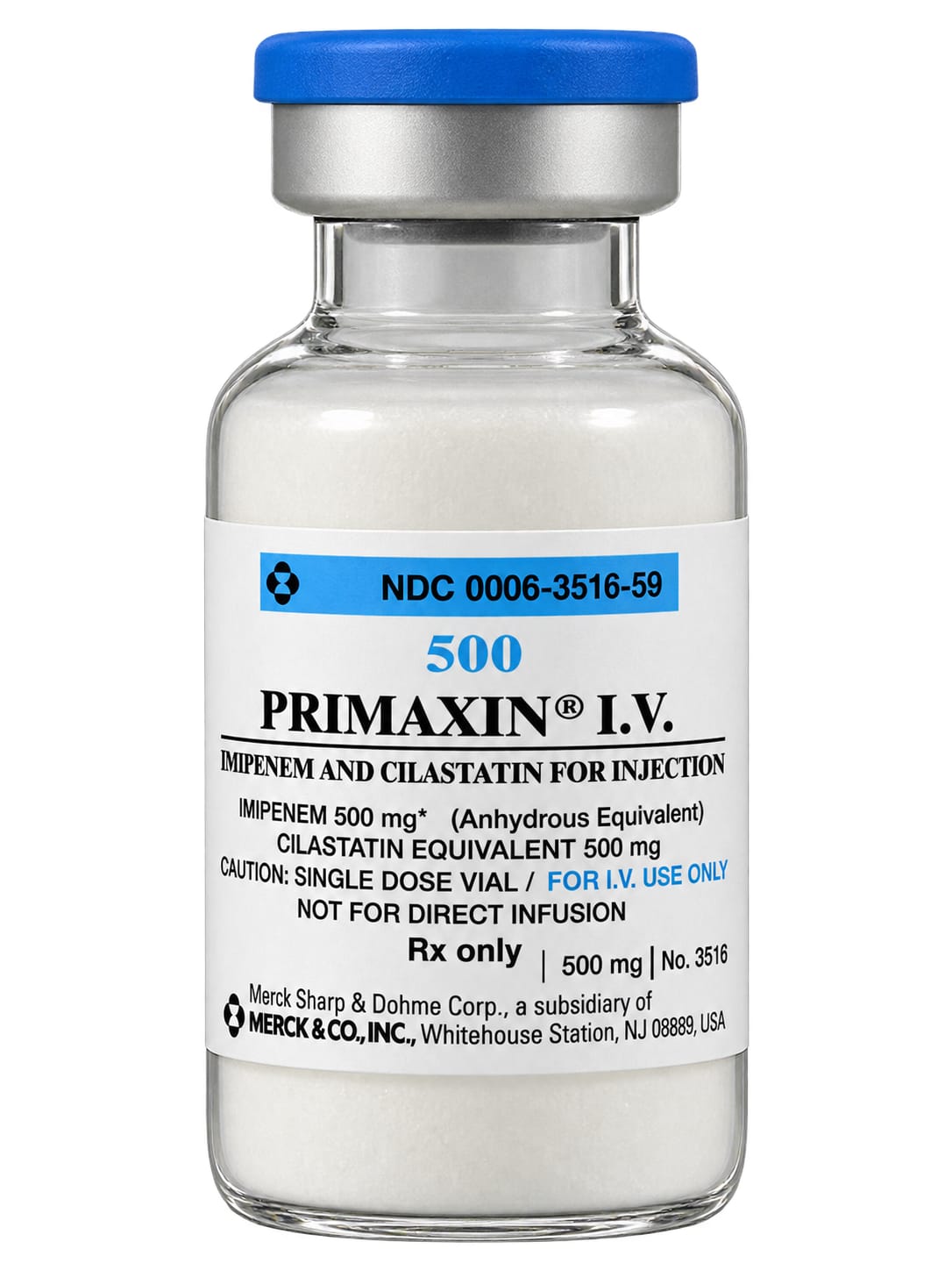
| Forms | Sterile powder for solution (reconstituted for IV infusion), supplied in single-dose vials of 250 mg or 500 mg imipenem with matching cilastatin |
Quick overview
Primaxin Injection contains imipenem and cilastatin sodium, an antibiotic from the carbapenem (penem) class, given only by IV infusion. Imipenem kills many types of bacteria, while cilastatin prevents the kidneys from breaking down imipenem too quickly so it can keep working in the body and urine. It is used for serious bacterial infections including lung, urinary tract, abdominal, skin, bone/joint, and blood infections. Primaxin must be given by a healthcare professional and used for the full prescribed course.
What is Primaxin Injection
Primaxin is an antibiotic given by IV infusion that combines two medicines: imipenem, which kills many types of bacteria, and cilastatin, which stops the kidneys from breaking down imipenem too quickly so it can keep working in the body and urine.
Primaxin Injection uses
- Lung (lower respiratory tract) infections
- Urinary tract infections
- Infections inside the abdomen
- Infections of the female reproductive system
- Blood infections (septicemia)
- Endocarditis (heart infection) caused by Staphylococcus aureus
- Bone and joint infections
- Skin and skin structure infections
Benefits of Primaxin Injection
- Treats serious bacterial infections
- Provides broad-spectrum antibacterial activity
- Covers many Gram-positive and Gram-negative bacteria
- Effective against many anaerobic bacteria
- Used for certain abdominal, urinary, respiratory, skin, and other serious infections
How Primaxin Injection works
Imipenem kills bacteria by stopping them from building their cell walls, which causes the bacterial cells to burst and die. Cilastatin blocks a kidney enzyme that would otherwise break down imipenem, so more active antibiotic stays in the body and urine.
Primaxin Injection dosage
Primaxin is given only as an infusion into a vein (IV); it must not be taken by mouth. It is given by a physician or other health care professional who decides the right method and amount for you. If nausea develops during the infusion, the infusion rate may be slowed. Keep receiving this medicine for as long as your doctor prescribes it, even if you start feeling better early in treatment. It is not recommended for infants under 3 months of age. No dosage adjustment is needed for elderly patients whose kidney function is normal for their age, but care is taken in dose selection since kidney function may be reduced.
| Age group | Dose |
|---|---|
| Under 1 week | 25 mg/kg every 12 hours |
| 1–4 weeks | 25 mg/kg every 8 hours |
| 4 weeks–3 months | 25 mg/kg every 6 hours |
| 3 months–17 years | 15–25 mg/kg every 6 hours |
Available forms and strengths
Sterile powder for solution (reconstituted for IV infusion), supplied in single-dose vials of 250 mg or 500 mg imipenem with matching cilastatin.
Side effects of Primaxin Injection
Common
- Nausea
- Vomiting
- Diarrhea
- Pain, redness, or swelling at the injection site or along a vein
- Rash
- Fever
- Low blood pressure
- Dizziness
- Sleepiness (somnolence)
- Itching
- Hives
Serious
- Seizures
- Severe allergic (anaphylactic) reactions, sometimes fatal, with symptoms like severe rash, swelling of face/lips/tongue, trouble breathing or wheezing
- Clostridium difficile-associated diarrhea and colitis, which can range from mild diarrhea to severe, life-threatening bowel inflammation
- Severe skin reactions such as Stevens-Johnson syndrome and toxic epidermal necrolysis, which can involve skin peeling, blistering, and effects on eyes, mouth, nose or genitals
- Confusion or myoclonus (muscle jerking)
- Hearing loss
- Hepatitis or liver failure
- Blood disorders such as low blood cell counts or bone marrow suppression
- Acute kidney failure
Warnings and precautions
- Serious and sometimes fatal allergic reactions have occurred with this type of antibiotic. Tell your doctor about any past allergic reactions to antibiotics before starting treatment, and stop the medicine right away and get help if signs of an allergic reaction occur.
- This medicine can cause seizures and other nervous system effects, especially in people with kidney problems or existing brain/seizure conditions, or if doses are higher than recommended.
- Taking this medicine together with valproic acid or divalproex sodium (used for epilepsy or other conditions) can lower valproic acid levels in the blood and has led to breakthrough seizures, so this combination is generally avoided.
- This antibiotic, like many others, can cause a serious bowel infection called Clostridium difficile-associated disease, which can range from mild diarrhea to life-threatening colitis and can occur even up to two months after finishing treatment.
- Severe skin reactions have been linked to this type of antibiotic, including blistering, peeling skin, and reactions affecting the eyes, mouth or other organs.
- Using this medicine when it isn't needed, or not finishing the full course, can lead to bacteria becoming resistant so the medicine may not work in the future.
- This medicine is not generally recommended during pregnancy. Animal studies showed some harm to pregnant animals, so tell your doctor if you are or might be pregnant.
- The medicine passes into breast milk, and since it could affect a nursing baby, women taking this medicine should not breastfeed unless their doctor advises otherwise.
- People with reduced kidney function need a lower dose, and those with very poor kidney function should not receive this medicine unless dialysis is started soon after, because of a higher risk of seizures.
- Liver-related lab changes and liver problems have been reported as side effects.
- This medicine can cause dizziness or sleepiness, which could affect your ability to drive or do other tasks that need alertness.
Storage
- Store the dry powder at room temperature between 15-30°C
- Keep PRIMAXIN out of reach and sight of children
- Do not freeze reconstituted solutions of PRIMAXIN
- After reconstitution, the solution stays good for 4 hours at room temperature or 24 hours if refrigerated
When to see a doctor
- Get emergency medical help right away if you have signs of a serious allergic reaction, such as a severe rash with or without high fever, itching or hives, swelling of the face, lips, tongue or other body parts, or shortness of breath or wheezing.
- Seek medical help if you have a seizure while taking this medicine.
- Contact your doctor if you develop diarrhea caused by a bacteria called Clostridium, which can mean inflammation of the colon.
- Get medical help immediately if you notice signs of a severe skin reaction, such as skin peeling, blistering, or pain, especially if it affects your eyes, mouth, nose, or genitals, along with fever, chills, body aches, or shortness of breath.
- If you think you have received too much of this medicine, contact your healthcare professional, hospital emergency department, or regional poison control center right away, even if you have no symptoms.
Alternatives
- Meropenem
- Ertapenem
- Cefepime
Watch the video
FAQs
What is Primaxin Injection used for?
It is used to treat serious bacterial infections including lung, urinary tract, abdominal, skin, bone/joint, blood infections, endocarditis, and infections of the female reproductive system.
How is Primaxin Injection given?
It is given only as an IV infusion by a healthcare professional; it must not be taken by mouth.
What are the common side effects of Primaxin Injection?
Common side effects include nausea, vomiting, diarrhea, injection site pain or swelling, rash, fever, low blood pressure, dizziness, sleepiness, itching, and hives.
Can Primaxin Injection be used in children?
It is not recommended for infants under 3 months of age, but dosing guidance is provided for children from birth through 17 years based on age.
What precautions should be taken with Primaxin Injection?
Tell your doctor about any past allergic reactions to antibiotics, avoid combining it with valproic acid or divalproex sodium due to seizure risk, and be aware it can cause seizures, severe allergic reactions, C. difficile-associated diarrhea, and severe skin reactions.
General information, not medical advice
Your prescriber and the leaflet in your pack know your situation. This page does not.
- Follow your prescriber and the leaflet
- Don't start, stop, or change a dose on your own
- Doses and warnings differ by country and product
Sources
Video
Related medicines

Injectafer Injection: Uses, Dosage, Side Effects, Precautions and Alternates
Iron products
Injectafer (ferric carboxymaltose) treats iron deficiency anemia and heart failure-related iron deficiency via IV. Learn uses, dosage, side effects, and

Gliclazide Tablet: Uses, Dosage, Side Effects, Precautions and Alternates
Sulfonylurea (hypoglycemic/antidiabetic agent)
Gliclazide Tablet is a sulfonylurea for type 2 diabetes that boosts insulin release. Learn about dosage, side effects, warnings, and precautions.