
Safety
General information, not medical advice
Your prescriber and the leaflet in your pack know your situation. This page does not.
- Follow your prescriber and the leaflet
- Don't start, stop, or change a dose on your own
- Doses and warnings differ by country and product
Probenecid Tablet: Uses, Dosage, Side Effects, Precautions and Alternates
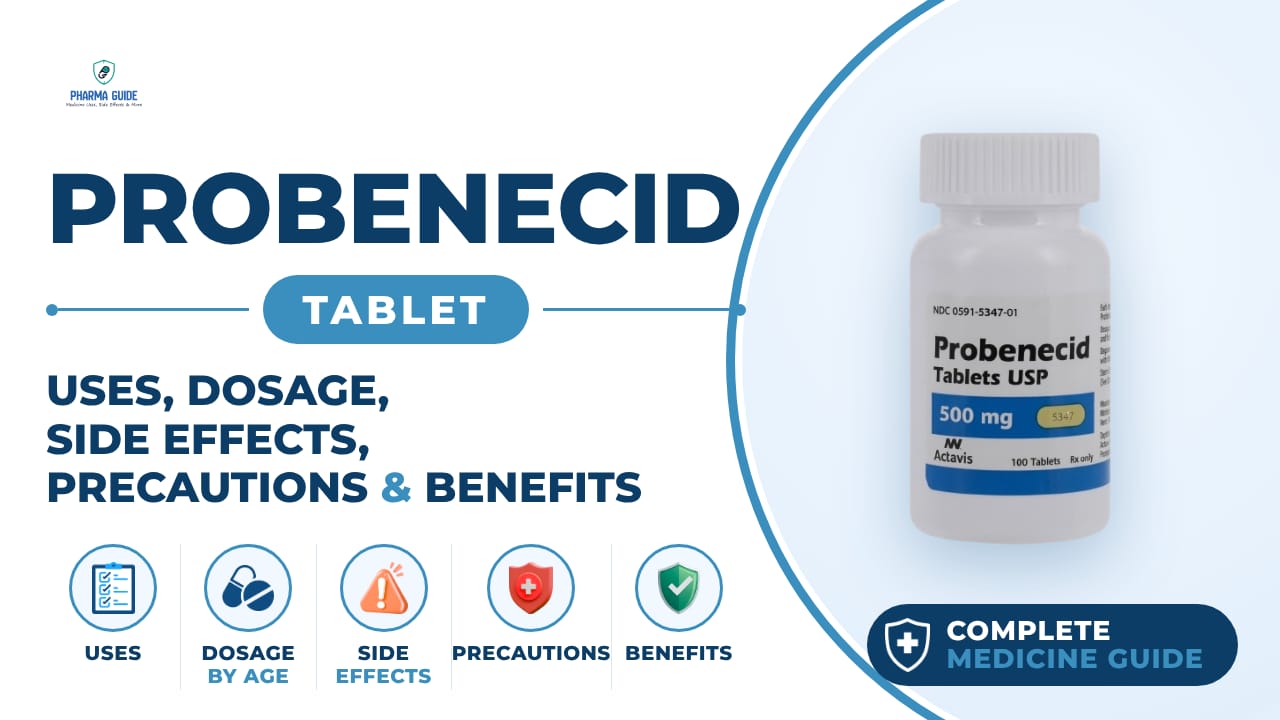
| Generic name | Probenecid |
|---|---|
| Drug class | Uricosuric agent (renal tubular transport blocking agent) |
| Forms | Tablet |
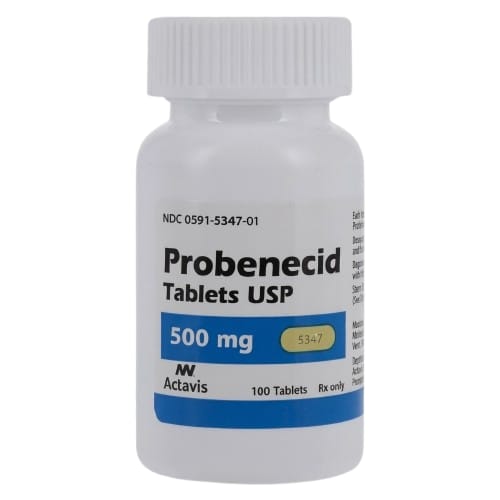
Quick overview
Probenecid Tablet (generic name: Probenecid) is a uricosuric agent used to lower high uric acid levels in the blood and treat gout. It is also used alongside certain antibiotics, such as penicillin, to help them stay active in the body longer, and to help protect the kidneys when a patient is given the antiviral medicine cidofovir. It works by blocking the kidneys from reabsorbing uric acid, so more is removed through urine, and by slowing how quickly the kidneys remove certain antibiotics.
What is Probenecid Tablet
Probenecid is a medicine used to lower high uric acid levels in the blood and to treat gout. It is also used alongside certain antibiotics to help them stay active in the body longer. It belongs to the uricosuric agent class, also known as a renal tubular transport blocking agent.
Probenecid Tablet uses
- Chronic gout and gouty arthritis caused by too much uric acid in the blood
- Preventing other medical problems caused by high uric acid levels
- Used together with antibiotics like penicillin to make them work better and last longer in the bloodstream
- Used to help protect the kidneys when a patient is given the antiviral medicine cidofovir
Benefits of Probenecid Tablet
- Lowers uric acid levels in the blood over time
- Helps prevent gout attacks from happening as often
- Makes certain antibiotics stay active in the bloodstream longer, boosting their effectiveness
How Probenecid Tablet works
Probenecid blocks the kidneys from reabsorbing uric acid back into the blood, so more uric acid leaves the body through urine. This lowers uric acid levels and helps prevent gout attacks. It also blocks the kidneys from removing certain antibiotics too quickly, keeping drug levels higher for longer.
Probenecid Tablet dosage
Probenecid will not relieve a gout attack that has already started; it works to prevent future attacks, so keep taking it even during an attack unless your doctor says otherwise. Taking it with food can help reduce stomach upset; an antacid may also help if stomach problems continue. When used with the antiviral drug cidofovir, probenecid is taken at specific times before and after the cidofovir infusion exactly as your doctor directs.
Take this medicine regularly and at the same time each day for the most consistent results. Treatment with probenecid is usually long-term; do not stop taking it suddenly without talking to your doctor, since gout symptoms may get worse. Avoid taking aspirin or other salicylate medicines while on probenecid, as they can make it less effective. Drink plenty of water each day while taking this medicine to help prevent kidney stones.
| Age group | Dose |
|---|---|
| Under 18 years | Not recommended |
| 18–60 years | 250 mg, twice/day |
| 60+ years | 250 mg, twice/day |
Available forms and strengths
- Tablet
Side effects of Probenecid Tablet
Common
- Headache
- Dizziness
- Nausea and vomiting
- Loss of appetite
- Joint pain, redness, or swelling
- Flushing of the face
- Frequent urge to urinate
- Sore gums
Serious
- Skin rash, hives, or itching
- Difficulty breathing, wheezing, or tightness in the chest
- Unusual bleeding or bruising
- Painful or bloody urination
- Lower back or side pain
- Fever with sore throat or chills
- Swelling of the face, fingers, feet, or lower legs
- Yellowing of the eyes or skin
- Sudden decrease in the amount of urine
- Unusual tiredness or weakness
- Weight gain
Warnings and precautions
- Do not start taking this medicine during a sudden, active gout attack; wait until the attack has settled down first.
- This medicine should not be used by people with blood disorders, uric acid kidney stones, or an allergy to probenecid.
- In rare cases, probenecid can cause severe allergic reactions, including a serious reaction called anaphylaxis, usually within a few hours of taking the drug again after previous use. If this happens, stop the medicine and get medical help.
- Do not take aspirin or other salicylate pain relievers with this medicine, as they reduce how well it works.
- This medicine is not recommended for children under 2 years of age.
- Probenecid is not recommended during pregnancy unless your doctor decides it is necessary. It can cross into the baby's blood supply, so the benefits and risks need to be discussed with your doctor.
- This medicine is not recommended while breastfeeding unless necessary. Talk with your doctor about the risks and benefits first.
- People with severe kidney problems should not take this medicine, as it may not work well and could worsen their condition. Those with milder kidney issues may need their dose adjusted and their kidney function monitored closely.
- It isn't clear exactly how alcohol interacts with probenecid, so check with your doctor before drinking. Drinking too much alcohol may also raise uric acid levels and make the medicine less effective.
- This medicine may cause dizziness or drowsiness in some people. Do not drive or operate machinery if you feel this way while taking it.
Storage
- Store the medicine in a closed container at room temperature, away from heat, moisture, and direct light.
- Keep from freezing.
- Keep out of the reach of children.
- Do not keep outdated medicine or medicine no longer needed.
- Store tablets at room temperature.
- The liquid should be stored in the refrigerator. It expires 24 hours after being made by the pharmacy.
When to see a doctor
- Get medical help right away if you have fast or irregular breathing, swelling around the eyes, shortness of breath, wheezing, chest tightness, changes in skin color of the face, or a rash/hives/itching along with these other symptoms — these can be signs of a serious allergic reaction.
- Contact your doctor as soon as possible if you notice blood in your urine, pain or difficulty urinating, or sharp pain in your lower back or side.
- If you think you have taken too much of this medicine, get emergency medical help right away. Overdose can cause drowsiness, stomach upset, nausea, vomiting, convulsions, or breathing problems.
Alternatives
- Allopurinol
- Colchicine
- Sulfinpyrazone
Watch the video
FAQs
What is Probenecid Tablet used for?
It is used to treat chronic gout and gouty arthritis caused by high uric acid, to prevent related problems, to help certain antibiotics like penicillin stay active longer, and to protect the kidneys when cidofovir is given.
How does Probenecid Tablet work?
It blocks the kidneys from reabsorbing uric acid, so more is removed through urine, lowering uric acid levels and preventing gout attacks. It also slows how quickly the kidneys remove certain antibiotics, keeping drug levels higher for longer.
Can Probenecid Tablet relieve a gout attack that has already started?
No, it will not relieve an active gout attack; it works to prevent future attacks, so it should be continued even during an attack unless a doctor says otherwise.
Can I take aspirin while using Probenecid Tablet?
No, aspirin and other salicylate medicines should be avoided while taking probenecid, as they can make it less effective.
What is the typical dosage of Probenecid Tablet for adults?
For adults aged 18 to 60 and those over 60, the typical dose is 250 mg twice a day; it is not recommended for those under 18.
General information, not medical advice
Your prescriber and the leaflet in your pack know your situation. This page does not.
- Follow your prescriber and the leaflet
- Don't start, stop, or change a dose on your own
- Doses and warnings differ by country and product
Sources
Video
Related medicines

Injectafer Injection: Uses, Dosage, Side Effects, Precautions and Alternates
Iron products
Injectafer (ferric carboxymaltose) treats iron deficiency anemia and heart failure-related iron deficiency via IV. Learn uses, dosage, side effects, and

Gliclazide Tablet: Uses, Dosage, Side Effects, Precautions and Alternates
Sulfonylurea (hypoglycemic/antidiabetic agent)
Gliclazide Tablet is a sulfonylurea for type 2 diabetes that boosts insulin release. Learn about dosage, side effects, warnings, and precautions.