
Safety
General information, not medical advice
Your prescriber and the leaflet in your pack know your situation. This page does not.
- Follow your prescriber and the leaflet
- Don't start, stop, or change a dose on your own
- Doses and warnings differ by country and product
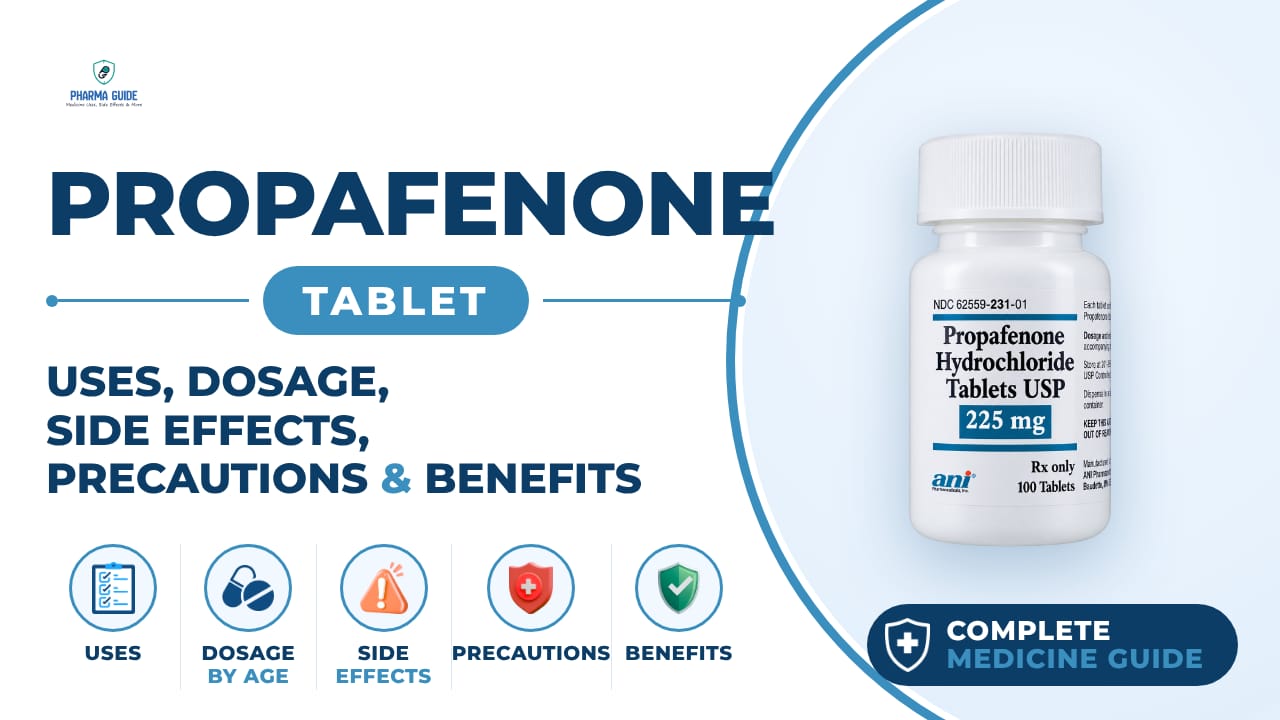
Propafenone Tablet: Uses, Dosage, Side Effects, Precautions and Alternates
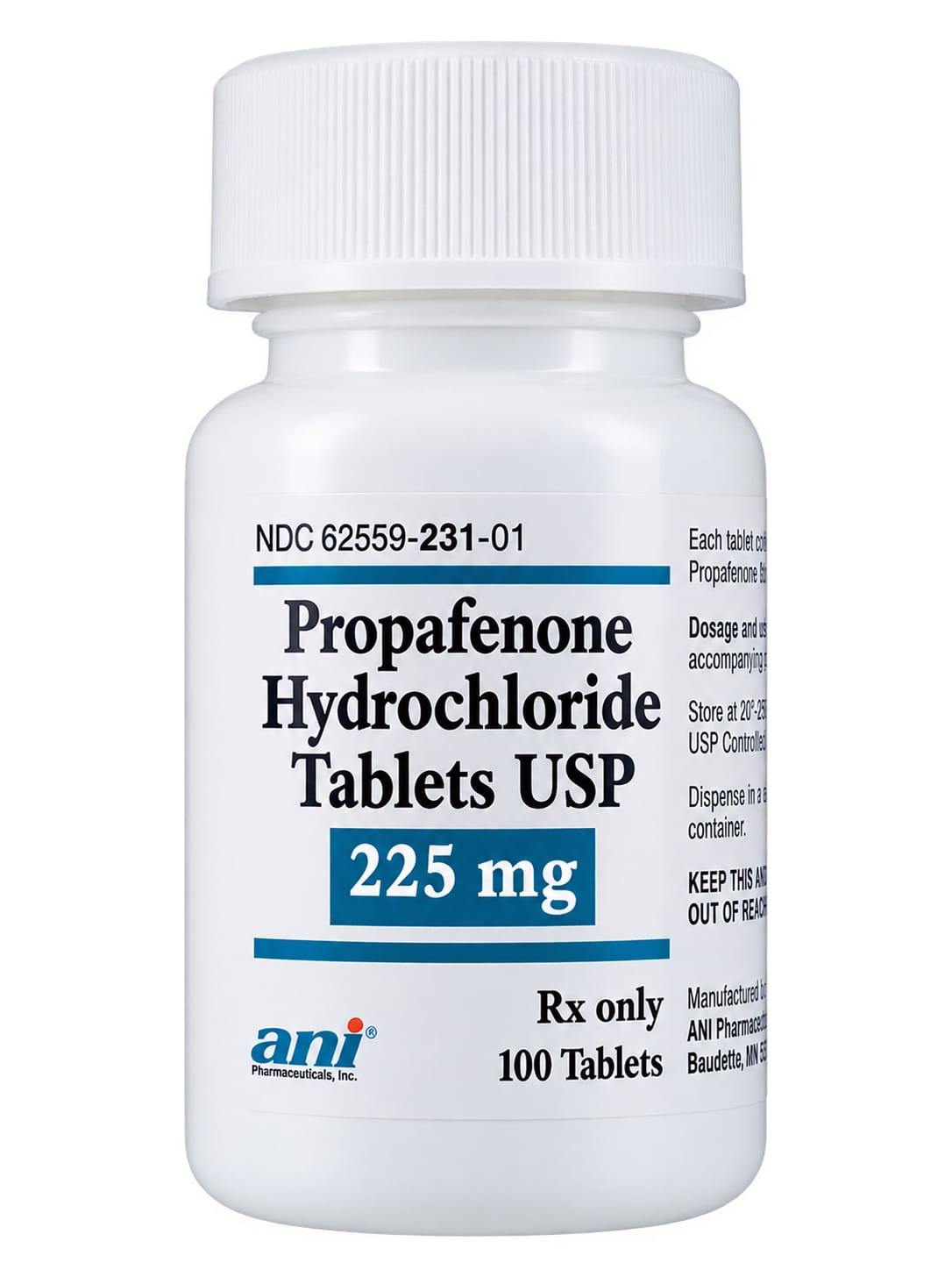
| Generic name | Propafenone |
|---|---|
| Drug class | Class 1C antiarrhythmic |
| Forms | Tablet (immediate-release, film-coated), Extended-release capsule |
Quick overview
Propafenone Tablet (generic name propafenone) is a prescription Class 1C antiarrhythmic medicine used to treat and prevent certain types of irregular heartbeats. It works by blocking sodium channels in the heart to help steady abnormal electrical signals. It is available as an immediate-release tablet and as an extended-release capsule, and must be used exactly as directed by a doctor.
What is Propafenone Tablet
Propafenone is a prescription medicine used to treat and prevent certain types of irregular heartbeats (arrhythmias). It belongs to a group of medicines called antiarrhythmics and is only available with a doctor's prescription.
Propafenone Tablet uses
- Preventing atrial fibrillation (AFib) or atrial flutter from coming back
- Preventing paroxysmal supraventricular tachycardia (PSVT) - immediate-release tablets only
- Treating life-threatening ventricular arrhythmias - immediate-release tablets only
Benefits of Propafenone Tablet
- Helps regulate heart rhythm and keep the heartbeat steady
- Can prolong the time before an irregular heartbeat returns
- Available in both immediate-release tablet and extended-release capsule forms
How Propafenone Tablet works
Propafenone works by blocking sodium channels in the heart, which slows down abnormal electrical signals. This helps the heart beat in a steadier, more normal rhythm, though it does not cure the underlying rhythm problem.
Propafenone Tablet dosage
Take the tablet by mouth, usually spaced evenly through the day as directed by your doctor. You can take it with or without food, though taking it with food may help prevent nausea or an upset stomach. Swallow tablets whole; do not crush, chew, split, or open them. Try to take it at the same time each day.
Continue taking it even if you feel well; do not stop without talking to your doctor first, since stopping suddenly can cause your heartbeat to become irregular again. If you miss a dose, take it as soon as you remember, but if it's almost time for your next dose, skip the missed one and go back to your regular schedule — never take two doses at once.
Avoid drinking grapefruit juice or eating grapefruit while taking this medicine. Dose increases should only happen gradually and under your doctor's direction, usually after staying on a dose for several days.
| Age group | Dose |
|---|---|
| Under 18 years | Not established |
| 18–60 years | 150 mg, 3 times/day |
| 60+ years | 150 mg, 3 times/day |
Available forms and strengths
- Tablet (immediate-release, film-coated)
- Extended-release capsule
Side effects of Propafenone Tablet
Common
- Dizziness
- Unusual or bitter/metallic taste
- Nausea or vomiting
- Constipation
- Diarrhea
- Dry mouth
- Headache
- Tiredness or weakness
- Anxiety
- Blurred vision
- Shaking (tremor)
- Gas
- Difficulty falling or staying asleep
- Loss of appetite
Serious
- New or worsening irregular heartbeat, including fast, slow, or pounding heartbeat
- Chest pain or discomfort
- Weakness, dizziness, or fainting
- Shortness of breath or wheezing
- Unexplained weight gain or swelling in the hands, feet, ankles, or lower legs (possible heart failure)
- Fever, sore throat, or chills (possible sign of infection or very low white blood cell count)
Warnings and precautions
- Propafenone carries a boxed warning: similar medicines in its class have been linked to a higher risk of death, especially in people who have had a heart attack. It should only be used for life-threatening heart rhythm problems.
- This medicine can cause new or worse abnormal heart rhythms, some of which can be life-threatening, including dangerously fast or slow heartbeats.
- It can cause new or worsening heart failure. Watch for swelling, sudden weight gain, or increasing shortness of breath.
- This medicine can affect how implanted pacemakers or defibrillators work, so these devices need to be checked regularly during treatment.
- Propafenone can cause a dangerous drop in white blood cells (agranulocytosis), usually within the first two months of treatment, which raises infection risk.
- This medicine should not be used by people with certain heart conditions, very slow heart rate, very low blood pressure, certain breathing problems, or major imbalances in blood salts (electrolytes).
- This medicine can worsen myasthenia gravis, a condition that causes muscle weakness.
- Avoid grapefruit juice while taking this medicine, as it can raise the amount of drug in your body and increase side effect risk.
- There is no strong evidence that propafenone is unsafe in pregnancy, but it should only be used if clearly needed. Tell your doctor if you are pregnant or planning to become pregnant so they can weigh the risks and benefits with you.
- Propafenone passes into breast milk in small amounts. Talk with your doctor about the risks and benefits before breastfeeding while taking this medicine.
- If you have kidney problems, this medicine needs to be used carefully since it can build up in your body and increase side effects. Your doctor may want to check your kidney function and heart more often.
- People with liver problems may process this medicine more slowly, causing it to build up in the body. Your doctor may need to check your liver function and adjust your dose.
- It isn't clearly known how alcohol affects this medicine, so check with your doctor before drinking.
- This medicine can cause dizziness, fainting, or blurred vision. Don't drive or use machinery until you know how it affects you.
Storage
- Keep this medication in the container it came in, tightly closed, and out of reach of children.
- Store it at room temperature and away from excess heat and moisture (not in the bathroom).
- Dispose of unneeded medications in a way so that pets, children, and other people cannot take them. Do not flush this medication down the toilet. Use a medicine take-back program.
When to see a doctor
- Get medical help right away if you notice an unusually fast, slow, or irregular heartbeat, chest pain, weakness, dizziness, or fainting.
- Contact your doctor immediately if you notice signs of heart failure, such as unexplained weight gain, swelling in your legs or feet, or increasing shortness of breath, especially when lying down.
- Call your doctor right away if you have signs of infection such as fever, sore throat, or chills, since this medicine can lower your white blood cell count.
- If you think you've taken too much of this medicine, contact your doctor or go to the nearest hospital emergency room right away.
- Seek emergency care if someone has collapsed, had a seizure, is having trouble breathing, or cannot be woken up after taking too much of this medicine.
Alternatives
- Propafenone
- Propanorm
- Rytmonorm
Watch the video
FAQs
What is Propafenone Tablet used for?
It is used to prevent atrial fibrillation or atrial flutter from recurring, prevent paroxysmal supraventricular tachycardia (immediate-release only), and treat life-threatening ventricular arrhythmias (immediate-release only).
How does Propafenone Tablet work?
It works by blocking sodium channels in the heart, which slows down abnormal electrical signals and helps the heart beat in a steadier, more normal rhythm, though it does not cure the underlying rhythm problem.
What is the typical dosage of Propafenone Tablet?
For adults aged 18 to 60 and those over 60, the typical dose is 150 mg three times a day. Dosage in people under 18 has not been established.
Can I drink grapefruit juice while taking Propafenone Tablet?
No, you should avoid grapefruit juice and grapefruit while taking this medicine, as it can raise the amount of drug in your body and increase the risk of side effects.
What are the serious side effects of Propafenone Tablet?
Serious side effects include new or worsening irregular heartbeat, chest pain, weakness, dizziness or fainting, shortness of breath, signs of heart failure like swelling or weight gain, and signs of infection such as fever, sore throat, or chills.
General information, not medical advice
Your prescriber and the leaflet in your pack know your situation. This page does not.
- Follow your prescriber and the leaflet
- Don't start, stop, or change a dose on your own
- Doses and warnings differ by country and product
Sources
Video
Related medicines

Injectafer Injection: Uses, Dosage, Side Effects, Precautions and Alternates
Iron products
Injectafer (ferric carboxymaltose) treats iron deficiency anemia and heart failure-related iron deficiency via IV. Learn uses, dosage, side effects, and

Gliclazide Tablet: Uses, Dosage, Side Effects, Precautions and Alternates
Sulfonylurea (hypoglycemic/antidiabetic agent)
Gliclazide Tablet is a sulfonylurea for type 2 diabetes that boosts insulin release. Learn about dosage, side effects, warnings, and precautions.