
Safety
General information, not medical advice
Your prescriber and the leaflet in your pack know your situation. This page does not.
- Follow your prescriber and the leaflet
- Don't start, stop, or change a dose on your own
- Doses and warnings differ by country and product
Propranolol Capsule: Uses, Dosage, Side Effects, Precautions and Alternates
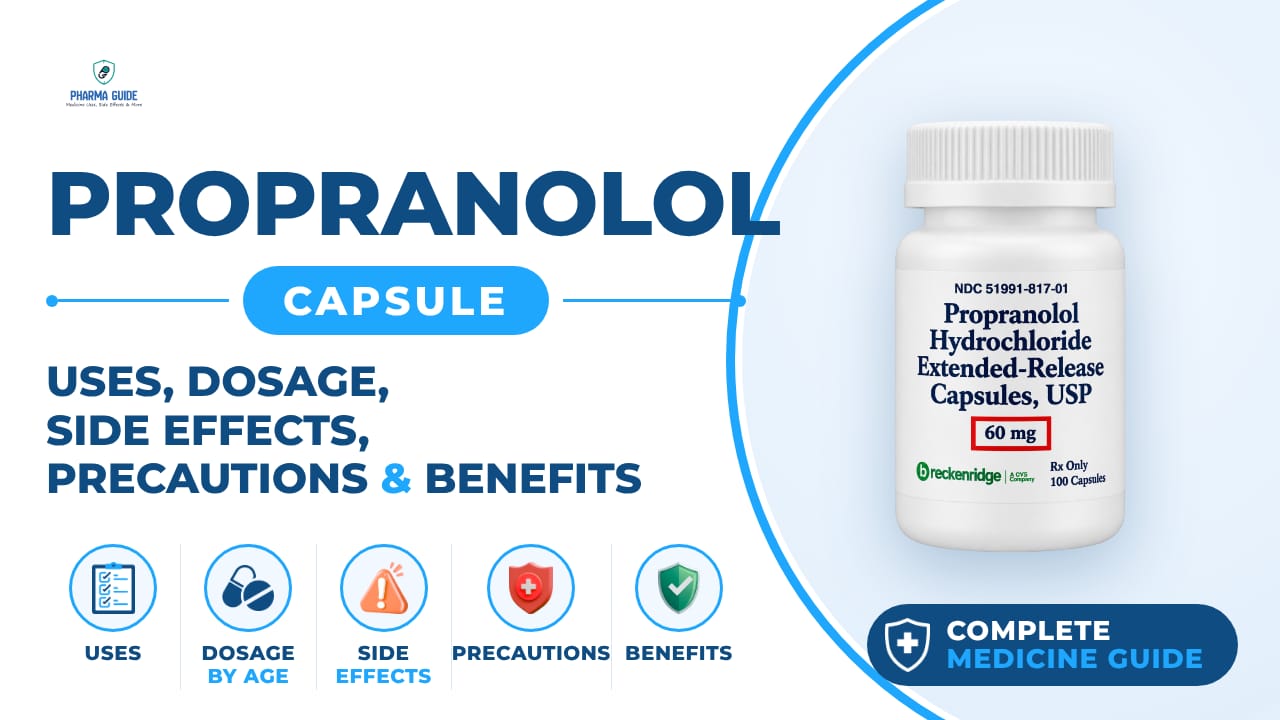
| Generic name | propranolol |
|---|---|
| Drug class | Non-cardioselective beta blocker (Group II antiarrhythmic) |
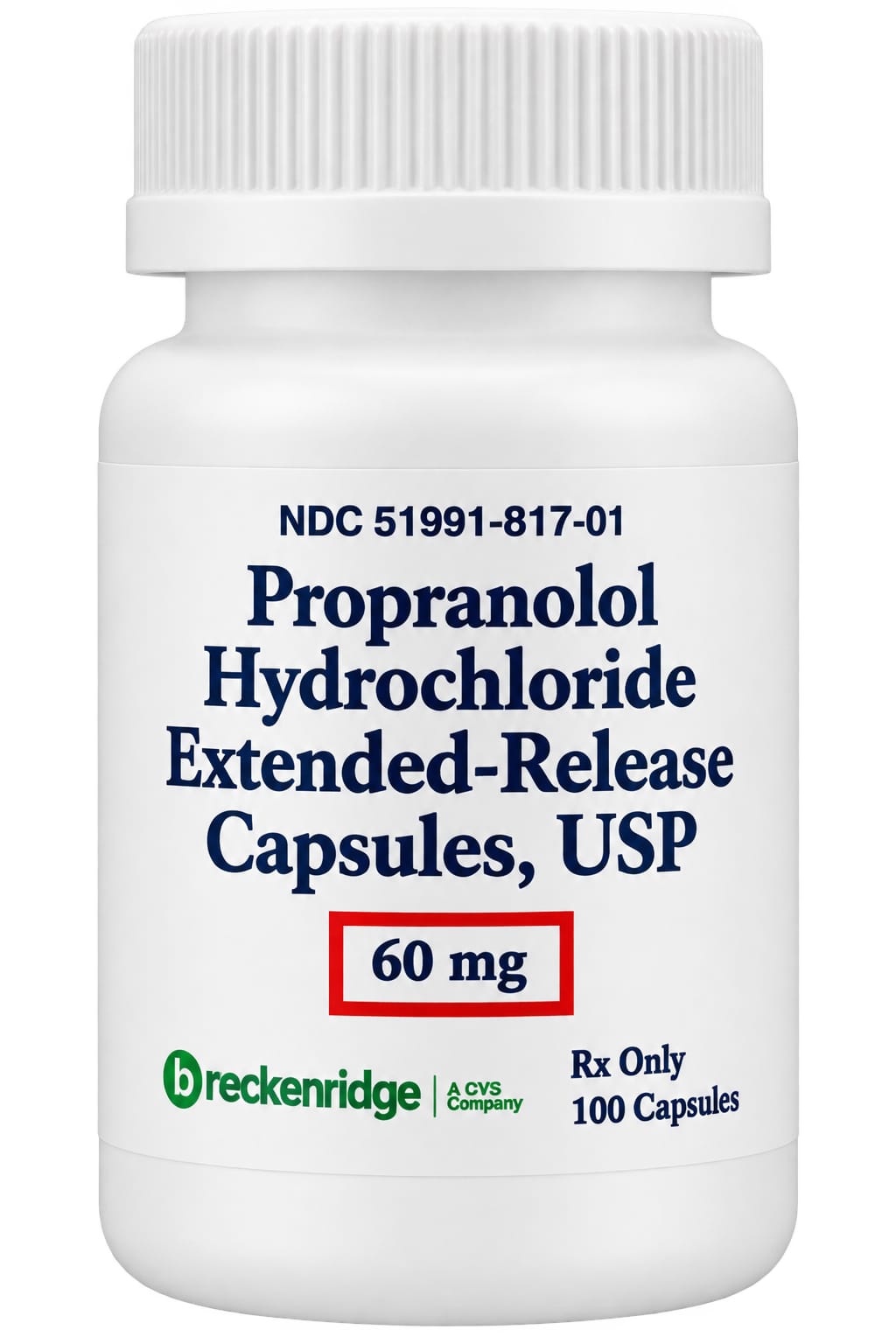
| Forms | Tablet, Extended-release (long-acting) capsule, Oral solution (liquid), Intravenous/injectable solution |
Quick overview
Propranolol Capsule is a prescription nonselective beta-blocker used to treat several heart and circulation conditions. It belongs to the non-cardioselective beta blocker (Group II antiarrhythmic) drug class and is also available as a tablet, oral solution, and injection. It works by blocking certain receptors in the heart, blood vessels, and kidneys to lower heart rate and blood pressure. It should be taken exactly as prescribed and not stopped suddenly.
What is Propranolol Capsule
Propranolol is a prescription nonselective beta-blocker used to treat several heart and circulation conditions. It comes as a tablet, extended-release capsule, oral solution, and injection.
Propranolol Capsule uses
- High blood pressure (hypertension)
- Angina (chest pain)
- Irregular heart rhythms (arrhythmias)
- Tremors
- Reducing the risk of complications after a heart attack
- Preventing migraine headaches
- Managing symptoms of pheochromocytoma (a rare adrenal gland tumor)
- Hypertrophic subaortic stenosis
- Infantile hemangiomas (in infants, using the oral solution form)
- Off-label use for physical symptoms of anxiety
Benefits of Propranolol Capsule
- Helps control heart rate and blood pressure
- Reduces the heart's oxygen demand
- Can help prevent migraine attacks
- May reduce physical anxiety symptoms like rapid heartbeat and shaking
How Propranolol Capsule works
Propranolol blocks certain receptors in the heart, blood vessels, and kidneys. This lowers heart rate and the force of heart contractions and reduces blood pressure, which lowers the heart's oxygen demand. Experts don't fully understand how it helps prevent migraines or tremors.
Propranolol Capsule dosage
Take propranolol exactly as prescribed and follow all directions on the prescription label. Adults may take it with or without food, but should take it the same way each time. Extended-release capsules should be swallowed whole; do not split, chew, or crush them. Take doses at around the same time each day.
If using the oral liquid form for an infant, give it during or just after a feeding, and space doses at least 9 hours apart; measure with the supplied measuring device, not a kitchen spoon, and do not shake it.
Do not stop taking propranolol suddenly without talking to your doctor, as this can make your condition worse. Keep taking the medicine even if you feel well, since conditions like high blood pressure often have no symptoms. Tell your doctor if you have planned surgery, including dental surgery.
| Age group | Dose |
|---|---|
| Under 1 year | Specialist-directed dosing only |
| 1–11 years | Individualized; pediatric dosing requires medical supervision |
| 12–17 years | Usually 10–40 mg, 2–4 times daily, depending on indication |
| 18–64 years | 40 mg 2–3 times daily for many indications; dose varies by condition |
| 65 years & older | Start at a lower dose and increase cautiously |
| Adults | Dose depends on indication; maximum varies by condition |
Available forms and strengths
- Tablet
- Extended-release (long-acting) capsule
- Oral solution (liquid)
- Intravenous/injectable solution
Side effects of Propranolol Capsule
Common
- Dizziness or lightheadedness
- Tiredness or fatigue
- Nausea, vomiting, diarrhea, constipation, stomach cramps
- Sleep problems (insomnia)
- Runny or stuffy nose, cough, sore throat, hoarse voice
- Cold hands and feet
Serious
- Signs of an allergic reaction such as hives, difficulty breathing, or swelling in the face or throat
- Severe skin reaction with fever, sore throat, burning eyes, skin pain, or a red or purple rash with blistering and peeling
- Slow or uneven heartbeats
- A light-headed feeling like you might pass out or feeling faint
- Wheezing or trouble breathing
- Sudden weakness, vision problems, or loss of coordination
- Cold feeling in hands and feet
- Depression, confusion, hallucinations
- Heart problems such as swelling, rapid weight gain, or feeling short of breath
- Low blood sugar symptoms such as headache, hunger, sweating, irritability, dizziness, fast heart rate, and feeling anxious or shaky
- Low blood sugar in a baby, shown as pale, blue, or purple skin, sweating, fussiness, crying, not wanting to eat, feeling cold, drowsiness, weak or shallow breathing, seizures, or loss of consciousness
Warnings and precautions
- Do not use propranolol if you have asthma, chronic bronchitis, emphysema, very slow heartbeats, cardiogenic shock, or a serious heart condition such as sick sinus syndrome or AV block, unless you have a pacemaker.
- Babies who weigh less than 4.5 pounds or were born prematurely and have not reached a corrected age of 5 weeks should not be given the Hemangeol oral liquid form.
- Your condition may get worse if you stop taking propranolol suddenly. Ask your doctor before stopping the medicine.
- Propranolol can make it harder to notice the warning signs of low blood sugar, which is important to know if you have diabetes.
- Tell your doctor if you have ever had slow heartbeats, congestive heart failure, breathing disorders, liver or kidney disease, a thyroid disorder, pheochromocytoma, circulation problems such as Raynaud's syndrome, or if you smoke.
- Propranolol is not usually recommended during pregnancy because it may harm the developing baby. Talk to your doctor if you are pregnant or planning to become pregnant.
- Propranolol is not usually recommended while breastfeeding because it may pass into breast milk and harm the baby.
- Propranolol should be used with caution if you have kidney problems, since the drug is removed from the body through urine and can build up in people with kidney disease.
- Propranolol should be used with caution if you have liver problems, since it is broken down by the liver.
- Avoid drinking alcohol while taking propranolol, as it can increase the amount of the drug in your blood and add to blood-pressure-lowering effects.
- Propranolol may sometimes make you feel dizzy or tired, so avoid driving or operating machinery if you experience these symptoms.
Storage
- Store at room temperature away from moisture and heat.
- Do not freeze Hemangeol oral solution.
- Throw away any unused Hemangeol 2 months after you first opened the bottle.
- Keep the medication in the container it came in, tightly closed, and out of reach of children.
- Store away from light, excess heat, and moisture (not in the bathroom).
- Dispose of unneeded medication in a way that pets, children, and other people cannot take them; do not flush it down the toilet. Use a medicine take-back program if available.
When to see a doctor
- Get emergency medical help if you have signs of an allergic reaction, such as hives, difficulty breathing, or swelling in your face or throat, or a severe skin reaction with fever, sore throat, burning eyes, or a red or purple rash with blistering and peeling.
- Call your doctor right away if you have slow or uneven heartbeats, a light-headed feeling like you might pass out, wheezing or trouble breathing, sudden weakness, vision problems, or loss of coordination, cold hands and feet, depression, confusion, hallucinations, or signs of heart problems such as swelling, rapid weight gain, or shortness of breath.
- Watch for signs of low blood sugar such as headache, hunger, sweating, irritability, dizziness, fast heart rate, and feeling anxious or shaky, and call your doctor if these occur.
- In a baby, watch for signs of low blood sugar such as pale, blue, or purple skin, sweating, fussiness, crying, not wanting to eat, feeling cold, drowsiness, weak or shallow breathing, seizures, or loss of consciousness, and get medical help right away.
- If you think you have taken too much propranolol, seek emergency medical attention right away.
Alternatives
- Inderal
- Inderal XL
- Inderal LA
- InnoPran XL
- Hemangeol
- Inderide
- Inderide LA
Watch the video
FAQs
What is Propranolol Capsule used for?
It treats high blood pressure, angina, irregular heart rhythms, tremors, migraine prevention, pheochromocytoma symptoms, hypertrophic subaortic stenosis, infantile hemangiomas, reducing complications after a heart attack, and off-label for physical anxiety symptoms.
How should I take Propranolol Capsule?
Take it exactly as prescribed, with or without food but consistently, and swallow extended-release capsules whole without splitting, chewing, or crushing them. Do not stop suddenly without talking to your doctor.
What are the common side effects of Propranolol Capsule?
Common side effects include dizziness, tiredness, nausea, vomiting, diarrhea, constipation, stomach cramps, insomnia, runny or stuffy nose, cough, sore throat, hoarse voice, and cold hands and feet.
Who should not take Propranolol Capsule?
It should not be used by people with asthma, chronic bronchitis, emphysema, very slow heartbeats, cardiogenic shock, or serious heart conditions like sick sinus syndrome or AV block unless they have a pacemaker.
Can I drink alcohol while taking Propranolol Capsule?
Alcohol should be avoided while taking propranolol, as it can increase the amount of the drug in your blood and add to its blood-pressure-lowering effects.
General information, not medical advice
Your prescriber and the leaflet in your pack know your situation. This page does not.
- Follow your prescriber and the leaflet
- Don't start, stop, or change a dose on your own
- Doses and warnings differ by country and product
Sources
Video
Related medicines

Injectafer Injection: Uses, Dosage, Side Effects, Precautions and Alternates
Iron products
Injectafer (ferric carboxymaltose) treats iron deficiency anemia and heart failure-related iron deficiency via IV. Learn uses, dosage, side effects, and

Gliclazide Tablet: Uses, Dosage, Side Effects, Precautions and Alternates
Sulfonylurea (hypoglycemic/antidiabetic agent)
Gliclazide Tablet is a sulfonylurea for type 2 diabetes that boosts insulin release. Learn about dosage, side effects, warnings, and precautions.