
Safety
General information, not medical advice
Your prescriber and the leaflet in your pack know your situation. This page does not.
- Follow your prescriber and the leaflet
- Don't start, stop, or change a dose on your own
- Doses and warnings differ by country and product
Propylthiouracil Tablet: Uses, Dosage, Side Effects, Precautions and Alternates
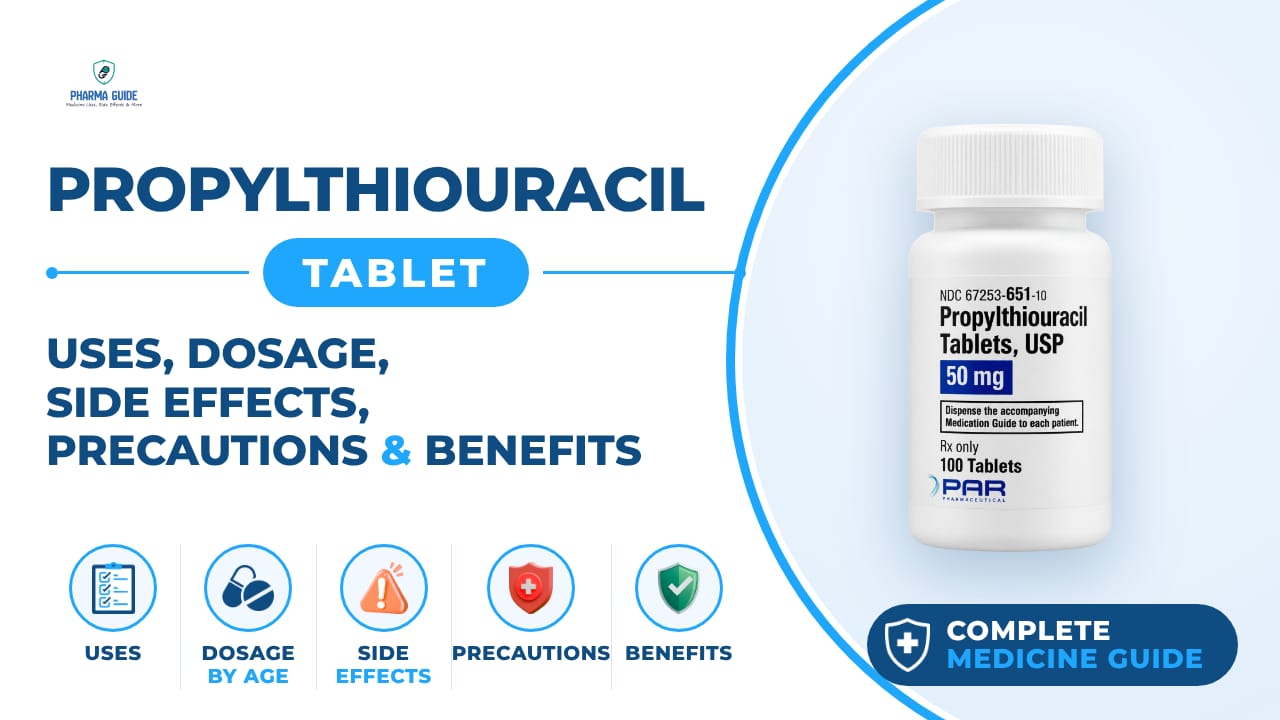
| Generic name | Propylthiouracil |
|---|---|
| Drug class | Antithyroid medicine |
| Forms | Tablet |
Quick overview
Propylthiouracil Tablet, known generically as Propylthiouracil, is a prescription antithyroid medicine used to treat an overactive thyroid gland (hyperthyroidism), including conditions such as Graves' disease and toxic multinodular goiter. It works by reducing the amount of thyroid hormone the body produces. It is available as a tablet and carries important warnings about liver problems and effects on blood cells, so it should be used under close medical supervision.
What is Propylthiouracil Tablet
Propylthiouracil is a prescription medicine used to treat an overactive thyroid gland (hyperthyroidism). It belongs to a group of medicines called antithyroid agents that reduce the amount of thyroid hormone your body makes.
Propylthiouracil Tablet uses
- Treats hyperthyroidism (overactive thyroid gland), including Graves' disease with hyperthyroidism or toxic multinodular goiter
- Used when other antithyroid medicines do not work well
- Used when thyroid surgery or radioactive iodine therapy is not a treatment option
- Used to decrease symptoms of hyperthyroidism before thyroid surgery or radioactive iodine therapy
- Used along with radioactive iodine therapy to speed up recovery
- Used to help control thyrotoxicosis before surgery
- Used to manage a thyroid storm along with other treatments
Benefits of Propylthiouracil Tablet
- Thyroid Hormone Reduction: Helps decrease excessive production of thyroid hormones.
- Hyperthyroidism Treatment: Used to manage overactive thyroid conditions such as Graves' disease.
- Symptom Control: Helps reduce symptoms related to high thyroid activity, including rapid heartbeat and nervousness.
- Thyroid Balance Support: Helps restore normal thyroid hormone levels under medical supervision.
How Propylthiouracil Tablet works
Propylthiouracil blocks an enzyme in the thyroid gland that is needed to make thyroid hormone. This stops the gland from producing as much hormone, which lowers hormone levels in the body over time.
Propylthiouracil Tablet dosage
This tablet can be taken with or without food. Swallow it whole with a drink of water; do not chew, split, or crush it. Do not take the tablet if it is broken, cracked, or not intact. Try to take it at the same time each day. Continue taking it even if you feel well, and do not stop without talking to your doctor. If you miss a dose, take it as soon as you remember, but if it is almost time for your next dose, skip the missed dose and do not double up. This medicine is not recommended for use in children under 6 years of age.
| Age group | Dose |
|---|---|
| Children | Dose based on body weight and thyroid hormone levels (as prescribed) |
| Adults (18–64 Years) | 100–300 mg daily initially, divided into doses; adjusted based on response |
| Older Adults (65+ years) | Lower starting dose; adjusted according to thyroid function tests |
| Pregnancy | Dose determined by doctor based on thyroid condition |
Available forms and strengths
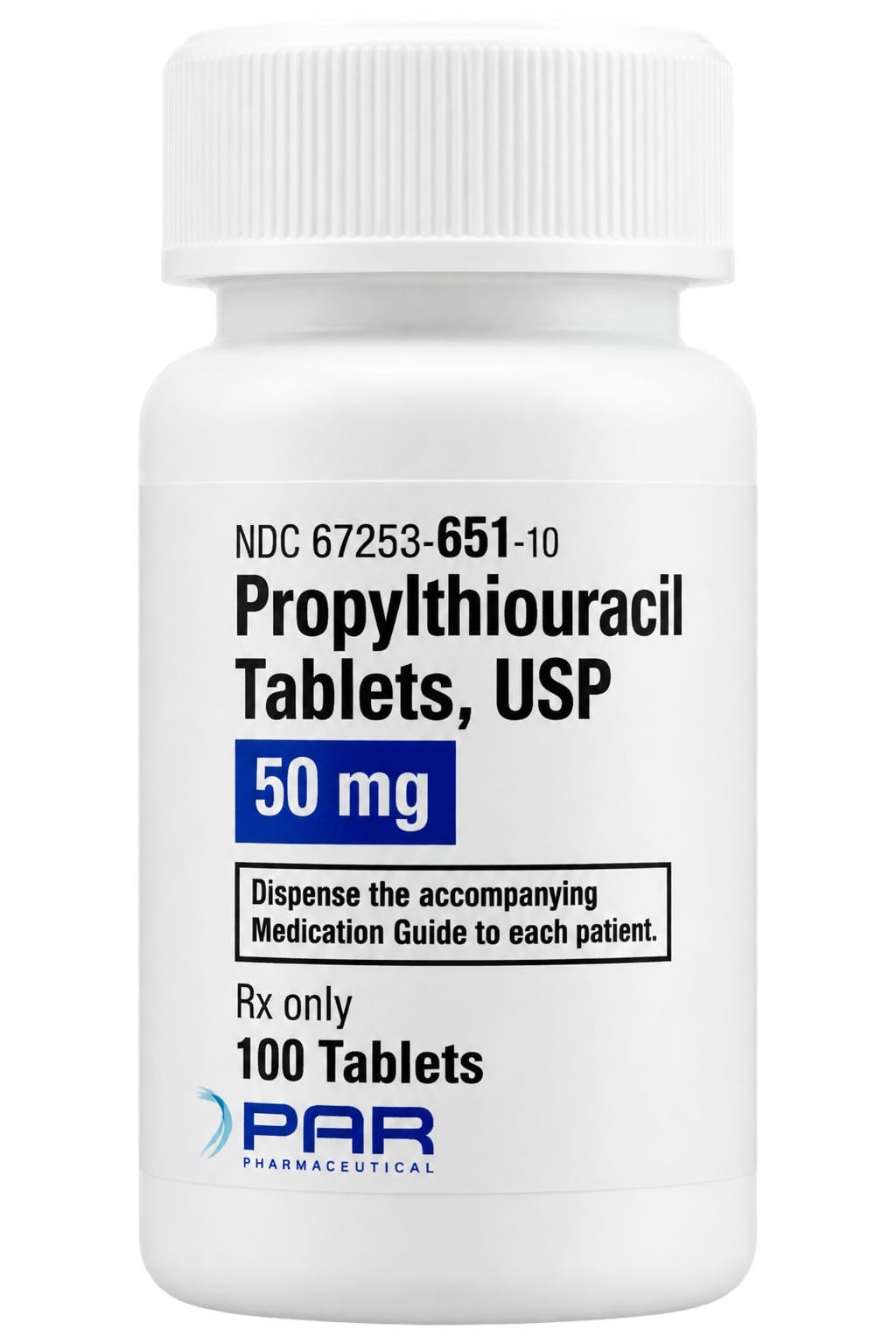
Propylthiouracil is available as a tablet.
Side effects of Propylthiouracil Tablet
Common
- Nausea and vomiting
- Stomach upset or discomfort
- Muscle or joint pain
- Headache
- Sleepiness or drowsiness
- Dizziness
- Loss or change in taste
- Numbness, burning, or tingling in hands or feet
- Hair loss or change in hair color
- Mild skin rash or itching
- Swelling (edema)
- Enlarged salivary glands or lymph nodes
- Altered hearing
Serious
- Signs of liver problems: fever, itching, loss of appetite, pain in the upper right stomach area, nausea, dark urine, vomiting, pale stools, tiredness, yellowing of skin or eyes
- Signs of low white blood cells (agranulocytosis): fever, chills, sore throat, mouth ulcers, bruising, unusual bleeding, or other signs of infection
- Signs of vasculitis: red or purple skin changes, rash, pain or swelling, pink or dark foamy urine, decreased urine output, shortness of breath, or coughing up blood
- Signs of severe skin reactions (Stevens-Johnson syndrome): skin blisters, peeling rash, mouth sores, hives, or other allergic reactions
- Increased bleeding, especially with surgery or blood thinners
- Signs of hypothyroidism: weight gain, tiredness, hair loss, feeling cold, dry skin, constipation, puffy face, irregular periods
- Signs of aplastic anemia: fatigue, weakness, pale skin
- Signs of lupus-like syndrome: fever, joint swelling and pain, muscle aches, blood in urine, shortness of breath, or rash
- Signs of encephalopathy: memory loss, confusion, personality changes, poor coordination, muscle twitches, sleep problems, slurred speech
Warnings and precautions
- This medicine can cause severe liver problems, including liver failure, the need for a liver transplant, or death. Stop taking it and call your doctor right away if you notice signs of liver trouble.
- This medicine can cause a serious drop in white blood cells, usually within the first few months of treatment, which can be life-threatening and increases infection risk.
- This medicine can rarely cause inflammation of small blood vessels (vasculitis), which can be serious and even fatal, affecting the skin, kidneys, or lungs.
- This medicine may cause rare but serious skin reactions that can be life-threatening and may need hospital treatment.
- This medicine can increase the risk of bleeding, especially during surgery or if you take blood thinners.
- Taking this medicine before radioactive iodine therapy can make that treatment less effective.
- Propylthiouracil can cause serious liver problems and may harm an unborn baby. It may still be used, at the lowest effective dose, during or just before the first trimester when an antithyroid drug is needed, with close monitoring by your doctor.
- This medicine passes into breast milk. Talk to your doctor about the safest way to feed your baby if you are taking this medicine.
- People with kidney problems may need a lower dose, and the medicine should be used with caution.
- This medicine can cause liver injury, so caution is needed, especially in people with existing liver problems. Doses should be kept as low as possible.
- Doctors may want to check liver function more closely in people who drink alcohol, since alcohol use is a risk factor for liver problems with this medicine.
- This medicine can cause dizziness or drowsiness. Do not drive or use machinery until you know how it affects you.
Storage
- Store at room temperature, away from excess heat and moisture (not in the bathroom)
- Store in a cool, dry place, away from direct heat and light, in the original package to protect from light
- Keep out of the sight and reach of children
- Dispose of unneeded medication through a medicine take-back program; do not flush it down the toilet
When to see a doctor
- Get medical help right away if you notice fever, itchy skin, loss of appetite, pain in the upper right stomach area, nausea, dark urine, vomiting, pale stools, tiredness, or yellowing of the skin or eyes — these can be signs of serious liver problems.
- Call your doctor right away if you have fever, chills, or sore throat, which could mean your white blood cell count is low.
- Tell your doctor right away if you notice new skin color changes or rash, pink or dark foamy urine, decreased urine output, shortness of breath, or coughing up blood — these can be signs of vasculitis.
- Get emergency help right away if you develop skin blisters, a peeling rash, mouth sores, hives, or other allergic reactions.
- If you think you or someone else has taken too much of this medicine, get medical help immediately, even if there are no symptoms yet.
- Tell your doctor right away if you become pregnant while taking this medicine.
Alternatives
- Methimazole
- Radioactive Iodine Therapy
- Thyroid Surgery
Watch the video
FAQs
What is Propylthiouracil Tablet used for?
It is used to treat hyperthyroidism, including Graves' disease and toxic multinodular goiter, and to control symptoms before surgery or radioactive iodine therapy, or during a thyroid storm.
How does Propylthiouracil Tablet work?
It blocks an enzyme in the thyroid gland needed to make thyroid hormone, which lowers hormone levels in the body over time.
What are the serious side effects of Propylthiouracil Tablet?
Serious side effects include liver problems, low white blood cell counts, vasculitis, severe skin reactions, increased bleeding, hypothyroidism, aplastic anemia, lupus-like syndrome, and encephalopathy.
Can Propylthiouracil Tablet be taken during pregnancy?
It may still be used at the lowest effective dose during or just before the first trimester when needed, with close monitoring by a doctor, as it can harm an unborn baby.
How should Propylthiouracil Tablet be taken?
It should be swallowed whole with water, with or without food, at the same time each day, without chewing, splitting, or crushing it, and continued even if you feel well unless your doctor advises otherwise.
General information, not medical advice
Your prescriber and the leaflet in your pack know your situation. This page does not.
- Follow your prescriber and the leaflet
- Don't start, stop, or change a dose on your own
- Doses and warnings differ by country and product
Sources
Video
Related medicines
PTU Tablet: Uses, Dosage, Side Effects, Precautions and Alternates
Antithyroid medicine
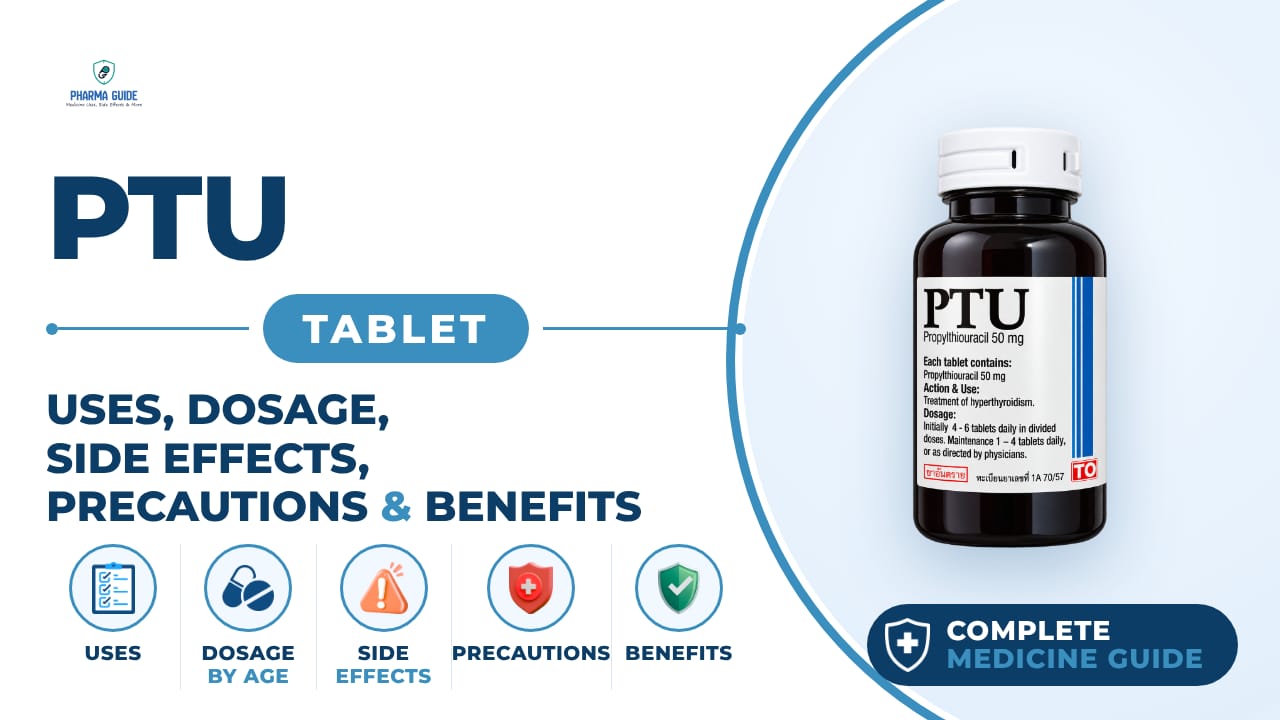
PTU Tablet (propylthiouracil) treats hyperthyroidism and Graves' disease by reducing thyroid hormone production. Learn uses, dosage, side effects and

Injectafer Injection: Uses, Dosage, Side Effects, Precautions and Alternates
Iron products
Injectafer (ferric carboxymaltose) treats iron deficiency anemia and heart failure-related iron deficiency via IV. Learn uses, dosage, side effects, and