
Safety
General information, not medical advice
Your prescriber and the leaflet in your pack know your situation. This page does not.
- Follow your prescriber and the leaflet
- Don't start, stop, or change a dose on your own
- Doses and warnings differ by country and product
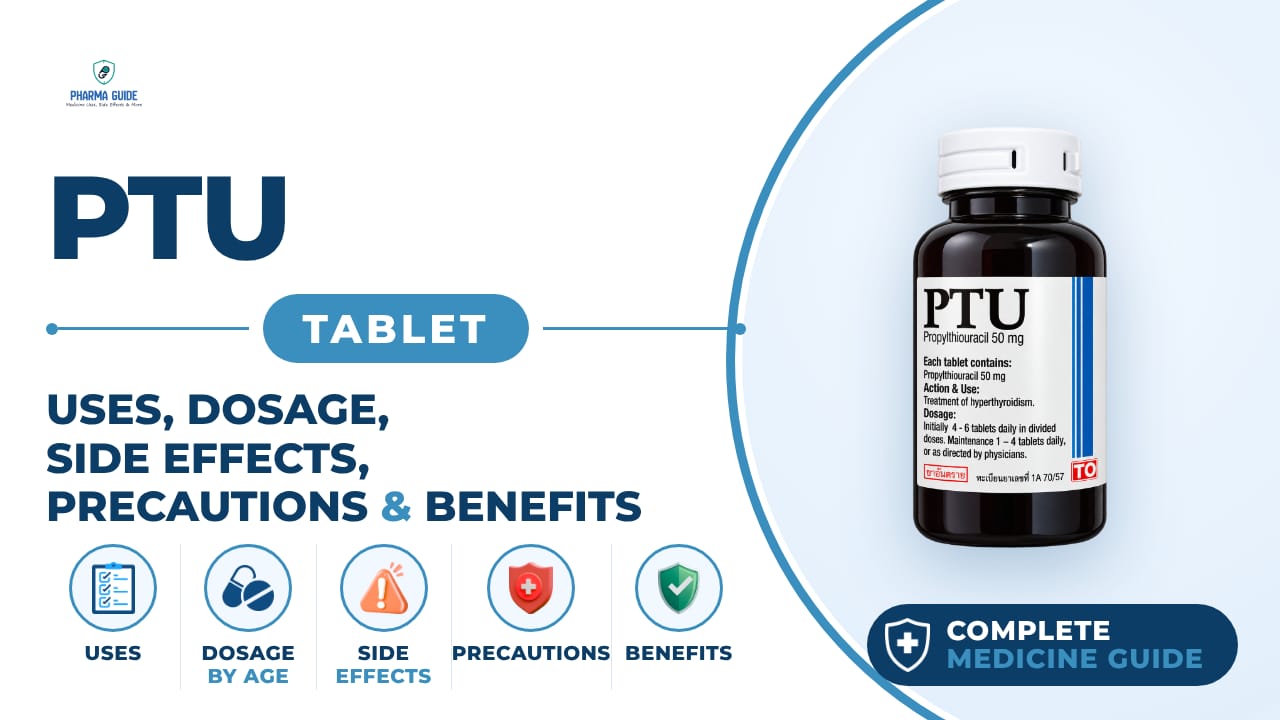
PTU Tablet: Uses, Dosage, Side Effects, Precautions and Alternates
| Generic name | Propylthiouracil |
|---|---|
| Drug class | Antithyroid medicine |
| Forms | Tablet |
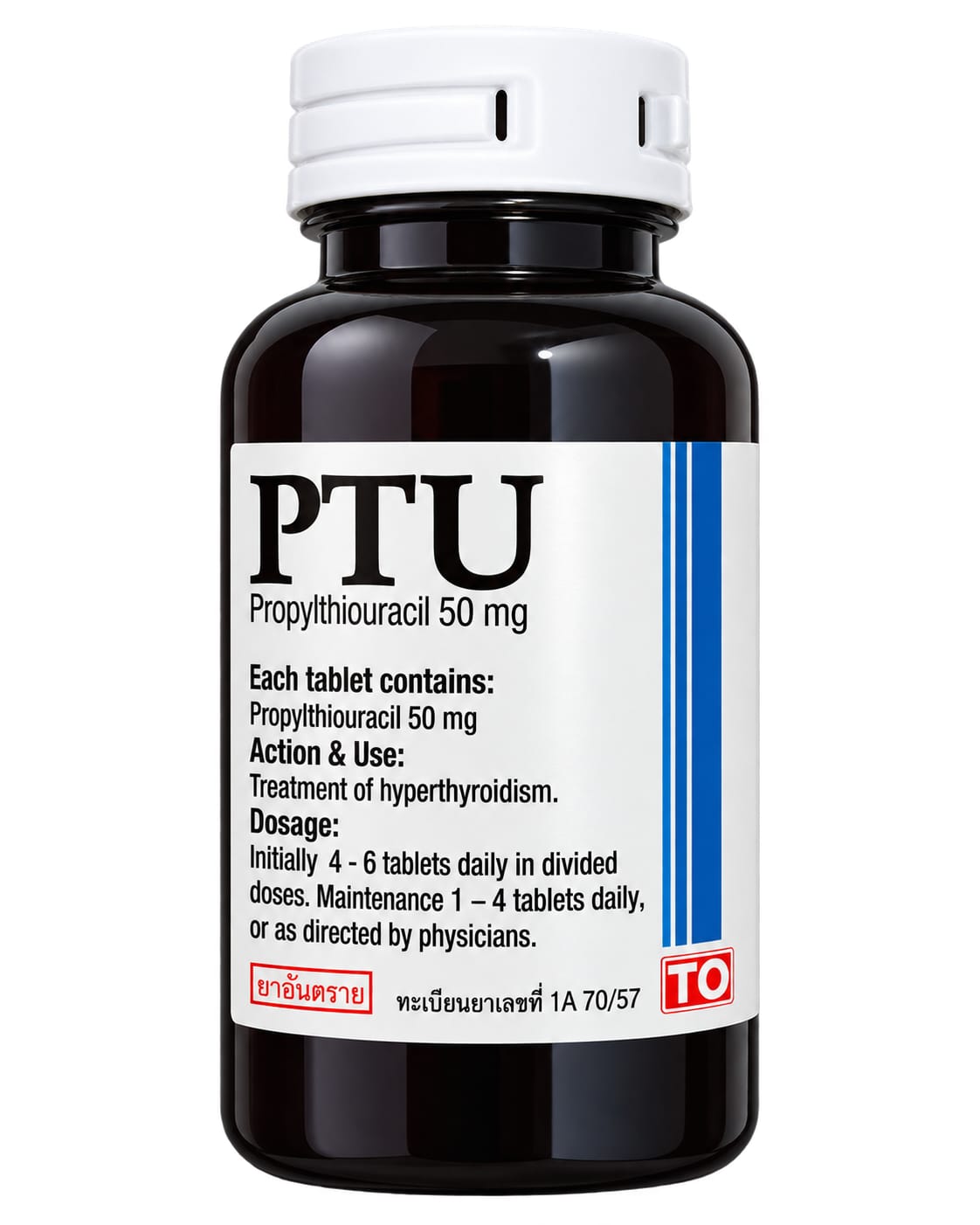
Quick overview
PTU Tablet contains propylthiouracil, an antithyroid medicine used to treat an overactive thyroid gland (hyperthyroidism) and Graves' disease. It works by stopping the thyroid gland from making thyroid hormone, and may also be used to control symptoms before surgery or radioactive iodine therapy. It is taken as directed by a doctor, with common side effects such as itching and nausea, and some serious side effects that require prompt medical attention.
What is PTU Tablet
PTU contains the active ingredient propylthiouracil. It belongs to a group of medicines called antithyroid medicines and is used to treat an overactive thyroid gland (hyperthyroidism).
PTU Tablet uses
- Treating an overactive thyroid gland (hyperthyroidism)
- Treating Graves' disease
- Treating symptoms of hyperthyroidism before surgery or radioactive iodine therapy
- Reduces excessive thyroid-hormone production
- May be used when methimazole cannot be tolerated
- May be used before thyroid surgery or radioactive iodine therapy
Benefits of PTU Tablet
- Helps manage symptoms of hyperthyroidism such as rapid heartbeat and weight loss
- Restores hormonal balance in the body
- Improves overall health and well-being by controlling excessive thyroid hormone production
How PTU Tablet works
This medicine works by stopping the thyroid gland from making thyroid hormone. It may take up to a week to start reducing symptoms of an overactive thyroid.
PTU Tablet dosage
Your doctor will tell you how many tablets to take and when to take them each day. Follow the instructions given by your doctor or pharmacist carefully, and ask for help if you don't understand the instructions on the bottle. Take your doses every day at equal intervals and at about the same time each day.
Swallow the tablets whole with a full glass of water. Do not crush or chew the tablet. It can be taken with or without food, but try to take it at the same time each day.
Continue taking the medicine for as long as your doctor tells you to, and do not stop suddenly or change the dose without checking with your doctor. If you miss a dose and it is close to your next dose, skip the missed dose and continue as normal; do not take a double dose.
| Age group | Dose |
|---|---|
| Under 18 years | Not recommended |
| 18–64 years | 100 mg, 3 times/day |
| 65+ years | 100 mg, 3 times/day |
Available forms and strengths
- Tablet
Side effects of PTU Tablet
Common
- Itching
- Dizziness
- Joint pain
- Taste loss
- Nausea
- Vomiting
- Stomach pain
- Numbness or tingling of fingers, toes, or face
- Skin rash
- Skin or hair colour change
- Hair loss
- Sore, red or watery eyes
- Headache
Serious
- Yellow eyes and skin
- Hearing loss
- Swollen glands
- Unusual bleeding or bruising
- Increase or decrease in urination
- Backache
- Feet or lower legs swelling
- Joint pain
- Fever
- Skin rash or raised red lumps
- Wheezing or difficulty breathing
- Difficulty passing urine
- Hives
- Upper abdominal pain
- Tingling or pricking feeling
- Mouth ulcers
- Bleeding or bruising more easily than normal
- Black or tarry stools
- Chest pain
- Shortness of breath
- Dark colored urine
- Liver damage shown by abdominal pain, loss of appetite, dark urine, or yellowing of skin or eyes
- Slow heart rate
- Severe flaking or peeling of the skin
- Serious skin reactions and skin loss
- Sore throat
- Chills
- Deep and husky voice
- Muscle weakness, cramps
- Swelling of feet or lower legs
- Unusual weight gain
- Change in menstrual periods
- Kidney disease
Warnings and precautions
Do not use this medicine if you are allergic to propylthiouracil, any of its ingredients, or to similar medicines called thioamide derivatives. Tell your doctor if you have or have had asthma, or allergies to other medicines, foods, preservatives, or dyes.
Do not stop taking this medicine suddenly, use it for other conditions, share it with anyone else, or change your dose without checking with your doctor. Tell any doctor, dentist, pharmacist, or nurse that you are taking this medicine, especially before surgery or blood tests, as it may affect other medicines used during surgery.
This medicine should be used with caution in people with a history of blood disorders such as agranulocytosis or bleeding disorders, as it can worsen these conditions. This medicine can increase the risk of low thyroid hormone levels (hypothyroidism) if used for a long time, so thyroid function should be monitored regularly.
Check with your doctor if you are pregnant or planning to become pregnant. This medicine has caused, or is suspected to cause, an increased chance of birth defects or irreversible damage to the baby, so it should only be used if absolutely necessary and after discussing the risks and benefits with your doctor.
Do not breastfeed while taking this medicine, since the active ingredient passes into breast milk and may affect your baby. Talk to your doctor if you are breastfeeding or planning to.
Tell your doctor if you have kidney problems before starting this medicine.
This medicine should be used with extreme caution in people with liver disease, because of an increased risk of liver damage. Your liver function may need to be monitored closely while you are taking it.
It is not known how this medicine interacts with alcohol, so check with your doctor before drinking alcohol while taking it.
Be careful driving or using machines until you know how this medicine affects you, as it may cause dizziness or tiredness in some people.
Storage
- Store below 30°C. Keep your tablets in the bottle until it is time to take them.
- Do not store PTU or any other medicine in the bathroom or near a sink.
- Do not leave it on a window sill or in the car. Keep it where children cannot reach it.
- If your doctor tells you to stop taking this medicine or the expiry date has passed, ask your pharmacist what to do with any medicine that is left over.
- If you no longer need to use this medicine or it is out of date, take it to any pharmacy for safe disposal.
- Do not use this medicine after the expiry date.
When to see a doctor
If you think you have taken too much of this medicine, get urgent medical help right away by contacting your doctor or going to the nearest hospital emergency department, even if you feel fine.
Call your doctor straight away if you become pregnant while taking this medicine.
Call your doctor straight away, or go straight to the hospital emergency department, if you notice any serious side effects such as yellowing of the eyes or skin, slow heart rate, chills, fever, swollen glands, mouth ulcers, backache, muscle weakness or cramps, swelling of the feet or legs, sore throat, wheezing or difficulty breathing, severe skin peeling, skin rash or red lumps, unusual bleeding or bruising, or changes in urination.
Report any unusual symptoms like unexplained bruising or bleeding to your doctor immediately.
Alternatives
- Methimazole
- Tapazole
Watch the video
FAQs
What is PTU Tablet used for?
PTU Tablet contains propylthiouracil and is used to treat an overactive thyroid gland (hyperthyroidism) and Graves' disease. It may also be used to control symptoms before surgery or radioactive iodine therapy, and may be used when methimazole cannot be tolerated.
How does PTU Tablet work?
PTU Tablet works by stopping the thyroid gland from making thyroid hormone. It may take up to a week to start reducing symptoms of an overactive thyroid.
What is the dosage of PTU Tablet for adults?
For adults aged 18-64 years and those 65 and above, the dose is 100 mg, 3 times a day. It is not recommended for those under 18 years. Always follow your doctor's instructions for dosage and timing.
What are the common side effects of PTU Tablet?
Common side effects include itching, dizziness, joint pain, taste loss, nausea, vomiting, stomach pain, numbness or tingling of fingers, toes, or face, skin rash, skin or hair colour change, hair loss, sore or watery eyes, and headache.
Can PTU Tablet be used during pregnancy or breastfeeding?
PTU Tablet should only be used during pregnancy if absolutely necessary after discussing risks and benefits with your doctor, as it has been linked to birth defects. You should not breastfeed while taking this medicine, as it passes into breast milk.
General information, not medical advice
Your prescriber and the leaflet in your pack know your situation. This page does not.
- Follow your prescriber and the leaflet
- Don't start, stop, or change a dose on your own
- Doses and warnings differ by country and product
Sources
Video
Related medicines
Propylthiouracil Tablet: Uses, Dosage, Side Effects, Precautions and Alternates
Antithyroid medicine
Propylthiouracil Tablet treats hyperthyroidism by reducing thyroid hormone production. Learn its uses, dosage, side effects, and important liver warnings.

Injectafer Injection: Uses, Dosage, Side Effects, Precautions and Alternates
Iron products
Injectafer (ferric carboxymaltose) treats iron deficiency anemia and heart failure-related iron deficiency via IV. Learn uses, dosage, side effects, and