
Safety
General information, not medical advice
Your prescriber and the leaflet in your pack know your situation. This page does not.
- Follow your prescriber and the leaflet
- Don't start, stop, or change a dose on your own
- Doses and warnings differ by country and product
Protonix Tablet: Uses, Dosage, Side Effects, Precautions and Alternates
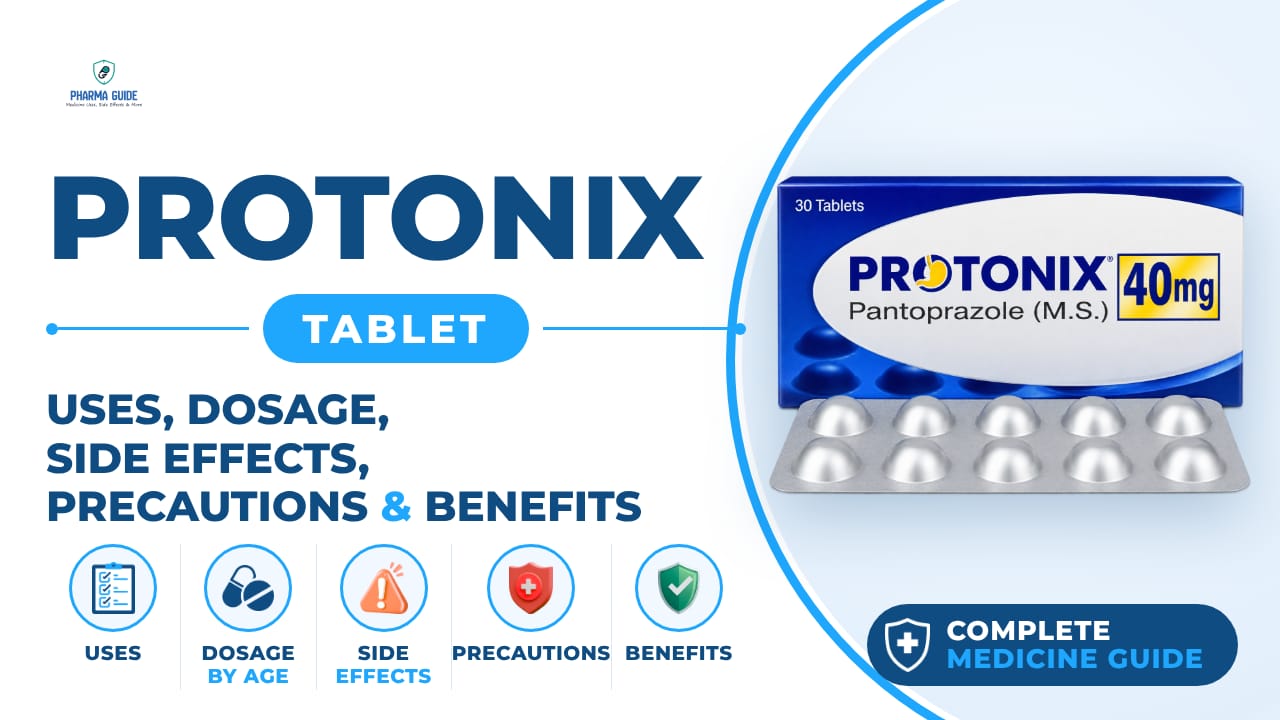
| Generic name | pantoprazole sodium |
|---|---|
| Drug class | Proton pump inhibitor (PPI) |
| Forms | Delayed-release tablets (20 mg and 40 mg), Delayed-release oral suspension granules (40 mg per packet) |
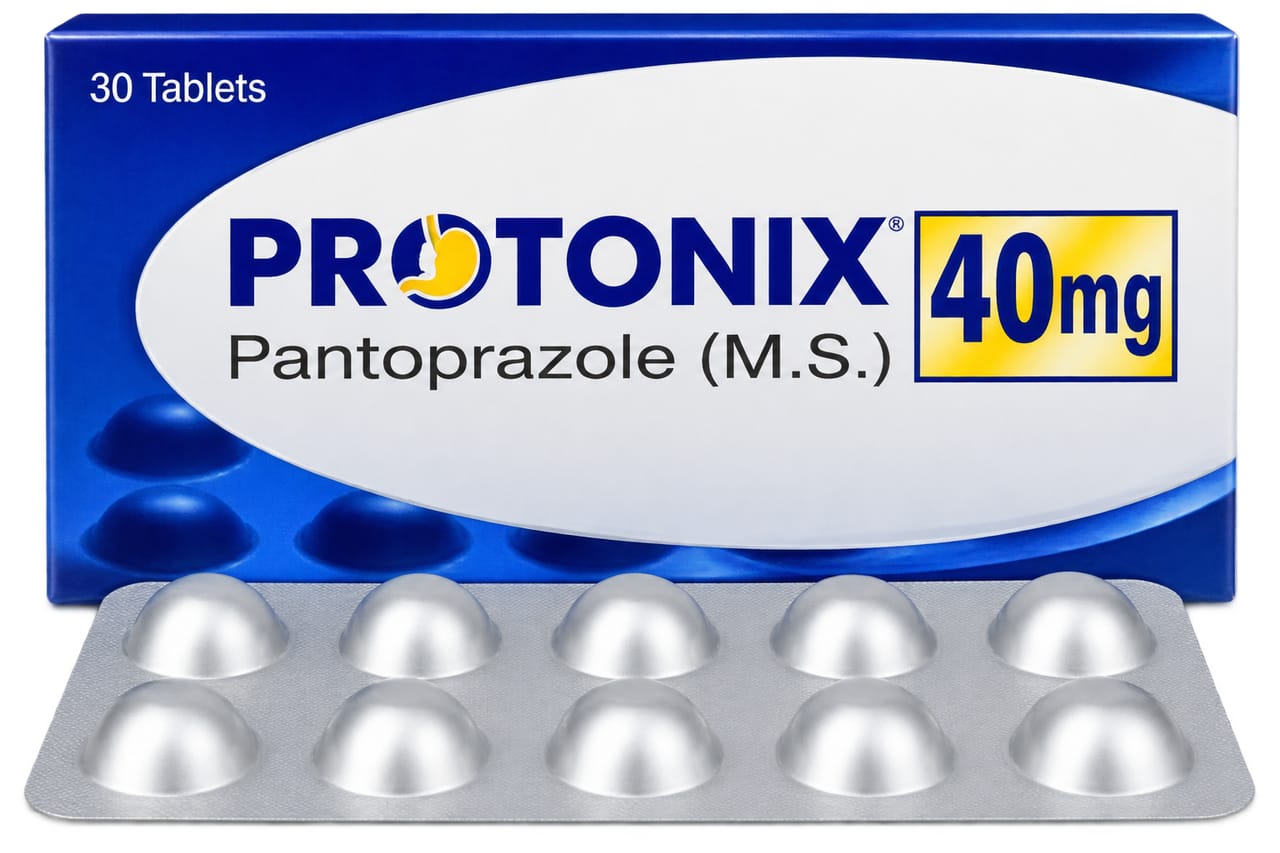
Quick overview
Protonix Tablet contains pantoprazole sodium, a proton pump inhibitor (PPI) used to reduce the amount of acid in the stomach. It is prescribed for short-term treatment of erosive esophagitis caused by GERD, maintenance of healing, and long-term treatment of conditions where the stomach produces too much acid, such as Zollinger-Ellison Syndrome. It works by blocking an enzyme in stomach cells that produces acid. Protonix is available as delayed-release tablets and oral suspension granules.
What is Protonix Tablet
Protonix is a prescription medicine called a proton pump inhibitor (PPI) used to reduce the amount of acid in your stomach.
Protonix Tablet uses
- Short-term treatment (up to 8 weeks) of acid-related damage to the esophagus (erosive esophagitis) caused by gastroesophageal reflux disease (GERD) in adults and children 5 years and older
- Maintenance of healing of erosive esophagitis and reducing return of heartburn symptoms in adults with GERD
- Long-term treatment of conditions where the stomach makes too much acid, including Zollinger-Ellison Syndrome
Benefits of Protonix Tablet
- Helps heal acid-related damage to the esophagus lining
- Provides relief from heartburn symptoms
- Helps prevent the return of heartburn symptoms caused by GERD
- Controls excess stomach acid production in hypersecretory conditions
How Protonix Tablet works
Pantoprazole works by blocking an enzyme in stomach cells that produces acid, reducing both regular and stimulated acid production for more than a day per dose.
Protonix Tablet dosage
Tablets can be taken with food or on an empty stomach. Swallow tablets whole; do not split, chew, or crush them. If you have trouble swallowing a larger tablet, ask your doctor about taking two smaller tablets instead. The oral suspension should be taken about 30 minutes before a meal, and it should only be mixed with applesauce or apple juice, not with water, other liquids, or other foods. Take the oral suspension mixture within 10 minutes of preparing it; do not prepare it ahead of time for later use. Do not divide an oral suspension packet to create a smaller dose.
Antacids may be taken along with tablets without affecting how the medicine is absorbed. If you also take sucralfate, take pantoprazole at least 30 minutes before it. Take this medication regularly, at the same time each day, for the full length of treatment prescribed, even if you feel better. If you miss a dose, take it as soon as you remember; if it is almost time for your next dose, skip the missed dose and continue your regular schedule; do not take two doses at once.
| Age group | Dose |
|---|---|
| Under 5 years | Doctor's advice required; tablet generally not preferred |
| 5–11 years | 20 mg once daily for certain GERD indications |
| 12–17 years | 20–40 mg once daily |
| 18 years & older | 20–40 mg once daily |
| Adults | 20–40 mg once daily |
Available forms and strengths
- Delayed-release tablets (20 mg and 40 mg)
- Delayed-release oral suspension granules (40 mg per packet)
Side effects of Protonix Tablet
Common
- Headache
- Diarrhea
- Nausea
- Stomach-area (abdominal) pain
- Vomiting
- Gas (flatulence)
- Dizziness
- Joint pain (arthralgia)
- Upper respiratory infection (in children)
- Fever (in children)
- Rash (in children)
Serious
- Kidney problem (acute tubulointerstitial nephritis) - decreased urination or blood in urine
- Diarrhea caused by an intestinal infection (Clostridium difficile) - watery stools or ongoing stomach pain, with or without fever
- Bone fractures of the hip, wrist, or spine with long-term, multiple daily dosing
- Certain types of lupus erythematosus - new or worsening joint pain, or a rash on cheeks or arms that worsens in the sun
- Low magnesium levels - seizures, dizziness, irregular heartbeat, jitteriness, muscle aches or weakness, spasms of hands, feet, or voice box
- Low vitamin B-12 levels with long-term use (more than 3 years) - shortness of breath, lightheadedness, irregular heartbeat, muscle weakness, pale skin, tiredness, mood changes, tingling or numbness in arms and legs
- Stomach growths (fundic gland polyps) with long-term use
- Severe skin reactions - blistering, peeling, or bleeding skin rash, possibly with fever, chills, body aches, shortness of breath, or swollen lymph nodes
- Serious allergic reactions - rash, face swelling, throat tightness, difficulty breathing
- Stomach lining weakening (atrophic gastritis) with long-term use
- Liver problems including jaundice and liver failure
Warnings and precautions
- Feeling better on this medicine does not rule out a more serious stomach condition, so continue to follow up with your doctor. Long-term or high-dose use of this type of medicine may raise the risk of broken bones in the hip, wrist, or spine. This medicine can rarely cause low magnesium levels in the body, especially after long-term use, which can lead to serious heart and nerve problems. This medicine may cause or worsen a rare autoimmune condition called lupus erythematosus. Do not take this medicine if you are allergic to it, to other proton pump inhibitors, or if you are taking certain HIV medicines containing rilpivirine. This medicine may cause a severe intestinal infection. Do not split, chew, or crush the tablets or granules, as this can affect how the medicine works.
- Tell your doctor if you are pregnant, think you may be pregnant, or plan to become pregnant, since it is not known if this medicine could harm an unborn baby. Talk with your doctor about the best way to feed your baby if you are breastfeeding, as this medicine can pass into breast milk.
- This medicine can rarely cause a kidney problem; contact your doctor right away if you notice a decrease in urination or blood in your urine. No dose changes are generally needed for liver problems, but doses above the standard 40 mg per day amount have not been studied in people with liver impairment.
- Swallow the tablet whole; do not crush, chew, or split delayed-release tablets. Usually take before a meal, as directed.
- Long-term use may be associated with low magnesium, vitamin B12 deficiency, and bone fractures. Tell your doctor if you have liver disease. Inform your doctor if you take warfarin, methotrexate, digoxin, or other regular medicines because interactions may occur.
Storage
- Store PROTONIX at room temperature between 68°F to 77°F (20°C to 25°C).
- Keep PROTONIX and all medicines out of the reach of children.
- Store at room temperature away from light and moisture. Do not store in the bathroom.
- Do not flush medications down the toilet or pour them into a drain unless instructed to do so. Properly discard this product when it is expired or no longer needed. Consult your pharmacist or local waste disposal company.
When to see a doctor
- Get medical help right away if you notice a decrease in how much you urinate or see blood in your urine.
- Get medical help right away if you have watery diarrhea or ongoing stomach pain, with or without fever.
- Get medical help right away if you develop new or worsening joint pain, or a rash on your cheeks or arms that gets worse in sunlight.
- Get medical help right away if you have seizures, dizziness, an irregular heartbeat, jitteriness, muscle aches or weakness, or spasms in your hands, feet, or voice box.
- Stop taking this medicine and call your doctor right away if you notice a skin rash with blistering, peeling, or bleeding, especially if accompanied by fever, chills, body aches, shortness of breath, or swollen lymph nodes.
- Tell your doctor right away if you notice signs of a serious allergic reaction such as rash, face swelling, throat tightness, or difficulty breathing.
- Report and seek care right away for symptoms like heart palpitations, dizziness, seizures, or muscle spasms, as these could indicate low magnesium levels.
Alternatives
- Nizatidine
- Ranitidine
- Omeprazole
- Esomeprazole
Watch the video
FAQs
What is Protonix Tablet used for?
Protonix is used for short-term treatment of erosive esophagitis caused by GERD, maintenance of healing of erosive esophagitis, reducing return of heartburn symptoms, and long-term treatment of conditions where the stomach makes too much acid, such as Zollinger-Ellison Syndrome.
How should Protonix Tablet be taken?
Tablets can be taken with or without food and should be swallowed whole without splitting, chewing, or crushing. If swallowing is difficult, ask your doctor about taking two smaller tablets instead. Take it regularly at the same time each day for the full prescribed duration.
What are the common side effects of Protonix Tablet?
Common side effects include headache, diarrhea, nausea, stomach-area pain, vomiting, gas, dizziness, and joint pain. In children, upper respiratory infection, fever, and rash have also been reported.
Can Protonix Tablet cause serious side effects?
Yes, serious effects may include kidney problems, Clostridium difficile intestinal infection, bone fractures with long-term use, lupus erythematosus, low magnesium levels, low vitamin B-12 with long-term use, stomach growths, severe skin reactions, serious allergic reactions, atrophic gastritis, and liver problems.
What should I do if I miss a dose of Protonix Tablet?
If you miss a dose, take it as soon as you remember. If it is almost time for your next dose, skip the missed dose and continue your regular schedule. Do not take two doses at once.
General information, not medical advice
Your prescriber and the leaflet in your pack know your situation. This page does not.
- Follow your prescriber and the leaflet
- Don't start, stop, or change a dose on your own
- Doses and warnings differ by country and product
Sources
Video
Related medicines

Dexlansoprazole Capsule: Uses, Dosage, Side Effects, Precautions and Alternates
Proton pump inhibitor (PPI)
Dexlansoprazole Capsule is a PPI that reduces stomach acid to treat heartburn, GERD, and erosive esophagitis. Learn dosage, side effects, and warnings.
Ppi Rabium Tablet: Uses, Dosage, Side Effects, Precautions and Alternates
Proton pump inhibitor (PPI)
Ppi Rabium Tablet (rabeprazole) reduces stomach acid to treat GERD, ulcers, H. pylori infections, and heartburn. Learn uses, dosage, and side effects.