
Safety
General information, not medical advice
Your prescriber and the leaflet in your pack know your situation. This page does not.
- Follow your prescriber and the leaflet
- Don't start, stop, or change a dose on your own
- Doses and warnings differ by country and product
Protriptyline Tablet: Uses, Dosage, Side Effects, Precautions and Alternates
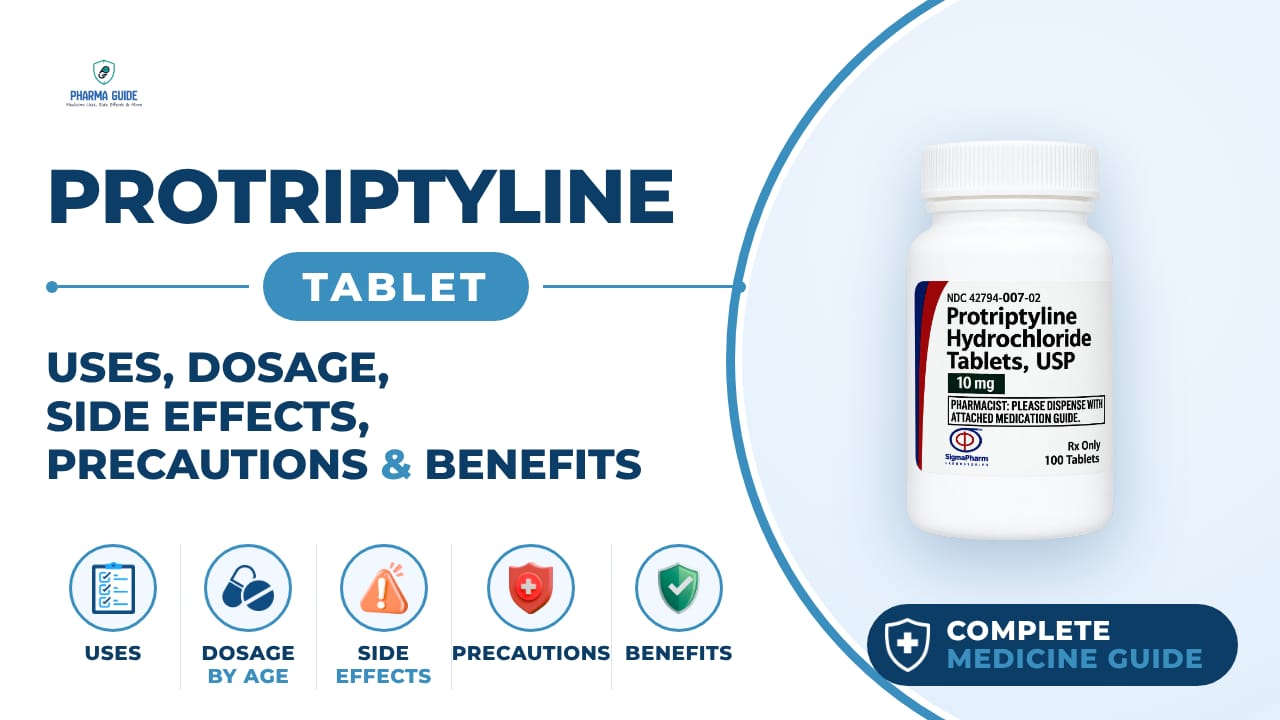
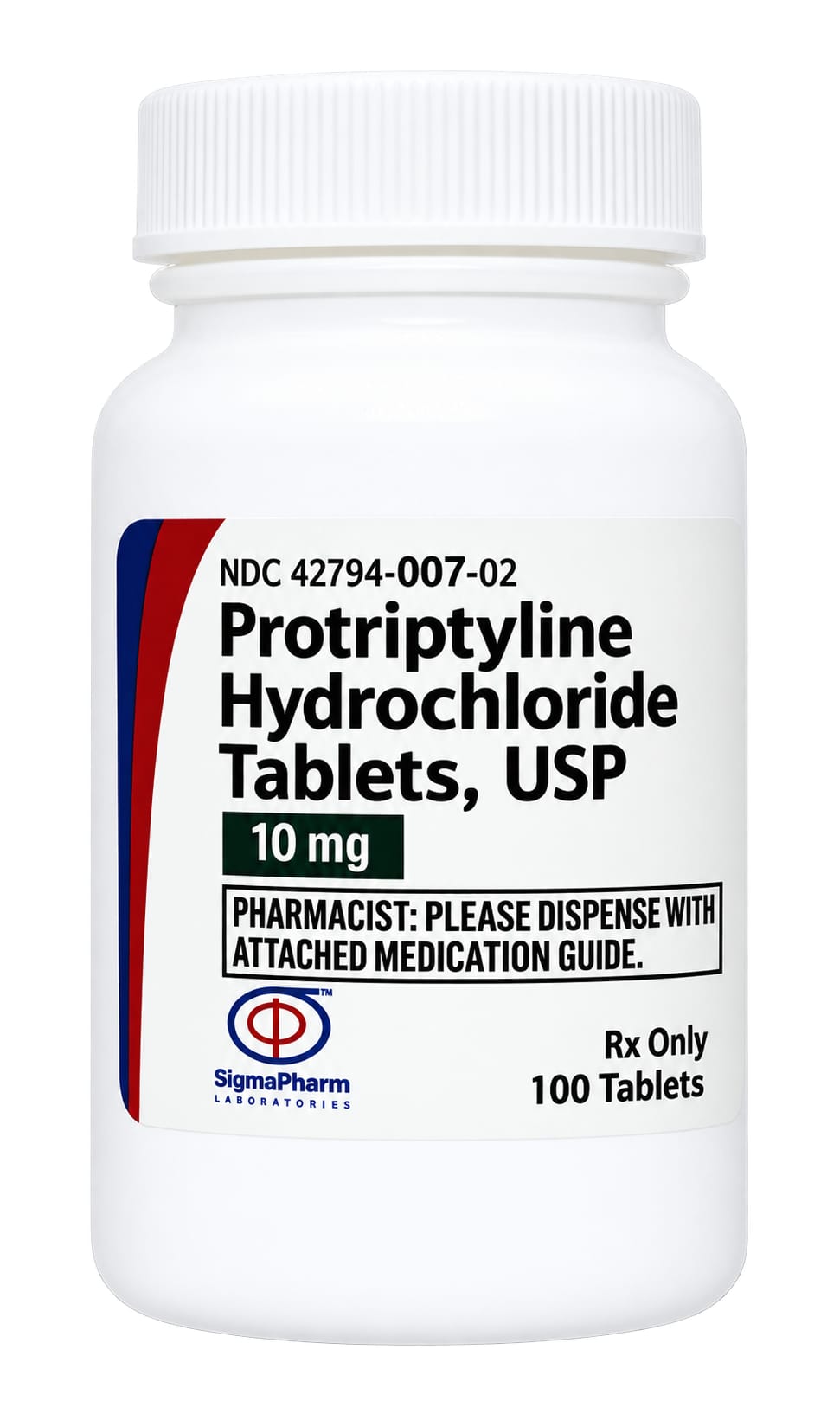
| Generic name | protriptyline hydrochloride |
|---|---|
| Drug class | Tricyclic antidepressant |
| Forms | 5 mg oral tablets, 10 mg oral tablets |
Quick overview
Protriptyline Tablet (protriptyline hydrochloride) is a tricyclic antidepressant used to treat symptoms of depression, including major depressive disorder. It works by increasing levels of certain natural brain chemicals, such as norepinephrine and serotonin, to help maintain mental balance. It is taken by mouth several times a day and is available as 5 mg and 10 mg oral tablets.
What is Protriptyline Tablet
Protriptyline is a tricyclic antidepressant medicine used to treat symptoms of depression.
Protriptyline Tablet uses
- Treats symptoms of depression
- Treats major depressive disorder
- Helps improve mood
- May reduce anxiety associated with depression
- May improve sleep disturbance related to depression
- Helps reduce other depressive symptoms
Benefits of Protriptyline Tablet
- May help relieve symptoms of depression when taken as prescribed
- Can improve depressive symptoms
- May improve sleep
- May improve energy and daily functioning
- Provides another option when other antidepressants are unsuitable
How Protriptyline Tablet works
It works by increasing the levels of certain natural chemicals in the brain, such as norepinephrine and serotonin, which help maintain mental balance.
Protriptyline Tablet dosage
Protriptyline is taken by mouth, usually three or four times a day. Take it at around the same times every day. Follow your prescription label directions carefully and ask your doctor or pharmacist about anything you do not understand.
Continue taking it even if you feel well; it controls depression but does not cure it. Do not stop taking it suddenly without talking to your doctor, as this may cause withdrawal symptoms like nausea, headache, and lack of energy. Your symptoms may not improve for up to a few weeks.
If you miss a dose, take it as soon as you remember, but if it is almost time for your next dose, skip the missed one and do not double up.
| Age group | Dose |
|---|---|
| Under 18 years | Safety and effectiveness are not established for routine use |
| 18–64 years | Common starting dose: 75 mg/day, usually divided or taken at bedtime; may be increased gradually |
| 65–74 years | Usually started lower, often 25–50 mg/day, with cautious titration |
Available forms and strengths
- 5 mg oral tablets
- 10 mg oral tablets
Side effects of Protriptyline Tablet
Common
- Constipation
- Inability to empty your bladder
- Dry mouth
- Drowsiness
- Dizziness
- Confusion
- Blurred vision
- Nausea and vomiting
- Diarrhea
- Loss of appetite
- Weight changes
- Unusual taste in the mouth
- Stomach pain or cramps
- Heartburn
- Nightmares
- Headaches
- Frequent urination, especially at night
- Difficulty urinating
- Wide pupils
- Changes in sex drive or ability
- Breast enlargement in men and women
- Unsteadiness
- Ringing in ears
- Hair loss
- Flushing
- Sweating
- Black tongue
- Fast heartbeats
- Problems with balance or muscle movement
Serious
- Severe allergic reaction: breathing problems or wheezing, racing heart, fever, swollen lymph nodes, swelling of the face, lips, mouth, tongue, or throat, trouble swallowing, hives, stomach cramps, joint pain
- New or increased thoughts of suicide or self-harm, or sudden changes in mood or behavior
- Signs of glaucoma: loss of vision, eye pain or redness, severe headache or vomiting, seeing halos around lights
- Signs of mania: greatly increased energy, trouble sleeping, racing thoughts, reckless behavior, unusually grand ideas, excessive happiness or irritability, talking faster than usual
- Heart rhythm changes: fainting, fast or skipping heartbeat
- Serotonin syndrome: sweating, fever, flushing, confusion, agitation, hallucinations, dizziness, fast heartbeat, nausea, vomiting, diarrhea, muscle twitching or stiffness, seizures
- Blood disorders: fever, easy bruising or bleeding, frequent infections or sore throat, unusual weakness or tiredness
- Slow or difficult speech, weakness or numbness of an arm or leg
- Crushing chest pain, rapid or irregular heartbeat
- Rash, hives, itching, swelling of the face or tongue
- Yellowing of the skin or eyes (jaundice)
- Jaw, neck, and back muscle spasms
- Uncontrollable shaking of a body part
- Fainting or difficulty walking
- Unusual bleeding or bruising
- Seizures
- Confusion or hallucinations
- Believing things that are not true
- Pain, burning, or tingling in the hands or feet
Warnings and precautions
- Protriptyline should not be taken if you have recently had a heart attack.
- A small number of children, teenagers, and young adults who take antidepressants like protriptyline may become more likely to have suicidal thoughts or actions, especially early in treatment or after a dose change.
- Protriptyline can make your skin more sensitive to sunlight, which can cause severe sunburn, blisters, and swelling. Wear sunscreen, a hat, and protective clothing if you must be in the sun.
- Do not take an MAO inhibitor within 2 weeks before or after taking protriptyline, as a dangerous drug interaction could occur.
- Older adults (65 and older) are usually advised against taking protriptyline because it is not considered as safe or effective as other treatment options for the same condition.
- Protriptyline is not approved for use in anyone younger than 18 years old.
- Do not stop taking protriptyline suddenly without talking to your doctor, since stopping too quickly can cause withdrawal symptoms such as headache, nausea, and feeling unwell.
- It is not known if or how protriptyline could affect pregnancy or harm an unborn baby. Tell your healthcare provider if you are or plan to become pregnant.
- It is not known if protriptyline passes into breast milk. Tell your healthcare provider if you are breastfeeding or plan to breastfeed.
- Tell your doctor if you have kidney problems before taking this medicine.
- Tell your doctor if you have liver problems before taking this medicine.
- Avoid drinking alcohol while taking protriptyline, as the combination can increase sleepiness or affect your alertness and concentration, and may cause dangerous side effects.
- Protriptyline can affect your alertness or coordination. Do not drive or do other activities that require alertness until you know how it affects you.
Storage
- Store at room temperature, between 68 F to 77 F (20 C to 25 C)
- Can be exposed to temperatures between 59 F to 86 F (15 C to 30 C) for shorter periods, such as when transporting it
- Store in a tightly closed container, away from moisture and heat, not in the bathroom
- Keep out of reach and sight of children
- Dispose of unneeded medication through a medicine take-back program rather than flushing it down the toilet
When to see a doctor
- Stop taking protriptyline and get help right away if you have signs of a serious allergic reaction, such as breathing problems, swelling of the face or throat, or hives.
- Call 911 or the Suicide & Crisis Lifeline right away if you or your child are thinking about harming yourselves.
- Get emergency help if you have symptoms of serotonin syndrome, such as high fever, confusion, agitation, fast heartbeat, or muscle twitching and stiffness.
- Stop using protriptyline and get help right away if you notice signs of a blood disorder, such as fever, easy bruising or bleeding, frequent infections, or unusual weakness.
- Get emergency medical help if you think you or someone else has taken too much protriptyline, as an overdose can be fatal.
- Call your doctor right away if you have eye pain, vision loss, severe headache or vomiting, or see halos around lights, as these can be signs of a serious eye problem.
Alternatives
- Amitriptyline
- Nortriptyline
- Imipramine
Watch the video
FAQs
What is Protriptyline Tablet used for?
Protriptyline is a tricyclic antidepressant used to treat symptoms of depression, including major depressive disorder, and may help with mood, anxiety, and sleep disturbances related to depression.
How does Protriptyline Tablet work?
It works by increasing levels of certain natural brain chemicals, such as norepinephrine and serotonin, which help maintain mental balance.
What is the dosage of Protriptyline Tablet?
It is taken by mouth, usually three or four times a day. Adults 18-64 typically start at 75 mg/day, divided or taken at bedtime, while adults 65-74 usually start lower, often 25-50 mg/day, with cautious titration. It is not established for use under 18 years.
What are the common side effects of Protriptyline Tablet?
Common side effects include constipation, dry mouth, drowsiness, dizziness, confusion, blurred vision, nausea, weight changes, headaches, and changes in sex drive, among others.
Can I stop taking Protriptyline Tablet suddenly?
No, you should not stop taking it suddenly without talking to your doctor, as this may cause withdrawal symptoms like nausea, headache, and lack of energy.
General information, not medical advice
Your prescriber and the leaflet in your pack know your situation. This page does not.
- Follow your prescriber and the leaflet
- Don't start, stop, or change a dose on your own
- Doses and warnings differ by country and product
Sources
Video
Related medicines
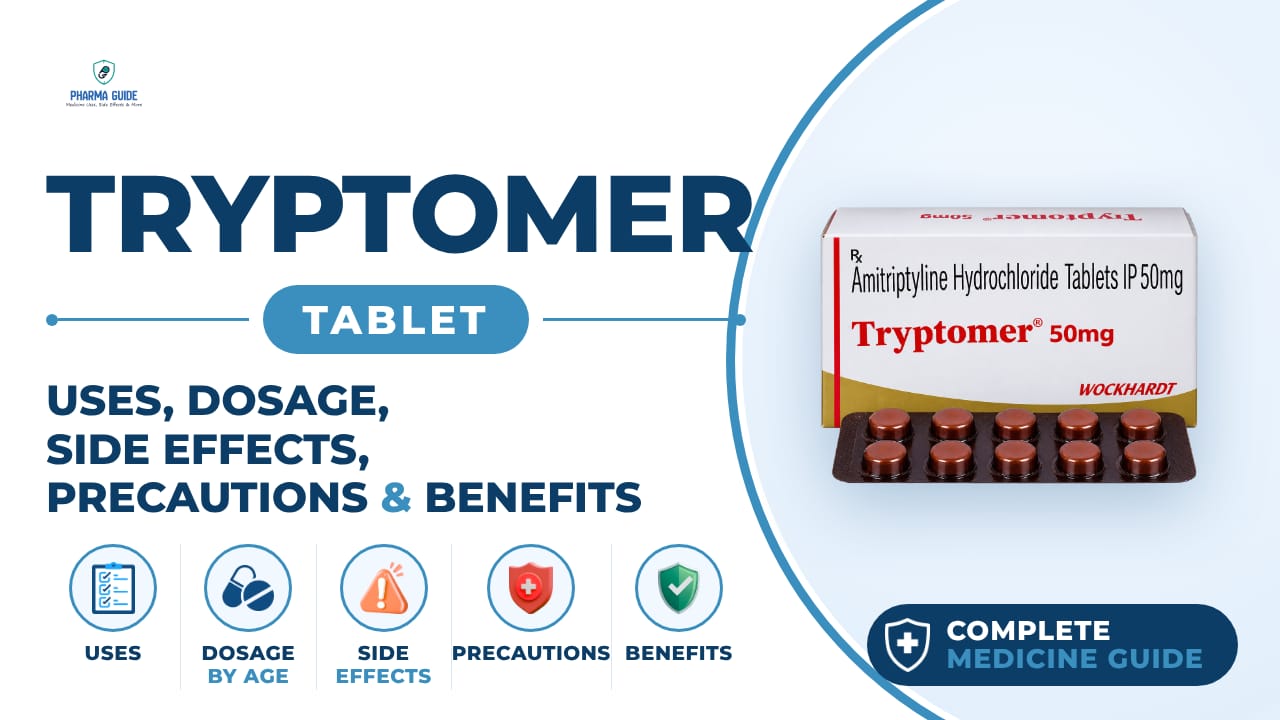
Tryptomer Tablet: Uses, Dosage, Side Effects, Precautions and Alternates
Tricyclic antidepressant
Tryptomer Tablet (Amitriptyline) treats depression, nerve pain, migraine, and tension headaches. Learn about its uses, dosage, side effects, and precautions.
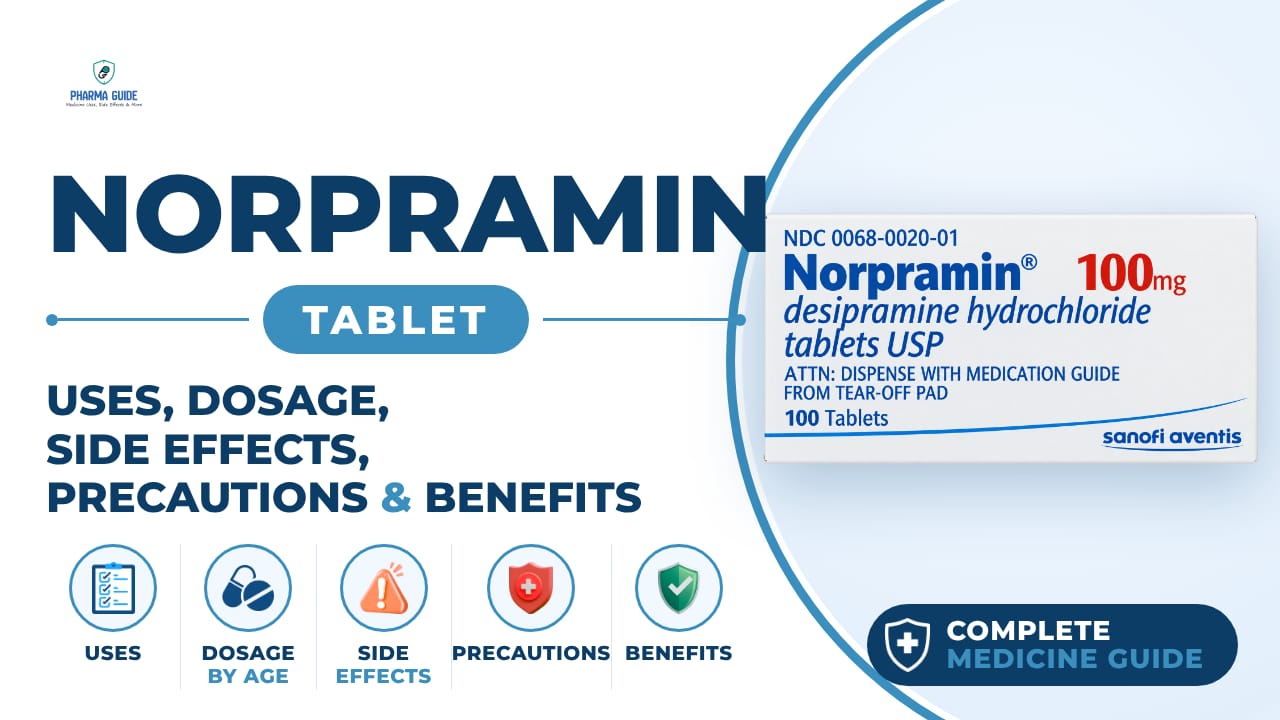
Norpramin Tablet: Uses, Dosage, Side Effects, Precautions and Alternates
Tricyclic antidepressant
Norpramin Tablet (desipramine) treats depression by restoring brain chemical balance. Learn uses, dosage, side effects, warnings, and precautions.