
Safety
General information, not medical advice
Your prescriber and the leaflet in your pack know your situation. This page does not.
- Follow your prescriber and the leaflet
- Don't start, stop, or change a dose on your own
- Doses and warnings differ by country and product
Pruradik Lotion: Uses, Dosage, Side Effects, Precautions and Alternates
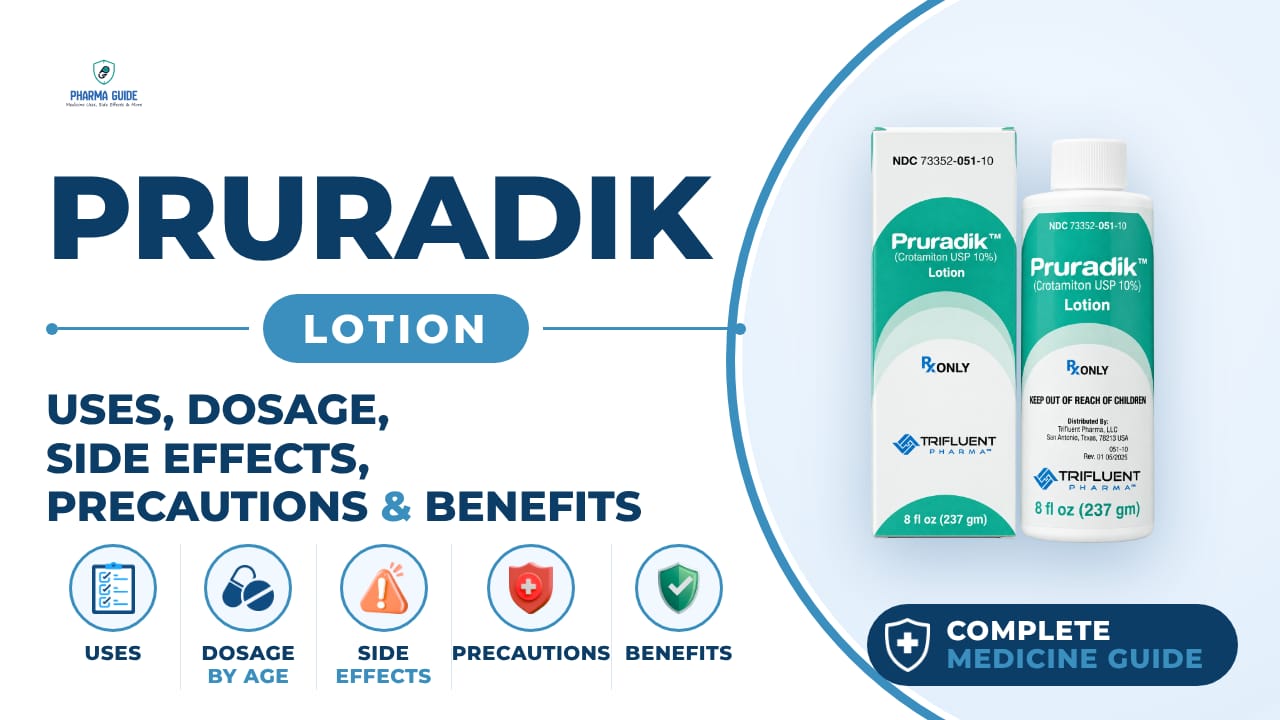
| Generic name | crotamiton |
|---|---|
| Drug class | Antiparasitic agent |
| Forms | Lotion |
Quick overview
Pruradik Lotion contains crotamiton and belongs to the antiparasitic drug class. It is a prescription lotion applied to the skin to treat scabies and relieve itchy skin. It also has uses related to preventing bone complications in certain cancers and treating hypercalcemia of malignancy. Common side effects include skin irritation, itchiness, rash, and dryness or redness of the skin.
What is Pruradik Lotion
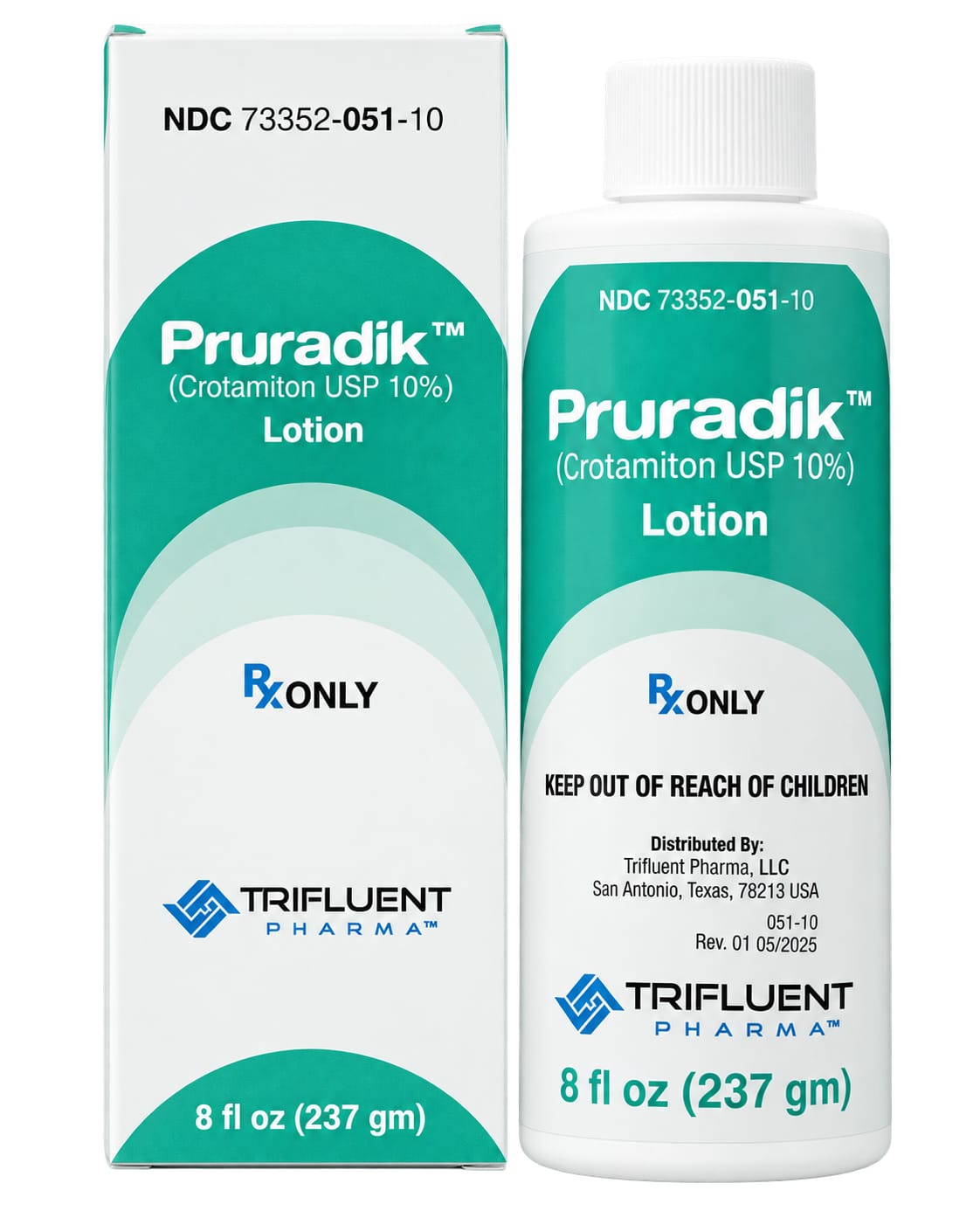
Pruradik is a prescription lotion containing crotamiton. It is used on the skin to treat scabies and to relieve itchy skin.
Pruradik Lotion uses
- Scabies
- Itchy skin (pruritus)
- Prevents skeletal-related events in multiple myeloma
- Prevents bone complications from solid-tumor bone metastases
- Treats giant cell tumor of bone
- Treats hypercalcemia of malignancy that has not responded adequately to bisphosphonates
Benefits of Pruradik Lotion
- Can help kill scabies mites when applied to the skin
- Can help relieve itchy skin
- Few side effects
- No known interactions with other medications
- Reduces bone breakdown
- Helps reduce pathologic fractures and other skeletal complications
- Helps control giant cell tumor of bone
- Helps lower excessively high blood calcium caused by cancer
- Targets the RANKL pathway
How Pruradik Lotion works
It's not fully understood how this medicine kills scabies mites. For itching, it may work by blocking histamine and other chemicals in the body that cause the urge to scratch.
Pruradik Lotion dosage
Shake the bottle well before use. Use on the skin only. Do not get it in your eyes, mouth, or vagina. If this happens by accident, rinse well with water. Do not apply to skin that is acutely inflamed, raw, or weeping; let it heal first.
For scabies: take a routine bath or shower first, then massage the lotion into the skin from the chin down to the toes, including folds and creases. Trim fingernails short and work some lotion under them, since mites can hide there; a disposable toothbrush can help apply it, then should be wrapped in paper and thrown away rather than reused. Apply a second time about 24 hours after the first application. Change clothing and bed linen the day after treatment, and wash them in hot water or dry-clean them. Take a cleansing bath about 48 hours after the last application.
For itchy skin: gently massage a thin layer into the affected area until it is absorbed, and repeat as needed.
Follow your care team's guidance to prevent scabies from spreading or coming back, including washing towels and bedding in hot water, sealing unwashable items in plastic, vacuuming furniture and carpets, and having close contacts checked and treated.
Safety and effectiveness in children have not been established. Studies did not include enough people aged 65 and older to know if they respond differently than younger adults.
| Age group | Dose |
|---|---|
| Under 12 years | Safety and effectiveness have not been established |
| 18–64 years – itching | Apply to affected skin as needed, according to prescription directions |
| 18–64 years – scabies | Apply thoroughly to skin; a second application after 24 hours is advised |
| 65–74 years | Same adult topical regimen, with monitoring for skin irritation |
Available forms and strengths
- Lotion
Side effects of Pruradik Lotion
Common
- Skin irritation
- Itchiness
- Rash
- Dryness or redness of skin
Serious
- Severe skin irritation (worsening redness, swelling that doesn't improve, weeping skin, a burning feeling)
- Allergic reactions (rash, itching, hives, swelling of the face, lips, tongue, or throat, eczema, angioedema)
- Skin irritation or rash not present before use of this medicine
Warnings and precautions
- Use this medicine on the skin only. Do not get it in your eyes, mouth, or vagina, as this can cause irritation. If this happens accidentally, rinse the area well with water.
- Some people may have severe skin irritation or an allergic reaction. Watch for redness, swelling, weeping skin, hives, or a burning feeling. If this happens, stop using the medicine and contact a healthcare professional.
- If severe irritation or an allergic reaction develops, stop treatment and get proper medical care.
- Do not use this medicine if you are allergic or sensitive to it, or if you have had a skin irritation reaction to other topical medicines.
- Keep this medicine out of the reach of children.
- It is not known whether this medicine can harm an unborn baby. It should only be used during pregnancy if clearly needed.
- Severe kidney impairment increases the risk of hypocalcemia, so calcium levels require careful monitoring.
- No standard liver-specific dosage adjustment is established.
- No major direct interaction with alcohol is established.
- This medicine usually does not directly impair driving; avoid driving if weakness or dizziness occurs.
Storage
- Store 20° to 25°C (68°-77°F). Excursions allowed between 15° and 30°C (59° and 86°F).
- Keep out of reach of children.
When to see a doctor
- Contact a healthcare professional right away if you notice worse skin redness, swelling, weeping skin, hives, or a burning feeling. These can be signs of severe skin irritation or an allergic skin reaction. Stop using the medicine and get medical advice.
- If you or someone else accidentally swallows this medicine, call a healthcare professional or your local poison control center right away. Swallowing it can cause burning in the mouth, irritation, and stomach upset.
- If swallowed by accident, it may cause a burning feeling in the mouth, irritation of the mouth, throat, and stomach lining, nausea, vomiting, and stomach pain. Call your Poison Control Center if this occurs.
Alternatives
- Xgeva (denosumab)
- Aukelso (denosumab-kyqq)
- Zoledronic acid
Watch the video
FAQs
What is Pruradik Lotion used for?
Pruradik Lotion is used to treat scabies and to relieve itchy skin (pruritus).
How do you apply Pruradik Lotion for scabies?
After a routine bath or shower, massage the lotion into the skin from the chin down to the toes, including folds, creases, and under trimmed fingernails. Apply a second time about 24 hours after the first application, change clothing and bed linen the next day, and take a cleansing bath about 48 hours after the last application.
What are the common side effects of Pruradik Lotion?
Common side effects include skin irritation, itchiness, rash, and dryness or redness of the skin.
Can Pruradik Lotion be used in children?
Safety and effectiveness of Pruradik Lotion in children have not been established.
What should I do if Pruradik Lotion is swallowed accidentally?
If swallowed accidentally, it can cause burning in the mouth, irritation of the mouth, throat, and stomach lining, nausea, vomiting, and stomach pain. Call a healthcare professional or your local poison control center right away.
General information, not medical advice
Your prescriber and the leaflet in your pack know your situation. This page does not.
- Follow your prescriber and the leaflet
- Don't start, stop, or change a dose on your own
- Doses and warnings differ by country and product
Sources
Video
Related medicines

Injectafer Injection: Uses, Dosage, Side Effects, Precautions and Alternates
Iron products
Injectafer (ferric carboxymaltose) treats iron deficiency anemia and heart failure-related iron deficiency via IV. Learn uses, dosage, side effects, and

Gliclazide Tablet: Uses, Dosage, Side Effects, Precautions and Alternates
Sulfonylurea (hypoglycemic/antidiabetic agent)
Gliclazide Tablet is a sulfonylurea for type 2 diabetes that boosts insulin release. Learn about dosage, side effects, warnings, and precautions.